Category: Classical Republicanism
-

Historical Sources of the American Founders
“The American Founders drew on an astonishingly wide range of historical sources. They invoked the Greek city-states, the Carolingian Dynasty [Empire of the Romans and Franks], and the Ottoman Empire in the Constitution’s defense. And they assumed that the new nation’s citizens would themselves be versed in history and political philosophy. Ignorance of the intellectual…
-

Marx, Lincoln and Anti-Capitalistic Roots in Republicanism
Steven F. Hayward writes about the classical influences of the American Revolution: “Wood says that the American Revolution was a “republican” revolution. By that he means that it had intellectual roots ranging from ancient Greece and Rome to the English Commonwealth, and that it was more communal than capitalistic. “Ideally,” he writes, “republicanism obliterated the…
-

Henry A. Wallace Spiritual Ideals and Fascination with the United States Motto
Henry A. Wallace (1888-1965) was a progressive Republican and Episcopalian, a high ranking official during the war, New Deal Secretary of Agriculture and Vice President of the U.S. 1941-45. He is considered a notable contributor to American liberalism and political culture. This brief will not cover his life or political work but highlight his particular…
-

Where Authority Lies: Republicanism, Liberalism, and Progressive Morality
WHERE AUTHORITY LIES “. . .And they that are wise shall shine as the brightness (zohar) of the firmament; and they that turn many to righteousness as the stars for ever and ever.” (Dan. xii, 3) What is called the “new morality” (a term dating to the 1920s) today guided by progressive social movements seems…
-

Étienne de La Boétie on Liberty and Tyranny
Étienne de La Boétie on facing corrupt rulers. “Be resolute to serve no more, and you are at once free. I do not ask you to push him, to topple him over, but only to cease sustaining, and you will see him, as a great colossus whose pedestal we’ve shattered, fall of his own weight…
-
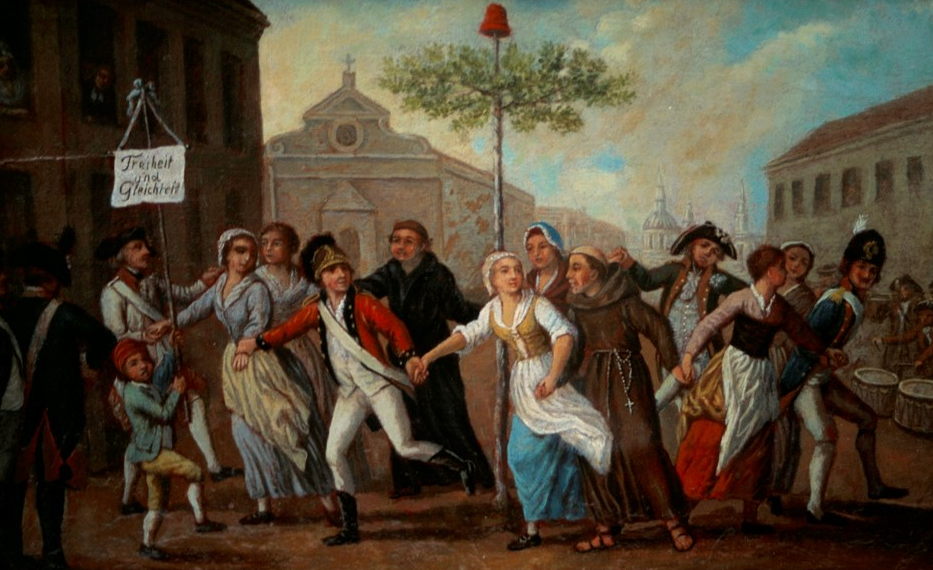
James J. Sack on Right-Wing Hatred of Dissenters in the 18th century
The European Right in the Era of Republicanism The attitudes and thinking-patterns of intellectuals on the political Right in the eighteenth and nineteenth-century remain as they are in today’s American Right. From Jacobite to Conservative: Reaction and Orthodoxy in Britain In James J. Sack’s From Jacobite to Conservative, speaking of the “ubiquitous right-wing hatred of…
-

Post-Trump: Republicans must return to Republicanism as Moral and Philosophical Guide
Brink Lindsey argues that the answer for Republicans is staring them in the face — in their very name. In post-Trump Right, Republicans must return to Republicanism as moral and philosophical guide. This expression would be staunchly anti-racist, anti-tyranny, cosmopolitan and mature. “To build a new, post-Trump right, we need a new political language in…
-
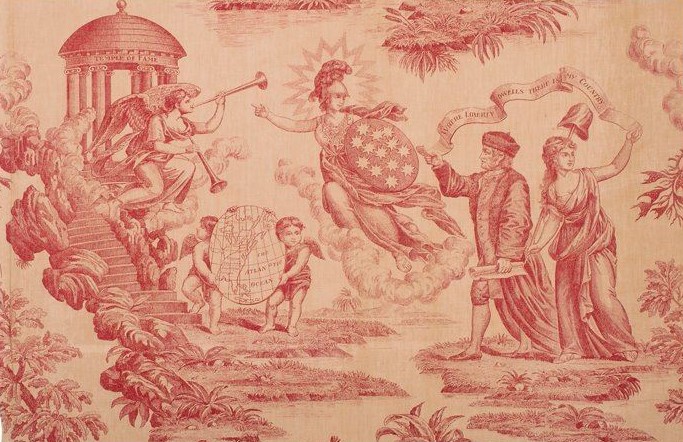
Minerva leads America in “The Apotheosis of Benjamin Franklin and George Washington”
MINERVA, Goddess of Wisdom leads America in “The Apotheosis of Benjamin Franklin and George Washington.” The Apotheosis of Benjamin Franklin and George Washington is a copperplate-printed toile fabric produced in several colorways in Britain between 1785-1800, after the first defeat of the British Empire. A banner reads “Where Liberty Dwells, There is My Country.” GALLERY…
-

The Loose Tradition of Republican Writers
In regards to the Stanford Encyclopedia of Philosophy, it is a great reference for understanding ‘REPUBLICANISM,’ in two different, but closely related senses. The author of the article, Frank Lovett explains that in the first sense is meant, a loose tradition or family of writers in the history of western political thought: “Machiavelli and his…
-

American Romanità: What we lost when we Abandoned Classical Education | M.N.S. Sellers, Wes Callihan and Rebekah Hagstrom
“The study of ancient Greek and Latin long ago vanished from most American classrooms, and with it has gone a special understanding of the values and virtues prized by Western civilization.” — DANIEL WALKER HOWE, CLASSICAL EDUCATION IN AMERICA, THE WILSON QUARTERLY, 2011. 🗡 IN “AMERICAN REPUBLICANISM: ROMAN IDEOLOGY IN THE UNITED STATES CONSTITUTION,” M.N.S.…
-

Benjamin Rush and Early Federalist Republicanism: Fear of Democracy, Moral Degradation, and Corruption
Fear of Mob Democracy and the Roman republic’s fate of corruption The stories of Marius, Tacitus, Livy and Sallust stress importance of morals, reason and the rule of law in a virtuous republic; also corruption of these through avarice, luxury, parties, factions and venality. According to the Roman statesman, Sallust, a republic should be free…
-
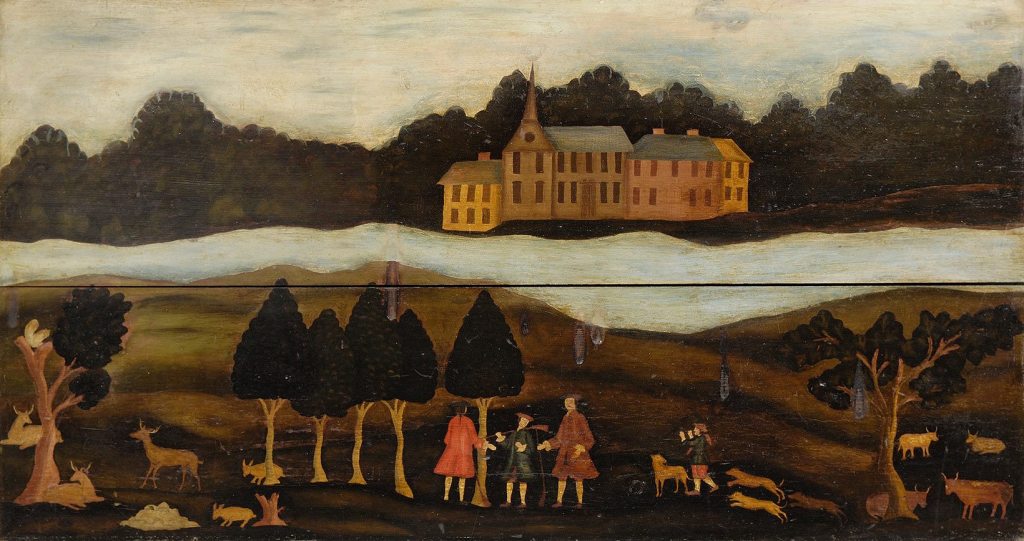
J. Hector St. John on What Is An American
“In this great American asylum [haven], the poor of Europe have by some means met together, and in consequence of various causes.” (J. HECTOR ST. JOHN DE CRÈVEŒUR, LETTERS FROM AN AMERICAN FARMER) “What then is the American, this new man? . . . He is an American, who, leaving behind him all his ancient…
 The American Minervan