Tag: Theosophy
-

The Complex Legacy of Albert Pike
The life and writings of Albert Pike provide a lesson to those interested in the history and study of Esoteric Philosophy. This article briefly lays out some facts to consider in light of recent events to challenge both American racial conflicts and limitations and the Trump Administration’s appropriation of Albert Pike (The Unseen Danger of…
-

Early Reflection on my Journey to Greece: Black Classicism, Childhood and American Identity
I just returned abroad from my journey to the island of Hydra (Gr: Ύδρα, romanized: Ýdra) and Athens in Greece back home to the state of Illinois and came back very happily engaged to my beautiful partner. It has been over two years since I went on a trip through a tour agency to Italy…
-

The Creation of New Culture
I think of these ideas presented here as what will come to synthesize the combined ideal and mission of THEOSOPHY, Johann Adam Weishaupt’s PERFECTIBILISM and REPUBLICANISM. MINVRA celebrates the path of human struggle to wisdom in life. It encourages you to adopt a balance: a sincere martial attitude towards life to sustain strong spiritual and…
-
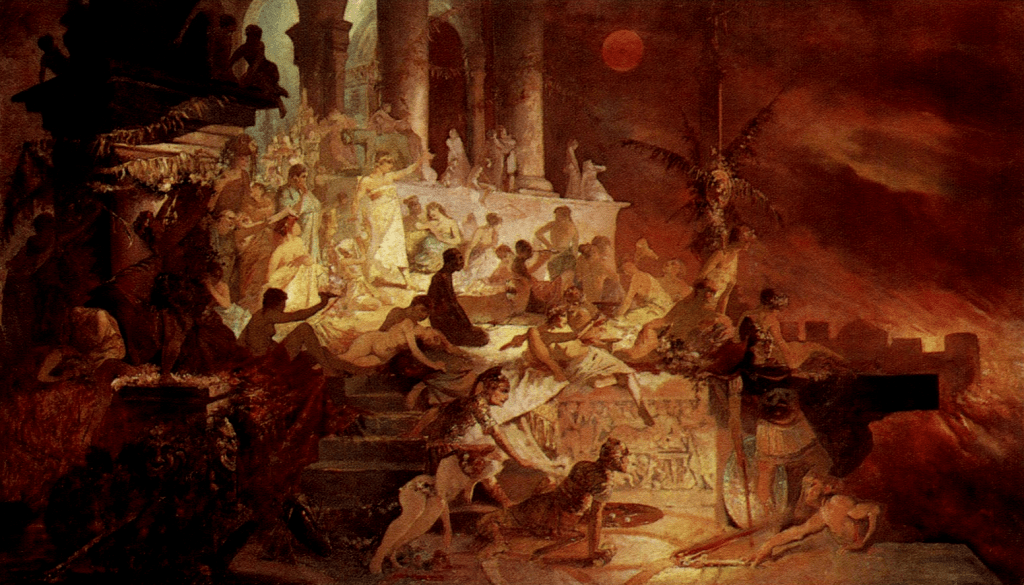
‘The Greatest Curse to a Nation is a Form of Faith that Prevents Inquiry’
What is the greatest curse to a nation? Helena P. Blavatsky stated that the greatest curse to a nation is a form of Faith that prevents inquiry. She begins by explaining the initiatory system and institutions of the Mysteries and its purposes and approach to education, as opposed to the manner in which the dominating…
-

Oath taken by members of Young Italy, 1831 | Giuseppi Mazzini
Introduction In the visions of nationhood and association professed by Italian revolutionary, Guiseppi Mazzini, I find inspiration, and freedom from limitations in the U.S. American perspective within the larger historical contexts of Republicanism. After the failures of the Carbonari, Mazzini founds Young Italy in his hopes for Italy’s unification. Mazzini saw the American Republic as…
-

Celsus discourse Against the Christian Cult
Celsus was a second-century eclectic of Platonism. In Contra Celsum, Origen reveals in his attempt to reproduce and refute him in his eight-volume work and the mysteries of Mithra, that Celsus adopts a septenary system. The obscure treatise of Celsus was written around 177 CE titled Logos Alēthēs or True Doctrine (Ἀληθὴς Λόγος), but like…
-

California Fire Destroys Theosophical Archives and Building in Altadena
IN LOS ANGELOS — A LARGE COLLECTION OF MATERIALS ON NINETEENTH-CENTURY ESOTERICISM were claimed by the raging fires in California. Prof. Wouter Hanegraaff (professor of the History of Hermetic Philosophy and related currents at the University of Amsterdam Netherlands) on Facebook this Thursday stated that “the entire property of the Theosophical Society in Altadena near Pasadena has been…
-
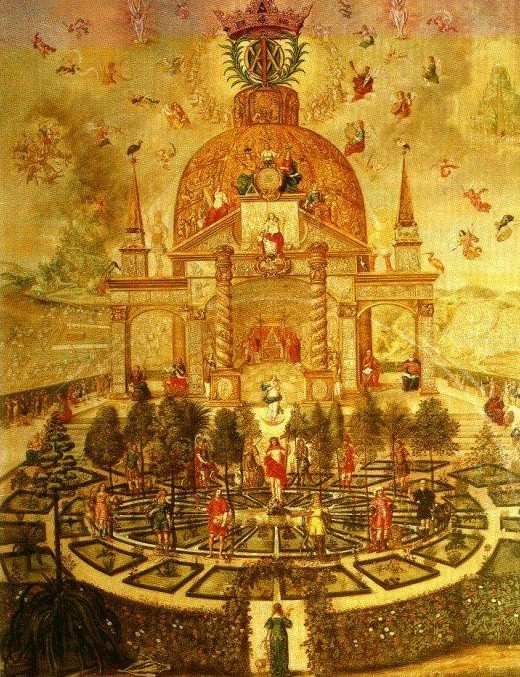
Did a Federation of Adepts form in the Nineteenth-Century?
HELENA BLAVATSKY IS CERTAIN THAT A GREAT BODY OR FEDERATION OF “spiritual Illuminati” does exist in her time; but their locations will never be known. Firstly, until the masses had greatly sought to get rid of its ignorance and aspired to learn of the body of knowledge associated with those institutions and schools, such individuals…
-

The Syncretic Combinations of the Monotheistic Religions
“To connect the Mosaic Religion with the Mysteries is to wrest from the Church its position, and to show that the Old Testament is the result of human effort…” (Samuel F. Dunlap. 1860. Sōd: The Mysteries of Adonai, pg. iii) “The work of the Old Testament is the first offshoot from the Mysteries; the New Testament…
-

Morya on Yahweh as a Mamo in the Prayag Letter
The term Prayāg (or Prayaga) is an ancient term for the city of Allāhābād. In January 1, 1881, an early branch of the parent or original Theosophical Society was formed in Allahabad. G.N. Chakravarti was a notable member of this lodge, who represented Brahmanism at the 1893 World’s Parliament of Religions in Chicago. So, the Prayag Letter is…
-
The Mahatma Letters on Plato, Revolution and Ideas ruling the World
“Koot Hoomi tells Sinnett first that the world must prepare itself for the manifestation of phenomenal elements in constantly augmenting volume and force. The age of miracles, he says, is not past; it really never was. Plato was right in asserting that ideas ruled the world; and as the human mind increases its receptivity to…
 The American Minervan