Category: Cultural History
-
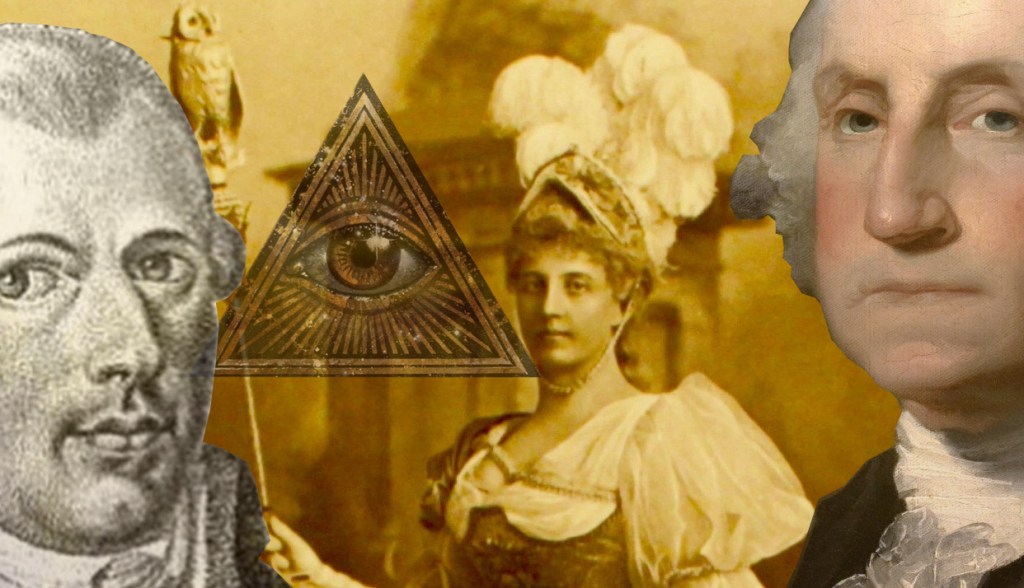
Illuminati History of the Secret School of Wisdom | Josef Wages
Josef Wäges gives the death-blow to Illuminati conspiracies as strings of repeated hearsay devoid of historical fact. He goes into the references made by George Washington, a Freemason, who equated the Illuminati with the Jacobinism of the French Revolution. “Wishaupt seems to be an enthusiastic Philanthropist. He is among those (…) who believe in the indefinite…
-

Illuminati Pop Lies vs. Secret Society Truth with Josef Wages
“It was the full conviction of this, and of what could be done, if every man were placed in the office for which he was fated by nature and a proper education, which first suggested to me the plan of Illumination.” — ADAM WEISHAUPT JOHANN ADAM WEISHAUPT: FROM SENSATIONALIST AND SLANDEROUS MYTHS TO DOCUMENTED FACTS…
-

Theosophy in Italy and Under Fascist Rule | The Prefect of Genoa Report (1939)
HISTORY OF THE ITALIAN THEOSOPHICAL SOCIETY DURING WORLD WAR AND UNDER FASCIST RULE, INCLUDING THE PREFECT OF GENOA’S REPORT JAN 1939 – HELENA P. BLAVATSKY frequently visited Italy, in namely Bologna, Bari, Trieste, Venice, Rome, and Naples. Many of her acquaintances in Italy became members of the Theosophical Society. In 1851, H.P.B. met Giuseppe Mazzini, and at…
-
Lewis Loflin’s “Debunking Theosophy”
Lewis Loflin’s Debunking Theosophy and Psychological Manipulation and Society (Joseph P. Szimhart’s review) are two critiques of the Theosophical Society, high in the index. The link is there to review. A common criticism in religious and historical research on Modern Theosophy — since its first expositions in Sinnett’s Esoteric Buddhism — is that Theosophy is a “hyper-syncretistic religion.”…
-

Kathryn Olmsted on the Secret Society of the Illuminati
THE SECRET HISTORY OF THE ILLUMINATI Great points by Professor of History at UC Davis, Kathryn Olmsted.
-

Helena Blavatsky Biography Russian Documentary
HELENA PETROVNA BLAVATSKY RUSSIAN DOCUMENTARY (ENGLISH DUBBED) The fascinating life of H.P.B. Helena Petrovna von Hahn was born in Dnepropetrovsk (Ekaterinoslav), a town in Southern Russia (now Ukraine), under the Romanov Dynasty and old Russian Empire. Her mother Helena de Fadeyev was a renowned novelist, and her grandmother, Princess Helena Pavlovna Fadeyeva-Dolgorukov was a botanist and writer. Her maternal…
-

Pro and Con Sources on Controversies about the Theosophical Society
Pro and Con Sources Dr. James Santucci, a scholar of comparative religion, and editor of Theosophical History wrote: “All too often, this subject [Theosophy & Blavatsky], when it is discussed in scholarly circles, is presented in a most unscholarly fashion. Falsehoods are perpetuated and original research is not actively pursued.” Why Take Blavatsky Seriously? by…
-

The Mission of Ammonius Saccas and the New Platonists of Alexandria
The aim of the Hellenist philosopher Ammonious Saccas from Alexandria, founder of the New Platonic Eclectic School, was to reconcile the plethora of sects in Egypt and Palestine at the time. The central object was faith in one immutable, nameless, inexorable Divine Principle and eternal law by which the Universe was governed. It was by…
 The American Minervan