Category: Theosophy
-
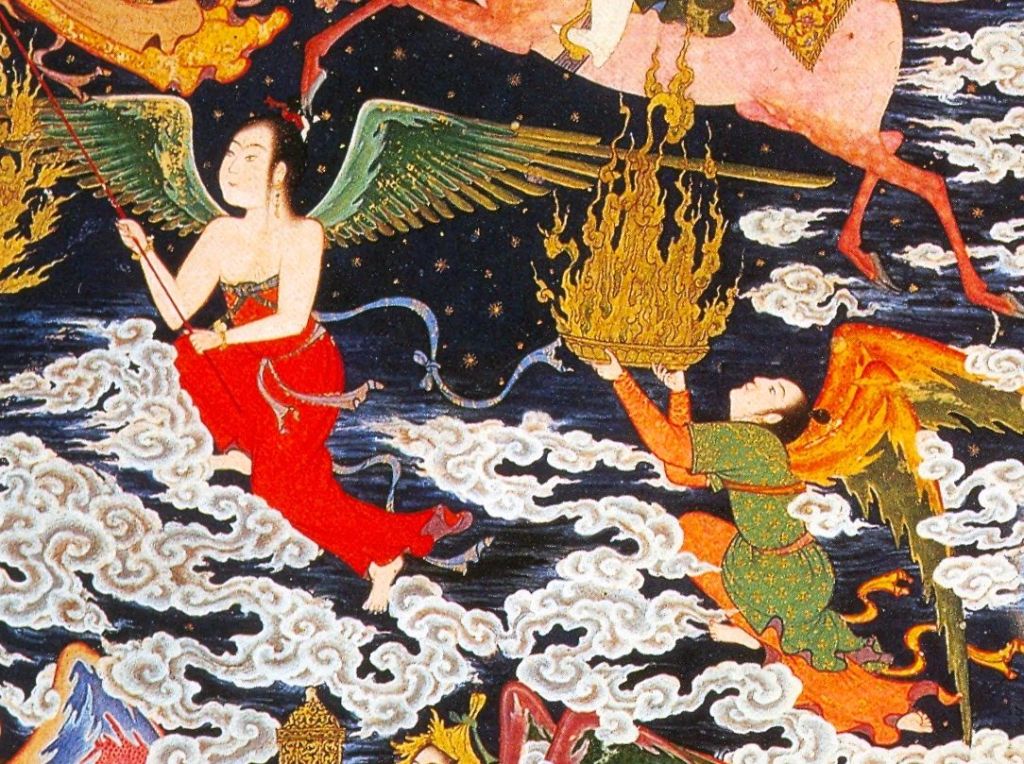
The Septenary Principles of Man: Zurvanite Zoroastrian and Theosophical Classification
R. C. Zaehner, Zurvan. A Zoroastrian Dilemma, Oxford, 1955, pp. 323, 334) demonstrates, that the Zurvanite Zoroastrian (a now extinct school of thought) classification (referring to levels of being or existence) is near identical to the Tāraka Rāja Yoga classification. However, as the Theosophical [esoteric] classification show, that the septenary division of man is explained in…
-

The Four Modes of Birth in The Secret Doctrine and the Abhidharmakosa of Buddhism
A NEW, YET UNKNOWN MYTHOLOGY AND CREATION ACCOUNT The Four Modes of Birth described in Indian and Persian Zoroastrian lore, and its meaning in The Secret Doctrine’s “Parallel Evolutionary System” about Human Origins In the ancient mythologies and literature of these traditions we find accounts of human creation, or modes of birth found in both…
-
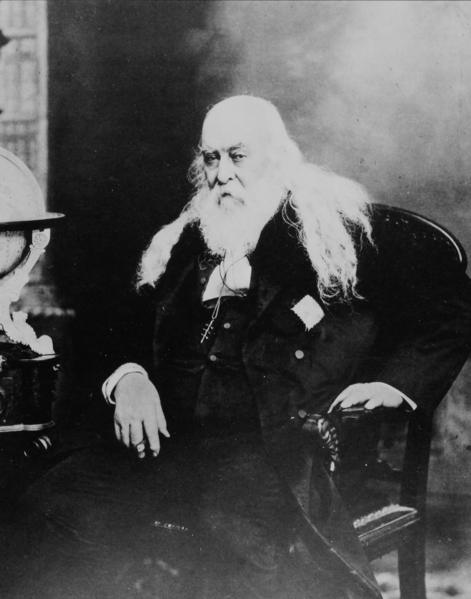
Albert Pike Ponders on Lucifer in Morals and Dogma: Tells Us to Seek the Light of Knowledge
There has been only one line in all of the pages of Albert Pike’s Morals and Dogma, used and cited numerously to accuse him of praising Lucifer or Evil in his book, and propagating “Luciferianism.” This is often used in Christian polemics against Esoteric philosophy and traditions. The purpose of this article is to dispose…
-
The Nineteenth-Century Popularization of the Desatir | Theosophists, Ishraqis, and Zoroastrianism
The Desatir or Dasātīr (Per. دساتیر lit. “Ordinances”), also known as Dasatir-i-Asmani is a collection of writings now generally taken to be a literary forgery written in an invented or artificial language. It contains elements from Indian and Iranian dialects, as well as Persian grammar. It is recommended in “The Secret Doctrine Reference Series,” where…
-

Russian MS. of H.P.B. criticized V.S. Solovyov’s Review of Theosophy: ‘Theosophists worship the wisdom that is from Above’
‘Theosophists worship the wisdom that is from Above’ In relation to Russian Philosopher Vladimir Solovyov and Charles J. Ryan: ‘H.P.B. did not invent the Tibetan Brotherhood and Chelas’, an insightful Russian MS. (the date reads London, 1890) in H.P. Blavatsky’s handwriting was discovered in the Adyar Archives. It was H.P.B.’s critical response, or correction of V.S.…
-

H.P. Blavatsky involvement in Italian Politics with Garibaldi and Mazzini, and the Carbonari’s Role in the Republican Revolutions
H.P. Blavatsky’s interest in Italian politics has been very scanty in the historical record of her life. H.P.B. herself had claimed and proven to H.S. Olcott, as detailed in his Diary Leaves, that she had joined the Garibaldians (see Garibaldi and the Red Shirts) at the bloody Battle of Mentana, where she was stabbed with a…
-

The Evolution of the God-Idea | H.P. Blavatsky on the Limits of the Greeks and Christians
DIVINE THOUGHT, OR CINERITIOUS MATTER (The Secret Doctrine Vol. 1, Page 327): A section from the 1888 work of H.P. Blavatsky’s The Secret Doctrine (pp. 326-28: Divine Thought, or Cineritious Matter) discusses the evolution of the GOD-IDEA. This is the beginning of some far more dense commentary on occult physics that will be central to…
-
![‘The snub-nosed Saxons’ [Borderland Magazine, 1894]](https://theamericanminvra.com/wp-content/uploads/2018/06/franz-xaver-winterhalter-princess.jpg?w=500)
‘The snub-nosed Saxons’ [Borderland Magazine, 1894]
THE SNUB-NOSEDSAXONS Borderland Magazine, October 15th, 1894 tributehighlights influence of Blavatsky in the successful periodsof the theosophical movement on the cultural milieu. “If everything be true that Dr. Hodgson and the Psychical Research Society say about her, it only heightens the mystery, and adds to the marvel of the influence which Madame Blavatsky undoubtedly has exercised,…
-

Anna Kingsford and Helena Blavatsky on the True Meaning of Satan
𓄂𓆃 INTRODUCTION “LET US THEN FATHOM THIS CREATION OF THE PATRISTIC FANCY STILL DEEPER.” Helena Blavatsky Satan יְהֹוָה in its original conception means adversary and differs from the later Dantian and Christian conception of popular imagination. According to H.P. Blavatsky, SATAN, a concept held by other ancient nationalities, “is one of the most profoundly philosophical…
-

Kalachakra and Theosophy: The Sources of the Book of Dzyan and Kiu-te in The Secret Doctrine and Tantras
The Secret Doctrine Connection to the Kalachakra, ANCIENT RELIGION, ORIGINS OF KABBALAH and the Mystery-Language OF THE INITIATES “These facts take us well beyond the realm of probability. Blavatsky indeed had esoteric northern Buddhist sources” (David Reigle) INTRODUCTION On the authorship of The Secret Doctrine: a facsimile of a letter from K.H. to William Quan Judge…
-
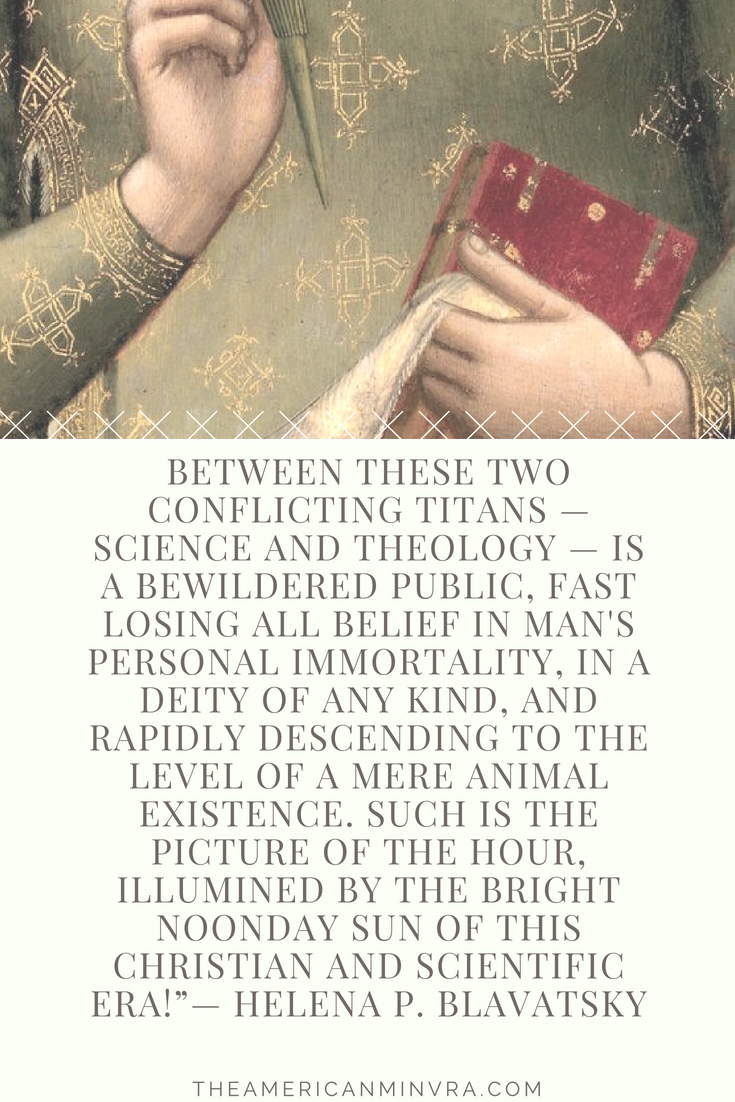
“Between these two conflicting Titans — Science and Theology — is a bewildered public”
“Between these two conflicting Titans — Science and Theology — is a bewildered public” “IT is nineteen centuries since, as we are told, the night of Heathenism and Paganism was first dispelled by the divine light of Christianity; and two-and-a-half centuries since the bright lamp of Modern Science began to shine on the darkness of…
-
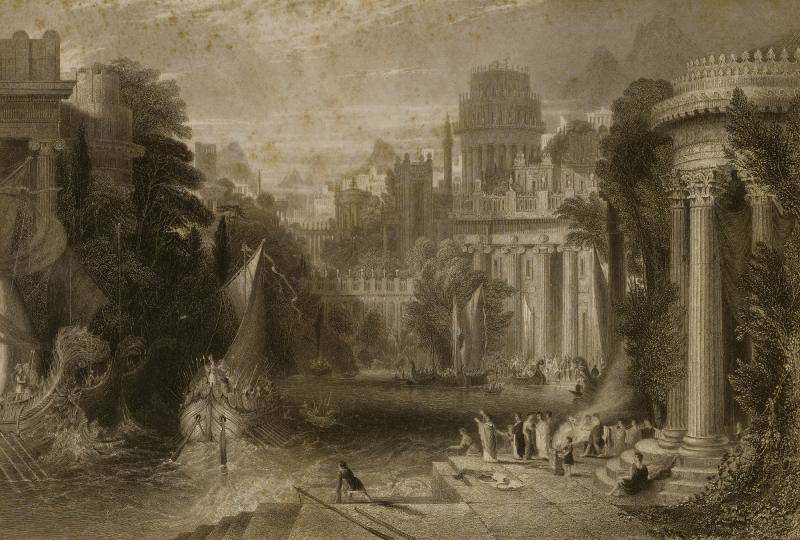
“Your History is Entirely at Sea”: The Legend and Classical Reference to Atlantis
ATLANTIS THE CLASSICAL REFERENCE TO THE MYTH OF ATLANTIS One vital classical source for the Atlantis legendand its remembrance, is from two dialogues writtenby Plato, in Timaeus and Critias.It is described as an island in the Atlantic Ocean.In Timaeus and Critias, Solon, an Athenian andprominent statesman c. 6th c. BCE, described theisland as a country bigger…
 The American Minervan