Tag: Helena Blavatsky
-

African Traditional Religion: From Nabta Playa to Dynastic Egyptian Mysteries
ON THEMES OF PRIMORDIAL WISDOM AND DIVINE REVELATION FROM DUNLAP, MACKEY, PIKE AND BLAVATSKY AS A CRITICAL ANALYSIS OF NINETEENTH-CENTURY MASONIC-CHRISTIAN AND THEOSOPHIST SPECULATION ABOUT THE ORIGINS OF THE ANCIENT MYSTERIES This article presents its case from the modern archaeological and anthropological record, and contemporary studies on the history of African and European religion, spurned…
-

Blavatsky and Mazzini’s Vision of Progress
Blavatsky and Mazzini adopted the same view towards communism and socialism. Both maintained a unique position in republicanism as a force for the progress of a moralistic and humanitarian syncretic religious vision, “universal brotherhood,” and ethical duty-driven virtue. This vision was divorced from socialism and communist revolutionaries, the emergent “new atheism” of that time (which…
-

Notes on Theosophy, Ismaili Cosmology, and Jamal al-Din Connection
NOTES Theosophical Positions are rooted in pre-Islamic doctrines, and this is supported by the research from Eastern Tradition archive’s Book of Dzyan Research Reports series. This series methodically verifies Blavatsky’s sources as traceable in extant Buddhist scriptures, such as Tsongkhapa’s Gelugpa texts on the Wisdom Tradition. Be very careful in connecting the socio-political and Masonic…
-

How to Identify Bad Research about Theosophy in Academia and Social Media
TECHNICALITIES OF BAD RESEARCH ON THEOSOPHY, BLAVATSKY AND THEOSOPHICAL SOCIETY HISTORY When people write about Theosophy, they mix many fantasies into history, and they repeatedly use words like “Ascended Masters,” “the Great White Lodge,” the “Great White Brotherhood,” and “Mahatmas of Agartha.” The history of the Theosophical Movement is not one continuous or consistent flow…
-

Alice Bailey’s Alleged Tibetan Buddhist Source and Political Idealism
INTRODUCTION: THE LERNAEAN HYDRA OF RELIGIOUS POLITICAL CONSPIRACIES Christians that use Alice A. Bailey (born Alice La Trobe-Bateman) to attack Theosophy prove to believe in the ideas of Alice Bailey far more than we Theosophists do. If they did not, then Christians would help Theosophists demarcate the great differences — and who are engaged in…
-

Christian Truth, or the eclectic Theosophical System
Every effort to help the West has failed and faced trials, each falling into the same patterns of individual and organizational turmoil, blame and mythologizing an adversary. So, what is this effort that the modern Theosophical Movement represents to “the West”? It is important to challenge our notions of “the West” as I explained in…
-

Guenon, Theosophy and Perennialism: Decline of Guidance and Wisdom
INTRODUCTION When I come across modern alternative spiritual teachers constructing new terminology, I am reminded that this has become customary in twentieth-century to present-day. The first generation of Theosophists were not constructing an extensive array of new terminology to baffle people. They were using terminology from schools, traditions and languages directly and then interpretating them…
-

The Complex Legacy of Albert Pike
The life and writings of Albert Pike provide a lesson to those interested in the history and study of Esoteric Philosophy. This article briefly lays out some facts to consider in light of recent events to challenge both American racial conflicts and limitations and the Trump Administration’s appropriation of Albert Pike (The Unseen Danger of…
-
‘The Greatest Curse to a Nation is a Form of Faith that Prevents Inquiry’
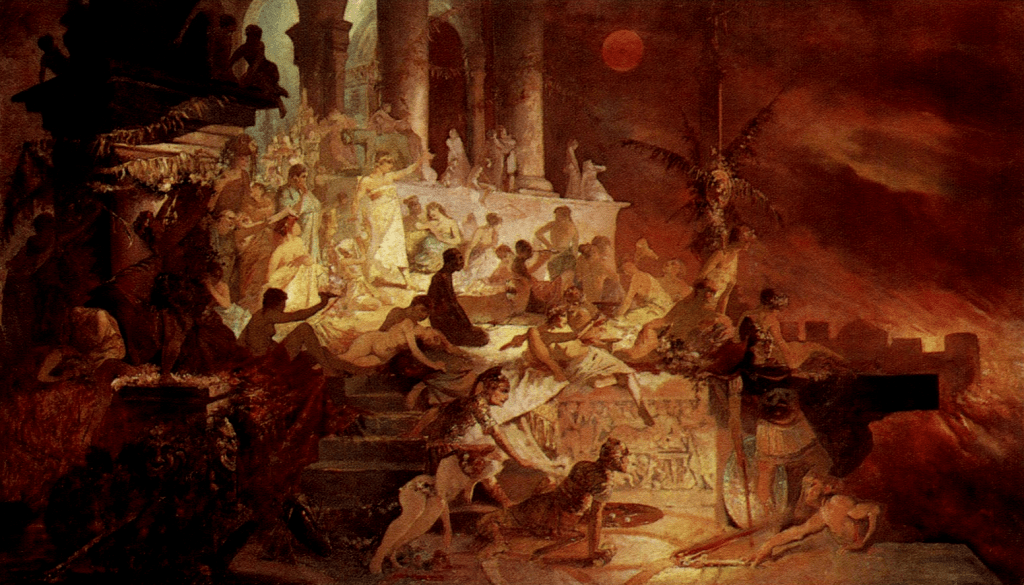
What is the greatest curse to a nation? Helena P. Blavatsky stated that the greatest curse to a nation is a form of Faith that prevents inquiry. She begins by explaining the initiatory system and institutions of the Mysteries and its purposes and approach to education, as opposed to the manner in which the dominating…
-

Oath taken by members of Young Italy, 1831 | Giuseppi Mazzini
Introduction In the visions of nationhood and association professed by Italian revolutionary, Guiseppi Mazzini, I find inspiration, and freedom from limitations in the U.S. American perspective within the larger historical contexts of Republicanism. After the failures of the Carbonari, Mazzini founds Young Italy in his hopes for Italy’s unification. Mazzini saw the American Republic as…
-

Nicholas Roerich asks Lama about the Kalachakra and the Kuthumpas
Nicholas Roerich asks a Lama: “. . . Lama, have you met Azaras (i.e., Sk. ācāryas) and Kuthumpas? (…)” “(…) Many of our people during their lives have encountered the Azaras and Kuthumpas and the snow people who serve them. Only recently have the Azaras ceased to be seen in cities. They are all gathered…

 The American Minervan