Tag: Theosophy
-
The Characteristics of a True Theosophist | Vincente Hao Chin, Jr.
Vicente Hao Chin, Jr. says, Helena P. Blavatsky, the principal co-founder of the Theosophical Society, distinguished between a member of the Theosophical Society and a true theosophist. “True Theosophists, as true Christians are very, very few” (CW VIII:159). Scattered throughout her writings, she mentions certain characteristics of a true theosophist: a. An understanding of the…
-

John Tavener: “Hymn to the Mother of God”
“HYMN TO THE MOTHER OF GOD” Lyrics “In You, O Woman full of Grace,the angelic choirs, and the human race,all creation rejoices. O sanctified Temple,mystical Paradise,and glory of Virgins. In You, O Woman full of Grace,all creation rejoices.all praise be to You.”
-
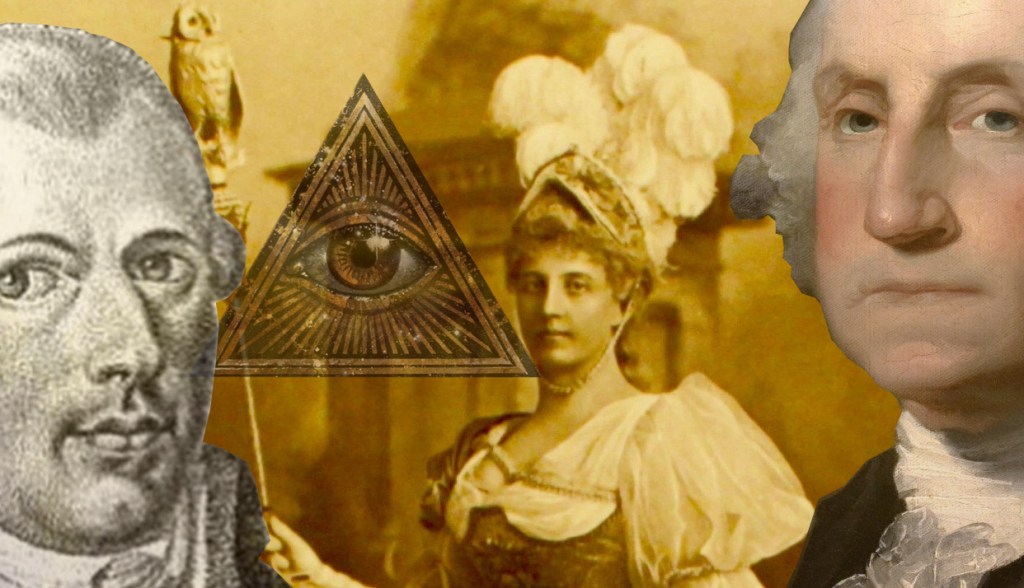
Illuminati History of the Secret School of Wisdom | Josef Wages
Josef Wäges gives the death-blow to Illuminati conspiracies as strings of repeated hearsay devoid of historical fact. He goes into the references made by George Washington, a Freemason, who equated the Illuminati with the Jacobinism of the French Revolution. “Wishaupt seems to be an enthusiastic Philanthropist. He is among those (…) who believe in the indefinite…
-

Theosophy and Freemasonry: Esoteric Schools within the Theosophical Society
HISTORY OF ESOTERIC SCHOOLS WITHIN THE THEOSOPHICAL SOCIETY The Theosophical Society did not become a secret, or occult fraternity, but it is true that the ideal for the Society was not to be a mere intellectual or literary society. The current condition of the Theosophical Society and its divided branches survive, though like a shell.…
-

Julius Evola: Christianity converted Western man only superficially
“For all practical purposes, Christianity “converted” Western man only superficially (…) In theory, the Western world accepted Christianity but for all practical purposes it remained pagan; the fact that Europe was able to incorporate so many motifs that were connected with the Jewish and Levantine view of life has always been a source of surprise…
-

Sophia and the Alchemical Wedding in the Rosicrucian Vision
“You are my mind, bring me forth.You are my treasure-house, open for me.You are my fullness, take me to you.” THE PRAYER OF APOSTLE PAUL, NAG HAMMADI LIBRARY
-
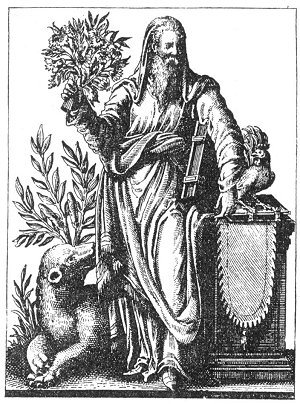
Cosmological Notes on Pythagorean Number Theory, the Vedas and Kabbalah
COSMOLOGICAL NOTES ON THE MATRIX AND THE FIGURE OF THE DECADE The Rig Veda teaches that the one animating principle of all the gods and man is a UNITY. IT is the eternally self-existent one, that lies behind Hiraṇyagarbha (the Womb) and brings forth a Universe. It is from Hiraṇyagarbha that the drama of creation, the first…
-

Short Lexicon of Titles and Terms used in Theosophical Literature
“THERE are persons whose minds would be incapable of appreciating the intellectual grandeur of the ancients, even in physical science, were they to receive the most complete demonstration of their profound learning and achievements.” (ISIS UNVEILED, 1877, Vol. 1, pg. 461.) “Lo, warrior! now the cross of RedPoints to the grave of the mighty dead;Within it…
-

Before the Conversion: Helena Blavatsky on Shakyamuni Buddha and Buddhism
The nineteenth-century saw its first public Western converts to Buddhism, or this is how it is usually defined in books. Although Helena P. Blavatsky cannot be described as a “Western convert,” H.P.B. and Henry S. Olcott, an American lawyer who worked on U.S. President Lincoln’s assassination case, were the two leading movers of the Theosophical…
-
“The Forlorn Hope” Letter, 1882.
“The Forlorn Hope,”‡. Received in Allahabad, Feb., 1882. “One or two of us hoped that the world had so far advanced intellectually, if not intuitionally, that the Occult doctrine might gain an intellectual acceptance, and the impulse given for a new cycle of occult research. Others – wiser as it would now seem – held…
-

Two Key Subjects in Morya’s Cosmological Notes: Space and Essence
TWO KEYS SUBJECTS ON THE NATURE OF REALITY The key concepts in Morya’s Cosmological Notes are: “space” and “essence.” or — [1] The nature of space.[2] The nature of matter. By space what is being referred to? Is it ākāśa or śūnyatā? When the notes refer to the eternal space, or “the one element,” the Skt. term धातु…
-
John Tavener: Fragments of a Prayer
John Tavener’s Fragments of a Prayer
 The American Minervan