TRACING THE ANCIENT WISDOM-RELIGION: NOTE ON THE NATURE OF MATTER IN THEOSOPHY AND THE Sāṃkhya SYSTEM
“What we desire to prove is, that underlying every ancient popular religion was the same ancient wisdom-doctrine, one and identical, professed and practised by the initiates of every country, who alone were aware of its existence and importance. To ascertain its origin, and the precise age in which it was matured, is now beyond human possibility. A single glance, however, is enough to assure one that it could not have attained the marvellous perfection in which we find it pictured to us in the relics of the various esoteric systems, except after a succession of ages. A philosophy so profound, a moral code so ennobling, and practical results so conclusive and so uniformly demonstrable is not the growth of a generation, or even a single epoch. Fact must have been piled upon fact, deduction upon deduction, science have begotten science, and myriads of the brightest human intellects have reflected upon the laws of nature, before this ancient doctrine had taken concrete shape.”
Helena P. Blavatsky, Isis Unveiled, Vol. 2, 99
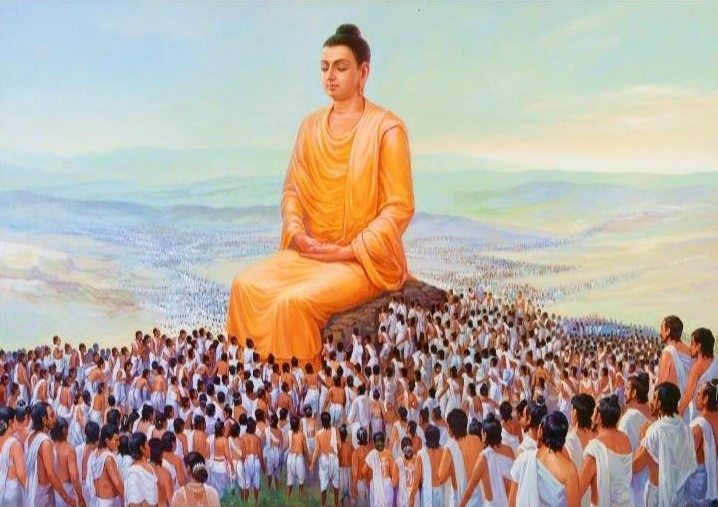
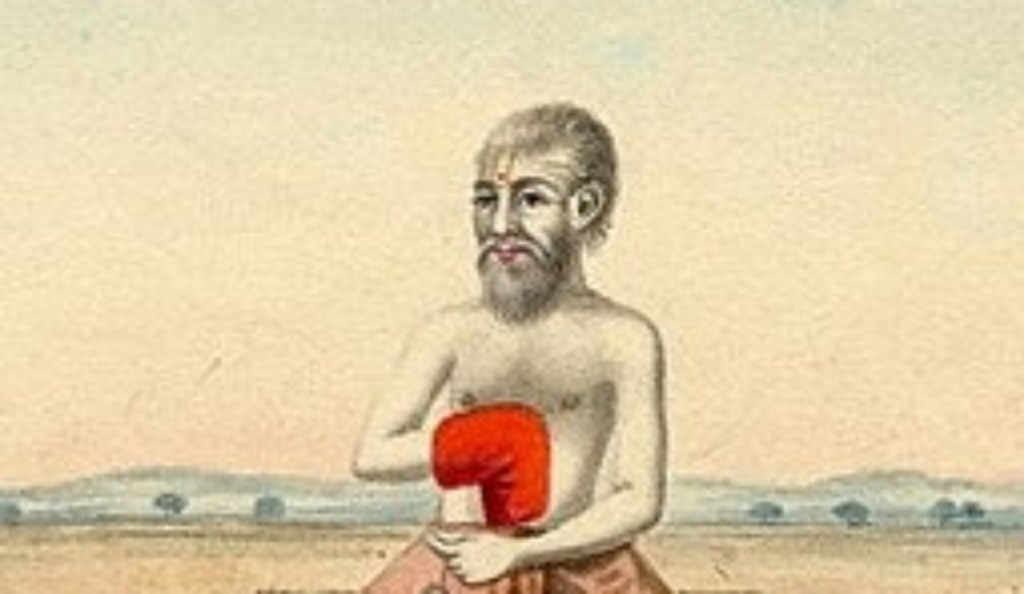
For context, the existence of a once universal Wisdom-Religion is at the core of Helena Blavatsky’s work. She has described the Wisdom-Religion as pre-Vedic Buddhism. The first fundamental proposition put forth in The Secret Doctrine explains the nature of matter, or rather “mūlaprakṛti,” a term used in Jaina philosophy. The usual belief is that spirit generates matter. However, this position states that the universe is the result of matter (prakṛti), not spirit (puruṣa), which is described as a passive presence and compound unity (one and many) that cannot think or act. This doctrine that the universe evolved from the principle prakṛti, which evolves numerous other principles of matter (together comprising the universe) is the basis of the Theosophical teachings on evolution, and is also the position of the Sāṃkhya system founded by Kapila. It is the basis of the belief in evolution by Manu and Kapila in ancient India. Interestingly, the birthplace of Gautama was Kapila-vastu, “the place of Kapila” (founder of Sāṃkhya, the oldest of the six orthodox schools of Indian philosophy, or darshans), and in 1937, E.H. Johnston wrote a book, Early Samkhya about pre-classical Samkhya indicating that this doctrine of a now extinct school of classical Indian philosophy is very old. So, can we identify the ramifications of the Theosophical teachings, since the definition of Theosophy as a syncretism, or “taking” from other religions proves unsatisfactory for research and to be founded on a lazy assertion?
The answer is yes. It is this type of research about Theosophy that is needed to regain momentum of the Theosophical Movement within this century, because it may still serve as a proper bridge despite its past failed attempt at reinvigorating Western Philosophy in relation to Religion and Science.
 The American Minervan
Leave a comment