As a Black American, I constantly reconcile ideas that many see as contradictory: embracing Western civilization while critiquing its flaws, claiming full belonging without apology, and rejecting both hostility and apathy toward its fate.
In general, also that amazing ability we have as humans is the capacity to reconcile systems of thought that commonly seem contradictory with how we perceive, or ought to perceive another’s identity and philosophical perspective of the world, based on our own view or others view of self, identity and systems. Humans are doing it all the time. Yes, I am reconciling seemingly contradictory systems of political, religious, philosophical and metaphysical mappings of the world, which I do not find to be as contradictory as commonly thought.
It is not only the perception of systems as contradictory to one another one deals with, but how they are reconciled within your mind and in relation to your understanding of your identity. My understanding fundamentally is what makes my perspective different from what is thus far, usually adopted in society. I do not believe I was born to go along and nod my head with what is already accepted or widely thought, within every layer of limitation imposed upon me from some environment or another.
I questioned what ought to have been automatically accepted, such as any particular perspectives I was exposed to on religion, culture and attitudes towards learning, and the attitudes I was raised around in school, among my peers and from celebrity pop culture simply conflicted with what I was learning about my history. The confliction made me question more, and see that while others may have read the same things I did about the history, their perspective and attitudes about that history were still different from my own reflections.
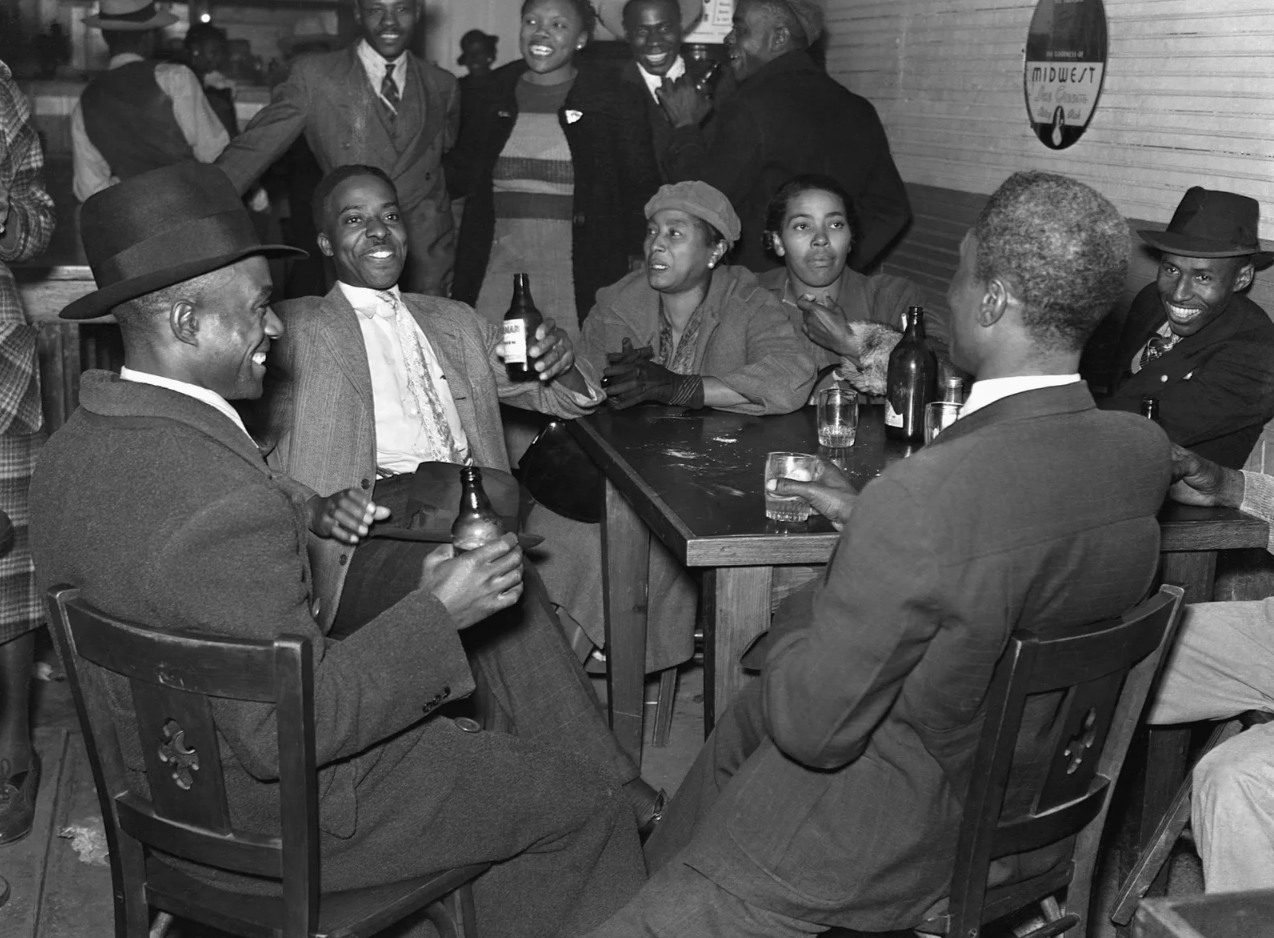
These reflections were also enhanced by my observations and thoughts on treatment by and assumptions about me from other Black people since a child, who demonstrate to me how race was not this mythic-magical bond between peoples of similar skin-color. There are deep traumatic wounds within certain Black people that unleash in negative ways on other Black people, and these were human flaws and impediments in the human condition that I was learning about how to conquer from classical literature. The classical myths were my refuge.
SEMANTIC BARRIERS TO CIVILIZATIONAL ADVANCEMENT
Learning to read and interpret mythology at a young age helped me more than I realize when this interest bloomed later in life in the academic environment. The ability or inability to understand certain linguistic and semantic barriers between systems or schools of thought can be a source of enmity and misunderstanding between people in every kind of relationship to each other. The advancement of American Civilization (there have been many — this is only one of them) and “Western Civilization” is important to me for instance, because I am (and view myself as) inextricably part of the history on this continent, and part of “Western Civilization” in the sense that factually, historically and scientifically, I am not separate from its history.
When I say the term “Western Civilization,” I do not internally mean “White People,” but to many people the two are equated. When it is viewed that way, it imaginarily places one’s sense of self either outside of the society, or as an alien living within it. How can a person that view themselves as alien to it have any actual effect on it while living within it bodily, except to view themselves as hostile to it, defending against it, maintain apathy to its fate, wrench it of life, or romanticize it.
In truth however, if this civilization fails, we fail. When this civilization falls, we will fall and suffer.
Also, who is to say you will survive after if your mentality is “I’m gonna sit this one out. This is White people’s problem.”
No! Get up and lead!
One cannot simply say, “to hell with it all,” or “this is White people’s problem.” I get to say, “America is the Devil” with this mindset, but this does not rid the world of its pain and views towards you. With such position, we conveniently wash our hands and sit on them, but in actuality this continues to limit us to a role of bottom-feeders, as other groups also hunger to climb the hierarchical structures of this façade system.
FAILURE OF NATIVISM
The U.S. has lost its role as “leaders” on the world stage, and the nativist and ethno-nationalist positions from both American and European politics that has risen over two decades has failed. It isn’t just failing. It has failed, and this is an opportune time within the next decade. We do not live in a “White man’s world,” or in the world of a White God (or God who favors any people or tribe) or a White man’s simulated reality. As a Black person, I have all means at my hand to mold and develop myself, because of where I live and what is provided to me to access. For that, in a sense, I am privileged, and must use it. I am part of a nation and a long familial history splintered between the Caribs, North America, Europe and Africa.
I do not live apart, away, or beyond this civilization. What infantile delusion would that be. In one sense, within this world of conceptions, I am “a Westerner” and in another sense, I am not, according to the way people typically think about this. They both mutually exist as true! To the foreigner especially, I am an American, a Westerner, and perhaps all of the things associated with how they particularly perceive “Westerners” and “Americans.” The American, e.g., is bound by elements of language, systems of logic, concepts of time and human nature, no matter their race, that differ in certain aspects. I not only do not define Westerner as White person, it is a fact, that every American, or any individual attached in any sense to this country (e.g., through business) directly affect its fate.
Whether negatively or positively in the absolute sense, who can say, since the fate of America is still yet to be written. All civilizations have their phases, decline and transition into a new life (or death) — with its worst elements or some higher, idealized or glorified ideals it represented in some metaphysical sense being carried by some group into another civilization, or perhaps towards space.
WESTERN CIVILIZATION BEYOND STEREOTYPES
What does “Western Civilization” mean to people? Does it mean the same to you, as it does to me? What is Western Civilization? “Why do you care about Western Civilization,” because “Western Civilization” in many people’s mind is connected to “White People,” to the “conquerors,” “the White devil,” or the “colonizers.” Also, when the American speaks of “Western Civilization,” he (she) does not view it the same as a Greek, Swede or Italian in Europe.
Anti-Western and anti-American attitudes dominate the age. A critique of the United States is easy to do. Yes, it is true that “to hell with Western Civilization” is one of the conflicting attitudes of this age. “Death to AmeriKKK” as many say, which usually means death (or end) to its power structure as evil Empire and its illusions of Democracy.
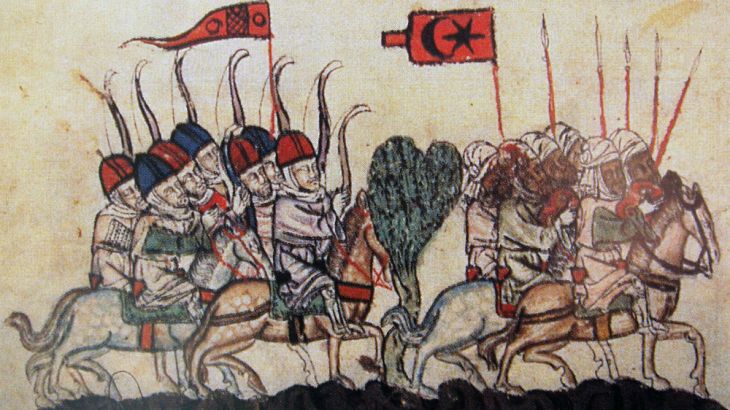
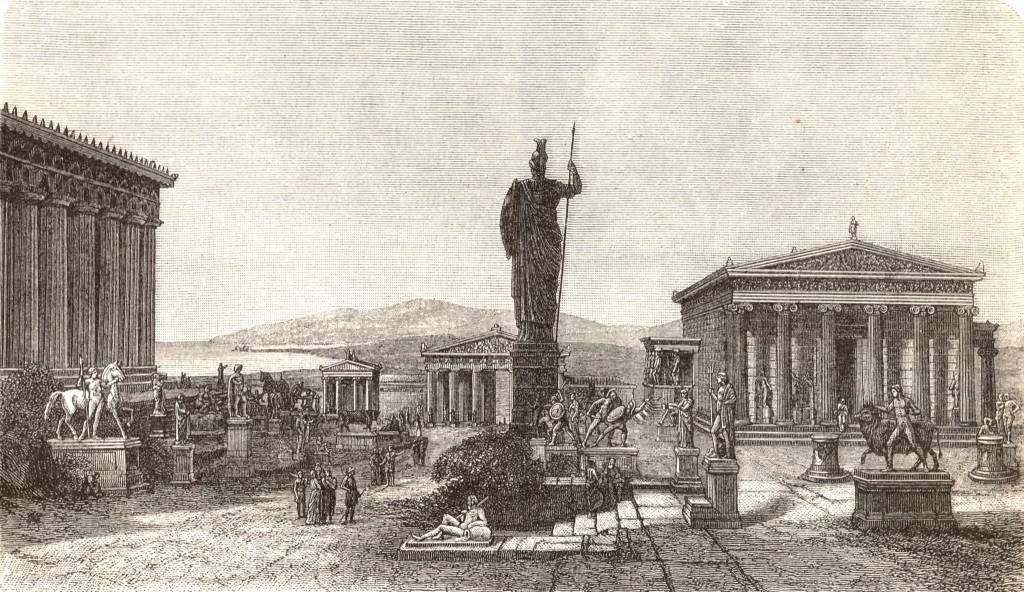
. . . .I am forced to observe the role of Christendom in the Ancient World and in the history of Western civilization, if I want to understand “Western Civilization,” and just about everyone, even atheists are unsure what a world looks like where, e.g., Christianity has greatly declined. There are many people who are afraid of Islam taking its place. However, there are Christians who study this history and often only perceive civilization in the advent of Christendom, because Christianity is claimed to be “the only true religion.” I am also led to study the roots of Western Civilization itself, before the advent of Christianity and its claims on “civilization,” weaving through “the golden threads of the mystery traditions” and theories of its roots and origin.
This history comprises much more than 2500 years of material. We cannot limit the scope of this intellectual tradition to 2500 years of history, nor even merely to ancient Rome and Greece. It is not entirely true, to discount oneself as whether descendants of American Sea Islands and of African-descent, from this history and to take disinterest in the study of ancient and classical history, with the perspective that “that’s just White people.” That is to give others power to write you out of history, even though you are living that history and contribute to it.
REJECTING SELF-LIMITED MYTHS AND FALSE RACIAL-COLLECTIVIST IDENTITIES
These limitations we place on ourselves is partly due to holding two seemingly contradictory concepts: the atomistic individual and our own traditional and familial-communitarian notions that tie us to extended family, community and collective destiny.
I think that specifically among fellow Black Americans, I have encountered a diverse set of opinions about our place in the World, but many still see ourselves as a shipwrecked people on somebody else’s land, within somebody else’s world (or system). This is not my view. Others among us have tried to construct pseudo-identities or impose those false identities onto other people’s histories claiming us all to be foundational Americans, the real Native Americans, the real Central Americans (e.g., the real Olmecs), the true (original) Hebrews, North African and Arab Moors, Ethiopians and on and on.
I do not adopt or engage in these ethnic constructions of identity, and find it disrespectful to the actual history of peoples and science itself. I argue, that the advancement of black people will not and does not depend on creating a religio-ethnic collectivist identity, or creating some new perfect leader — some new patriarch! New lawgiver! Some new Moses! And they are likely to say things, like, “Black mothers are turning our Black boys gay!” and other usual nonsense. There have been plenty of false prophets already for the record. We are not “a lost people” “because we don’t have an identity.”
We aren’t “lost” without a fabricated identity. Raised between church and secular life, my family showed me religion without forcing it. My identity is philosophically cosmopolitan — focused on cross-cultural translation, diplomacy, and representative of my country.
The position in the world of being “a lost people” is not true, and it provides a space to delve deeper into what makes your sense of identity. Mines is linguistically and philosophically (not superficially) cosmopolitan in vision and diplomatic as a representative of my home-country, focused on cross-cultural translateability. That’s fundamentally American.
It it is relatable across regions, e.g., in Greece, I felt it through the European Union’s appeal firsthand.
TOWARD NEW RENAISSANCE
I think, yes, we need an organic burgeoning of new groups, new thinking, more cohesive solidarity, new ideas and philosophy to help contribute to a new renaissance. But these times are full of division, jealousies, and soured relations between colleagues, nations and so on; and the chief source of that has been from our sense of place in the fight while political representatives exploit our “identities,” our fears, our ignorance; also racial and ethnic differences and conflicts across states and borderlines.
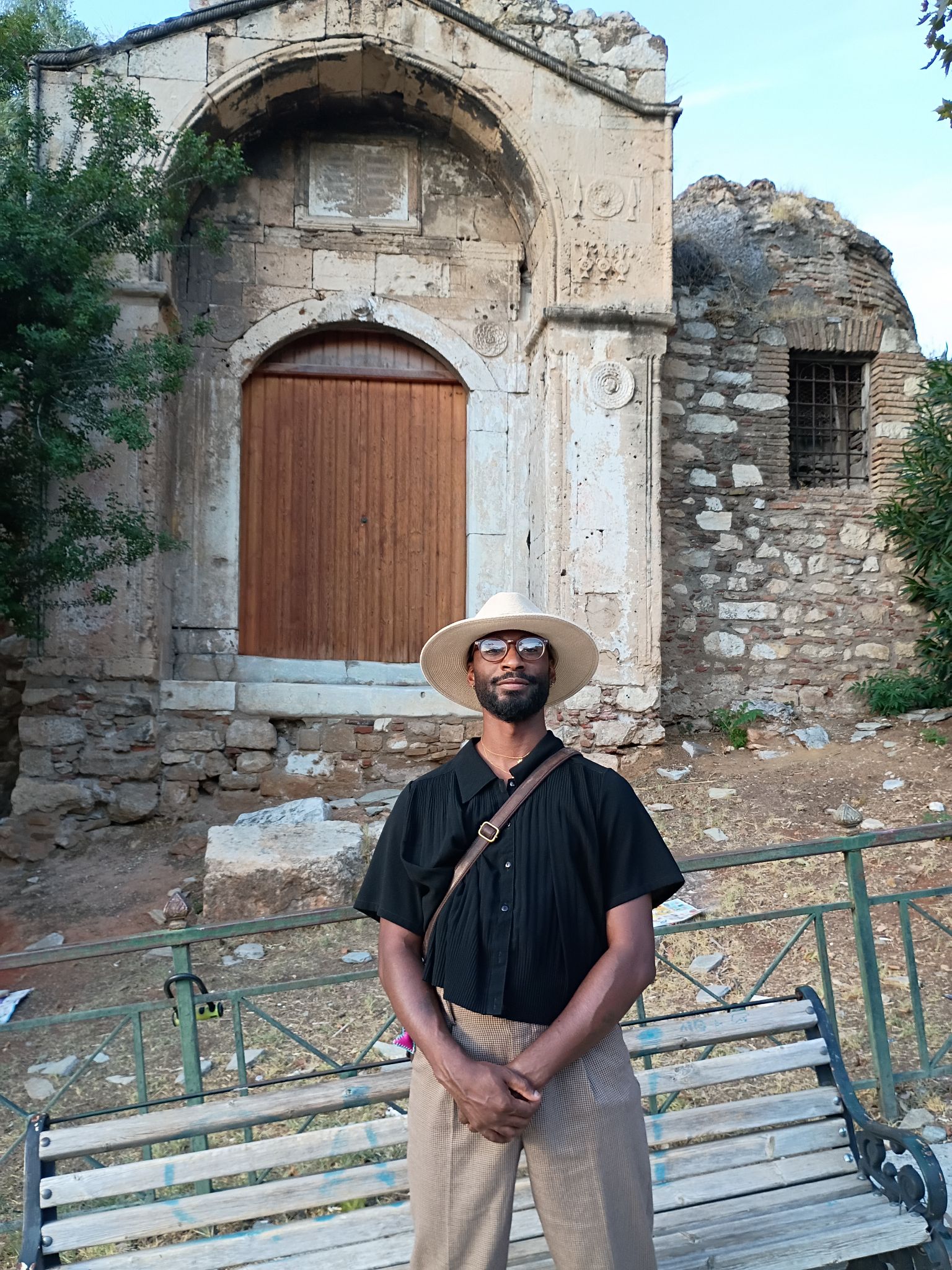
 The American Minervan
Leave a comment