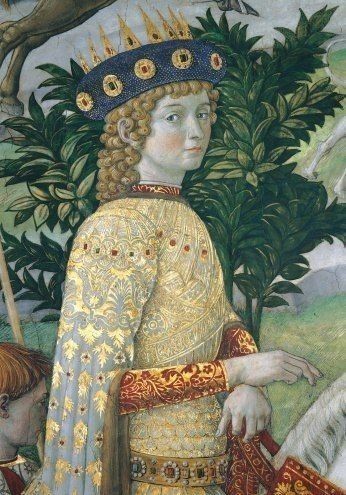
Within the Theosophical framework, as articulated by H.P. Blavatsky and in David Reigle’s analyses of an ancient, pre-Vedic Wisdom Tradition, the Pre-Socratic sages such as Thales, Anaximander, Xenophanes, Parmenides, Heraclitus, and Pythagoras (often included in this group) are regarded as pivotal figures who birthed Western civilization and philosophy by drawing from a primordial, universal esoteric knowledge. This knowledge, predating recorded history shares close parallels with Eastern non-dual systems like Samkhya and Great Madhyamaka, emphasizing a monistic cosmology where an eternal, impersonal principle underlies all existence. Blavatsky portrayed these philosophers as initiates or transmitters of the “archaic Wisdom-Religion,” which manifests in their pursuit of a single ARCHE (origin) or unity, without anthropomorphic deities.
There are important differences in Abrahamic monotheism (Judaism, Christianity, Islam), which appear as a later, exoteric distortion anthropomorphizing the impersonal One into a tribal tutelary (protector or guardian) god then in its final recognized form as a personal Creator God or extra-cosmic God separate from matter, thus fragmenting the original non-theistic unity into dualistic theism.
PRE-SOCRATIC CONTRIBUTIONS TO WESTERN PHILOSOPHY
Theosophists credit the Pre-Socratics with laying the foundations of Western thought by shifting from mythological explanations to rational inquiry into the cosmos’s fundamental nature, which involve teaching about cosmic cycles, indestructible matter-spirit, and non-dual unity. Blavatsky describes this as a reflection of the “divine wisdom” shared with ancient Hindu sages, transmitted through figures like Pythagoras and others who studied in India and Egypt, i.e., within the earliest colleges of the initiates.
Their ideas birthed Western philosophy’s emphasis on logic, metaphysics, and science, but Theosophy asserts these were not original inventions; rather, they were veiled expressions of the Wisdom Tradition, obscured in exoteric forms to protect esoteric truths. This policy of secrecy and its reasons have been constantly put into question by skeptics and scientists, as was expressed in the frustrations of people like Gerald Massey.
Pre-Socratic monism posits “All is One,” as articulated by Xenophanes (c. 570–475 BCE), who critiqued anthropomorphic gods and asserted a unified, unchanging reality. Parmenides deepened this with his concept of the eternal, indivisible One, rejecting multiplicity and change as illusions. Blavatsky connects this with pantheistic monism, where the universe emanates from a single protean essence (e.g., Pythagoras’s Monad as the source of all, retreating into silence to form the Duad and Triad, symbolizing unity evolving into manifestation). This is more far-reaching than materialistic monism, integrating spirit and matter as convertible poles of one indefinable principle, with every atom imbued with latent essence.
Pre-Socratics sought the ARCHE as an eternal, boundless substratum as with Anaximander’s apeiron (the indefinite, surrounding and steering all things), Thales’s WATER as primal substance, or Heraclitus’s LOGOS (eternal flux governed by harmony). In Theosophy, this relates to the Wisdom Tradition’s cyclical genesis from SUBSTANCE (root-matter) or svabhava (inherent nature), where the universe evolves through emanation without a creator, evolving Pythagoras’s harmonic cosmology. Souls cycle through metempsychosis (reincarnation), purifying from matter’s manifested illusory behavior or phenomena to reunite with the Universal Mind, similar to Plato’s Ideas but rooted in Pre-Socratic emanation.
These elements fostered Western civilization’s rationalism, ethics, e.g., Pythagorean harmony influencing art and science, and metaphysical inquiry, but I lament their dilution by later materialism and theological limitations.
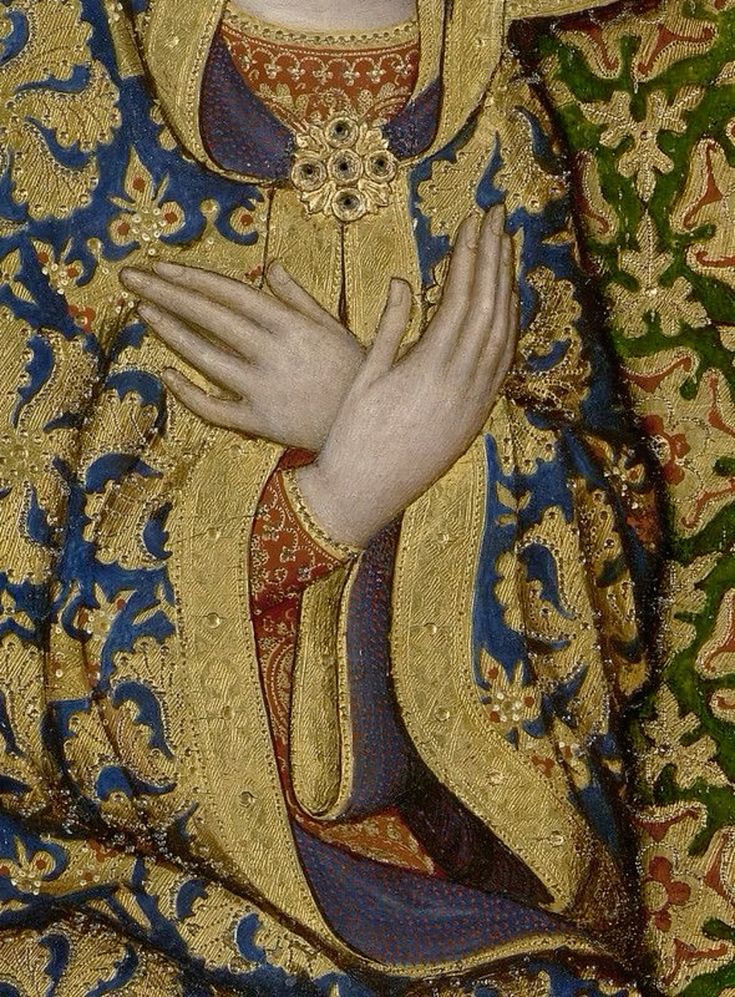
ABRAHAMIC MONOTHEISTIC SYSTEM AND PRE-SOCRATIC MONIST COSMOLOGY
Abrahamic religions claim monotheism as humanity’s original faith, with a personal, transcendent God (Yahweh/Allah) as the sole creator, revealed through prophets like Abraham. Theosophy, however, reframes this as a derivative, anthropomorphic overlay on the primordial non-theistic monism of the Pre-Socratics and Eastern traditions. Pre-Socratic thought, being closer to the esoteric source, exposes Abrahamic monotheism as a confused mixture or exoteric adaptation. The old arguments against other systems considered other, or “not of the Monotheists” clearly reveals theological, psychological, linguistic and cultural limitations from proponents making the claim to primordial roots of humanity’s highest philosophical conceptions.
Abrahamic monotheism posits a dualistic creator-creation divide, with God as separate, willful, and anthropomorphic endowed with emotions like love or wrath, leading to inconsistencies like infinite mercy alongside eternal damnation. Pre-Socratic monism, in contrast, posits an impersonal, unknowable ONE (e.g., Parmenides’s ONE or Xenophanes’s unified THEOS), rejecting personal gods as illusions. It thus aligns with Theosophy’s non-dual principle where spirit-matter are one, and multiplicity emanates from unity without a separate creator.
Blavatsky critiqued Abrahamic theism for fostering fetishism through anthropomorphism, while Theosophy’s deeper monism (e.g., every atom as divine spark) is reflected in Pre-Socratic indivisibility (atomon).
The Theologians’ creation ex nihilo (from nothing) by divine fiat contrasts with Pre-Socratic eternal cosmogony, where the ARCHE (e.g., apeiron) eternally generates without beginning or end through natural laws rather than a conscious will. Theosophy sees this as analogous to Eastern cycles (pralaya-manvantara), with Pre-Socratics preserving the Wisdom Tradition’s indestructibility of MATTER-SPIRIT and evolutionary emanation. Abrahamic eschatology, with its linear time, judgment, heaven and hell scheme opposes the cyclical metempsychosis in Pre-Socratic and Platonic thought, which Blavatsky ties to theosophic liberation through a process of purification.
In essence, Theosophy elevates Pre-Socratic monism and cosmology as purer expressions of the ancient Wisdom, non-theistic and unified, while viewing Abrahamic monotheism as a cultural evolution or disfigurement that personalizes the impersonal, consequently obstructing the path to esoteric truths.
This reconciliation reveals the Pre-Socratics’ foundational role in Western thought as a bridge to universal wisdom, challenging Abrahamic primacy by tracing origins to a shared, pre-theistic source.
The next page of this article explores the Implications of Theosophy against Abrahamic claim on Monotheism as Humanity’s “Original Religion.”
 The American Minervan
Leave a comment