IMPLICATIONS OF ABRAHAMIC CLAIMS ON MONOTHEISM AS HUMANITY’S ORIGINAL RELIGION
Theosophy is positioned as providing evidences of an ancient, universal Wisdom Tradition (also termed the Wisdom-Religion), that is fundamentally non-theistic, predating all known religious systems. This tradition originates from a primordial, impersonal “One Reality” or eternal principle. Theosophy as it was being presented has been traced through non-theistic foundations in pre-Vedic Indian philosophies like Samkhya and early Buddhist systems, including Great Madhyamaka, which emphasize metaphysical realism without a monotheistic deity. This Wisdom Tradition is the “parent source of all known religions,” according to the claims of the early Theosophists who accepted the increasing focus from Egypt to India in the early history of the Theos. Soc. This position therefore implies, that this Wisdom Tradition is the parent source also of the Abrahamic ones (Judaism, Christianity, and Islam), which emerged as fragmented, exoteric expressions during historical cycles of spiritual decline.
Abrahamic religions, conversely, assert that monotheistic belief in a single, personal, transcendent God (Yahweh or Allah) represents humanity’s original faith, tracing it back to figures like Abraham as the pioneer of exclusive worship of one God. This claim is rooted in scriptural narratives: for Judaism, in the Hebrew Bible’s covenant with Abraham; for Christianity, in the New Testament’s interpretation of Abraham as a model of faith; and for Islam, in the Quran’s view that true monotheism (tawhid) preceded and corrects Judaism and Christianity, restoring the primordial submission to Allah from Adam onward. These traditions often frame monotheism as innate to human origins, contrasting it with polytheism or idolatry as later corruptions. The Theosophical framework directly challenges and reframes these Abrahamic assertions in several key ways.
PRIMORDIAL NON-THEISM UNDERMINES MONOTHEISM’S CLAIM TO ORIGINALITY
The original meaning of nontheism, coined by G.J. Holyoake in 1852, was to provide a neutral term for those who don’t believe in God, distinct from “atheism,” which carried negative baggage implying immorality or a lack of all goodness. It was meant to be an umbrella term for various views, from outright denial of a creator God like in some schools of Buddhism or Jainism to simply a lack of belief, focusing on human autonomy and naturalistic explanations rather than supernatural ones.
Reigle contended in his works, that the earliest recoverable traces of the Wisdom Tradition, evident in systems like Samkhya, are inherently non-theistic, teaching that the universe evolves from eternal matter (prakriti) or an impersonal essence without a creator God. We learn, that the original philosophical schools of Hinduism contain a metaphysical realism, lacking the notion of a monotheistic God.
This extends to pre-Vedic Buddhism, which Reigle identifies as the original form of the Wisdom Tradition, describing it as “pre-Vedic Buddhism” in Blavatsky’s terms — a non-dual and non-theistic doctrine of unity and emptiness preserved in esoteric lineages.
If humanity’s original heritage is this non-theistic model, monotheism cannot be primordial but rather a later innovation or adaptation.
Reigle’s research leads us to look at the Vedic period, when there was no single ethical god who, while being intimately involved in the world-process, is yet transcendental in character. Theism entered Indian thought gradually, such as through later Nyaya-Vaisheshika schools, showing how monotheism might have developed elsewhere from polytheistic or henotheistic roots. The broader scholarly views that early Israelite religion (precursor to Judaism) was not strictly monotheistic, but included veneration of multiple deities like El and Asherah, with exclusive Yahwism emerging later ties into this.
Abraham is often portrayed as rejecting polytheism for monotheism in a Mesopotamian context, but within the context of the universal Wisdom Tradition, it suggests such stories are symbolic retellings of a shift from esoteric non-dualism to exoteric theism. For instance, Islam’s assertion that monotheism predates Judaism and Christianity is reframed as a partial echo of the Wisdom Tradition, but distorted by anthropomorphic personalization of the divine. Reigle implies that true originality lies in non-theistic unity, not a personal God, rendering Abrahamic monotheism a “minority report” or cultural adaptation, rather than the baseline.
ABRAHAMIC RELIGIONS AS FRAGMENTS OF THE WISDOM TRADITION
In Theosophy, all religions derive from the Wisdom Tradition but diverge into exoteric (outer, literal) and esoteric (inner, symbolic) forms. Abrahamic monotheism represents an exoteric layer, where the impersonal ONE REALITY is anthropomorphized into a nationalized or universal protector God and creator God. This means Abrahamic claims may preserve esoteric truths (e.g., unity in God’s ONENESS) in the paradox of Monotheism, but overlay them with theism, which is seen as a later construction, rather than inherent, or believed by the “first human man” or Adam in the myths.
Samkhya shows the universe as “matter alone,” eternal and self-evolving, without a God as in Pre-Socratic monism (e.g., Anaximander’s APEIRON as boundless source). The Abrahamic creation model contrasts sharply, suggesting monotheism adapted non-theistic cosmologies into theistic frameworks. Scholars like William G. Dever supported this by noting that “in antiquity, all monotheists were polytheists by our modern definition,” indicating a gradual evolution from polytheism and henotheism.
🌿
Consider the cultural and ethical shifts — The Construction of Monotheism: Dever, Stavrakopoulou, LePage, Blavatsky and Others argue that polytheism fostered cultural compatibility, while monotheism “blocked inter-cultural translatability” by deeming other gods false. This implies Abrahamic exclusivity (e.g., no other gods before me) is not original but a divisive development, potentially leading to conflicts absent in the non-theistic Wisdom Tradition’s emphasis on universal unity.
PHILOSOPHICAL RAMIFICATIONS
The stance aligns with modern critiques that monotheism’s origins are not as ancient or pure as claimed. Early religions in ancient China such as Shangdi as supreme but with lesser deities, or Egypt’s Akhenaten brief Aten monotheism demonstrate “wide monotheism” acknowledging one supreme amid others, not strict exclusivity. The rebuttal thus far of polemicists and theologians is to simply say, “the historical record still does not disprove that monotheism is not the original idea of ‘God’s true religion,’ that just shows that other people worshipped false gods until [insert religion or prophet] brought (or restored) the true revelation of ‘the One True God’ that was lost.”
Abrahamic traditions, while innovative in ethical monotheism (one God demanding justice), are to the position of Theosophy — derivations and developments (negating theories of progressive or superior evolutions), not origins. Theosophy offers a reconciliatory view: Abrahamic faiths could rediscover their esoteric non-theistic roots, and still affirm the doctrine of the ONENESS of God without literal theism.
This framework invalidates Abrahamic claims by positing a non-theistic Wisdom Tradition as humanity’s true global heritage from which monotheism derived as a localized, exoteric form. This encourages viewing Abrahamic monotheism not as primordial truth, but as a valuable, if partial, expression of deeper universal principles, potentially fostering renewed and enhanced interfaith dialogue through shared esoteric origins. Certain eclectic schools have allowed numerous learned esotericists, scholars and disciples within each of their own great philosophical schools and religions to come together and exchange their learning. This effort is another side of interfaith, or interreligious dialogue at the level which takes place between sage and friend-philosophers alike than what occurs through established institutions, seminaries, and so forth in public space and common views on what is accepted and conforms to creeds.
If you have not listened to this lecture of Alan Watts on mental fixation on particular aspects and symbolism in relation to “God”, then I highly recommend it as connected to the points made here.
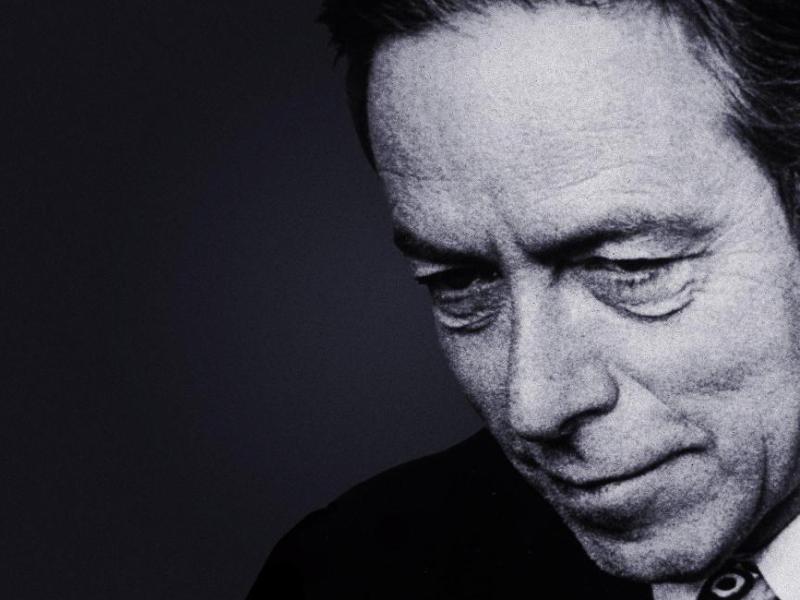
Alan Watts: “Ecology and Religion”
Alan Watts on the limited symbolic ideas about God affecting human behavior, the problem of the paternalistic concept of God, the feminine property in Eastern metaphysics, and the self-contradiction of the idea that real power is force. Alan Wilson Watts (6 January 1915 – 16 November 1973) was a British-born philosopher, writer, and speaker, best…
 The American Minervan
Leave a comment