| Theme | United States (1776–1820s) | Haiti (1791–1804) |
|---|
| Definition of liberty | Liberty is non-interference and (for many Founders) non-domination, but with huge exceptions for enslaved people and women | Liberty is non-domination with no exceptions. Slavery is the paradigmatic form of domination and therefore absolutely incompatible with a republic |
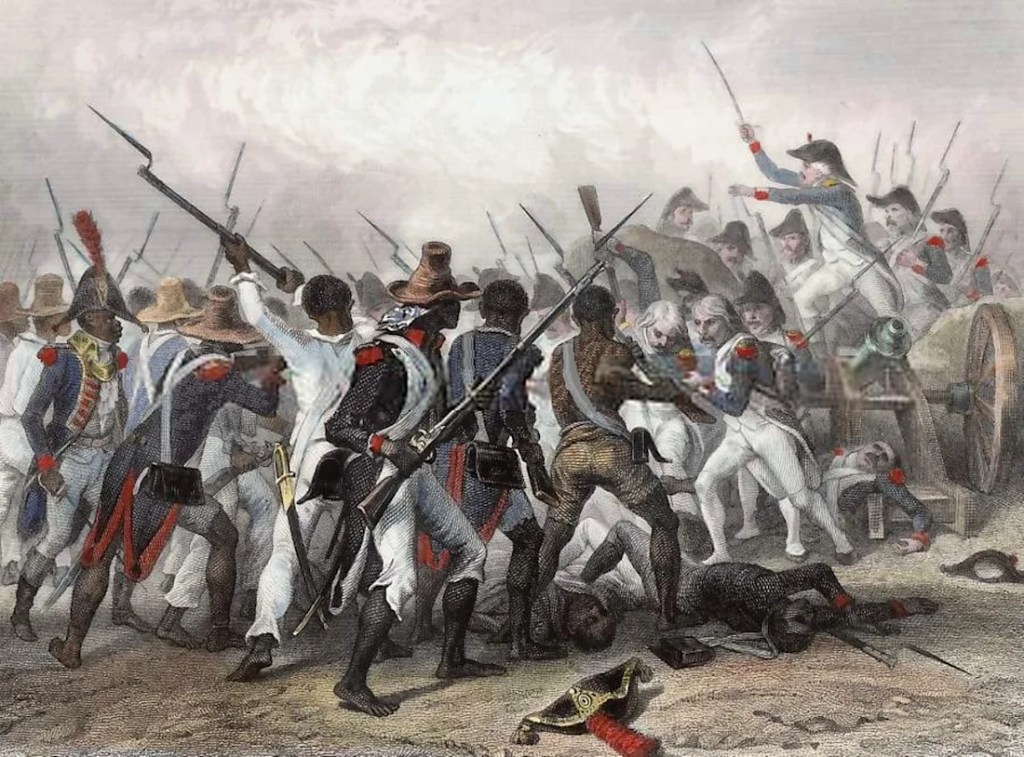
| Slavery and Republicanism | Slavery tolerated and protected (3/5 clause, fugitive slave clause, 20-year slave-trade protection). Jefferson, Madison, Washington, Henry—all slaveholders who used republican language daily | Slavery abolished forever in every Haitian constitution from 1801 onward. “There cannot exist slaves on this territory” (Toussaint’s 1801 Constitution, Art. 3) is the most uncompromising anti-slavery sentence in any 19th-century constitution |
| Who counts as a citizen? | Only free white men (and in some states free Black men with property until the 1820s–30s). Civic membership explicitly racialized | All inhabitants, regardless of color, are citizens. Dessalines’s 1805 Constitution (Art. 14): all citizens are legally “Black” to forge a civic identity rooted in shared experience of non-domination |
| Fear of corruption | Fear that luxury, standing armies, and finance would corrupt the republic. Solution: checks and balances, agrarian virtue | Fear that any return of white proprietors or foreign domination would re-impose slavery. Solution: permanent constitutional prohibition on white landownership (1805 Const., Art. 12–13) |
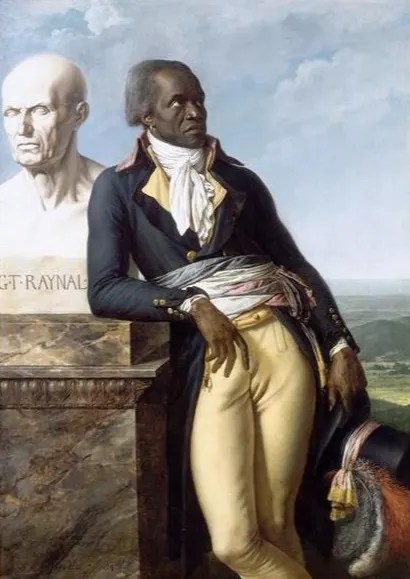
| Use of Roman models | Cato, Cicero, Cincinnatus admired, but Rome’s slave economy quietly accepted or ignored | Rome admired as a republic that fell because it abandoned its own principles and embraced latifundia slavery. Haiti must not repeat Rome’s mistake |
| Military vs. Civic Virtue | Washington voluntarily retires (Cincinnatus moment). Civilian control of military emphasized | Toussaint and Dessalines both take lifelong or monarchical titles, arguing that only a strong Black military leadership can permanently prevent re-enslavement (the “armed virtue” argument) |
| Economic vision | Agrarian republic of independent (mostly white) yeomen. Plantation slavery seen as compatible or even necessary in the South | Forced labor on plantations retained temporarily (the “cultivateur” system) to prevent economic collapse and the return of great proprietors—explicitly justified in republican anti-corruption language (“idleness breeds vice”) |
| Universalism vs. particularism | Universal language of rights in the Declaration, but repeatedly qualified by race and gender in practice | Universalism without qualification. Haiti grants citizenship to any enslaved person who sets foot on its soil and to Poles, Germans, and Native Americans who fought with them |
| International reception | Celebrated throughout the Atlantic world as the first modern republic | Terrifying to every slaveholding society. Jefferson refuses recognition; France demands indemnity; Spanish America fears “contagion.” Haiti becomes the great unspoken counter-example that proves republicanism and racial equality are compatible |
| Long-term ideological legacy | Civic-republican strand largely eclipsed by liberal individualism by the 1830s (except in labor-republican and abolitionist circles) | Civic republicanism remains a living tradition in Haitian political thought into the 20th century (Firmin, Price-Mars, Duvalier paradoxically invoked it, etc.) |

 The American Minervan
Leave a comment