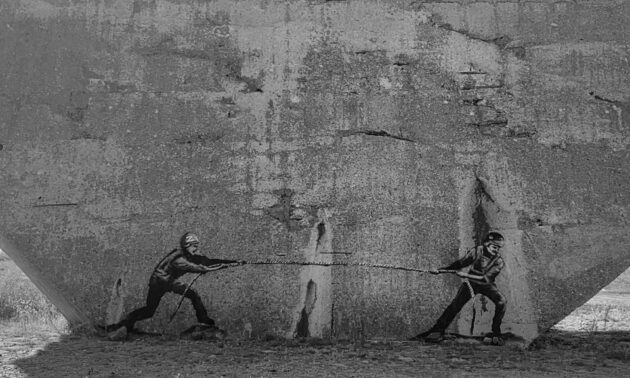
UKRAINE-RUSSIAN WAR CONSEQUENCES
The collapse of the Soviet Union freed Theosophy in Russia, and yet the momentum there fell flat. Not many people even know this history. Look at what happened to the war of Ukraine and Russia. This affected my friend John and other researchers involved in a project about Blavatsky’s Russian writings.
Do people know that Blavatsky’s hometown, Yekaterinoslav, Russian Empire now in Dnipro, Ukraine was an important region during this still on-going Ukraine-Russian war?
There is a tremendous cultural significance to this history, to the war and the story of both of these divided nations in conflict. You think, it is a bad agenda for me to address it? Why do you think inaction (just writing about it) is best? It has started to make me think, that the people running the modern Theosophical Society branches are either mismanaging it, fatigued, just cautious, uninformed or run by people purposely keeping it that way. However, I do think the problem is a lack of many young voices and relating to these social issues. The silence on the Ukrainian and Russian situation is a big dropped ball for Theosophists.
BLAVATSKYIANISM AND PHILOSOPHICAL CONTEXTS OF BLAVATSKY’S SLAVOPHILISM
The deep cultural and philosophical history of the classical Slavophile thinkers to Fyodor Dostoevsky then the Eurasianists is an important context in understanding almost everything about Blavatsky’s perspective (which left an imprint on the Theosophical Movement) and pushes against the whole fight in the early history of the Theosophical Movement about “Eastern emphasis” vs. “Western emphasis.” Russia is not a “White country,” “Western country” or a “European country.” The Europeans once looked down on the Russians as “Asiatics” in the 19th century. What is this perception, that they are “White Europeans” coming from? This has definitely reversed course back into the other direction, though Western romanticization about Eastern Europeans and Russians today define things this way, they get many things wrong in my opinion. These are constructions, especially from the point of view of Russians, Ukrainians and others themselves. The uniqueness of thought is brushed over by constructions of “Whiteness” in our culture. North Asia’s cultural history is very rich, and Blavatsky leads us to consider Russia’s connection to Asia like Dostoevsky. Perception of Theosophy and Blavatsky as “Western” contradict mutually existing perception of the two as “foreign,” and “far-out.” Blavatsky was not “a Westerner.”
Blavatsky’s writings explicitly reject basic modern characteristics of the American and Western Civilization and instead leads us to consider other historical influences, qualities and characteristics that have been lost and abandoned by the West; and which demonstrate bridges existing between “East” and “West.” These bridges already exist and are not 19th century inventions; and can often break the illusive construction of “East” and “West.” Theosophy must be considered within those contexts, not from a naked eye of contrasting modern superficialities.
Her experiences dealing with stupid Russophilia from Americans to her leaving America after all her enthusiasm about the Republic is very important! This Russophilia is baked into our society, on top of our habit of reducing comparison to every country in relation to our materialist secular society. Is that “an agenda” of mines to talk about that within the context of my focus?
This is not to advocate a “Blavatskyian perspective,” or the Blavatskyian school.” Studying the contexts in which Blavatsky developed her views can lead you to many other things, that do not envelop you into Blavatsky’s head space.
Blavatsky projected herself very differently to her Russian audience and her family than her American and Western European audiences. Her letters are full of personal documentation and opinions about geopolitical and social situations, events and issues whenever she travelled. They were setting up Theosophical Societies all over the world and needed to know the political and social contexts of any particular region. Right? They could not go willy-nilly navel-gazing through this. This is probably what limits Theosophists today. So, any criticism that my writing on politics has an agenda or is off-putting — and if it is personally off-putting, actually I can do nothing about that — but the foundation of the criticism is not correct. It just reflects modern attitudes that has not helped Theosophists.
 The American Minervan
Leave a comment