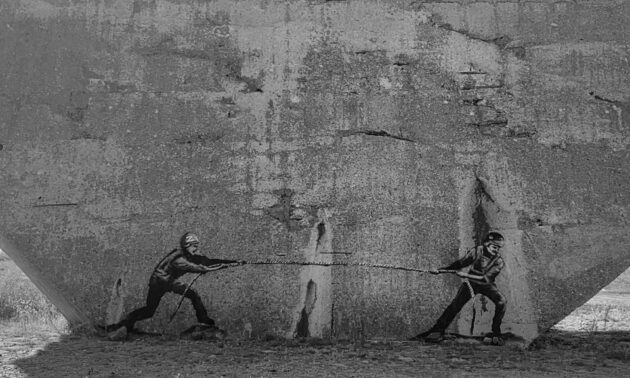
CONVENIENCE OF APOLITICISM AND SUBJECTIVE MYSTICISM AS THE WORLD CHANGES
In my class on Catholicism and Social Change, we discuss topics I really care about. The first few weeks deal with how the Catholic Church, Popes and current Pope have sought to respond to social issues. Right now, the real issue is between Catholics like Vice President JD Vance and Pope Leo XIV. Catholics and right-wing Christians want an American puppet Pope that talks about “Woke” all day. They want these variations and combinations of a Catholic Pope that is “traditionalist” even though American Conservatives are reinventing (contradicting) “traditionalism.” Anyway, they are liars, and want a puppet Pope, and didn’t get it.
Just yesterday and the day before, two professors had already explained to us, that firstly you cannot separate politics and religion. When studying religion and politics, you are studying power. I learn the convenience with which subjective mysticism seeks to retire from the world into some cult that shields them from the harsh realities of the world. This was not Theosophy. Blavatsky spoke no differently about the role of Theosophy than the role Adam Weishaupt envisioned his Illuminati order, but it seems the Theosophists got spooked and wanted the effort of the Theosophical Movement to last with its same early momentum into the next century; and Theosophists felt pressured — hence all their contradictions and mistakes. Weishaupt seemed to be highly attentive to the “physics of power,” i.e., the hypocrisies and problems of those who governed the offices of the world. This is why Blavatsky also emphasized repeatedly that the survival and work of the Theosophical Movement was linked to other actions happening in the world, and the earth would be a heaven compared to the past if it were to succeed. I am not seeing this with the hat of a conspiracist or Christian conspiracist, but through the historical research about the two. However, many people seem to forget the roots of Theosophy in objective idealism, in the need to bridge the abstract with the physical world and action. This is very important also in Theravadin Buddhism, to which both Olcott and Blavatsky converted and took active roles in influencing certain cultural shifts in Sri Lanka, Indonesia and so forth.
In our “secular” society, citizens often try mentally to create this separation for various reasons conscious to themselves or obscured purposely by themselves (e.g., to avoid uncomfortable confrontation literally or due to other complex mental reasons), or subtle to themselves. The professor said to the students, “you are in political science or religious studies, and you supposed to be analysts, and I’m asking you: what is the main issue of politics? What is religion? Describe religion.” Then, she broke down the relation of religion and politics to power, and their functions, connecting to my other course on Theories of Religion, which talks about the term “civil religion” and “civil religion” in the U.S.,” questioning the idea of the separation between secularism and religion.
 The American Minervan
Leave a comment