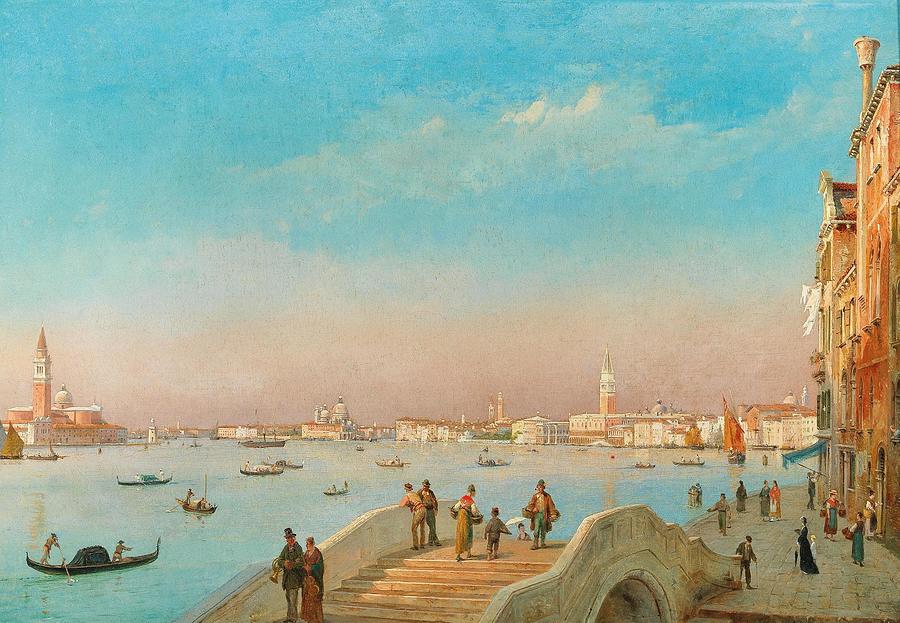
Garrison-Mazzini parallels, Fuller’s Roman dispatches, Mazzinian guerrilla warfare influence on John Brown, and the global circulation of ideas leading to developments in Black American republican political thought and abolitionist strategy grounded in political liberation and ethical upliftment, producing a shared ideological ecosystem bound to a moralizing republicanism. Black abolitionist activists, especially those engaged with transatlantic abolitionist ideas and circles were exposed to European republican debates and a shared democratic universalism insisting all peoples deserved freedom.
- INTRODUCTION: THE ITALIAN INDICTMENT OF EARLY U.S. REPUBLIC — Introduction to the history and betrayal of Italian Republicanism.
- FROM THE CARBONARI TO MAZZINI — tracing the transformation from reactive conspiracy to affirmative moral philosophy grounded in Doveri dell’Uomo.
- THE CATTANEO-MAZZINI DIVERGENCE — expanded treatment of how both men condemned American slavery from different structural angles (unitary vs. federal republicanism), with Cattaneo’s surgical argument that slavery was a royalist remnant, not a federal defect.
- THE KOSSUTH CONTRAST — exploration of Kossuth’s cynical refusal to denounce slavery during his 1851-52 American tour vs. Mazzini’s unwavering moral consistency, and what that fault line revealed about European revolutionary movements.
- THE ITALIAN STAGE — on Rota’s Bianchi e neri, Verdi’s Un ballo in maschera, satirical journalism, and how Italian audiences laughed at America’s pretensions to freedom.
- GARIBALDI IN SOUTH AMERICA: PRACTICALITY OF REPUBLICAN INTERNATIONALISM — the multi-racial, internationalist context of the Guerra Grande.
- THE TRANSATLANTIC CIRCUIT — Garrison-Mazzini parallels, Fuller’s Roman dispatches, Timothy M. Roberts’s research on Mazzini’s influence on John Brown, and the pathway into Black Republican political thought.
- ITALY’S DIARCHY AND FASCIST ALLIANCE DESTROYS REPUBLICAN INHERITANCE — the Rosselli assassinations, the outlawing of Masonic networks, and how the monarchist-conservative line triumphed over the Mazzinian tradition.
- REPUBLICANISM AS A DIVINE IDEAL — describing the philosophical displacement of republicanism in the world, why Washington and Mazzini refer to republicanism as a divine ideal, its fight against theocracy, and the argument that this republicanism is foundational, not foreign, necessitates revival, and belongs most urgently to those for whom its promise was most violently betrayed.
THE MOST CONSEQUENTIAL LEGACY OF THE ITALIAN REPUBLICAN critique of American slavery was its absorption into Black American political thought and abolitionist strategy. This was not a vague influence or a matter of atmospheric inspiration. It was a direct, traceable, intellectually substantive transmission, mediated by transatlantic print networks, abolitionist newspapers, political correspondence, public lectures, and the shared conviction that national liberation and racial emancipation were aspects of a single universal cause.
The mechanism of transmission was the transatlantic radical public sphere, which was a network of newspapers, correspondents, exile communities, and reform organizations that connected London, Boston, New York, Paris, Geneva, and the Italian peninsula in a continuous circuit of ideas, arguments, and mutual support. Mazzini, exiled in London for most of his adult life, was a node in this network. He strongly believed that political liberation required cultural and ethical transformation, and that nations were stepping‑stones toward a future brotherhood (or solidarity) of peoples. So was Garrison in Boston. So were the editors of the antislavery press, the correspondents of the New York Tribune, and the organizers of the transatlantic antislavery conventions.
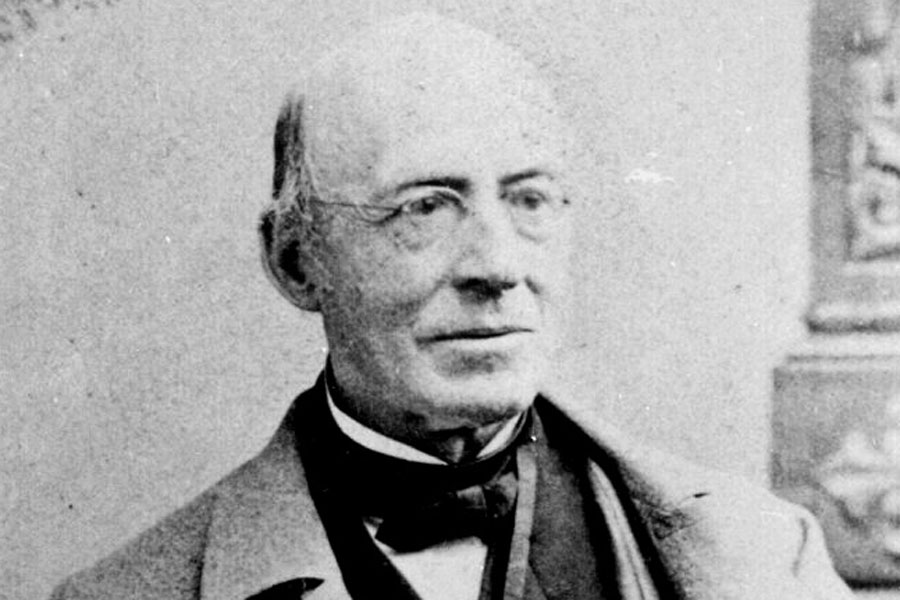
Garrison and Mazzini had met twice, first in 1846, at the London home of William Henry Ashurst, and again in 1867, but the deeper connection was between their movements. Both Garrison and Mazzini had constructed practices of media persuasion in the early 1830s through journals (The Liberator and La Giovine Italia) that functioned as instruments of revolutionary apostolate, designed to convert readers to a total moral commitment. Both men were radicalized by imprisonment. Both built organizations that expanded from local to national to international scope. Both faced bitter internal challenges from rivals who accused them of excessive radicalism or impractical idealism, and both understood that their respective causes of the abolition of slavery and the liberation of Italy were structurally bound by a shared universalist commitment.

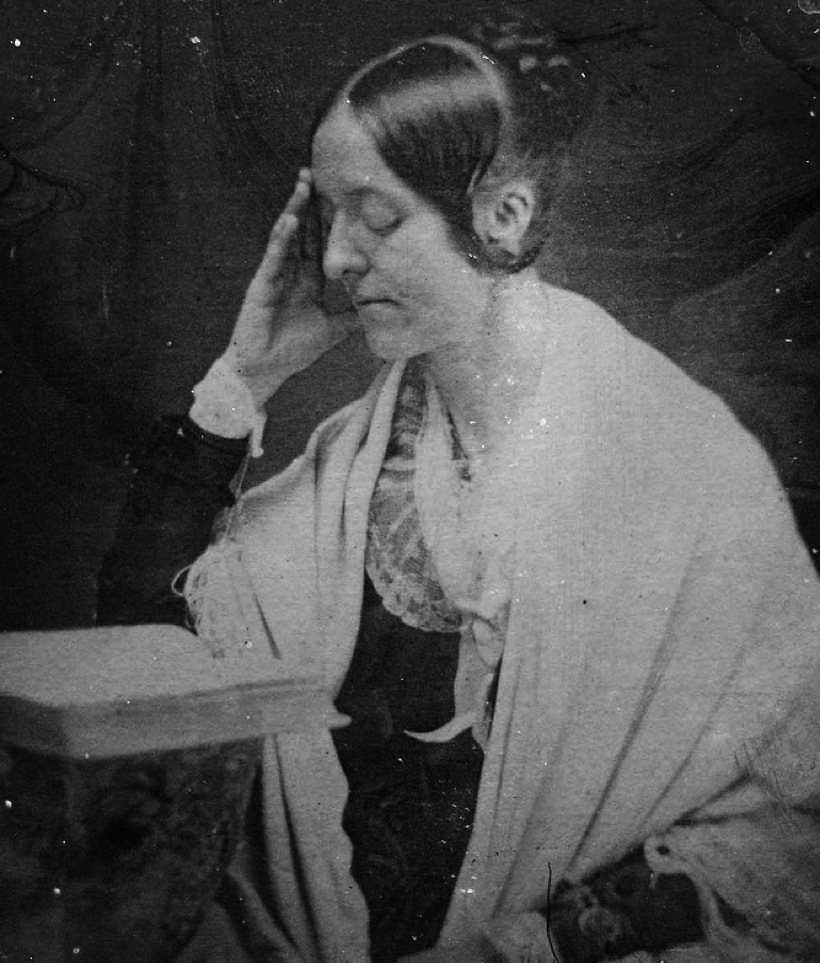
Margaret Fuller, the transcendentalist intellectual who served as the foreign correspondent of the New-York Daily Tribune in revolutionary Rome, provided one of the most electrifying firsthand accounts of this convergence. Reporting on the Roman Republic of 1849, Fuller observed with bitter precision that Americans in Italy “talk about the corrupt and degenerate state of Italy as they do about that of our slaves at home.” The same arguments deployed to justify the subjugation of Black Americans, that the enslaved were unfit for freedom, degraded by their condition, and requiring the paternalistic guidance of their betters, were deployed by American travelers to justify indifference to Italian liberation. Fuller saw through the hypocrisy with clarity and condemned America’s “boundless lust of gain” and its betrayal of its founding promise. Her dispatches, published in the most widely read newspaper in the United States, brought the Italian revolutionary experience, and its implicit indictment of American moral failure directly to the American reading public.
The most profound influence of Italian republican thought on American politics was its impact on the ideology of radical abolitionism and, ultimately, on the actions that precipitated the Civil War. Mazzini’s ideas of popular insurrection had some influence on Brown. John Brown, the sacrificing abolitionist whose 1859 raid on the federal arsenal at Harpers Ferry ignited the final crisis of the slaveholding republic, adopted a strategy of insurrectionary warfare like Mazzini, the consecration of political struggle devoted to a covenantal constitutional republicanism through the blood of martyrs, and the moral obligation to fight against tyranny, not merely protest (Defense of John Brown). Mazzini’s concept of insurrection as a demonstration of enslaved people’s civic identity was a proof, enacted in blood, that the oppressed possessed the moral capacity for republican citizenship. This informed Brown’s conviction that a slave uprising would not merely free the enslaved but would transform them, in the eyes of the nation and the world, into citizens worthy of the republic.
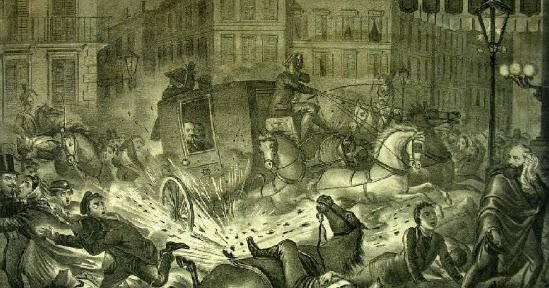
There is a connection to Felice Orsini’s assassination attempt against Napoleon III in January 1858, which riveted the transatlantic public and demonstrated that Italian revolutionaries were prepared to use violence against the most powerful tyranny in Europe, shaping Garrison’s capacity to sympathize with Brown’s raid at Harpers Ferry the following year. Garrison, who had for decades advocated nonresistance or moral suasion rather than physical force found himself unable to condemn Brown unreservedly, in part because the Orsini affair had already expanded the boundaries of what radical reformers could accept as justifiable political violence. The Italian example inspired American abolitionists and altered the moral categories within which they operated.
Early Black and radical Republicans studied the classics, read about global revolutionary strategies and actions, corresponded with Garrison, followed Garibaldi’s campaigns with passionate attention, and built their political repertoire from a tradition that was explicitly transatlantic and explicitly universalist. For these men and women, republicanism was not an American invention that happened to have European antecedents. It was a universal moral philosophy that happened to have been most rigorously articulated by an Italian exile, most dramatically enacted by an Italian guerrilla fighter, and most urgently needed by those Americans, Black Americans, for whom the promise of republican liberty had been most violently betrayed. This history demands that we champion it once more. Reclaim the old republican cause, study its principles and classical roots, like Brown, Douglass, Garrison, Garibaldi, Cattaneo, the Rosellis’, Mazzini and many others, refusing to accept being the fodder and distant voice behind those who wear this inheritance like a mask, betray its legacy, or do not embody it fully.
 The American Minervan