This FAQ directly confronts common doubts, objections, and skeptical questions about the blog’s purpose, approach, content, and claims. It is written in the spirit of open inquiry and civic honesty that defines this project.
A: It is the enduring political-moral tradition centered on liberty, resistance to arbitrary power, civic virtue, mixed government, and the common good. Rooted in Cicero and classical antiquity, revived in the Renaissance and Enlightenment, and realized in revolutions including the American and Haitian, it demands active, educated citizens as the ultimate guardians of the republic.
A: The United States was founded squarely within this tradition. Today, civic illiteracy, historical deconstruction, materialism, and partisan tribalism erode its foundations. Republicanism offers a corrective: a shared framework of liberty and virtue that transcends left-right culture wars and equips citizens to understand their government and defend it honestly. The U.S. founders did not merely copy the ancient republican pluralist model. They updated it.
Now, Americans actually live in a post‑republican political culture. There is a broader cultural shift away from republican citizenship, that began since the 1820s-1840s in the Jacksonian era. By the time the modern Democratic and Republican parties matured, the Founders’ model of pluralist self‑government, civic virtue, citizen participation, and anti‑elite politics was already gone.
We have gone from the Jacksonian era to the 2000s-present, an Age of Polarization, Identity Politics, and Digital Platforms. Politics is now tribal, algorithmic, outrage‑driven, identity‑based, and elite‑managed. Citizens have become protest participants, spectators, influencers and content consumers, but not republican citizens in the Founders’ sense.
This is the final stage of the republican tradition’s disappearance. Civic republicanism died culturally between 1945 and 1975, but it had died institutionally between 1828 and 1910.
Civic republicanism depended on a specific moral‑intellectual ecosystem of classical theism, natural law, Enlightenment deism, Masonic eclecticism, civic humanism and early secular rationalism. When that ecosystem collapsed, i.e., replaced by modern secularism, technocracy, identity politics, and mass‑party ideology, the republican citizen and culture that was emerging from it finally disappeared. The loss of this republican tradition is inseparable from the loss of the worldview that sustained it. This is my focus for my Senior Thesis Seminar as we mainly focus on Charles Taylor’s A Secular Age and “disenchantment” with Dr. Scott Paeth.
Modern political parties behave more like centralized organizations, brand‑managing corporations, and gatekeepers of acceptable ideology opposite of the pluralist, citizen‑driven republican tradition the U.S. was founded on. Political, corporate, tech, and financial elite have all consolidated to centralize decision-making, maintain predictability and control over narrative and resources. If we will have a two-party system, then both parties must express a pro-republican pluralist attitude, and have to be strong, healthy, competent and wise. Madison feared factions capturing institutions and suppressing competition, and this has happened within both major parties. The Founders built a pluralist republic, but modern parties behave like centralized corporations. READ DECONSTRUCTION OR RECONSTRUCTION: WHY AMERICAN STUDENTS NEED REPUBLICANISM.
A: Every system produces an elite. The systems will differ in their degree of circulation of power. This tradition is designed to be an antidote to arbitrary power. As argued against the apparent sacralization of the term “democracy,” democratic organizations also eventually transition to oligarchy. All societies possess a ruling minority, no matter if it is anarchist communes, monarchies or republics. Organization simply wins against disorganization. If you want to challenge the current elite, organize a new elite. It matters in every system, how an elite is formed, constrained and legitimized. Elites in a republic are accountable, their power rotates (all should rotate), is non-hereditary, chosen by citizens (supposed to be “enlightened citizenry” or informed) and bound by law. In republicanism, its “elite” are justified as “the most capable citizens under public scrutiny,” not “rule by a superior class.”
Modern left-leaning critiques often portray classical or civic republicanism as inherently elitist, or as an ideology favoring propertied, educated, male citizens; suspicious of mass democracy; nostalgic for hierarchy; and disconnected from the struggles of the oppressed. Figures like Seneca are dismissed as hypocritical wealthy Stoics who preached virtue while serving tyrants, rather than trying to guide them.
Seneca (and broader Stoicism) is often attacked as the archetype of elitist quietism: a rich advisor to Nero preaching detachment while enjoying luxury. This misreads both the man and the philosophy in republican context. Stoicism taught that virtue is the sole good and is accessible to all humans through reason — slave or emperor. He taught, that the divine fragment of Zeus or Logos (reason) was in every person. Seneca’s writings emphasize moral courage, resistance to fortune and tyranny, and ethical self-mastery as preparation for right action. In the republican synthesis through Cicero’s eclectic Stoic influences, inner cultivation equips citizens to resist corruption and serve the public. Withdrawal is tactical under tyranny, not ideal, because Cicero himself engaged until Caesar’s dominance made resistance suicidal. Seneca’s wealth came with risks; and his suicide under Nero was a final stand against arbitrary power. More importantly, judging the philosophy by one flawed practitioner ignores its democratizing impact. Stoic natural law influenced ideas of universal rights and dignity, feeding later republican and Enlightenment thought against hereditary aristocracy and despotism.
Modern, particularly leftist readings reduce a rich anti-domination tradition to its historical imperfections, ignoring its core principles, universal aspirations, and historical expansions. This is a strawman that serves contemporary ideological purposes more than historical truth.
Early republics had exclusions (slaves, women, non-citizens in antiquity), but the principles of non-domination and civic virtue proved expandable. The tradition fueled anti-slavery republicanism, Haitian Revolution ideals, Risorgimento, and American struggles for broader suffrage and civil rights. Black republican voices and abolitionists, invoking Cicero or natural law against arbitrary bondage, demonstrate its universalizing power, not rigid elitism. Those who associate republicanism with “elitism” for valuing education and virtue confuse necessary civic literacy with exclusion. Self-government requires informed citizens, and lowering standards to pure majoritarianism does not empower the oppressed. It invites new forms of manipulation and demagoguery.
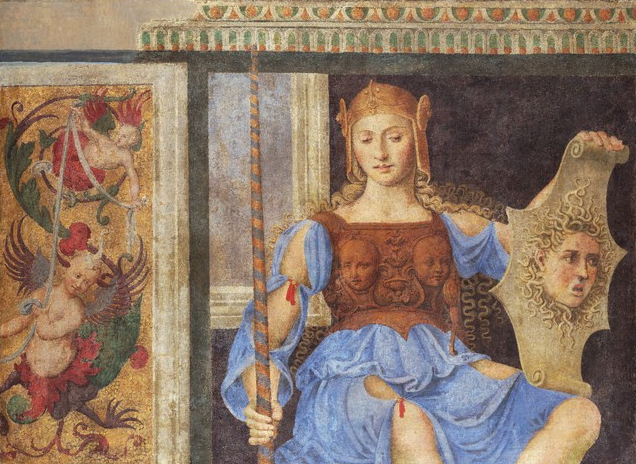
A: The Worship of Wisdom (Σοφία) is at the heart of Republican Tradition. MINERVA was goddess and patron of arts, crafts, war and wisdom. I would be doing a disservice if I was merely focused on subjective mysticism. Republicanism emerged alongside classical humanistic, eclectic and theosophical currents. I am now more specifically focused on the classical roots of Theosophy, and working through assisting the development of the current of American Esotericism. The classical eclectic, theological and humanistic currents provided the moral and intellectual fire for anti-tyrannical movements, the Renaissance, and revolutionary humanism. This blog is situated outside of later twentieth-century apolitical attitudes, organization quietude and insularity. This habit of viewing these things as disengaged from civic life is an after-effect of later secularization and differs from the manner it has been viewed historically within and outside of republican tradition.
A: It looks toward a post-Trump era in U.S. political culture, injecting itself to disrupt the game of extreme political polarity, drawing on history, philosophy, primary sources, and the full American story (including Black republican voices and critiques of slavery) to serve all citizens committed to truth and the common good. It is not a “religious” or “esoteric blog” though it contains these elements. Republicanism is inherently eclectic and pluralist. Applying its pluralism to politics, a healthy political order requires multiple competing social groups, interests, and perspectives, and that liberty is preserved through this plurality — not by suppressing it. This is why classical republics had built institutions that force pluralism to function, i.e., no single social class or interest may dominate. Therefore, there are multiple centers of power, a mixed constitution and competing social interests.
The Stoic universalism in republicanism is irremovable, as it is its foundation, and is the reason for its support and emphasis on plural participation in civic life. Cicero, one of the central figures of Roman republicanism was an eclectic expressing Stoicism, Platonism, Aristotelianism, and Roman tradition as a synthesis through which he believed truth emerges, thus rejecting dogmatism. The U.S. Founders consciously emulated this model of classical republican pluralism.
Typically, all these features of the U.S. system are studied or observed as if they were separate from one another, but they are not.
A. I do not vote for the Republican Party, but I also think of the Democratic Party as full of political operatives, donor-dependent, consultant-driven, elitist gatekeepers. As to citizens, many people have knowingly or unknowingly adopted a Marxist‑humanist framework. I operate from a civic republican-humanist framework, and do not find any need for Marx as a foundation. There are foundations of the republic, and I study them, embracing a pluralist and eclectic approach to their theories.
A small but growing group of Democrats, mostly at the state and local level, embody the classical republican citizen ethos, rather than the behavior of modern party operatives. Zohran Mamdani is a commendable politician in this view, because although he is a democratic socialist, he models many traits of the classical republican citizen. Although, he is not a “Founders‑style republican” ideologically, he embodies the citizen‑centered, anti‑elite, participatory ethos necessary for the welfare of the republic.
Many modern commentators speak from a moral, humanitarian, global, anti‑hierarchical worldview that feels emotionally compelling and narratively simple, but the problem though is that they are steeped in Marxist frameworks, and do not value the foundational republican tradition. Marxist frameworks filled the vacuum left by the collapse of civic republicanism. Some of the only people in modern politics who act like classical republican citizens are not even philosophically republican at all. They come from Marxist, socialist, or progressive traditions; and perhaps not because they reject republicanism, but because the modern party system no longer teaches or rewards republican civic virtue. So, they inherit the practice of republican citizenship, but not the philosophy. Most Americans, especially younger progressives, are not taught about republican tradition. We study the history purely as myth and hypocrisy through analytical critique, which leaves the student with an emptiness — “what now,” or “maybe, the whole system should be burnt down.” Burnt down for what? You ask them, and the only other alternative they have “ready-made” is Marx’s vision. They are echoing and filtering an older tradition through social justice frameworks, Marxist critiques of capitalism, identity‑based political analysis, anti‑colonial theory, and protest‑centered activism. This is not sufficient, and time has proven this.
I do not define my political identity as a “progressive.” It suggests that any other political adversary does not believe in human progress. “Modern Progressives” do not define “progress” in the same way that classical liberals and classical republican thinkers defined “human progress.” We have not even worked on or established the foundations first, before moving to policy on more equality, more state action, and more social protection. Classical liberal progress and classical republican progress were once two halves of the same project, and modern progressivism split them apart. The demanding ideas of republican “civic virtue” and “moral elevation” frightens the modern man, and frightens the politically corrupt.
But, anyway, the romanticization of communism, Marx, and socialism reflects how identity, narrative, and emotion shape political imagination, and I find it concerning. I do not adopt modern left identity politics, which divides society into the oppressed proletariat versus the privileged bourgeoisie. Marxism provides a simple explanation against “the system of capital.” Republicanism provides a complex one, requiring and demanding maintenance and civic virtue. American schools and universities also do not teach about the history of the Atlantic Republican Tradition and its roots. Republicanism is not taught as a living philosophy. This is a serious failure. Marx is provided as thinker, as a grounding for critical framework and analysis of systems of Power. Not a single person I ever speak to physically know what the “republican tradition” is. That is not good. But that is opportunity for education.
A: It is written for all Americans, for educating those outside the United States, anyone who values republican government, wants depth instead of slogans and standard campaign speeches, and those frustrated by polarization and superficial (robotic) data analysis-driven politics. The tradition belongs to all who inherit the Republic. Yes, posts require attention; but civic literacy has always demanded effort. The project rejects adaptation to TikTok-level brevity because shallow understanding cannot sustain self-government. It is for students, educators, independent thinkers, history enthusiasts, and concerned patriots tired of superficial politics and seeking the real foundations of liberty, virtue, and civic strength.
A: Tribalism and superficial thinking weaken republics. The tradition teaches vigilance against corruption and arbitrary power (from any direction), the necessity of virtue and education, and honest reckoning with history. Without it, paper rights and democratic forms eventually fail. (See our open letters and series on why American students need republicanism, deconstruction vs. reconstruction, etc.)
A: It is neither. It is not niche. Serious engagement, unfortunately, with civic republicanism has always been somewhat rare outside academia or dedicated circles, which is not a good sign given the decline in civic knowledge alongside the rise of extreme partisan politics. This is a specialized, independent intellectual project centered on the history, philosophy, and revival of the civic republicanism, as a serious tradition, which has been abandoned in Western political thought. Scholarly references, historical analysis, and classical sources are utilized, and can lead students and citizens to the necessary research to understand what is at stake. While it incorporates genuine, not conspiratorial esoteric and mythological elements (as the historical republican tradition itself often did), these serve its core civic and humanistic aims. Republicanism has deep historical ties to classical eclecticism, Stoicism, and ancient forms of theosophy.
Since the core focus is the civic republican tradition, it follows a well-documented lineage in political philosophy. Topics like Theosophy, Bavarian Illuminati, Freemasonry, Occult Philosophy, American Esotericism and Atlantic Republican Tradition are examined in their actual historical contexts to correct popular myths, institutional and conspiratorial distortions. The American Minervan, or MINVRA positions itself as justifiably, an eclectic blend of their highest aspirations, and given the fact that the republican tradition itself is eclectic and pluralist (American Pluralism is the synthesis of republicanism and liberalism). Classical Eclecticism blended multiple schools into a unified political philosophy (Cicero), Stoicism provided natural law, civic virtue and anti‑tyranny ethics, and their theosophical systems that inspired the Stoics supplied the metaphysical foundation of a rational, divine cosmic order (logos). Neoplatonic and Pythagorean ideas influenced later republican thinkers, especially during the Renaissance (e.g., Ficino, Pico, Harrington), who revived ancient “divine wisdom” traditions known under the term, prisca theologia.
A: The connection is historical, not invented, and there has been active inversion and suppression of this. Republicanism emerged intertwined with classical humanistic and eclectic traditions that emphasized prisca theologia, moral courage, and resistance to arbitrary power. Prisca theologia was the Renaissance Platonist doctrine and underlies the view of Christian Masonry, providential deism and republican secularism, which in turn is integral to the prism through which the neo-Roman (or neoclassical) Republicanism was transmitted to and expressed itself through the U.S. Prisca theologia refers to the belief that there existed an ancient, primordial, divinely revealed wisdom shared across the earliest civilizations, and that this wisdom formed a single, unified theological tradition from which later religions (including Christianity) descended. Every well-known Christian-Mason tyro subscribed to this theory. Prisca theologia (ancient theology) becomes directly relevant to Christian Masonry and U.S. religious pluralism because all three share a core assumption: that religious truth is ancient, universal, and expressed through multiple traditions. These currents involve Renaissance revivals, Enlightenment thought, and revolutionary movements (including Italian Risorgimento figures with theosophical or Masonic ties). This synthesis aims to recover the active, illuminative fire that historically supported republican virtue, not to promote occultism detached from civic life.
The notion that “occult philosophy” is something private, marginal, or cut off from civic life is an assumption born in the post-Enlightenment part of a process of Protestant demystification and later rationalist secularization. In Antiquity and the Middle Ages, “occult” knowledge was civic knowledge. So, what we now call “occult,” “esoteric,” or “mystical” knowledge was woven directly into political theory, statecraft, law, architecture, medicine, and even public ritual; and Plato, Cicero, Plotinus, and Augustine treated metaphysics, cosmology, and ritual as essential to the health of the polis. Agrippa was not apolitical. The Renaissance Platonists like Ficino, Pico, Patrizi and Bruno went further and saw natural magic, astrology, and prisca theologia as tools for shaping virtuous citizens, advising rulers, and cultivating the soul as a civic duty. The Renaissance Platonists wrote for statesmen, not hermits; and early modern statecraft relied on esoteric sciences (see, e.g., Crusades to Late Renaissance Occultism to Enlightenment Timeline, 1075-1680). Rulers employed court astrologers, alchemical physicians, Hermetic advisors, Kabbalistic Christian theologians and architects using sacred geometry.
This is not a fringe theory, and it is one the most difficult to get through to people who want to find an evil plot in this. This is the history of the intellectual bridges between Renaissance esotericism, Freemasonry, Enlightenment thinkers and early American republicanism. Early American republicanism absorbed Renaissance esoteric ideas through Freemasonry, which acted as the transmission belt between European Hermetic-Platonic thought and American political culture. This means that the enchanted world of the Renaissance didn’t disappear, but was naturalized into American republican ideals of virtue, liberty, and pluralism. American pluralism is an expression of this prisca theologia, and even more ancient influences at the foundations of “Western Civilization” (Introduction to the Pre-Socratic Sages: All the Wise Sages). Freemasonry, specifically Christian Masons preserved and institutionalized this prisca theologia which it inherited from Renaissance esoteric universalism in which no single sect possesses all truth, moral law is universal, and diverse traditions can coexist within a shared civic framework. The practice of incorporating biblical figures (Solomon), classical philosophers, and mythic builders into a single symbolic system came to them from the Renaissance thinkers. The idea of a virtuous republic was taught by the latter and is not an anti-religious thing. The Masonic political symbolism has roots in Renaissance Hermetic-Platonic cosmology, with the Mason as both the builder of the self and the republic.
So, this focuses on the spiritual civic branch of Enlightenment thinking that gave birth to the United States. It is based on a view of civics that inner moral formation produces outer political order, and religion is universal, not sectarian.
No editing in the world can omit this fact, which is resisted even hated, and because it cannot be omitted, it has been turned into a conspiratorial history of evil plotters, distorting the history and the ideas of Masonry, e.g., saying “The Great Work” means a “Satanic plot.” “The Great Work” refers to the moral and spiritual transformation of the human being, and through that transformation, the elevation of humanity as a whole; where society itself becomes more just, rational, and harmonious. This is the essence of the moderate and Hermetic strain of the Enlightenment of Newton, Locke, Montesquieu, the Founders and English Freemasonry, as opposed to the materialist secularism strain of the French Radical Enlightenment of d’Holbach, La Mettrie and Helvétius.
A: Not Fascism, but REPUBLICANISM and FASCISM share heritage from Rome. I lay out the foundations, historical contexts and philosophy of Fascism to refute modern definitions and distortions of it as a competitor to the stability and Atlanticist narrative of the post-war liberal international order. The narrative after the war scapegoated various groups who themselves were victims of Catholic instigation, absolutist, Communist and Fascist persecutions, which have still gone uncorrected, e.g., Christians connecting Fascism to Theosophy or Theosophy to Socialism and Communism to perpetually modify variant constructed anti-republican conspiracies. I have documented this pattern, which also refutes conspiracies about Adam Weishaupt (an Enlightenment anarchist Christian philosopher) and the Illuminati, which has not received an update in American consciousness as it has in Germany and in scholarship. Public opinions about these things are very behind, and anti-intellectualism is only spreading. My project is against this current and is anti-arbitrary power in all forms — whether monarchical, corporate, ideological, or majoritarian tyranny. It examines Fascist philosophy and figures like Giovanni Gentile historically to clarify distinctions from republicanism (e.g., actual vs. misused definitions, Risorgimento context vs. later betrayals). Republicanism prioritizes mixed government, rule of law, civic virtue, and vigilance against corruption. It celebrates revolutionary moments only insofar as they advanced liberty and confronted injustice. The aim is re-alignment and fortification of the existing Republic through informed citizenship, not overthrow or authoritarianism.
A: On the contrary, republicanism provides essential safeguards modern liberal democracy often neglects. There is no pluralism without republicanism. It is compatible with (and historically contributed to) rights discourse, and the U.S. Founding blended republican and liberal elements. Reviving republican habits counters contemporary ills like tribalism, historical amnesia, materialism, and declining civic literacy, without returning to pre-modern exclusions. It explicitly includes Black republican voices and reckonings with slavery’s contradictions.
A: Radical movements (early Theosophy, Bábí movement) often shift internally and to apoliticism for survival, legitimacy, or institutionalization, which can neuter their original anti-establishment impulse and implicitly support existing powers. There is no such thing as “above politics,” as even detachment from politics still has political effects. This is not a call for reckless activism but for engaged, virtuous citizenship grounded in wisdom. Inaction risks moral abdication in the face of corruption or injustice. History does not show that “staying out of politics” is wiser. The attitude contradicts our duty as citizens. READ EXPANDED ARGUMENT.
A: It is religio-philosophical in the classical sense. It is an expression of eclecticism, and the moral-intellectual roots of humanism and republicanism. It is not sectarian, promoting any single faith or modern occult organization, and is not anti-religious. The focus remains civic, in arming citizens with wisdom for virtuous public life. Politicians are increasingly using the Bible to justify their geopolitical strategies and decisions in the Middle East. With U.S. red states pushing the boundaries of secular government and distorting the meaning of our government by focusing it into a purely “Judeo-Christian” narrative that ignores and explains away how steeped Republicanism was and emerged out of a milieu and movement of Pagan Revivalism and the origin of colonial Deism is ignored. They ignore the role Freemasonry played. The U.S. Founders’ were knowledgeable of this and represented these currents. We want to counteract attempts to rewrite, omit or demonize this contextual history.
A: No. But my first introduction to political philosophy was Edmund Burke at a young age. Since the beginning of the Trump era, subconsciously a conflict emerged that led to questioning my thoughts on politics and society. I still carry with me a different political and social understanding against the materialist excesses of modernity. I broke from the classical Burkean thinking. I never went left, but only always allied with causes I thought were just, such as “food justice.” I do not care about right or left. Whenever I stood in solidarity with others in these causes, I just know that I never saw a “conservative.” I only felt the heat of the left and liberal when they learned I did not see myself of their political tribe. I set myself on a path similar to Nietzsche — someone who deliberately stands outside their own culture (American, Western) in order to diagnose, judge, and overcome it. Then, I stepped back into it with new vigor and reflection. Now, writing as a republican thinker, I feel independence. I explicitly distinguish civic republicanism (anti-arbitrary power, virtue, common good, mixed constitution) from the modern Republican Party, which the blog has critiqued as often anti-republican in practice (oligarchic, factional). It includes strong anti-slavery, anti-racist and Black classicist threads, and rejects identity tribalism or Christian nationalism. The framework however transcends left-right by returning to foundational principles applicable to all citizens. I am not working from an intellectual conservative framework, or the ideas of Russell Kirk on the roots of the American Order. I used to try to work fully within conservative framework for about a year of the time mentioned earlier, but my research is now wholly outside of “conservative tradition.” I know about Kirk’s material.
Kirk believed, as I also argue, that the United States did not invent its political philosophy out of thin air. However, there is for him, a long traceable civilizational lineage from Jerusalem to Athens to Rome to London and to Philadelphia. These cities represent a symbolic Civilization Genealogy. Kirk is grounding the history in “Judeo-Christian” roots as the foundation. “Judeo-Christian” is not, from a factual historical or philosophical basis, the foundations for republican government, or the “American Order.” This “American Order” of Kirk was not like the French Revolution, but interpreted as a conservative defense of inherited order built on English common law, Greek intellect, Roman order, Christian moral vision and Burkean continuity. This is the basis of “American conservative tradition.” The political opposition does not have a competing vision or narrative except to entrench themselves further in Marxist and Socialist theory, which the Right is anticipating for their attack.
Russell Kirk’s writings or ideas have been adapted and adopted by Stephen Miller in the Trump administration (a defining moment), but liberals and the left called it “Fascist,” and do not read classical liberal and intellectual conservative material, clearly. In this tribal political climate, I am not the conservative’s guy, because I do not write as a representative of conservative tradition, and I am not the guy for liberals or progressives, because they do not care about these things from my observations. They associate elements vaguely with “fascist.” I have been told that my ideas are “old,” “outdated,” and “nobody thinks like that anymore,” by Democrat colleagues, but this is not even close to true. Conservatives exploit a gap that has been created in our political culture, building a captivating American mythos that has matched that of any modern liberal/left utopianism. I am simply building from within this gap, and kind of reacting to Russell Kirk. A tall order.
Russell Kirk’s idea that the American political order is rooted in ancient moral, philosophical, legal, and religious traditions that developed over millennia is correct. In this view, America is “new,” but its order is old; and is a synthesis of Hebraic morality, Greek reason, Roman law, Christian theology, and British constitutionalism. As one of the fathers of modern conservativism, American conservative intellectuals see themselves as protecting this legacy against a left flank that engages in constant reductionism of this legacy and limited expression of political philosophy. The gap enables modern right-wing to incorporate the framework into their logical conclusion to “destroy the left” as they say, since they equate “White majority” and the foundations of the American Order as a conservation of order, that without the two would come the end of this “Order.” Russell Kirk built a narrative structure that leads to Christian Zionism, and this is what is emotionally behind the ideological zeal and loyalty to Israel, and the idea that the destinies of Jerusalem and the United States are eternally interlocked. This is also a tall order to challenge; due to the fact Christian Zionism reaches across parties. Russell Kirk’s civilizational genealogy is not really an accurate portrayal of the history, but a crafted mythos omitting many other influences and contexts, which displace Jerusalem from the center of the narrative.
A: It equips you with historical context, philosophical tools, and moral vocabulary to understand American government, critique power, teach civic literacy, engage debates honestly, and resist manipulation by superficial trends or tribal narratives. Open letters like “Every Citizen is the Salvation of the Republic” and series on education and deconstruction vs. reconstruction translate ideas into contemporary relevance. The ultimate aim is practical: stronger, more virtuous citizenship that helps keep the Republic safe. Also, I am of the working class. I am not rich. I work till midnight and I am a full-time student at once. Nothing has been easy. I do not write for “intellectual interest” but to fight the degeneration of our civic knowledge. If you take no genuine interest in helping me, how can I help anybody? Then, we’re all drowning, and no one is lifting each other up. I write to lift people up.
A: I can blame many things. I am used to blaming myself, despite already doing so much. The internet and social media operate very differently than when I began. I can reveal to you metrics, that either can be interpreted as algorithmic changes in the way Indexing works, or people who are “confused” about the “blending” of elements that are usually associated in modern day with the interests of a conspiratory writer (e.g., discussing occultism and politics), but this is a contemporary problem. The reader either goes a little deeper to understand, or they do not. I am championing the ideas many have been taught to see as “Satanic.” I am working through and debunking big conspiracies, so you alienate all kinds of people.
The subject of Occult Philosophy is not in the cautious hands of actual philosophers and historians of the traditions, but conveyed to the people through conspiracy by conspiracists, and it is popular to engage in this speculation, and has characterized American political thinking since its birth. People rather learn from an outsider, or someone confirming their suspicions of an “evil plot.” Conspiracy thinking is too intertwined with a person’s psychology. Also, algorithms reward outrage, brevity, and emotional triggers over sustained depth and synthesis. If generative artificial intelligence is standardizing human writing, the algorithms shape and limit how people express their thoughts. So, long form writing is dead, e.g., because people are always on the go and need to listen to or desire to devote themselves to content that can “hook” and “addict.” All this manipulation is the very opposite of the work.
So, combining republican history with classical and the history of esoteric philosophy challenges multiple tribal silos (mainstream history buffs avoid “theosophy”; esoteric circles often prefer apolitical universalism; partisans dislike non-aligned corrective framing). Low visibility reflects platform dynamics and cultural preference for easy narratives. The persistence of my blog has shown growth, and despite lack of traction reflects commitment to the long-term work of cultural and civic reconstruction, not quick virality. Perhaps, my time is yet to come, but then again, I have not really done all that I can yet to spread. I even only just updated my Academia yesterday, and the prospect of writing books and making videos become more real to me each day.
A: Start with open letters and accessible series (Risorgimento guides, Black republicanism, Deconstruction or Reconstruction, Gordon Wood pieces). Cross-reference primary sources and cited historians. Approach with the republican spirit of inquiry, and test ideas against evidence and the common good, rather than dismissing by association. This is how I began this research. Feedback, comments, and honest critique are welcomed as part of civic discourse, and I would expect substance, and signs that the reader is mature, inquisitive and sane — not a troll.
A: No pay wall. Substantive articles, historical recoveries, open letters on republican philosophy, and resources that deepen your civic understanding, provide intellectual armament, and inspire practical civic engagement. You’ll join a project of liberty dedicated to keeping the Republic safe through informed, courageous citizenship. It is needed precisely because, so few are doing it.
A: Read the featured open letters (“Every Citizen is the Salvation of the Republic” and “The Real Republican Mind“). Subscribe to the newsletter. Share pieces. Apply the ideas in teaching, discussions, seminars, presentation and your own civic life. The Republic depends on active minds, and is kept safe by active, informed citizens.
This FAQ reflects the project’s commitment to transparency and depth. The American Minervan exists because republics decay without citizens who understand their foundations and actively uphold liberty paired with virtue. Skepticism is healthy, but disengagement, ignorance, apathy and nihilism is the greater risk. Explore the archives, form your own judgment, and contribute to the living tradition if the ideas resonate.
 The American Minervan
Leave a comment