
INTRODUCTION TO ZODIACAL SYMBOLISM AND SALVATION IN PRYSE’S INTERPRETATION
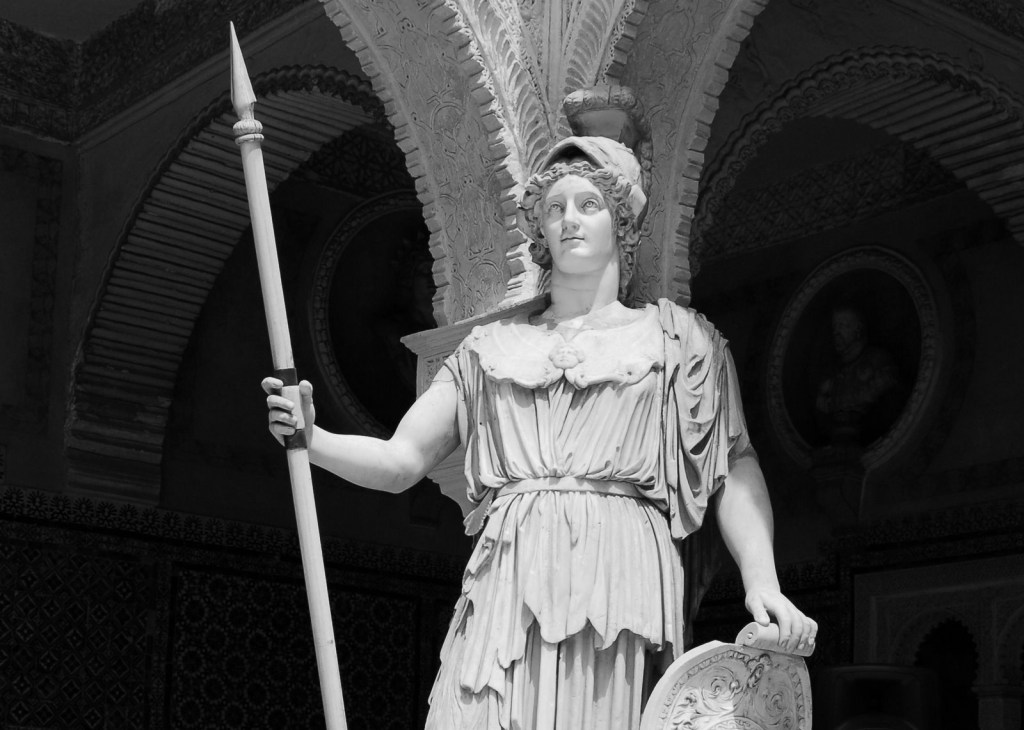
We adventure once more into The Restored New Testament (1914) of Theosophist James Morgan Pryse to understand the significance of Athena in Hellenic religion. Pryse’s work reinterprets the New Testament as a Hellenic mystery drama infused with esoteric symbolism, blending Greek mythology, zodiacal astrology, and theosophical ideas. Pryse views Athena as a multifaceted archetype embodying both martial courage (spiritual conquest over lower planes) and noetic enlightenment (inner wisdom unfolding from divine intelligence). Athena with themes of courage as (i) the Goddess of War with dauntless energy and conquest; and (ii) enlightenment as the Goddess of Wisdom, tied to inner unfolding, wisdom, noetic power, and the transmission of fire, knowledge, enlightenment, or illumination. These appear in commentaries on initiatory virtues, zodiacal symbolism, and mythological integrations, positioning Athena as a guardian against false learning and a conduit for the wisdom of the boundless universe, with roots in pre-Socratic philosophy.
CONTENTS
- INTRODUCTION TO ZODIACAL SYMBOLISM AND SALVATION IN PRYSE’S INTERPRETATION
- COURAGE AND ENLIGHTENMENT ON THE ZODIACAL PATH TO POWER
- ATHENA’S GUARDIAN RULERSHIP
- MOUNT OLYMPUS AS THE CELESTIAL WHEEL
- ATHENA’S COUNTERPART: MINERVA IN ROMAN ESOTERIC TRADITIONS AND HER LEGACY
- INTERPRETATION ROOTED IN CLASSICAL HELLENISTIC AND ROMAN ASTROLOGY
- SUMMATION OF ATHENA’S ROLE IN HELLENIC MYSTERY DRAMA
- PRYSE’S INTUITION LEADS TO CLASSICAL COMMENTARY AND ICONOGRAPHY
- ZODIACAL SALVATION IN SIDEREAL MYSTERIES AND THEATRICALITY OF INITIATION
COURAGE AND ENLIGHTENMENT ON THE ZODIACAL PATH TO POWER
James Morgan Pryse emphasizes courage for those seeking wisdom, and as an essential virtue on the aspirant’s journey:
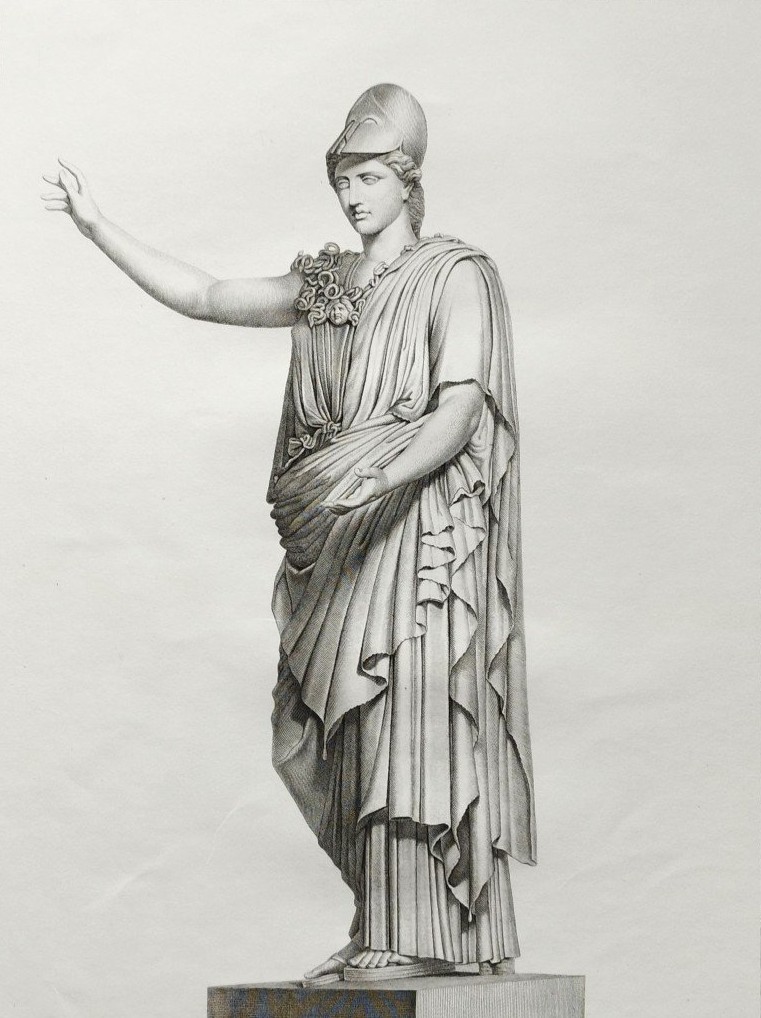
Courage is one of the essential virtues of the aspirant, who must with dauntless energy force his way through the dark and hostile psychic planes of life which have to be traversed before the divine realm is reached; and the realm itself belongs only to him who can become its conqueror. But the occult teachings are imparted to him, by those who know, only as he may merit them; he will receive no more than his rightful wage, and he can gain nothing by compulsion or artifice. The neophyte is very apt to overestimate his own merits, and imagine therefore that he is entitled to more than he is receiving; also the craving for knowledge may cause him to lose sight of the fact that wisdom comes, not from listening to the words of others, but from the unfolding of the inner faculties. Athena, who was fabled to have sprung from the head of Zeus, was the Goddess of War as well as of Wisdom; for whoever has wisdom wields power.” (The Restored New Testament, 40)
This passage appears in Pryse’s commentary on synoptic Gospel sections (e.g., Luke 3:14 on soldiers’ wages and Matthew 11:12 on the kingdom taken by force), reframed as initiatory teachings. Before this passage, Pryse discusses the energizing of psychic forces symbolized by “water” (leading to sacred trances and mantic exaltation), contrasting it with inferior mental faculties like those of conventional religionists and materialists who falsely claim descent from Zeus (Cosmic Intelligence). He explains how lower reason stifles intuition and imagination, resulting in “sterile unfaith.” Mankind is classified into four non-arbitrary grades analogous to races (see James M. Pryse On The Delphian Key-Note of Esotericism: Plato’s Four Degrees of Knowledge), tied to planes of life, rejecting hereditary castes. A word-play on “laas” (stone) and “laos” (people) references Greek myths of Deukalion and Pyrrha creating humanity from stones after Zeus’s deluge. This leads into moral instructions for the working class.
Following the passage, the text shifts to advice for merchants on storing “treasures supernally” (not earthly), as guidance for initiation candidates in the Mysteries, emphasizing eternal over transitory reliance. It critiques immature heaven concepts, instructs the military class that the “starry realm” is taken by the forceful (without violence), and expands into beatitudes for the thirsty, supplicants, mourners, self-effaced, compassionate, pure-hearted, and peaceful — reconstructed as occult elements and divine attributes.
In meaning, courage represents the “dauntless energy” required for the spiritual aspirant to conquer psychic obstacles and attain divine realms, akin to a warrior’s conquest. Enlightenment is portrayed as merit-based inner unfolding, not external acquisition — warning against neophyte hubris. Athena symbolizes this duality: her birth from Zeus’s head signifies sudden, divine wisdom emerging fully formed, while her war goddess role ties courage to true power through knowledge. Pryse uses Athena to illustrate that true occult wisdom empowers spiritual victory, aligning with theosophical views of self-realization over dogmatic learning.
It covers zodiac guardians, Athena’s attributes, courage for aspirants, merit-based teachings, and warnings against overestimation or craving knowledge without inner unfolding, critiquing false learning and priests. After, the poem invokes the Sire awakening souls like Athena’s birth, revealing universal wisdom. It then revisits Olympus-zodiac symbolism, guardian rulership developments, and proceeds to Jesus’s teachings on rewards, inner light, manifested mysteries, disciple consecration, sending them out, feeding multitudes, empowering the seventy-two, warnings against evil, renunciation, false priests, vineyard parables, and banquets.
ATHENA’S GUARDIAN RULERSHIP
This gets into ideas similarly dealt with in writings about the role of Yahweh and Angelic guardianship in ancient times. In further tying Athena’s themes to zodiacal allegory, particularly her role as guardian of Aries, the Ram, Pryse notes, that the companions of the Ram are said to be virgins (parthenoi), and the Guardian-Goddess of Aries is Athena the Virgin (Parthenos), whose splendid temple in the Acropolis of Athens was called the Parthenon. Aries is the domicile of the planet Mars, reiterating that Athena is the Goddess of War as well as of Wisdom, with her helmet adorned with rams’ heads and a sphinx. (Pryse, 361-362)
This follows Pryse’s description of Mount Olympus symbolizing the zodiac, with peaks as signs guarded by six gods and six goddesses in opposite pairs: Gemini-Apollon, Taurus-Aphrodite, Aries-Athena, Pisces-Poseidon, Aquarius-Hera, Capricorn-Hestia, Sagittarius-Artemis, Scorpio-Ares, Libra-Hephaistos, Virgo-Demeter, Leo-Zeus, Cancer-Hermes. In the “Iesous-mythos” (Jesus myth), guardians of Gemini, Taurus, Aries, Pisces, and Aquarius are male, others female, requiring swaps: Athena with Hephaistos (her opposite), Aphrodite with Hera, and Hermes as female.
Post-passage, Pryse references Prometheus stealing fire and arts from Athena and Hephaistos (Plato’s Protagoras 321), equating her to Minerva. It transitions to a poetic rebuke against false learning, praising the Sire turning “stones” into sages, evoking Athena’s birth, then into parables on the Realm, renunciation, seership, and crucifixion.
Embedded in Pryse’s astrological decoding of the New Testament, tied to Revelation’s symbolic beasts or apostolic assignments, this highlights Athena’s guardianship of Aries (the Ram), connecting her virginity (parthenoi) to purity and initiatory companions. Courage is evoked through her war aspect (Mars domicile, ram-adorned helmet for conquest), while enlightenment comes through wisdom. The Parthenon reference demonstrates her cultural centrality. Pryse integrates this to show the New Testament as a zodiacal allegory, where Athena embodies the balanced force of intellectual warfare against ignorance, enabling spiritual ascent, reflecting Hellenic mystery traditions over Jewish interpolations.
Athena is the measurer. She counters false learning and demonic wisdom, representing the wisdom of the boundless universe. Pryse’s poetic paraphrase captures this:
"O brood of vipers! who has bid you shun
The Seer's fine frenzy ere it has begun?
False Learning's haughty but ignoble breed,
How from your lips can noble truths proceed? (...)
I tell you that the Sire of men and Gods
Can turn these stones, these dull-brained human clods,
Into a race of sages and of seers:
For when the Sire's winged Messenger appears
And wakens with his wand the slumbering soul,
Man's mystic memory will then unroll
As 't were a sacred scripture, and rehearse
The wisdom of the boundless universe.
Sprung, like Athena, from the head of Zeus." (The Restored New Testament, 154)
Preceding this, Pryse links courage for spiritual conquest, occult merit, neophyte pitfalls, inner wisdom unfolding, and Athena’s war-wisdom duality. After, it details the nature of Athena-Hephaistos, Aphrodite-Hera, and the female Hermes.
This is Pryse’s poetic paraphrase of John the Baptist’s rebuke (Matthew 3:7-9 and Luke 3:7-8), reimagined as an esoteric diatribe against false learning of hypocritical priests and sophists. Enlightenment is the core theme: the “Sire” (Zeus) transforms dull humanity into seers through a “winged Messenger” (Hermes or the parakletos), unlocking mystic memory as sacred knowledge. Athena’s birth metaphorizes this sudden, divine emergence of wisdom from cosmic intelligence (Zeus’s head), bypassing gradual learning. Pryse contrasts outer dogma with inner revelation, tying to platonic anamnesis, where enlightenment is a rebirth of innate universal truth.
Pryse elaborates:
“The Mount Olympos of mythology, with its cloud-land gate, symbolized terrestrially the zodiac in the heavens, its encircling peaks corresponding to the zodiacal signs; so the six Gods and six Goddesses who sat upon the twelve peaks of Olympos are the Guardians of the twelve zodiacal signs, and according to the ancient Hellenic arrangement they are allotted to the signs in pairs of opposites, as follows: Gemini (Didymoi) … Apollon / Taurus (Tauros) … Aphrodite / Aries (Krios) …. Athena / Pisces (Ichthyes) … Poseidon / Aquarius {Hydrochoos) … Hera / Capricornus (Aigokeros) Hestia / Sagittarius (Toxotes) … Artemis / Scorpio (Skorpios) … Ares / Libra (Chelai) …. Hephaistos / Virgo (Parthenos) … Demeter / Leo (Leon) Zeus / Cancer (Karkinos) … Hermes. But in the Iesous-mythos the Guardians of the five signs Gemini, Taurus, Aries, Pisces and Aquarius are males, and the Guardians of the remaining seven signs are females. To meet this condition Athena must exchange places with her polar (opposite, Hephaistos), and so also of Aphrodite and Hera, while Hermes, the androgynous Deity, must wear a female aspect.” (Pryse, 77-78)
MOUNT OLYMPUS AS THE CELESTIAL WHEEL
In an introductory section on New Testament symbolism, Pryse maps Greek mythology to zodiacal astrology, portraying Olympus as the celestial wheel. Athena’s assignment to Aries (with polar swap to Hephaistos) adapts Hellenic tradition to the Iesous mythos, emphasizing gender balance in guardians symbolizing androgynous soul integration. Athena’s wisdom role in zodiac guardianship is the crux of Pryse’s thesis. This thesis is that Restored New Testament is a solar myth and allegory of initiation cycles with deities like Athena transmitting fire (knowledge) to humanity, as in the Promethean mythology. Pryse reframes Biblical narratives as esoteric astrology, where cosmic forces guide spiritual evolution.
The Restored New Testament glossary defines Athena straightforwardly, reinforcing her as the archetype (arts guardian) of wisdom and enlightenment archetype and courage through Aries (Athena/Mars). “Athena (Gk.), the Goddess of Wisdom and of the Arts; Guardian of the zodiacal sign Aries. From Athena and Hephaistos, says Plato (Protagoras, p. 321), Prometheus stole the fire and mechanical arts which he gave to mankind. She is usually identified with the Roman Minerva.” (Pryse 812).
The Promethean reference symbolizes enlightenment as stolen fire (divine knowledge) gifted to humanity, thereby defining the mysteries and their ethical values as civilizing forces or institutions in the world. Minerva integrates the Roman elements, emphasizing universal mythic unity. In these themes of dissemination of gnosis, Athena enables human ascension through wisdom’s fire, and Pryse connects this to New Testament motifs on Light.
ATHENA’S COUNTERPART: MINERVA IN ROMAN ESOTERIC TRADITIONS AND HER LEGACY
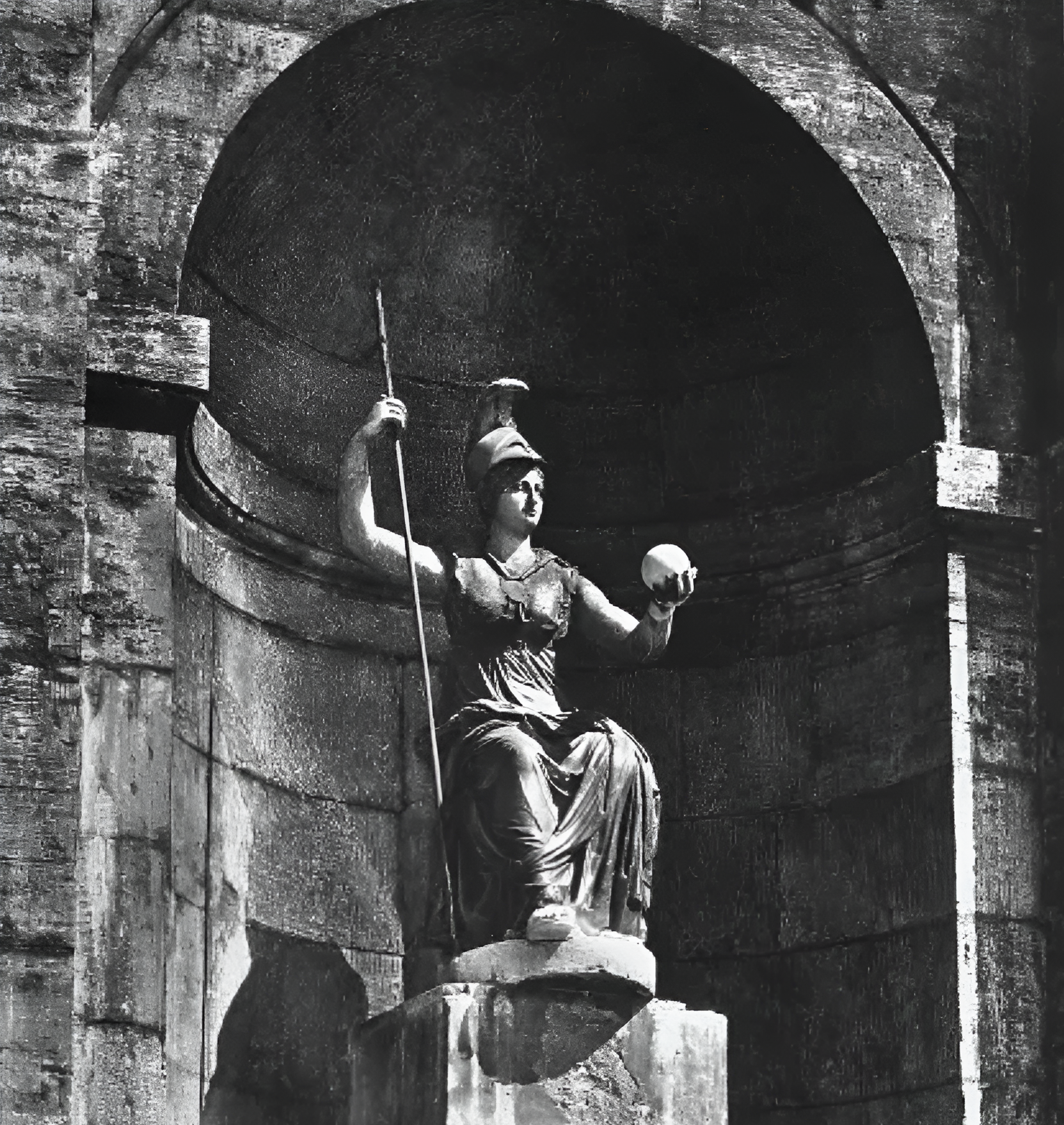
Minerva is Athena’s Roman counterpart. She was the Roman goddess of wisdom, strategic warfare, arts, crafts, medicine, and commerce, holds a prominent place in Roman religion as part of the Capitoline Triad alongside Jupiter and Juno. Her origins trace back to Etruscan Menrva and possibly older Italic roots (from meneswā, meaning “she who measures” or “remembers”), emphasizing intellect and foresight. Syncretized with Athena, sharing her armed birth from Jupiter’s head, Minerva retained distinctly Roman emphases on practical wisdom, civic strategy, and medical medical science.
In esoteric contexts, Minerva’s role is interpretive rather than central to mystery cults. Roman religion favored public rituals and syncretic practices over secretive Greek initiations such as the Eleusinian, focusing instead on public rituals, state cults, and syncretic practices in provinces. Often depicted with an owl, symbolizing nocturnal insight and knowledge, helmet, spear, and aegis, esoterically, her emergence from Jupiter’s head represents noetic birth, or pure intellect arising from divine mind. This idea is similar to Platonic ideas of anamnesis, or a means of possessing a collection of eternal truths.
As Minerva Medica, she patronized physicians and healing. In Romano-British contexts, she was syncretized as Sulis Minerva at Aquae Sulis (Bath), where thermal springs were sacred. Pilgrims sought cures, prophecy, and justice through curse tablets called defixiones. Over 130 tablets have been found invoking Minerva for vengeance or protection.
Though not core to ancient Hermeticism (Egyptian-Greek influenced), Minerva shaped Renaissance and modern occultism through her association with wisdom. Her Etruscan nature as the goddess who measures ties to precise arts (crafts, medicine), and alchemical transformation. Indirectly, she influenced Freemasonry and Rosicrucianism; the “Owl of Minerva” symbolized knowledge in the Bavarian Illuminati’s Minerval degree. Rites like Scottish Rite’s 18th Degree (Knight Rose Croix) blend Rosicrucian elements, viewing Minerva-like wisdom as divine gnosis. Minerva embodies strategic intellect, healing duality (benevolent or malefic, as in Bath curses), and measured knowledge — vital for occult hidden wisdom and self-mastery. Her legacy endures in symbolic interpretation.
INTERPRETATION ROOTED IN CLASSICAL HELLENISTIC AND ROMAN ASTROLOGY
Pryse’s ideas are not cleverly inventive, but interpretive and rooted in ancient Greek and Roman esoteric traditions. Pryse’s assertion in The Restored New Testament that Athena is the guardian-goddess of Aries (the Ram) draws from esoteric and symbolic interpretations rather than a strictly canonical ancient Greek astrological tradition. In classical Hellenistic and Roman astrology, e.g., as outlined by Manilius in Astronomica or Ptolemy in Tetrabiblos, there is no standardized system assigning specific Olympian gods as guardians to zodiac signs in the way Pryse describes. Planetary rulerships are clear. Aries is ruled by Mars (Ares), but deity-sign guardians are not formalized in surviving ancient texts.
However, Pryse’s view aligns with symbolic associations and later interpretive traditions, particularly emphasizing Athena’s war-wisdom duality (strategic over brute force, contrasting from Ares) and iconography.
In Athena’s iconography, she is frequently depicted with a helmet adorned with ram’s heads (horns), directly linking her to the ram archetype of Aries. This reflects her martial aspect as Goddess of War, domiciled in Mars-ruled Aries. (Pryse, 361-362).
Athena’s mythic birth depicts her emergence fully armed from Zeus’s head, which symbolizes the “fire of the mind,” raw intellect, creativity, and dawn renewal — qualities esoteric traditions associate with Aries as the zodiac’s initiatory sign (exalted Sun, cardinal fire). This contrasts Ares’s bloodlust often linked to Scorpio. The kind of interpretive synthesis Pryse was building upon drew from classical myths; e.g., parallels in Plato’s references to Promethean fire stolen from Athena and Hephaestus.
The Roman poet Manilius in Astronomica (Book 2) states “Pallas (Minerva or Athena) watches over the Woolbearer” (Manilius, Astronomica 2.433-452) who is Aries, providing one of the closest ancient textual supports for guardianship. This influenced later Hellenistic arrangements of Olympian correspondences.
There is also a connection between the Parthenon and virgin purity, in that Athena’s epithet “Parthenos” (Virgin) ties to the “virgins” (parthenoi) as companions of the Ram in zodiacal lore (Pryse, 361-362) and her Parthenon temple reinforces cultural centrality. Pryse adapted a Hellenic arrangement of paired opposites on Mount Olympus (as the zodiacal peaks), assigning Athena to Aries, with adjustments for the Jesus-mythos gender balance. (Pryse, 77-78, 812).
SUMMATION OF ATHENA’S ROLE IN HELLENIC MYSTERY DRAMA
Pryse reinterprets the New Testament as an esoteric Hellenic mystery drama, overlaying Greek mythology, zodiacal astrology, and oracular initiation symbolism. The zodiac represents the Mount Olympus of mythology terrestrially manifested as the heavenly circle, with its twelve peaks (signs) guarded by Olympian deities in polar pairs (opposites). This is reflected in the soul’s initiatory journey through cosmic cycles. Athena’s role as Guardian of Aries is central to the themes of courage, which is required in the dauntless conquest of psychic planes. This martial energy is of the real inner essence that will lead to enlightenment (noetic wisdom) unfolding from harmony with the divine mind.
The zodiac symbolizes the encircling realms of life, traversed by the aspirant en route to divine conquest. Aries, as the first sign (domicile of Mars), embodies initiatory force — raw energy requiring strategic wisdom (Athena) over chaos (Ares). Her guardianship reflects balanced war: power wielded through intellect. (Pryse, 77-78)
In the Iesous mythos, the narrative of Jesus is depicted as a drama of solar initiation, the guardians are adapted for symbolic gender balance, e.g., Athena swaps with her polar opposite Hephaestus. This represents androgynous soul integration and merit-based inner unfolding. Athena transmits “fire” (Promethean knowledge and arts) to humanity, enabling enlightenment (Pryse, 812; cf. Plato, Protagoras 321).
Zodiacal mysteries manifest the Mysteries’ virtues, which means acquiring the courage to conquer lower planes, wisdom blossoming from inner faculty awakening, not external. Athena’s dual War-Wisdom essence illustrates that true power arises from noetic birth like her origins from Zeus’s head, mirroring the aspirant’s spiritual rebirth and conquest of the “starry realm.” (Pryse, 40)
Pryse views the zodiac as an allegorical map of initiation cycles, with Athena/Aries embodying the threshold. The initiatory candidate must undertake courageous ascent through wisdom’s divine fire, transforming brute force into divine realization. Pryse reflects in his understanding Platonic, theosophic and mythic elements effectively reframing the New Testament and Glad Tidings as veiling Hellenic esotericism and the drama of initiation.
PRYSE’S INTUITION LEADS TO CLASSICAL COMMENTARY AND ICONOGRAPHY
Pryse interpreted the zodiac as an allegorical map for initiation cycles depicted the soul’s journey through cosmic realms, guarded by Olympian deities. This interpretation and its elements are found within the systems of classical Greek, Persian-influenced, and Roman esotericism, particularly the zodiac’s role in symbolizing soul migration, initiation rites, and cosmic salvation. To some, Pryse’s ideas about Mount Olympus and the gender-neutral guardian roles appear as modern esoteric elaborations, but ancient sources provide foundational parallels in mystery religions.
If we focus on textual, iconographic, and archaeological evidences for zodiacal initiation allegories, we will come across, e.g., ancient Greek esotericism through the Pythagorean and Orphic Traditions. In ancient Greek esoteric thought, the zodiac was frequently allegorized as a pathway for the soul’s descent into material existence (genesis) and ascent to divine liberation (apogenesis), which aligns with Pryse’s initiatory conquest of psychic planes. This is evident in Pythagorean and Orphic mysteries, where zodiacal symbolism veils meanings connected to spiritual development and rebirth, often tied to solstitial gates (e.g., Cancer and Capricorn) as thresholds between celestial and sublunar realms.
In the second-century CE, philosopher Numenius, cited in Proclus’s commentary on Plato’s Republic and Porphyry’s De Antro Nympharum (chapters XXI-XXII) describes Cancer and Capricorn as “the two gates of heaven,” through which souls descend into generation and ascend back to God. Porphyry interprets Homer’s Odyssey myth about the “cave of the Nymphs” as an esoteric allegory for these gates. The northern door (Cancer, summer solstice, genesis, cold) faced north for human descent, and the southern door (Capricorn, winter solstice, apogenesis, heat), more divine, for immortal ascent. This cave symbolizes the cosmos as an initiatory space, where souls migrate in cycles, which corresponds to Pryse’s interpretation of the zodiac as a map for aspirants traversing hostile planes to reach divinity.
The Pythagoreans are documented as far back as the first-century BCE and before as using zodiacal motifs to represent soul transmigration, reinforcing the drama of initiation as a cosmic zodiac or guardian-guided return to a divine source. René Guénon, in his analysis of Pythagorean symbolism also noted parallels to Vedic traditions (deva-loka and pitri-loka doors), which demonstrates a shared esoteric heritage predating Pythagoras (6th century BCE), with the north door for descent and south for ascent in ancient Greek systems.
ZODIACAL SALVATION IN SIDEREAL MYSTERIES AND THEATRICALITY OF INITIATION
Orphic hymns and Pythagorean teachings integrated zodiacal astrology with mysteries, viewing the zodiac as a cosmic bridge for souls to journey through the sidereal realms and star paths. Zodiacal fragments from Uruk (Seleucid period, ca. 200 BCE) blend Babylonian-Greek elements, and reveal early Hellenistic adoption of zodiac icons like Leo and Virgo. The ZODIAC project at Freie Universität Berlin led by Prof. Dr. Mathieu Ossendrijver, researches the Babylonian origins and cross-cultural spread of zodiacal astronomy, and its turn in the historical development of Greek astrology. In this idea, individual fates are tied to cosmic cycles, involving initiatory self-realization in Orphic rites.
Pryse’s deity-guarded conquest harmonizes with classical soul migration, emphasizing purification and harmony. In Persian-Roman esotericism, Mithraic Mysteries (1st-4th centuries CE) carry the strongest archaeological and iconographic evidence for the zodiac as an initiatory map. Originating from Zoroastrian esotericism and blending with Greco-Roman elements, it depicted the zodiac as a cosmic framework for soul salvation, with seven planetary grades of initiation symbolizing ascent through spheres, which Pryse intuited through his emphasis on merit-based enlightenment and spiritual warfare.
Similarly, Origen’s Contra Celsus (c. 248 CE) described a Mithraic ladder of gates representing heavenly revolutions, through which souls pass for salvation relating to Tertullian (c. 200 CE) mentioning a “representation of the resurrection,” of zodiac-tied rituals simulating death and rebirth. These align with Persian Zoroastrian transmigration as in Porphyry’s De Abstinentia, where Mithras facilitates eternal rebirth.
In the cosmically theatrical iconography of Mithraea (underground temples) cosmic models displayed zodiac signs and solstice alignments (e.g., Sette Sfere Mithraeum at Ostia: altars at Gemini-Cancer and Sagittarius-Capricorn). There exists 23 surviving zodiac depictions, which include rings (Cancer top/Capricorn bottom, e.g., Ponza stucco) and arcs (clockwise from Aries). Solstitial light effects (e.g., Caesarea Maritima: summer noon light; Hawarte: winter altar illumination) simulated initiatory passages, with inscriptions like “et nos servasti aeternali sanguine fuso” (Santa Prisca) and “in aeternum renatus” implying zodiac-guided salvation. Capricorn iconography exists on funerary reliefs (e.g., Cologne, Pannonia) symbolizing ascent.
Those Mithraic seven grades (e.g., Leo as seniority, tied to fire and wisdom) map soul journeys allegorically, with tauroctony (bull-slaying) reflecting precessional cycles from the Age of Taurus to Aries.
Pryse’s view of zodiacal conquest, rooted in Persian-Roman syncretism lead us to classical textual support for Athena (Pallas) as Guardian of Aries (the Ram of Ares). In Marcus Manilius’s Astronomica (1st century CE, Books 2 and 4), Pallas (Roman Minerva or Athena) is explicitly described as the guardian over Aries (i.e., the “Woolbearer” or Ram), emphasizing her wisdom in strategic affairs over Ares’s brute force. This explains Athena’s war-wisdom duality, with Aries as Mars’s domicile, but Athena as patron for thoughtful and strategic conquest. Manilius’s work, the earliest complete astrological treatise had its influence from Hellenistic sources assigned gods to signs as patrons long before Pryse, supporting Olympian-zodiac correspondences. The iconography of Athena’s ram-horned helmet reinforces this symbolism.
While Pryse’s detailed system restores Hellenic esoteric influences on Christian terminology, the evidence from Porphyry, Numenius, Manilius, and Mithraic sites substantiates the zodiac as an esoteric map for initiation and soul cycles across Greek, Persian, and Roman traditions.


 The American Minervan
Leave a comment