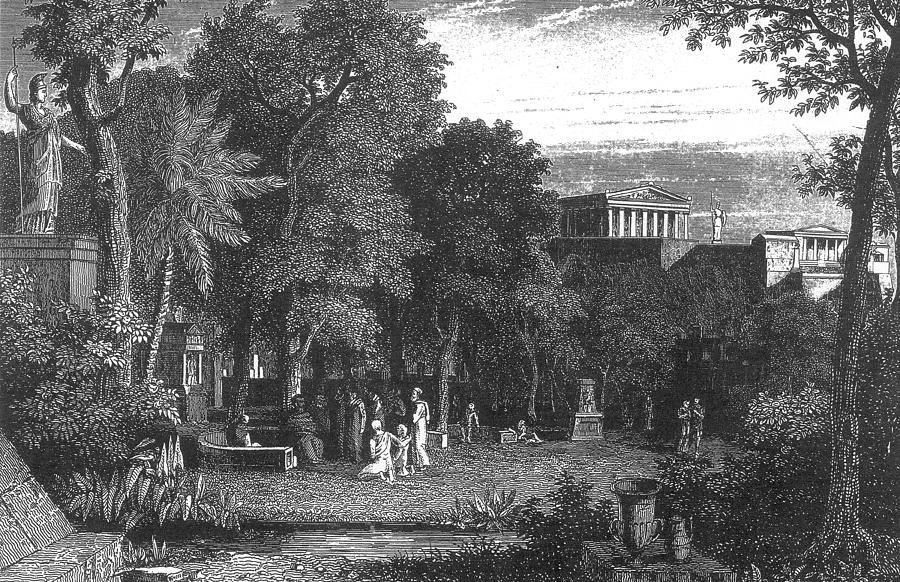
“The gods exist, but they are not what the hoi polloi suppose them to be. And the impious man (Gr. ἀσεβὴς, asebēs) is not he who denies the existence of the gods whom the multitude worship, but he is such who attaches to the gods the beliefs of the multitude.”
EPICURUS OF SAMOS, EPISTLE TO MENOECEUS.

The existence and nature of the gods in plural, as opposed to as the garden philosopher Epicurus of Samos states, “what the many suppose them to be” is important for us to get an understanding of when it comes to Epicurus and his “naturalistic explanations.” Epicurus leads us to question then, “what are the gods,” as opposed to not only what the multitudes believe and worship, but as opposed to what monotheistic religions have taught the gods are, when attacking the old philosophers, the ancient “idol-worship” of the multitudes (or of the state, cult or empire). What are the gods as opposed to what “gods” have come to be known, since even atoms are gods. The term gods also get indiscriminately attached to the constitution of man. The “gods” are the primordial elements. The gods do exist because we have preconceived notions of them Epicurus teaches, but they are not what the many suppose them to be; and men embellish their ideas onto the gods. The nature of the gods is an important question to the theosophist in reference to different conditions of (a) theurgy, (b) theophany, (c) theopathy, or (d) theopneusty required to “commune with the gods.” What is man c“communing” with, and why does man feel variation in degree of proximity, space or combination of substance (of their own nature) with that which they are supposed to “commune” with. It seemed to them, a quality of lucidity, understanding, intelligence and emancipation.

 The American Minervan
Leave a comment