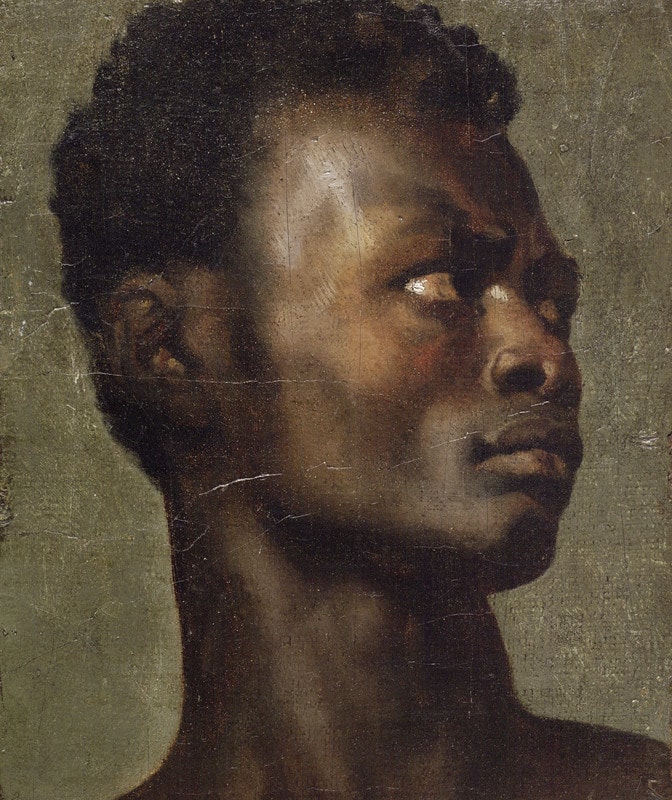
Beyond the well-known figures like Phillis Wheatley and Frederick Douglass mentioned in the Introduction to Five Early Figures, a generation of Black American classicists emerged in the late nineteenth and early twentieth centuries, often born into slavery or its immediate aftermath. These scholars mastered Greek and Latin to refute racial inferiority claims and assert our intellectual equality. Their work, highlighted in exhibitions of Michele Valerie Ronnick’s “Black Classicists” series of mural mosaics at the Center for Hellenic Studies, has been largely forgotten due to shifts toward vocational education (e.g., Booker T. Washington’s influence) and institutional erasure, particularly by the current administration. Black European classicists from this era are rarer, with most notable figures being of African descent or Caribbean-born, but active in diaspora contexts.
William Sanders Scarborough (1852-1926) was one of them. Born enslaved in Macon, Georgia, Scarborough taught himself to read and write despite laws prohibiting it. After emancipation, he attended Atlanta University and Oberlin College, mastering the classics. He authored First Lessons in Greek (1881), the first Greek textbook by an African American, widely used and praised. Scarborough taught at Wilberforce University from 1877-1908 and was later president, joining the American Philological Association in 1882, being one of the earliest Black members. Scarborough in this time lectured internationally.
His work countered pro-slavery pseudoscience by demonstrating Black mastery of “elite” languages, we were considered unable to master. While not explicitly tied to republicanism, Scarborough’s emphasis on liberal arts education reflects classical ideals of civic virtue and intellectual freedom, which do align with Black republican reconfiguration against domination.
Another figure, Edward Wilmot Blyden was born in 1832 in the Danish West Indies (St. Thomas). Blyden emigrated to Liberia in 1851 after U.S. racial barriers blocked his education. A polyglot proficient in Greek, Latin, Hebrew, and Arabic, he served as Liberia’s Secretary of State, professor of classics at Liberia College (president 1880-1884), and diplomat. Blyden authored influential works like Christianity, Islam and the Negro Race (1887), promoting African “personality” and Pan-Africanism. Blyden drew on classics to argue for African civilization’s antiquity and potential, influencing Liberia’s republican framework. His Black republicanism combined liberal civilizing missions with republican non-domination from European empires, though controversially excluding indigenous Africans from full citizenship, mirroring classical republican exclusions. He awarded honorary degrees to Black American classicists like Scarborough.
A FEW OTHER NOTABLE FORGOTTEN AMERICAN CLASSICISTS AND THEIR LEGACY
Wiley Lane, Richard Theodore Greener, John Wesley Edward Bowen, Lewis Baxter Moore, and Helen Maria Chesnutt have been discussed. These figures, featured in Ronnick’s exhibitions, taught at HBCUs, and they were at the forefront of the early battles in this country fighting to demonstrate the intellectual capacity of our people, e.g., Calhoun’s challenge showing a Black parsing Greek just to prove our human dignity.
Early Black thinkers reconfigured classical republicanism (Cicero, Roman virtue, liberty as non-domination) to critique and refute American hypocrisy and racial domination. As Melvin Rogers notes in The Darkened Light of Faith (2023), 1830s-1850s intellectuals like David Walker, Maria Stewart, and Douglass transformed civic virtue into Black solidarity against tyranny.
Stoicism was influenced through Roman figures (Seneca, Epictetus, Marcus Aurelius). Epictetus, a former slave resonates with this history, given his emphasis on inner freedom despite physical chains of being enslaved. Seneca’s letters were read by nineteenth-century abolitionists. Stoic endurance and virtue as control over judgments aided our resistances, though many ancients accepted slavery institutionally.
Although Blyden and Scarborough indirectly engaged in such philosophical foundations of republicanism through classics education, their efforts fostered republican civic ideals for self-governance and human upliftment. Douglass explicitly drew from Stoic-like rhetoric in his oratory style. Later, Frank M. Snowden Jr. (1911-2007), a Howard University classicist, documented Black people in antiquity (in Blacks in Antiquity, 1970 and Before Color Prejudice, 1983), arguing against ancient color racism and vindicating Black presence in the classical world. This “Classica Africana” tradition enriched republicanism and used Stoic resilience for their cause of liberation, holding America to its professed ancient-inspired ideals.
 The American Minervan
Leave a comment