Tag: Philosophy
-

Voltaire on The First Philosophers
“How precise and true is Plato’s expression, how profound and philosophical his remark on the (human) soul or Ego, when he defined it as “a compound of the same and the other.” And yet how little this hint has been understood, since the world took it to mean that the soul was the breath of…
-

The Practical Basis of Spiritual Illumination
“To fully define Theosophy, we must consider it under all its aspects. The interior world has not been hidden from all by impenetrable darkness. By that higher intuition acquired by Theosophia — or God-knowledge, which carried the mind from the world of form into that of formless spirit, man has been sometimes enabled in every age…
-
Discovering Religion: If America Became a Christian Nation
“What If America Became a Christian Nation” The words of John Adams, second President of the United States (1797–1801) and the first Vice President (1789–97) on Religion in the United States, Quakers, Jesuitism, and Machiavellianism: “All Religions have Something good in them: but the Ambition and Avarice of Priests and Politicions have introduced into all of…
-
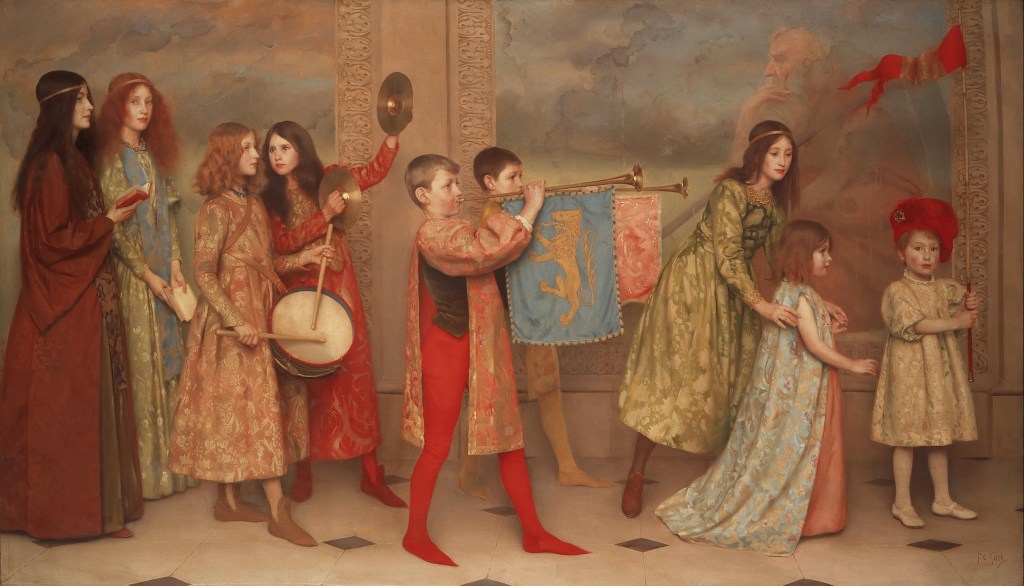
Jean-Louis Siemons: “Theosophy” in Neo-Platonic and Christian Literature
Dr. Jean-Louis Siémons article Theosofia in Neo-Platonic and Christian Literature (2nd to 6th Century A.D.), Theosophical History Centre, London, 1988, pp. 24-26. Dr. Siémons was an Associate of the United Lodge of Theosophists for over fifty years. This is to give us perspective on the 19th century Theosophical Movement’s place within the broader scope of theosophical…
-
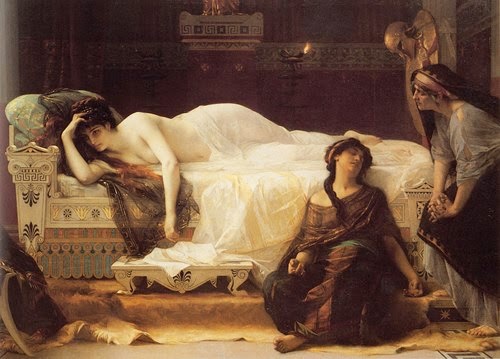
The Manifestation of Divine Light
“But All-Father Mind, being Life and Light, did bring forth Man (Ἄνθρωπον) co-equal to Himself.” (Pœmandres treatise) “This Man or Anthrōpos is the Spiritual Prototype of humanity and of every individual man, and is a technical term found in a number of the early Christianised Gnostic systems” (G.R.S. Mead). “So says the Zoroastrian: I hold…
-
What are the Principles of a Theosophical Group?
The principles of a group called Theosophical would be: [1] “Brotherhood [camaraderie] of man, without distinction of race, color, religion, or social position. [2] The serious study of the ancient world-religions for purposes of comparison and the selection therefrom of universal ethics; [3] the study and development of the latent divine powers in man (…)” —Theosophical…
-
Manly P. Hall, ‘Philosophical Reflections on the Use and Abuse of Money’
“Philosophical Reflections on the Use and Abuse of Money” Canadian philosopher and mystic speaks on the Use and Abuses of Money in a great and enlightening talk.
-
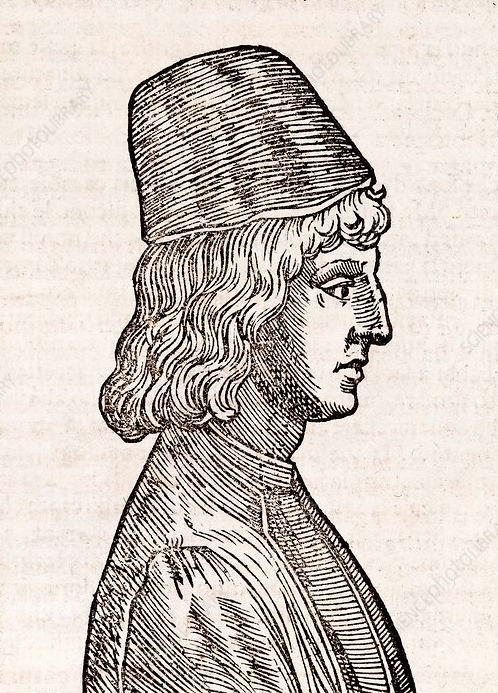
Pico della Mirandola Oration on the Secret of Gnosis and the Dignity of Man
Pico della Mirandola on the secret of Gnosis
-

Gottfried De Purucker defines Religion in “Occult Glossary”
What does it mean, when we use the broad term religion? Gottfried de Purucker† (1874-1942), who was head of the Pasadena Theosophical Society from 1929-1942, had a good definition in his Occult Glossary (1933). It follows on pages 148-9: “Religion. An operation of the human spiritual mind in its endeavor to understand not only the how and the why of…
-
“The Religion of the Future”
‘No human-born doctrine, no creed, however sanctified by custom and antiquity, can compare in sacredness with the religion of Nature.’ (Helena P. Blavatsky, The Secret Doctrine, Vol. 2, pg. 797) The Religion of the Future [Helena Blavatsky, The Theosophist, Vol. IV., No. 8, May, 1883.] “Occultism teaches us that ideas based upon fundamental truths move…
-

Remembrance of the Gods: What the Origin of the Term Soul in English Reveals
Origin of Soul and Spirit in English In our English, the sawol (from saiwalō; Proto-Germanic origins) or soul meant life, animate existence, living being, or the spiritual and emotional part of a being. Around 971, this term also referred to the “spirit” of a deceased person. The terms “soul” and “spirit” became in the English confusedly synonymous and passed down…
 The American Minervan