
Modified Version 3-16-2026
INTRODUCTION
“Over all this region Adonis (Saturn) was adored under various names by the fire-worshippers; for they called Dionysus Adon (Adonis) in the Lebanon, Adoni and Adonai in Jerusalem…” (Samuel Fales Dunlap, Ghebers of Hebron, p. 2)
This article will be adapted into a series of articles and commentary that goes into Dunlap’s linguistic derivations of god-names, the meaning of multi-layered “keys” (interpretive methods) of the Mysteries, and critique monotheistic bias as creating a false hierarchy between “primitive paganism” and “superior Abrahamic truth.” This will be based on the thesis in Dunlap’s Sōd: The Mysteries of Adoni (1861) and The Ghebers of Hebron (1894) with modern scholarship on the Ugaritic Tablets (13th c. BCE), including Mark S. Smith, Francesca Stavrakopoulou and others.
As modern discoveries have made it impossible to maintain the old picture of neat early monotheism, e.g., inscriptions of Yahweh and Asherah, and astral and solar symbolism tied to Yahweh worship. A divine council structure, which includes a pantheon with El, Baal, Asherah (Athirat), Anat and others still features in the Tanakh. These modern discoveries placing Yahwistic religion in a shared regional polytheism clearly reveal the West‑Semitic pantheon, which Israel grew out of. Hence, comparative West‑Semitic religion (Ugarit, Phoenicia, etc.) provided the template for Israel’s religious environment, and we should not read Deuteronomistic theology (Yahweh alone) back into all periods of Israel’s history.
Still, Christians, e.g., will insist that Yahweh was and is “the one true God.”
Sōd and Ghebers attempt to strip away the later theological veneer that Judaism and Christianity place over their origins, and one of the reasons Dunlap is not used today is because the modern scholars play cautiously and avoid his symbolic and esoteric view of religion through the lens of mystery‑religion syncretism. Dunlap argues that the early Israelite cult was not monotheistic, but part of the broader West‑Semitic religious world of Phoenicia, Syria and Mesopotamia. In his reconstruction, Adonai/Adoni is a veiled form of Adonis or Dionysus, the youthful dying‑and‑rising god; Baal/Bel is the solar‑Saturnian “lord of fire”; and Moloch is simply another manifestation of the same fiery Dionysian power worshipped on the Israelite high places.
Dunlap’s point is not merely that Israel once worshipped multiple gods, as this is also acknowledged even in the Tanakh, but that later Jewish and Christian interpreters worked hard to obscure the period when Yahweh was one deity among many, competing with Baal, Asherah, Chemosh and Moloch. The prophets themselves testify to this struggle, yet later theology retroactively imposes a pure monotheism that did not exist in practice. Dunlap’s work was not just to “unmask” names, but to show that Israelite religion was originally polytheistic and syncretistic.
The purpose of this series of papers and commentary is to (a) refute Jewish, Christian and Islamic polemics, (b) demonstrate the royalist and monarchic origins of the Jewish Mashiach and Christos, and the Mashiach’s connection to Adonis and Baal (the storm-God or cloud rider), (c) counter exclusivist Christian claims of Jesus as the prophesied Messiah and (d) why the ancient royalist construction of the Jewish Messiah is inarguably a direct threat to the U.S. republic harboring a contradiction that is counter to its ideal, which is explicitly anti-monarchic and secular. The U.S. Founders (e.g., Jefferson, Madison, Paine) feared European-style theocracy where a “King of Kings” (Rev 19:16) justifies absolute rule, and the Jewish Mashiach was an ancient royalist construct built upon the anointed divine king of the Ugaritic Baal Cycle, absorbed into Jewish monarchy, then repurposed in the construct of “Jesus Christ the King” as monarchism in disguise. The U.S. Republic was founded on the rejection of kings (George III and any divine Christ-king). Christian nationalism’s “Kingdom of God” or “Christ rules America” is precisely the royalist ideology Dunlap and the Ugaritic tablets peel, which is high-place divine-right rule transferred to the Church or “Christian nation.”
The Gods and their Names in the ancient world are intimately tied to the history of ancient peoples, cities, and the meanings those people ascribed in their world. In Dunlap’s works, he demonstrates that the famous God-names have a linguistic connection, which was covered in this initial introduction that simplifies it Samuel Fales Dunlap on the Ancient Origin of Names of Great Gods, Cities, Rivers and Countries.
The monotheistic bias results in a dichotomous worldview and ranked hierarchy of the evolution of religious thought from ignorant and primitive animism, shamanism and paganism to monotheism. However, Dunlap disproves the notion, that the so-called “Abrahamic religions” and beliefs are unconnected from the Old Religions. The basis of the high religio-philosophical thought can be found throughout ancient India, Persia, among the pre-Homeric Hellenes and more.
LANGUAGE OF THE MYSTERIES
Dunlap wrote alot about “the Mysteries” using this term frequently, and people often do not know what the MYSTERIES were. To explain it briefly, Dunlap frames the Mysteries through the Hebrew word Sōd (סוד) meaning the Secret or Arcanum, and he argues that early Christianity, Judaism and pagan cults all preserved elements of hidden initiatory systems shared across Hebrew, Greek and Near Eastern religions. The Mysteries comprises a long history of ancient religious secret traditions — esoteric rites, doctrines, and symbolic teachings, and those who study, protect, promulgate and embody them. These mystery traditions were central, he argues, to many religions in antiquity, including Hebrew sects, Greek mystery cults, Syrian and Phoenician rites and early Christian groups. The Mysteries are shared across ancient religions involving symbolic teachings, rituals, philosophical and mythic structures and this does not exclude Judaism and the offshoot Christianity.
In Sōd: The Mysteries of Adoni, Dunlap explores the cult of Adoni/Adonis, which he interpreted as a dying-and-rising god mystery connected to the Hebrew Adonai by utilizing the lexicon of Hesychius of Alexandria (5th-6th century CE), which Franz Karl Movers drew from showing Adonis as understood by the Greeks aligned with the Semitic root, ’adon / adonai, and symbolically linked to early Christian interpretations of Jesus. He suggests that the parallels between Adonis and Christ are not accidental but reflect a shared mystery tradition. So, Dunlap proposes, that Christianity has an occult, initiatory origin. Sōd is at the core of early Christianity, and Jesus may have been connected to a Nazarene sect with esoteric teachings. He demonstrated that early Christianity preserved initiatory doctrines, and its symbolism (sacrifice, resurrection, sacred names) reflected older mystery patterns.
Sōd (סוד) or the Arcanum is defined as
- a secret or religious mystery.
- a congregation of initiates participating in a sacred secret.
Related modes of the Mysteries that one repeatedly comes upon in studies include:
- Numbers, or the metaphysical meaning of number, proportion, and cosmic structure.
- Correspondences
- Cycles, or periodicity
- Nature of Motion, Colors and Sounds
- Symbolism
It is not enough, that the dominant religions carry certain ideas from systems before it:
“The proofs brought forward in corroboration of the old teachings are scattered widely throughout the old scriptures of ancient civilizations. The Puranas, the Zendavesta, and the old classics are full of them; but no one has ever gone to the trouble of collecting and collating together those facts.” (Helena Blavatsky, The Secret Doctrine, Vol. 1, p. 307)
Reliance on the narratives we have been told in the Sunday schools, by priests, theologians, etc, and through these biases from the main three monotheistic religions have bred and perpetuated long generations of conflict and ignorance about the beliefs of our ancestors, their value and the origins of these beliefs. The significance in the meanings and archaic symbolism connected with Solar and Lunar mysteries are in fact of one worship, and carry meanings related to the natural and invisible world.
Freemason-Kabbalist James Ralston Skinner (1830-1893) postulated an ancient language that appears to have been lost, though its proofs abundantly exist. Firstly, language can mean a systematic means of communicating ideas or feelings by the use of conventionalized signs, sounds, gestures, or marks having understood meanings. Language in the first sense describes ordinary human languages, which can be either speech or writing, and in the second sense, a nonlinguistic sort of symbolic system.
This should be taken into account when describing the Mysteries throughout antiquity among the ancient nations, where such means and traditions of communicating developed. The systems contain multi-layered interpretations of singular symbols or ideas, which mean multiple correct interpretations (called “keys”) associated with sciences, or branches of knowledge.
It is believed that certain texts are deliberately written with literary devices that include these interpretive methods and which makes reading a perceptive enhancing tool, that enables them to protect their work, make it laborious, or unveil the layers in meaning of ancient scriptures, myths and symbols.
These are “keys” or interpretive methods that can be identified:
- Spiritual, or Metaphysical: The spiritual key becomes the search for the fundamental principle from which all things arise. Every philosopher sought the ultimate principle.
- Psychical or Mystical: Understanding the soul as a natural force, or as a subtle form of matter or motion.
- Measures, i.e., Numbers and Geometrics: the Measure (metron) is the architecture of reality, and its paradoxes reveal the structure of space and time.
- Astronomical and Astrological, i.e., Kosmic, or the Order of the Heavens: cosmic order as revealed in celestial motion.
- Ethical and moral: reveals the great Harmony, reveals cosmic justice. Ethics lead to the study of equilibrium, or the way nature restores proportion.
- Symbolical and Allegorical: insight of patterns, symbolism becomes the recognition of underlying structure, the invisible logic that shapes the visible world.
- Literal, or Historical: the “literal” level is the world as it presents itself to the senses, i.e., one is encouraged to learn to “read the book of nature,” observe the elements in all their forms, study their mixtures, watch how the river changes, etc. This is direct observation of natural phenomena. It is the most basic thing that opens the senses, widens the perception.
Considering this as an example, one would not conclude, that all mythologies were built on the worship of the physical sun, because of the prevalence of sun symbolism, or say that Christos, Mithras, Baal or Adonis is merely the sun. Before the mythicists of our day, there were scholars with this position in the nineteenth-century, that relied heavily on one interpretation, or another.
There are seemingly conflicting, yet equally true interpretations about the nature of the SUN and what is the meaning of ancient Fire and the Sun-gods. Much of the confusion about these things still has its roots in Orientalist interpretations, which you have to untangle yourself.
The sun in the Mysteries has a multi-faceted meaning and was considered divine, because ancient peoples knew the Sun was a life and fructifier of life. There is also taught a teaching of a “hidden Sun,” the divine fire that lay behind its power, but which also lives in man. The Primal Sun, the sacred mysteries also taught, holds in latency the reservoir of all the energy of our kosmos, of which the physical orb and the planets serve as its medium.
This indicates that concepts typically seen as far abstract were conceived as being related to forces and phenomena in nature, that created a bridge or connection between the world of the gods, the natural world and spaces, and the body. This cannot be fully understood through the lens of monotheistic doctrine.
ADONAI, BAAL AND MOLOCH IN THE MYSTERIES
“The endeavor has been made to give an accurate outline of the ancient religion of the countries from which we have derived our classical literature; and thus to afford correct ideas of the nature and the signification of their worship.” (Alexander Wilder, Richard Payne Knight. Symbolical Language of Ancient Art and Mythology, pg. vi.)
When the Roman poet Ausonias of Burdigala says,

“Ogygia me Bacchum vocat;
Osirin Ægyptian putat;
Mysi Phanacem nominant;
Dionyson Indi existimant;
Romana Sacra Liberum;
Arabica Gens Adoneum.”
“Ogygia calls me Bacchus;
Egypt thinks me Osiris;
The Mysians name me Phanax;
The Indi consider me Dionysus
The Roman Sacra calls me Liber;
The Arabian race, Adonis.”
And Attis of Phrygia to be Adonis and Dionysius. Samuel Fales Dunlap remarked that the general idea of which the ancients had of the deities (Dunlap, The Origin of Ancient Names, pg. 4) is not only demonstrated, but that in their very names, there contained even verbal resemblance. “They are frequently exactly the same word.”
LINGUISTIC ORIGIN IN GOD-NAMES OF ANCIENT NATIONS
Richard Payne Knight said in Charles Anthon’s Classical Dictionary (1848), in Adonis, that “Adon-is or Adonai was an Oriental title of the sun.” Adon-is, the sun-god, or Adan (Mesopotamian sun-god). The god Adonis was worshipped in Palestine, Egypt, Phoenicia, Mesopotamia, and Asia Minor. Ēl, the Northwest Semitic deity is found in Mesopotamia, Greece, Judaea, and Phoenicia. El (Bel), or Al is the Sun, called by Homer — Helios. With the old Turks, and in Assyria, it becomes another set of names under the same change in consonant with an appended vowel, or as the last syllable.
Samuel F. Dunlap asserted, that names of sun-gods (the source of spirit-light) compounded together made up most of the gods of antiquity (see Samuel Fales Dunlap on the Ancient Origin of Names of Great Gods, Cities, Rivers and Countries for a lighter explanation), and changing according to the language and its rules.
THE SUN-GOD AND THE DIVINE FIRE
Most of the gods of the nations of antiquity are compounds often of “the (hidden) sun,” who is actually Ani-ma, “the one life,” and these names and titles were adopted by kings and queens, hierophants, priests; and also applied to rivers, mountains, lakes, cities, nations, people’s names, and islands.
The sun-god did not mean simply the physical sun, but the fire of the sun, from the first-principle, Archeus (the primordial FIRE), represented in antiquity by the Ghebers of ancient Persian religion in the element — fire. The triple fire, referring, e.g., to the solar heat or SPIRIT (anima) fructifying the earthy forms of matter, is also in another sense as previously explained, the immanent SPIRIT (“the prima materia”) in us.
The systems of heaven were said to come from the cosmic matrix, a parentless abstraction, coeval with DARKNESS. The Arabs and the Hebrews worshiped Adonai-SABAOTH (SPIRIT-Matter) with SEVEN SACRED PLANETS. It was the worship of the Sabians, with the Seven Sons of Sabus — its CENTRE. This centre is KURIOS, the Mind only-begotten (FATHER-Son), which the sects of John the Baptist call LIFE of all, from the Abyss (Non Ens).
This concept is not a modern construction but is known throughout antiquity. The “Boundless Deep” is identical to Śūnyatā, or tong-pa-nid (in Buddhism); the Chronos of Orpheus; Bythos in the school of Valentinus the Gnōstic; the to kenon of Leucippus, Diagoras, and Epicurus; the Apeiron of Anaximander and in Platonism; Apeiria of Anaxagoras and in Aristotelianism; the Chaos of Hesiod’s Theogony; the Mummu Tiamut of the Babylonians; the Celi-Ced (the Black Virgin) of the ancient British Druidism; the Ein Sof of the Kabbalists; and the Zurvan Akarana of Zurvanism.
The LOGOS was taught by the Greeks, Phoenicians, Babylonians, and Persians. These schools say, the Logos — FATHER-God, or Bel the Older, dwells in the solar orb as its life. Bel, the Younger (Mithra, Christōs) is Son. The FATHER, Bel (ʾĒl) or Baal is the PRIMAL SUN Helios, Adonis or Adonai (the Lord), Elah or Alah — the Spirit.
The Gnōstics of Valentinus’ school held the God-ANOINTED to be central to their doctrine, holding that, the First DUNAMIS (Christōs with the ancient Gnostics) after God the Father and Lord of all, is “Son” the LOGOS, according to the Apologia (II) of Justin Martyr.
The initiated are repeatedly described from school to school to be redeemed and purified by this POWER. This power is thus considered liberator, or savior (read more in the drama of The Liberator-God in Ancient Religion: Salvation and Resurrection of the Initiated). It is not a man, and the actual teaching, is that this power has never manifested on earth.
In Pre-Socratic philosophy, MOTION and SUBSTANCE were considered the conditions of the ONE ELEMENT. We are met with the same idea among the Jews. From Spirit (the Breath, or MOTION) came forth the Word, and in the esotericism, the “fiery world” during cosmic formation. It is natural, from the standpoint of anthropology, since fire was important to the ancient world, that we should find a single basic idea early civilizations were to convey it. With people who lived close to rivers, or to whom rivers and lakes were important, we find the element of water as a symbol for the Sea or Soul of the Universe, or God as SPIRIT considered vitality, breath (motion), substance, and entity (force).
“The record of the Jews contains the literature of the fire-god” states Samuel F. Dunlap. The old Canaanites were all controlled by the same religion of the natives of Persia, which is the bright and vast home of many traditions, philosophies, and mystics. The natives of ancient Persia were known as “fire-worshippers,” though they worshipped the NOUMENAL FIRE.
These are the philosophies and traditions of Asia and the Mediterranean, in which all things were the progeny of the Sun, or PRIMAL FIRE, and by MOTION set its power enclosed in matter, as the Chaldean Oracles teaches us. This MOTION is the MIND of mind (a divine fire) and is called “the mistress of life.”
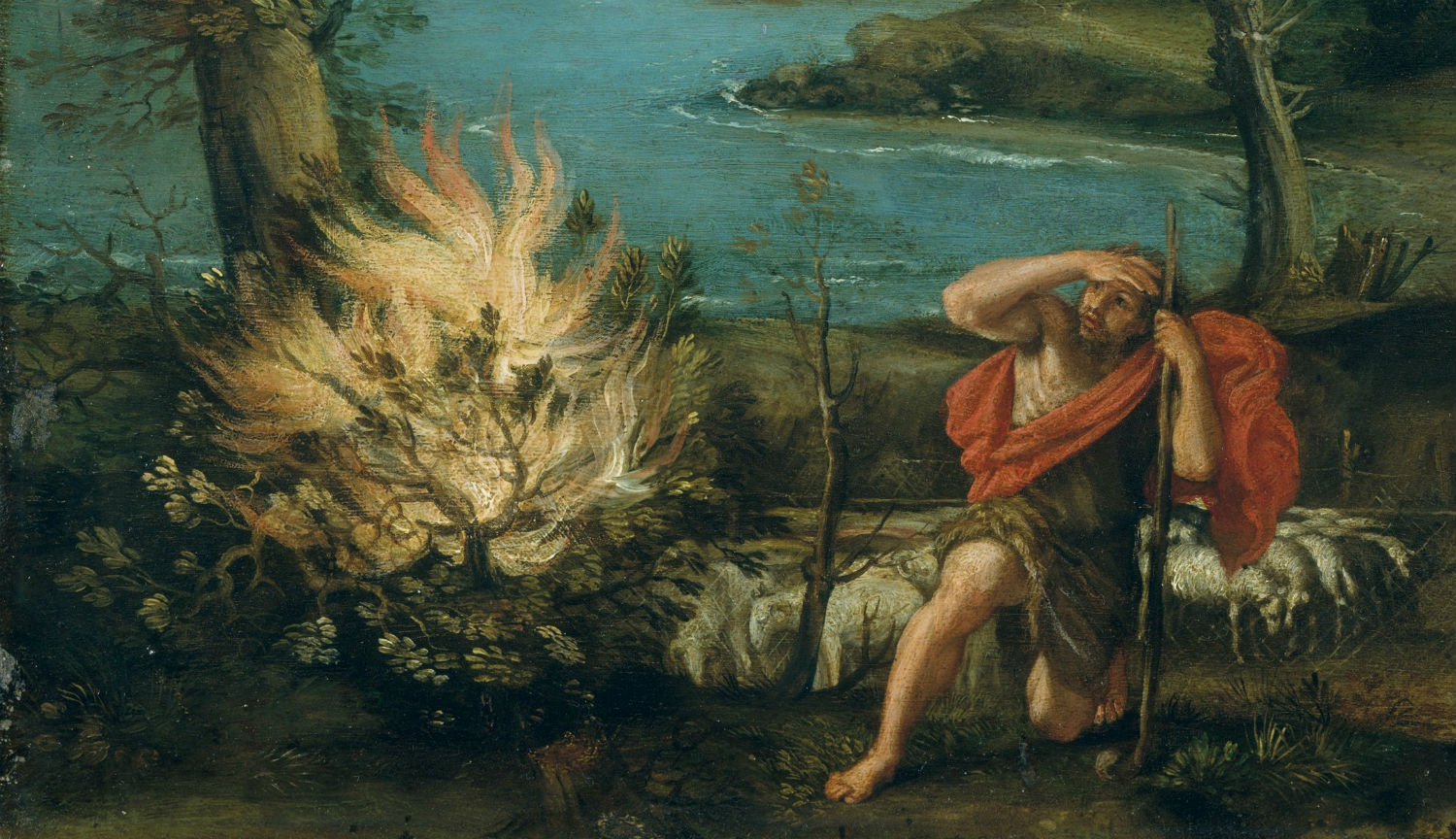
We find this old philosophy come down to us in the New Testament in Matthew (3:11), e.g., when it says: “I baptize you with water for repentance. But after me comes one who is more powerful than I, whose sandals I am not worthy to carry. He will baptize you with the Holy Spirit and fire.” This fire is not the physical flame, but the divine light of THEION (see Baptized with Fire: Proclus and Simonian Theosophy on the Symbolism of Fire and Water and Historical Connection of Born-Again Christianity to 17th century Theosophers, Occultism and Alchemy).
The notable god of Arabia, and its gods come into the same vicinity of the Bacchus-Dionysian worship, who was known as Adon, the First Ancestor, the LIFE-god. The worshippers of Adonai tried to distance themselves from the worshippers of Bel (Baal) and Moloch. Despite their protestations, Bel and Moloch, as well as Mithra and Saturn — all personify the same principles of the Hebrews. Franz Karl Movers demonstrated that even the names of Abraham and Israel were names of the chief FIRE of the Kabiri (fire-gods).
BAAL THE STORM-LORD WHOSE ATTRIBUTES YAHWEH STOLE, UGARIT CONFIRMS DUNLAP
The biblical scribes, in their Deuteronomistic fury, painted Baal as the arch-rival and false god (1 Kings 18, Elijah on Carmel). Christian tradition turned him into Beelzebub, ‘lord of the flies,’ a prince of demons. Islamic sources inherited the same idol-condemnation (Qur’an 37:123-132 on false gods of the Arabs). However, this is mere polemic propaganda to enforce exclusive Yahweh worship.
Modern Ugaritic scholarship from the Ras Shamra tablets and 1929 onward refutes the Yahwists. In the Baal Cycle (KTU 1.1-1.6), Baal is the heroic storm-king who slays the sea-dragon Yam, builds his palace on Mount Zaphon, and brings fertilizing rains — exactly the life-giving “divine fire” and fructifying sun Dunlap described. Baal is no demon, but is the young, victorious lord.
Mark S. Smith in The Early History of God (2002) proves this convergence of Yahweh and Baal, historically. Yahweh, originally a southern warrior from Edom/Midian, absorbed Baal’s cloud-rider imagery (e.g., “rides on the clouds,” Psalm 68:4; 104:3), thunder-voice and fertility powers. Israelite religion was Canaanite at root, and the “contest” on Carmel was not Yahweh against a foreign demon, but internal reform suppressing the native high-place cult Dunlap already exposed in Ghebers, when he stated, that on the high places of Judah, incense was burned to the planets, sun, moon. These high places of Israel belonged to the Mithra worship and the Osiris worship” (Ghebers, p. 134). Thus the Abrahamic faiths did not evolve beyond Baal but simply demonized and absorbed him to weed out the competition.
THE MYSTERY AND MEANING OF THE GOD-NAME BA’AL
The Mystery of this god-name is the combined esoteric meanings of the SPIRITUAL SUN (Lord of the Sun) and Full-Moon. The deities names and narratives vary in detail, but are essentially built on the same primitive type, whether it was of India, Babylon, Greek or Roman, Jewish, or Egyptian. We see in all their infant stages, from the monotheistic to pagan religions and culture what is so-called: fire, sun, and lunar worship.
If you trace this same line in research, you will find a pre-Christian Nazarenism in Mesopotamia, and a Christos-idea (Roman and Persian Mithra) long before any modern Mythicist to blame. You’ll also discover the books of the New Testament, with sects among them regarding the god as having been manifest in different bodies, and in various times, similarly to a concept in Indian (Hindu) philosophy.
The early Gnostics are primarily influenced by Chaldean and Syrian ideas along the borders. Dionysius (Adonis) was the Syro-Arabian god under various names, with the principle Urania (Ourania who is both the Sun and the Full-Moon, Sin, or Lunus-Luna), and the Father of Epigeios (Adam, earth), a hermaphrodite or duad in mythology, that contained Eua (Eve, female principle) in it. She, known as Daughter was represented by the Crescent-moon.
Many gods are expressions of two fundamental cosmological poles — a theme that appears in Rome, China, Mesopotamia, and even in the earliest Indo‑European mythologies. Consider that the essence of the pre-Islamic gods can be understood as expression of two primordial principles, just as the multitude of Roman deities may be reduced to the sacred polarity embodied in Coelus (Heaven) and Terra (Earth), or in the ancient Chinese pair of Tiān (天) and Dì (地). The simplest explanation is often the truest: the gods originate as personifications of the fundamental powers of nature. Yet, as time moves on, the conceptions grow more fantastical in the minds of those who cannot admit the fact. Thus, it is common in many ancient theogonies, the “Daughter of God” appears as a symbolic figure, or offspring of Heaven and Earth, represented in forms such as Terra and Luna (Phoebe). She embodies Wisdom, mediating between the upper and lower worlds. This is another side of the mystery of the “Son of God,” known variously as Wisdom or Mercury among the Romans, or Nēbo among the Semitic peoples in Arabia, each a divine messenger in their myths that convey the knowledge of the gods to humanity.
MOLOCH, THE FIRE-DIONYSUS OF THE HIGH PLACES — BIBLICAL DISTORTION AND HISTORICAL REALITY
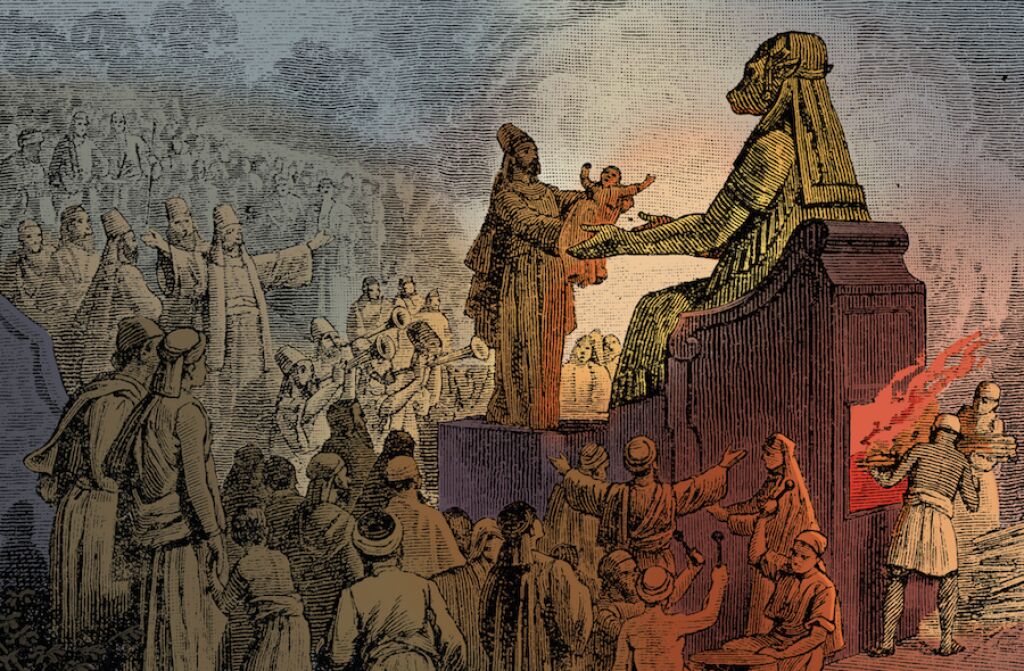
“Moloch worship” was the old fire-cult of the Ghebers/Asarim on the bamoth, identical with the solar Dionysus/Adonis/Adonai mysteries. Christian and Islamic traditions simply inherited this demonization without evidence. Archaeology at Carthage and biblical-era Judah shows no mass slaughter of innocents for a “devil-god,” but only the same fructifying fire Dunlap called the “Primal Sun” and “Archeus.”
MOON AS FEMININE IN LUNAR MYSTERY AND THE ALLEGORY OF THE ARK
The moon as a woman is used as a sexual allegory also, transfigured into other allegories, such as the Ark, or the Argha (Celestial Isis, Astarte, Diana and Venus-worship) containing all the germs of living things. It was an “impersonal symbol of nature” (Blavatsky, The Secret Doctrine, Vol. 2. pg. 462), and not the physical moon. The Ark or Argha, being simply the allegory of the Ship of Life, carrying all the germs of all beings through the Sidereal (Starry) Ocean (or the Sea of Venus).
In the Chaldean myth, Nuah is the Universal Mother, who is now represented as the fabled Mary the Virgin carrying the “Son of Man,” without having been impregnated.
Certain Christians accuse the ancient Arabs and Muslims of moon-worship, but the moon or Hebrews’ lunar calculations (to record Lunar Months), and Adonai the (Sun-god, or God of life) are also built on the same ground. The lunar mystery helped them record the lunar months.
The Babylonians held that the Sun-god proceeded from the Mother of all, who is the superior of nature, like the Cybele (Mighty Mother) of Anatolia, or Maat (Cosmic Order) in Egypt. The Sisters, Daughters, and Mothers are often the mirror-side of the Brothers, Sons and Fathers, and at other times explicitly detailed as being Androgyne.
BAAL AND THE CONCEALED GOD OF SECRET WISDOM
Yahweh had for his counterpart Asherah, and Apollo (Bēl, Adonis), or generally the Sun-gods had mirrored Sun goddesses, e.g., Minerva, or Athēna who all also represented the principle of Wisdom and Intelligence.
Essentially, for the ancients, every god was the one living and unique god. It couldn’t be reinterpreted into the later developed monotheistic scheme, which is a modification subsuming the characteristics of other Mesopotamian gods, and conceals its paradox and history. Apollo is merely Bēl the sun-god again in Mesopotamia, Phoenicia, and Palestine, guised in another myth in Greece and Rome as Pol-lux, the light and son of Zeus.
Baal-Moloch compounded is a prophet (Malachi), with Moloch (its Semitic root means “king” like the Greek “sōter”), or Melech being merely again, Theion, the fire-sun, or the Fire of Life. Moloch, an Ammonite god is in fact Mithra, the Chaldean Word (the lord), the ‘Fire of the Intelligible Sun’ (Universal Mind). Mithra is the Persian and Chaldean Christōs in the Mithraic Mysteries.
Bēl, the fiery Sun is the devouring physical luminary and the hidden Sun. In India, hence he is also Shiva, the destroyer (destructive aspect of one Force under a triune), and Adon (Adonai, Lord). God is hence, light and darkness, the one who “makes weal and woe,” creator, destroyer, and preserver, broadly speaking — LIFE as the Mandaeans call their Highest God.
Circle dances were performed to Baal, or Bēl, the mightiest and oldest gods of Babylon. Bēl (Ēl, Enu or Elu in Chaldea) was called father of the gods, and his eldest son in that Chaldean Theogony was Sin (the Moon), the presiding deity of Ur in Chaldea. Sin is a god in pre-Islamic Arabia, and the Ur lunar god of Terah, who was Abraham’s (Abram) father.
The real “Concealed God” (as in Judaism) was “ineffable, a name unpronounceable,” the Proarche in Mesopotamia. This “HIDDEN GOD” is followed by Ten primal Patriarchates, or Aiōns (Virtutibus), in the Pentateuch as taught in Bere’shith, usually defined as an ancestral genealogy of humanity from a dual-parentage — Adam (Epigeios) and Eve (Eua).
We must remember, there are multiple meanings ascribed to things. All of the ten so-called Antediluvian patriarchates, correspond to the ten Babylonian sar (solar periods), or the Ages or TIME; and these Ten Patriarchates are the names of the solar periods (Aeons). They are the Ten (a number stressed in the Jewish Kabbalah) Hebrew Aeons, and the ten Babylonian Mythic Kings who reigned 120 SARS (3600 a solar year) each (see Babylonia), according to Berossus of Babylon. The decade (symbol of 10) is the triad and septenate-mystery combined. Add Bel and Beltis (his consort), and this makes the TWELVE Powers (signs) of the Gods.
Like the Hebrews, the Babylonians did not speculate on the nature of sige, or silence (Damascius the Syrian on the Babylonians, see Cory, Ancient Fragments, 1832, pg. 318), called DARK SPACE in The Secret Doctrine.
Knorr von Rosenroth, stated in the Kabbalah Denudata, that the God of Israel is the eternal WISDOM (Eternal Logos) united with the soul of the ANOINTED (see Kabbalah Denudata, III, 1912 ed., pg. 271.), i.e., combined, it describes the MONAD (the “One”). This indicates, that even in antiquity the nature of this principle at the root of life had been considered protean.
The ANOINTED (“they call Male-Female”—Cyril of Jerusalem) is no man as it is depicted in Christianity. This Gnostic doctrine began amongst the Jews, with their ancient doctors, schools, Talmud, the Mishnah, the Syrian heresy manuscripts, Magianism, Chaldeism, and Arabian mythology. These systems believed in an ANOINTED-god or ONLY-BEGOTTEN, and FATHER-Mind-Wisdom (represented symbolically as the LION).
LUNAR MYSTERIES IN LIGHT OF SUN-FIRE
“What is known of Chaldaean Moon-Worship, of the Babylonian god, Sin, called by the Greeks “Deus Lunus,” is very little, and that little is apt to mislead the profane student who fails to grasp the esoteric significance of the symbols. As popularly known to the ancient profane philosophers and writers (for those who were initiated were pledged to silence) the Chaldeans were the worshippers of the moon under her (and his) various names, just as were the Jews, who came after them.” (Helena P. Blavatsky, The Secret Doctrine, Vol. 1., pg. 388).
The significance of this must be searched for in the meaning of the sacred day, and the relation of their agriculture to the lunar month. The nature of the moon and beliefs surrounding its subtle or “psychic” relation to terrestrial life, or the mysteries of life and death were all considered apart of one Knowledge, with its branches. There is no lunar (of the full-moon or crescent) religion versus astral religion versus solar (the sun, or fire) religion.
Nations and peoples had variant yet limited philosophical conceptions and different hierarchies, each with their special additions and subtractions to their system. Although the Mysteries was said to be a system of seven “dialects,” the Hebrew elites only had four of the “keys” to make out from these their special religion, which resulted in a tribal nationalized religion others have been glad to force onto mankind through their revisions, or claimed continuation of prophetic legacy. The notion of a right, or “true religion” became popularized through the Christians, and then is adopted by subsequent sects, and the later Islamized Arabs.
There was although, a high philosophy connecting what is so-called “sun-worship” and “moon-worship.” Unlike abstract concepts of God as an invisible gigantic entity, the idea that Spirit pervaded its creation was evident and understood in both a literal and metaphysical sense in antiquity. Through its aspects, the Unknown Deity uses the gods, planetary systems and natural objects as receptacles. The astronomical bodies and the Sun played a role, as planets are receptacles and generators of forces, energy, etc., that sustain, preserve, or create life — providing the conditions for the evolution of life.
Each and every name has symbolical, abstruse, and philosophical meanings, as it would when crossing over into any nation, tribe, or language. As Dunlap proved in Sōd and Ghebers, and as Ugarit, Smith, and Stavrakopoulou now confirm with tablets and stratigraphy: Adonai, Baal, and Moloch are not three separate “idols” to be demonized. They are linguistic and ritual masks of the one hidden Sun, or divine fire that fructifies life, lives in man, and was veiled by the exoteric Abrahamic scribes. The old religions, the Mysteries (Eleusinian, Mithraic, Adonis) preserved the true keys, and were never ‘primitive. They were the source.
SOLAR AND LUNAR WORSHIP ARE APART OF CHRISTIAN SYMBOLISM
“THIS archaic symbol is the most poetical of all symbols, as also the most philosophical. The ancient Greeks brought it into prominence, and the modern poets have worn it threadbare. The Queen of Night, riding in the majesty of her peerless light in heaven, throwing all, even Hesperos, into darkness, and spreading her silver mantle over the whole sidereal world, has ever been a favourite theme with all the poets of Christendom, from Milton and Shakespeare down to the latest versifier. But the refulgent lamp of night, with her suite of stars unnumbered, spoke only to the imagination of the profane. Until lately, Religion and Science had nought to do with the beautiful mythos. Yet, the cold chaste moon, she (…) stands in closer relations to Earth than any other sidereal orb. The Sun is the giver of life to the whole planetary system; the Moon is the giver of life to our globe; and the early races understood and knew it, even in their infancy. She is the Queen and she is the King, and was King Soma before she became transformed into Phoebe and the chaste Diana. She is pre-eminently the deity of the Christians, through the Mosaic and Kabalistic Jews, though the civilized world may have remained ignorant of the fact for long ages; in fact, ever since the last initiated Father of the Church died, carrying with him into his grave the secrets of the pagan temples. For the “Fathers” — such as Origen or Clemens Alexandrinus — the Moon was Jehovah’s living symbol: the giver of Life and the giver of Death, the disposer of being — in our World. (…) The number seven, so prominent in the Bible, so sacred in its seventh (Sabbath) day, came to the Jews from Antiquity, deriving its origin from the four-fold number 7 contained in the 28 days of the lunar month, each septenary portion thereof being typified by one quarter of the moon.” (The Secret Doctrine, Vol. 1., pp. 386-387)
“Though the regular Sun-Worshippers, the Parsis, are few, yet not only is the bulk of the Hindu mythology and history based upon and interblended with these two worships, but so is also the Christian religion itself. From their origin down to our modern day it has coloured the theologies of both the Roman Catholic and Protestant Churches. The difference, indeed, between the Aryan Hindu and the Aryan European faiths is very small, if only the fundamental ideas of both are taken into consideration. Hindus are proud of calling themselves Suryas and Chandravansas (of the Solar and Lunar dynasties). The Christians pretend to regard it as idolatry, and yet they adhere to a religion entirely based upon the solar and lunar worships. It is useless and vain for the Protestants to exclaim against the Roman Catholics for their “Mariolatry,” based on the ancient cult of lunar goddesses, when they themselves worship Jehovah, pre-eminently a lunar god, and when both Churches have accepted in their theologies the “Sun”-Christ and the lunar trinity.” (The Secret Doctrine, Vol. 1., pg. 388, The Moon, Deus Lunus, Phoebe).
from “The Ghebers of Hebron”


THE MONOTHEISTIC GOD OF THE ABRAHAMIC FAITHS
As to the name Yahweh, some have traced it to being a volcano or mountain god, as opposed to the sky-god, Ēl. This attempts to perhaps confusingly demonstrate the names and titles of the Gods were more than just names and titles, but masks of different aspects of the Sun-God, or an eclectic meaning of God collected from surrounding cultures.
Samuel Fales Dunlap referred to Judaism as an offshoot of the old Phoenician worship, owing its ideas and concepts to “paganism,” and that it shrouds this under the constructed blind of “monotheism.” The tutelary god Yahweh had succeeded Ēl in worship, which appropriated the consort, Asherah, and survives in Christianity under a Father-Son-Mary combination.
“The Jews contend that their God, Yahweh or Jehovah, is the Supreme Being, who deigned to communicate with them and them alone in the covenant at Sinai. Christians and Muslims, their spiritual descendants, have taken up the claim—while insisting that their revelations are the final and complete versions. All of these religions, in their dominant forms, insist that any other god either does not exist or is a demon in disguise.
Sometimes, however, the charges have been reversed to say that the monotheistic God of the Abrahamic faiths is not what he is claimed to be. One of them was H.P. Blavatsky. She writes: “If we are taken to task for believing in operating ‘Gods’ and ‘Spirits’ while rejecting a personal God, we answer to the Theists and Monotheists: Admit that your Jehovah is one of the Elohim, and we are ready to recognize him. Make of him, as you do, the Infinite, the one and the Eternal God, and we will never accept him in this character. Of tribal Gods there were many; the One Universal Deity is a principle, an abstract Root-Idea which has nought to do with the unclean work of finite Form” (Secret Doctrine, I, 492n.; emphasis here and in other quotations is in the original). Blavatsky is not denying that the God of the Abrahamic religions exists; rather she is saying that, contrary to what these religions claim, he is not the sole and unique Supreme Being.” (Richard Smoley,God and the Great Angel, Quest 99. 1, Winter 2011, pp. 24-28.)
References
- Helena Blavatsky, The Secret Doctrine ,Vol. 2 (1888)
- Samuel Fales Dunlap, The Origin of Ancient Names of Countries, Cities, Individuals, and Gods, Christian Examiner, Cambridge: 1856.
- Samuel Fales Dunlap, The Ghebers of Hebron, New York Revised Edition, 1898.
- See ideas in Knorr von Rosenroth’s (trans. M.L. McGregor Mathors), Kabbalah Denudata (1912).
- See Ante-Nicene Fathers, Vol. 1., Irenaeus: Against Heresies Book I (edited by Alexander Roberts). http://www.gnosis.org/library/advh1.htm
- Wallis Budge, E.A. (1921). The Babylonian Legends of Creation. http://www.sacred-texts.com/ane/blc/blc06.htm
- Mark S. Smith, The Ugaritic Baal Cycle, Vol. 1-2 (Leiden: Brill, 1994)
 The American Minervan
Leave a comment