
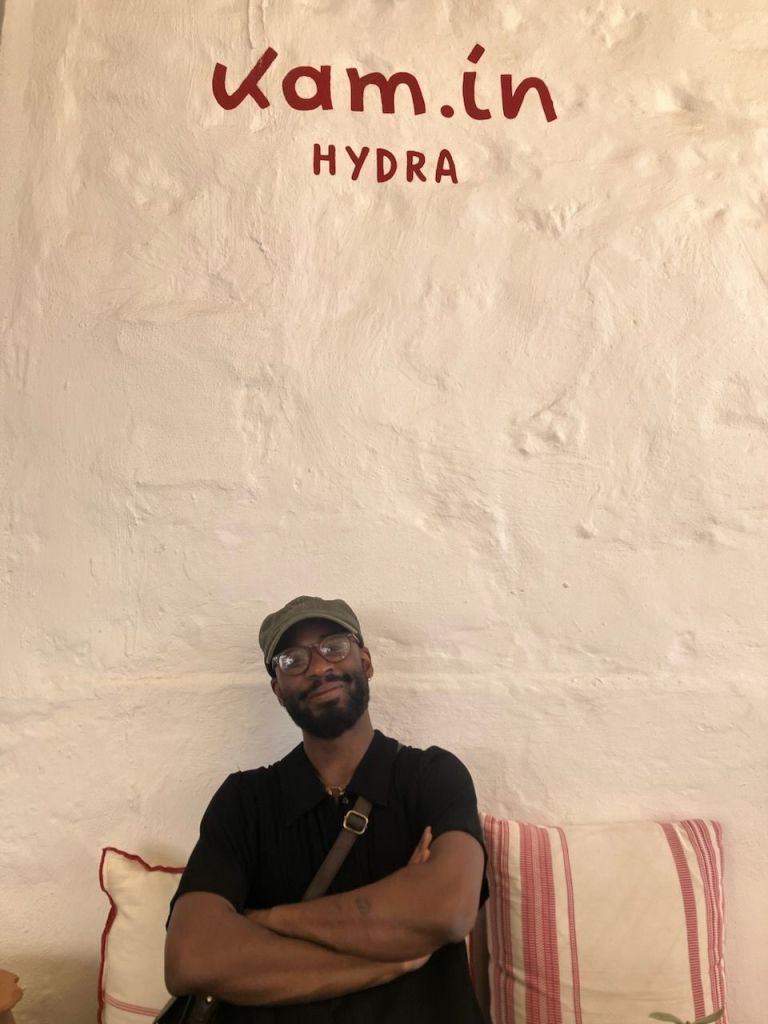
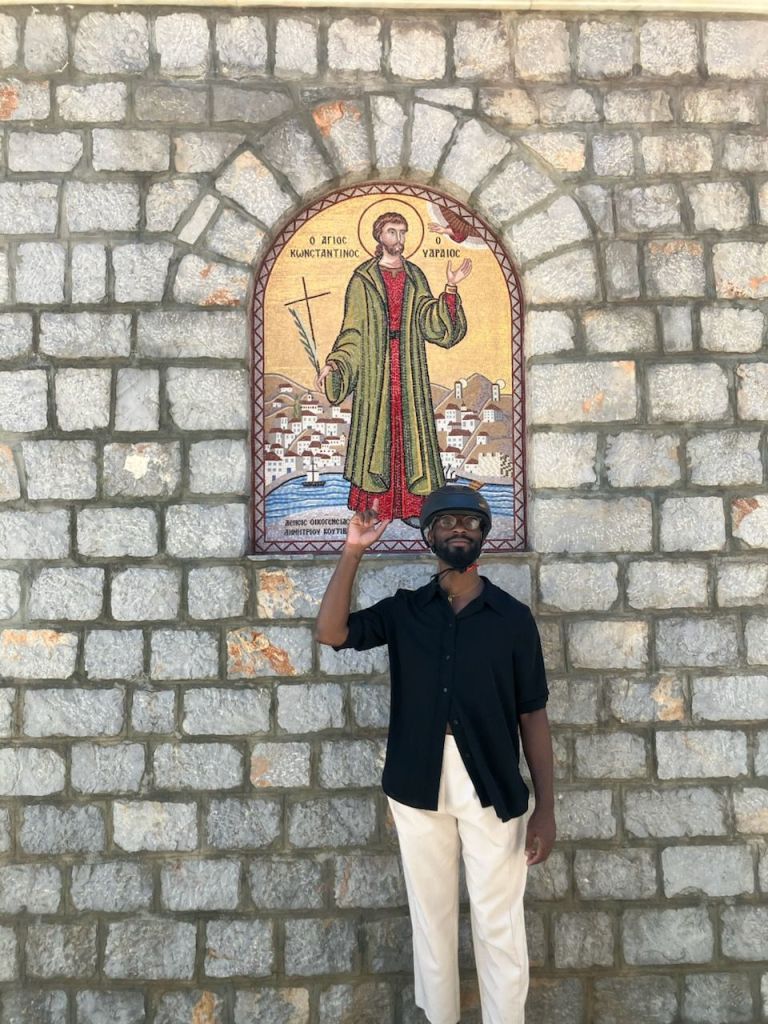
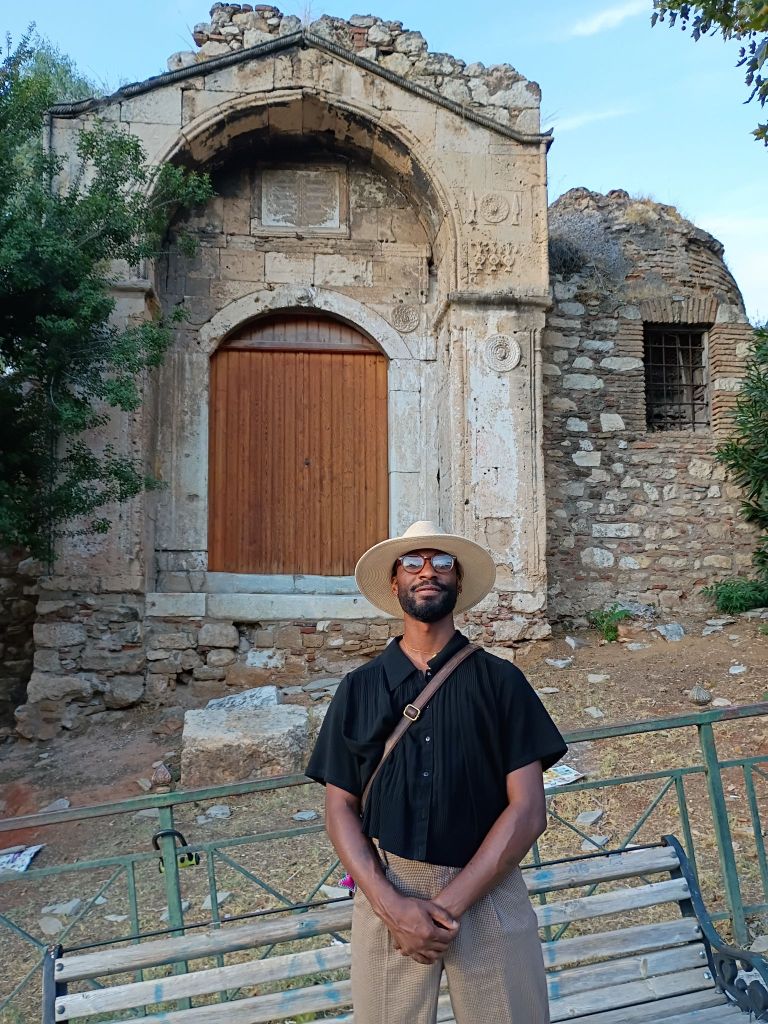
I just returned abroad from my journey to the island of Hydra (Gr: Ύδρα, romanized: Ýdra) and Athens in Greece back home to the state of Illinois and came back very happily engaged to my beautiful partner. It has been over two years since I went on a trip through a tour agency to Italy where I visited and stayed in Florence, Venice and then Rome (visiting the Vatican), and I have still not fully processed that time period. Then, I also have so many pictures and memories to hold. Although I documented my time in Italy and Greece, there are so many emotions and thoughts about my travels abroad upon returning to the United States. These are places I would like to visit numerously in the future. Italy (again) and Spain are next on the list. The one question I have been asked by others was, “so, why Greece?”

THE BURDEN AND BREAKING THROUGH SOCIETAL LIMITATIONS
Besides, my personal interest in the study of Greek and Roman antiquity, which been part of my reading since I could ever read books, I can only answer, “why not GREECE?” These things are being reflected through my eyes, that of a Black person of African descent to whom the role of classical antiquity (of political, philosophical, cultural or religious life), mythology and world folklore has served the most important part of my focus in life. Admittedly, it is hard to reflect on due to complexities of Race in this society. For example, considering the dimensions of historical place within the construction of Whiteness (involving the construction of American Identity) and the development of racial hierarchy, or the association of Greco-Roman culture with claims of white inheritance.
CLASSICISM THROUGH BLACK EYES AND NEGATIVE IDEAS ABOUT CLASSICAL ANTIQUITY
So, in my own country, I have been asked about my interest in Greek and Roman antiquity on numerous occasions in a manner of tone that reads suspicion. Also, there is still a prevalent perspective that asks — why should Classicism interest Black people, since the past is just full of racism, slavery, pain and European culture. Black people ask that. Others may ask, “why do you focus on Europe, and not Africa as a Black person?” thus giving the impression, I shouldn’t be there. “Why don’t you bring up, e.g., the works of Cheikh Anta Diop or various other thinkers?” It is assumed I am naive.
The subject of Black Classicism when it is prevalent in non-academic minds is too surrounded by racial questions, agendas over ethnography, or of reversing (or restoring) history to Africa and Black people, which is not the point of my research. For some Black people, not all, the only way to deal with such history is to position either Black people or a certain people in Africa as the source of ancient philosophy of the Greeks or see all history from the position of slavery and subjugation. Nothing really prevents us from becoming masters of philosophy in our day.
I also do not like how others are fixated on claiming such history and philosophy only to say, “we did it first,” but aren’t necessarily interested in becoming philosophers and creating philosophy or works of classical beauty themselves. I want to get out of the emotional side of it, based in racial or ethnic jealousies and animus. The questions are often full of assumptions, and not genuine interest in knowing me; and with a lack of genuine interest, such a person is not really interested in reading my writings or hearing what I have to say.
For a long time in my life, I have dealt with people who do not cheer me on, but rather seethe in personal jealousy, and try by every means to discourage me, or make it seem like I don’t know what I’m talking about. This is a real struggle for me, because it affects how I frankly think of who my audience is. Are my readers made up of people who wish me good, and who do take interest in how I approach these subjects and topics? I am not sure, because I feel invisible and not heard.
In ways, I am dealing with a dilemma and how to break through personal, societal and academic limitations in the “Burden of Being a Black Philosopher in a White World.” There is the fear also, that Black professionals, or expertise isn’t taken seriously, and to be taken seriously, one has to be more extraordinary than usual or laughingly have three Ph.Ds to be listened to, when from others such is not expected. There is also a problem or limitation in the public mind about classical antiquity in general, not merely “The Classics.” This problem is the view of classical antiquity negatively as ‘elitist,’ ‘colonial,’ ‘western,’ and therefore having no place in the perspective or learning of Black people. I have come upon this time and again when observing perspectives from certain scholars about Theosophy and H.P. Blavatsky, when they falsely frame Blavatsky, a Russian and Slavophile thinker (Maria Carlson on the Influence of Theosophy on Russian Culture in the Russian Silver Age) within a limited Western European, or Anglo context or generalize Theosophy solely within naive European romanticization of “the Orient!” Despite the fact, that many Theosophists and their perspectives were not that of a “Westerner,” and they tried to challenge impeding habits of thought in intercultural exchange, and construct bridges of understanding for Westerners.
THE INFLUENCES WEAVING
Although I am born in the United States, I have since youth adopted and adapted to the thinking of other peoples, cultures and philosophies that inspired me, particularly East Asia (namely Japan and China), and understanding thinkers who sought to politically and philosophically resolve their national conflicts. In early elementary, Greek, Roman, Scandinavian and Biblical mythology appealed to me and spoke to me all at once. I had an experience in my early youth where I would frequently hear my own mind speak to me in the manner of a teacher, and these thoughts were centered on discipline. It is my conscience, but it was odd because my conscience had wisdom, and it felt instructive. It was as if I was speaking to a future version of me, that sought to align, which I struggled with. Whenever I did not listen, things went awry in life in terms of mistakes one makes. When I listened, the dualism ceased and I acted and thought as one being, with more swiftness in thought and wiser. I came to understand what that was through classical philosophy (e.g., Socrates and his daimon), but it is different when you are actually facing the labyrinth of your own mind, or dealing with that sense of introspection and meditation. That led me deeper into philosophy and the development of a love for classical writers. I was also a science (Astronomy) nerd and enjoyed reading about the History of Music. The history of science and music taught me, that human history is not about one singular people being the supreme focal point of ingenuity, but that historical development paints a grand composite picture of seemingly disparate pieces brought together. The same applied no less to the history of Religion, and I became devoted to understanding how Christianity became the dominate religion.
I happened upon The Secret Doctrine at one point and remember looking at a Chapter on Giants and being fascinated, but saw the rest of the Contents, and thought it was way over my head. I read it as mythology. I realized at that point, that there was so much I did not know about ancient history. From junior high to early highschool, I was fascinated with world conspiracy theories, then had fun debunking them. By late highschool, I discovered India, its history and classical Indian philosophy. It blew my mind. I had never adopted the belief in supremacy ascribed to Biblical literature so customary to the environment and society I grew up within, but by then it was completely eviscerated. In early college, I continued searching through Theosophical literature and discovered their conflicts, and what I agree and do not disagree with in the habits and approach of contemporary Theosophists.
Then, I discovered Islam and Islamic philosophy, and the history of Mani, Persia, the Ottomans and the Byzantine Empire. It brought me full circle in present-time all the way back to Greek and Roman antiquity with the addition of interest on Bactria, Mesopotamia and the Mediterranean. The story and world felt far too grander to ever find my interest in classical antiquity wane, and my entire idea of “Western Civilization” has turned into “so-called Western Civilization,” and any idea of painting the history from the American limitation of viewing the world as a struggle between White and Black people is wrecked.
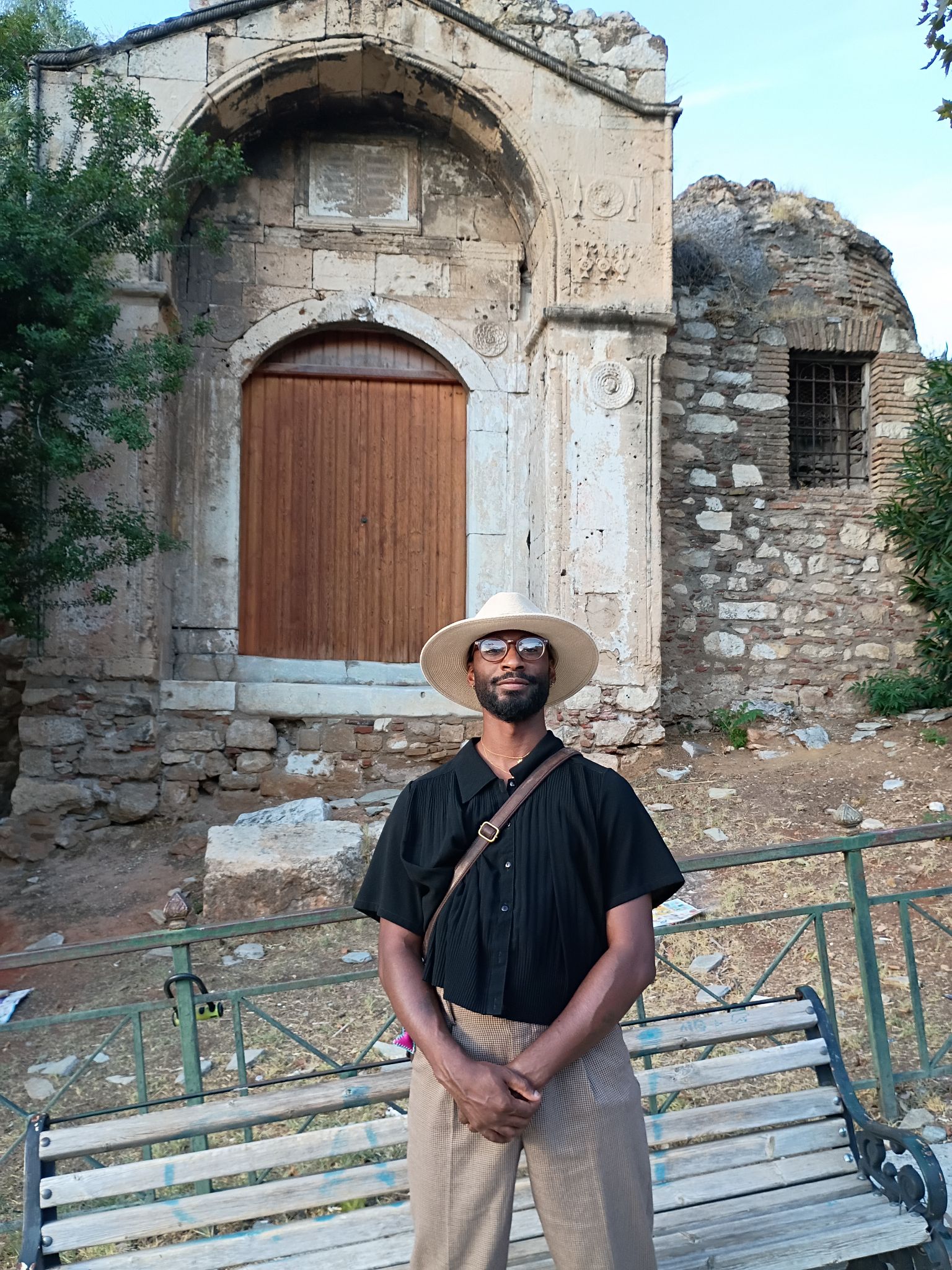
Any belief in supremacy of Americanism, or “White culture” appears farcical and infantile from any vantage point and does not require “Black eyes” to see through that alone. You must consider from where I approach, and what has influenced me, particularly my interest in Chinese culture and history. I think almost entirely in a manner of how to develop civilization, from studying all the qualities in antiquity that have built the relative golden ages of great civilizations. My aim and focus are on development of the culture, of the individual and of our civilization, not its stasis or theories of excuse for its present conditions. The older nations have the history and knowledge to help them. The Americans are still learning to see themselves “as a People” outside of simplistic logic of relying on “the Other” or “Whiteness” to define ourselves. When studying religion, I look at relative periods of high literary development, high mysticism, rich philosophical debate, hybridization and eclecticism. I have spent most my time and field study within Chinese and Muslim cultures within that context. So, all this is playing in my head as I am standing on the streets of Athens, which many historical persons have walked before.
I was a little Black kid from the Hyde Park and Jeffrey Manor neighborhoods of Chicago. What does Greece, Italy, Europe, or their histories mean to me one may say. All I can say is “well, read what I have to say. Read what interests me, and read what is to come, the more I learn and can give, because there is a unique perspective to give, and my voice has value, despite what anyone else may say and have said to the contrary.” Everything about my work here and in the future is part of me and what I care about.
THE AMERICAN
This blog is not called The American Minervan, because it is a reaction to White identitarianism or to promote nationalism. I am an American, and understand it in a different way than others, because of my reflections on U.S. history, its peoples and its narratives based on historical facts. I have journeyed all across the country, and still have plenty more places to visit, and I do passionately enjoy learning and explaining the history. Nothing has changed for me since my days of highschool when I took part in the History Fairs every year. It is just continuation of the love of history.
But why “The American?” Why not The “universal” or “global” “international,” or “cosmopolitan” something? I do not see it as exclusionary.
So, “the American” is associated with White identity, or White people (speech, habits, lifestyle, thinking, etc) within its constructed racial hierarchy, and other people around the world do adopt this perspective and racial hierarchy even when they are not White. When some people think of American, they think of White people first, and everyone else as secondary. Any person of reputable influence can adopt that perspective and assert it so in a matter-of-fact way and think they speak truth when they do. However, I take from my personal experiences that have led me through years of reflection deal with interactions with colleagues from the Middle East, North and Central Asia, Central Europe, China and Africa with whom my American habits or limitations of cultural thinking became noticed then challenged, despite my cosmopolitanism or deep interest in the study of other cultures. For example, many of my colleagues that were students from China coming to study in the U.S., saw me firstly as American. Even colleagues from Africa viewed identity first through nation and tribe.
Their understandings of identity and nationality defined the way they saw me, and they saw me through my nationality, as a representative of ‘the American.’ What I did, some of them saw the American through me, and I know this, because of how they addressed me and spoke.
In such circles also, you are “The American.” It was respectable and profound to me within, because I felt more recognized by them, than I felt from Americans, coming into an environment in my college years that I did not experience until college — being around other peoples and cultures outside of a main demographic of Black Americans, Hispanics, and immigrants of the diaspora (composing some of my family).
BEYOND THE BLOCK, STUDENT LIFE AND HOPES
In the neighborhoods I grew up, there were always those men and teenagers that stood on the corners. I not only wanted to never be on that corner myself, I wanted to experience the world beyond those corners, and live out my ideas, and it did take a long time in this life, but I believe I am going places and will continue to learn and be able to teach beautifully the things I take interest in. Maybe I can change American culture and limitations about its identity and our relation to the past beyond the pain, or maybe I can’t, but for now, I am maturing, learning and must remain consistent. So many skills to learn, and some languages to master, and I am happy returning back home to university to finish and continue my education with a vengeance.
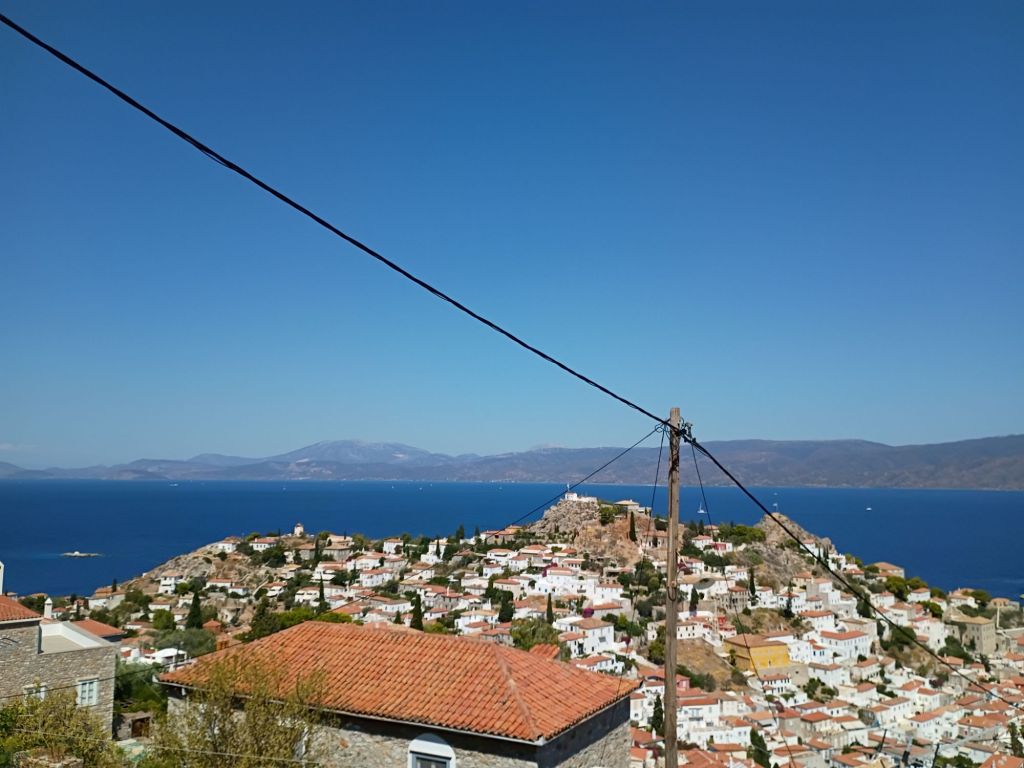

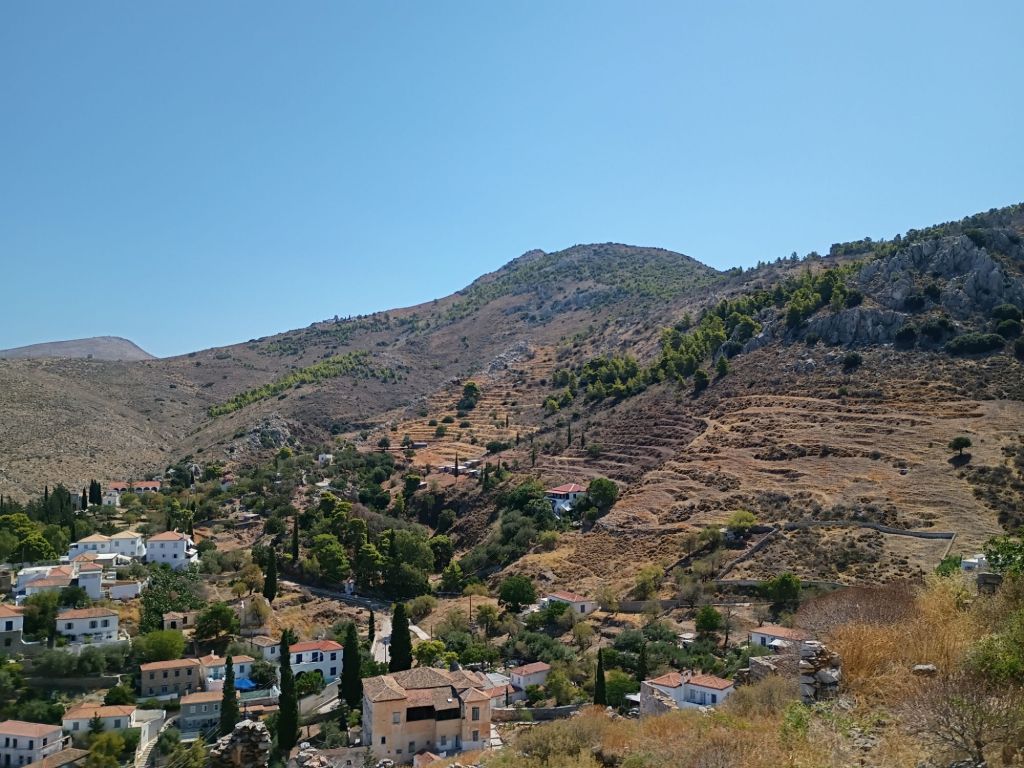
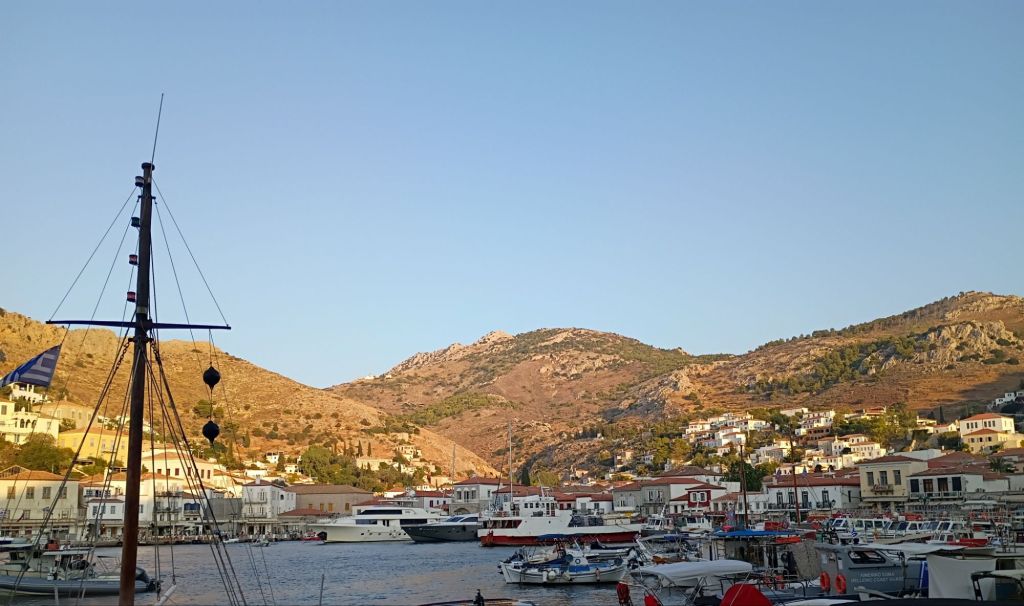

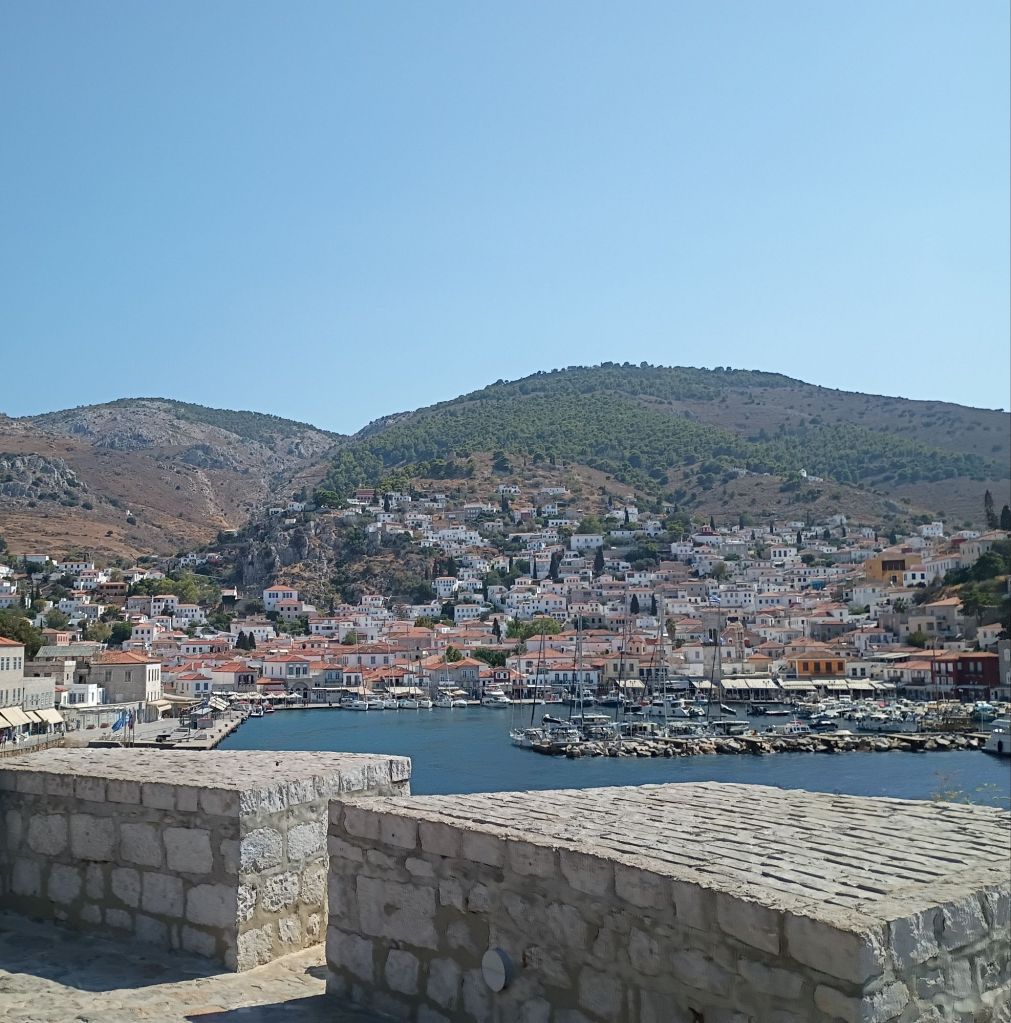
A little view from the Port and the spinning Sun on the way to a nearby beach.
In my next reflection, I want to talk about Hydra in particular and the significance and symbolism the island represents within Greek history, being that it was directly related to my blog, although this was a complete surprise when my partner pointed out the flag of Hydra at the museum.


 The American Minervan
Leave a comment