
INTRODUCTION: THE LERNAEAN HYDRA OF RELIGIOUS POLITICAL CONSPIRACIES
Christians that use Alice A. Bailey (born Alice La Trobe-Bateman) to attack Theosophy prove to believe in the ideas of Alice Bailey far more than we Theosophists do. If they did not, then Christians would help Theosophists demarcate the great differences — and who are engaged in this very task, between Theosophy and Alice A. Bailey’s teachings, but Christian conspiracists do not.
Alice A. Bailey was a political idealist, as well as her unseen source. The writings and style of Bailey and her source reveal itself. This could also explain the angst with which certain credulous Christians so willingly claim an affinity and connection between Theosophy and Alice A. Bailey to fill the internet with misinformation. Her work could also be attributed to psychological explanations. Whatever is the case, we do not believe in the sham of Bailey’s writings and source of knowledge. You do.
“The long divorce between religion and politics must be ended and this can now come about…” (“The Reappearance of The Christ” p. 18-19)
Why does Bailey and her source care so much about power in the political world?
Any honest person who also has done their research well on Theosophy, the inner conflicts within its movement from the nineteenth to twentieth-century would be intellectually capable of realizing that Bailey’s writings are the kind of distractions H.P. Blavatsky herself warned against, as detailed in Pseudo-Theosophy and Pseudo-Messiahs: Imitations of Theosophy. No student needs a cunning Christian or the Bible to teach them this very fact, because they ought to and can be made to discriminate between Theosophy and Bailey themselves.

The political idealism of Bailey is another effort in the twentieth-century at taking advantage of the inner conflicts and turmoil within the Theosophical Movement. It is also another effort at subverting the cause of the Theosophical Movement and transition it towards an authoritarianism customary to papalism and the methods of the Church. The reason why Blavatsky is discussed here is because the heads of the Lernaean Hydra keep emerging and spreading the idea that Bailey’s teachings and Theosophy are one and the same. It is Christians who are primarily each year producing writings that re-circulate these lies.
When I first came into the Theosophical Society, I digested all the material. I had full access to the Olcott library in Wheaton, Illinois. I already came into it with some knowledge of Besant and Bailey’s writings. I read through each period, and I began to notice differences. I learned about William Q. Judge, the Katherine Tingsley drama, the Back to Blavatsky movement, Charles W. Leadbeater’s “simplified Theosophy,” scandals and Jiddu Krishnamurti. Many theosophists have had this exact same experience.
When researching what is happening, it seems Leadbeater and Bailey were both simultaneously in the early 1900s developing new peculiar teachings. However, some concepts that enter Theosophy in this period like the “Second Coming of Christ” in Bailey’s teaching first appear in the work of C.W. Leadbeater under self-proclaimed “clairvoyant discoveries.”
Bailey claimed that someone named “’The Tibetan,’ Djwhal Khul” telepathically dictated to her the teachings she writes in a number of her books. D.K. was a known chela of K.H., but we can prove with supporting evidence, that Bailey’s inspirer could not have been the Djual Khool (or Gjual-Khool) associated with Blavatsky and her teachers.
“The idea that Djwhal Khul, who is known to be a disciple of the Master Koot Hoomi, worked closely with HPB in her writings has no basis whatsoever in anything other than the unsubstantiated assertions of later writers, who began making such statements long after HPB had passed away. “The Secret Doctrine” was not inspired or dictated to her by D.K. The latter was only a chela (disciple) “of the first degree” according to both HPB and Damodar K. Mavalankar (an advanced Indian chela of the Master K.H., who was eventually called by the Masters to live personally with them) and thus not a Master. He did not even take his very first initiation until the 1880s (see “Damodar and the Pioneers of the Theosophical Movement” p. 202 and “The Letters of H. P. Blavatsky to A. P. Sinnett” p. 12). There is no record of him having dictated any books or writings of HPB or anyone else.” (Tibetan Master or Christian Priest)
The issue however is not whether he was an advanced disciple or not, but rather our ability to identify the patterns and differences in the ideological content, which take on a Christian-Buddhist orientation.
Whereas the teachings of these adepts of their trans-Himalayan school advances a non-theistic Indo-Tibetan esoteric system, the teachings and style of Alice Bailey is a quasi-monotheistic Christian esoteric system that seems to be trying to make fun of Theosophy. Bailey’s writings read like a Christian priest disguising themselves in the system similar to the Besantian and Leadbeater school. Bailey focuses on a personal God, a personal Christ and the “Master Jesus” who she claimed lived secretly in Rome in her time.
“The Lord of Pain has descended from His throne and is treading the ways of earth today, bringing distress, agony and terror to those who cannot interpret His ends.” (The Externalisation of the Hierarchy, p. 116)
Bailey had written in her Destiny of the Nations on Page 59, that all of religion will be re-oriented from Rome, and from the chair of the Pope, where her “Master Jesus” would return and bring about a great religious and spiritual renewal of power.
“Upon the spiritual side, as I told you in an earlier book, the whole field of religion will be re-inspired and re-orientated from Rome because the Master Jesus will again take hold of the Christian Church in an effort to re-spiritualise it and to re-organise it. From the chair of the Pope of Rome, the Master Jesus will attempt to swing that great branch of the religious beliefs of the world again into a position of spiritual power.” (The Destiny of the Nation, p. 59)
No real theosophist believes in any of these statements, and each part of her statement directly contradicts the words of those adepts and initiates of that trans-Himalayan school. They did not teach that Jesus would return, and that the seat of spiritual power will come from the chair of the Pope in Rome. Bailey’s claim in A Treatise on Cosmic Fire (p. 759) that the “Master Jesus” “will take a physical vehicle, and with certain of His chelas effect a re-spiritualisation of the Catholic churches, breaking down the barrier separating the Episcopal and Greek churches from the Roman” in 1980 also did not come to fruition.
Some theosophists had already been led astray by Leadbeater and Besant’s new Christology before Bailey begins to make her delusional declarations. Her words or dictations from her source in The Unfinished Autobiography, The Externalisation of the Hierarchy, The Reappearance of the Christ speak of prophecies and plans of the Christian Church, and the emergence of the “Church Universal” (Neo-Papism).
“The Tibetan” dictates supposedly through Alice Bailey about “The Master Jesus“:
“The Master Jesus, who is the focal point of the energy that flows through the various Christian churches, is at present living in a Syrian body, and dwells in a certain part of the Holy Land. He travels much and passes considerable time in various parts of Europe. He works specially with masses more than with individuals, though He has gathered around Him quite a numerous body of pupils. He is upon the sixth Ray of Devotion, or Abstract Idealism, and His pupils are frequently distinguished by that fanaticism and devotion which manifested in earlier Christian times amongst the martyrs. He Himself is rather a martial figure, a disciplinarian, and a man of iron rule and will. He is tall and spare with rather a long thin face, black hair, pale complexion and piercing blue eyes. His work at this time is exceedingly responsible, for to Him is given the problem of steering the thought of the occident out of its present state of unrest into the peaceful waters of certitude and knowledge, and of preparing the way in Europe and America for the eventual coming of the World Teacher.” (The Externalisation of the Hierarchy, p. 511)
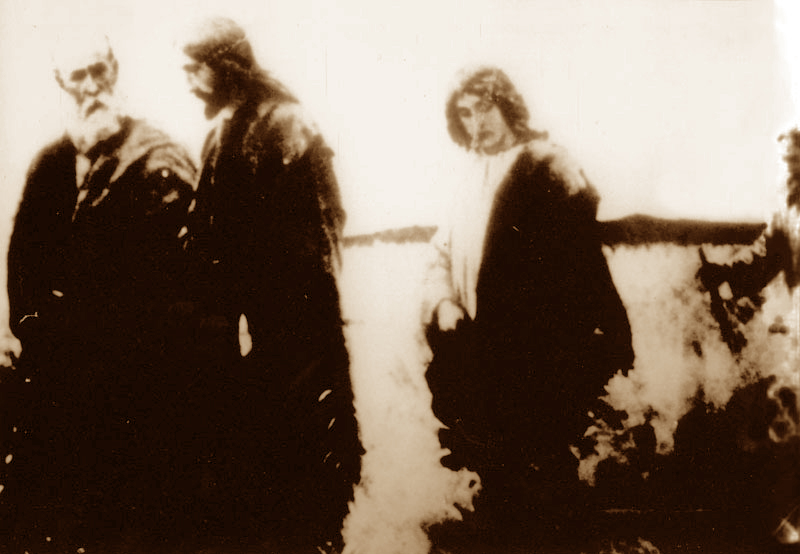
That is not Theosophy. This is your introduction to the “Neo-Theosophy” of Bailey and Leadbeater, with his “World Teacher” project.
Alice Bailey and her husband, Foster Bailey tried to assert spiritual authority by claiming in A Treatise on Cosmic Fire, that H.P.B. said, that in the 20th century a disciple would come who would give the psychological key to her own monumental work The Secret Doctrine. Foster Bailey also claims that “The Tibetan” worked on The Secret Doctrine with Blavatsky, and that H.P.B. was in full recognition of this.
The Baileys’ however are liars, as Blavatsky not only ever made such a statement, a letter of K.H. to German theosophist Dr. Hubbe Schleiden explained (see Analysis of the ‘Würzburg Manuscript’ of The Secret Doctrine, 1888), that the work of The Secret Doctrine is a triple product of himself, Morya and Upasika (H.P.B.), not “The Tibetan” who Bailey claims is her source.
Why does Bailey and her source care so much about the Christ and power in the political world, and what is Bailey and her unseen source teaching? We are going to review the religious-political idealism of Alice Bailey.
REVIEW OF ESOTERIC PSYCHOLOGY (1936) AND ALICE BAILEY’S POLITICAL AND RELIGIOUS IDEAL OF THE NEW AGE, OR WHAT SHE TERMED THE “NEW WORLD ORDER.” THE DIFFERENCE BETWEEN BLAVATSKY’S THEOSOPHY AND ALICE A. BAILEY. ALICE A. BAILEY BELIEVED THE WORLD LEADERS ARE (AND SHOULD BE) UNDER THE SWAY OF A “BENEVOLENT” “SPIRITUAL HIERARCHY.”
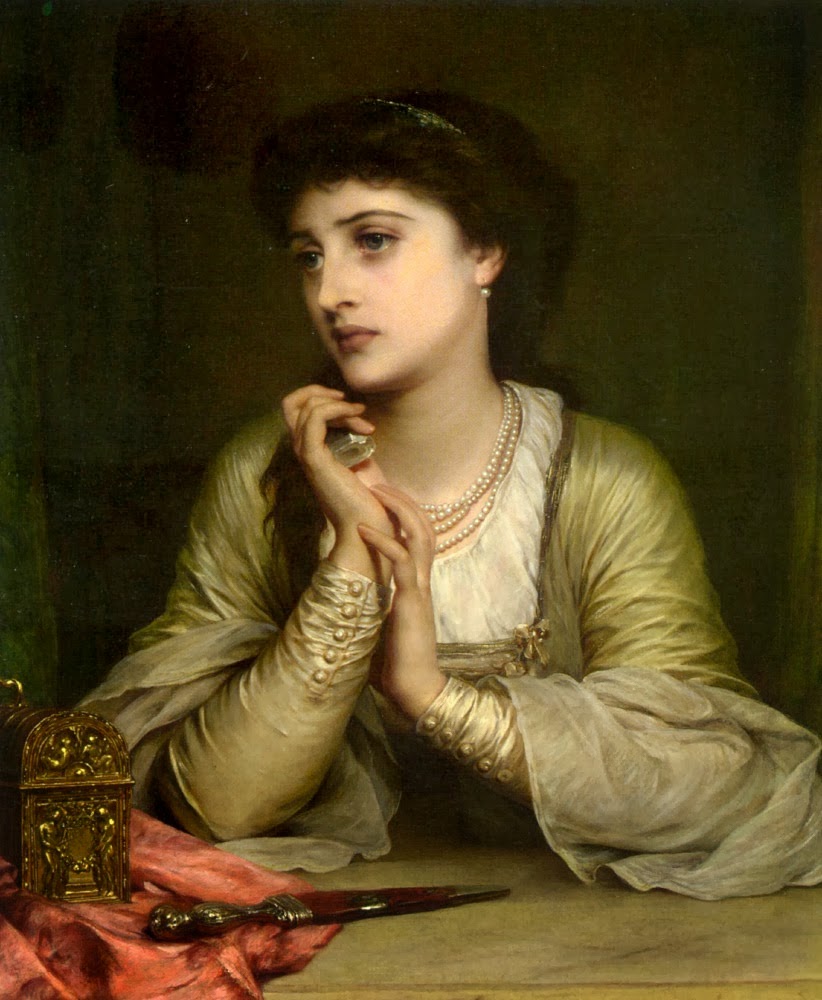
“Bailey’s view that the Theosophical Movement revolves around humanity invoking an avatar and his hierarchy is foreign and opposed to Theosophy as taught by HPB and the Adepts.” (Nicholas Weeks, Theosophy’s Shadow)
ALICE BAILEY POLITICAL WRITINGS ON THE “NEW WORLD ORDER”
Alice A. Bailey speaks of ‘Executives’ of the “New Age” and the “New World Order” in her writings, particularly Esoteric Psychology (1936). Note, that the word “new order” and “new world order” addressed here is used by A.B. herself. Why politics should be in a book on psychology, on a deep subject in Buddhism, and in The Secret Doctrine from the Védic tradition is beyond us, which is why these passages are being put forth.
Theosophists critical of Alice A. Bailey have both contended that her writings have elements from Tibetan Buddhism and Christianity. There is a great difference in Blavatsky’s style from Bailey’s contact (A.B. calls the “Tibetan” and his “plans”). It will come as a shock to some, because of the consequential influence of her ideals, or their similitude in direction, or vision among leaders of the world today.
This is what leads people to the conspiracy confirmation bias about the “New World Order.” A.A.B. claims to present the next evolution of Occult Wisdom from Blavatsky, but as we have discussed in the introduction, this is a lie.
THE SEVEN RAYS AND POLITICS
Alice Bailey in Esoteric Psychology writes a treatise on an occult, or highly difficult concept of the “Seven Rays,” or Logoi (“the seven asdt, Aions or Spirits”), which is a concept in Indian and Jewish tradition, ancient Central Asian and Iranian traditions, Gnosticism, Catholicism, Roman Mithraism, and Chinese Mahayana Buddhism.
It is all built on this hypothesis for Alice Bailey, that Seven Rudimentary Elements of the manifested Deity has qualities, which reflect through the individual incarnations of people’s personalities, and correspond to the ways of nations, and of ‘Initiate Masters.’
Alice Bailey connects this concept to politics and nations to justify the nationalisms during the World War expanding more federal state power, and eventually greater super-states and eventually, world governing, under the head of these “Initiates,” “Executives,” A.B. calls them.
So, some contemporary Theosophists of Post-War believed that ‘nationalism is evil,’ which is the logic known with internationalists. Nationalist and proto-nationalist ideals are therefore, by some, treated as ideals of organizing society that will never return, hence regressive, tribal, less evolved (unspiritual), and evil; then still believe somehow, that they are metapolitical, or even apolitical.
ALICE BAILEY REVEALS THE SOURCES OF HER WRITINGS
A.A.B. states something, that is very opposite of Theosophical and Indian Vedic Tradition, in which she teaches, the source of the Seven Rays originate from what she calls the “Solar Logos,” through Sirius, or the seven stars of the Big Dipper in the Great Bear, and the seven major stars of the Pleiades, and then ultimately in the ‘mind of God.’
Alice A. Bailey claims that her masters are the same as those of H.P. Blavatsky’s.
Whether crazy from the atheist and skeptical position, or suspect in the eyes of a Christian, we can find what Alice Bailey taught were her influences in her own words.
In theosophical writings, as asserted by those men then, they repeatedly state, that they are living mortal men, on the physical plane. H.P.B. warned, whomsoever fell from the influence of their Buddhist teachings into that of the “Star Rishis,” “are no Theosophists.” William Quan Judge, the co-founder of the Theosophical Society remarked in “The Vahan” Issue of 1892, that “The Saptarishis as meant by H.P.B. are in a very advanced class of elementals, able sometimes to communicate with man, and by their apparent knowledge to make him suppose them to be high spiritual beings.”
Alice Bailey taught that her works were dictated to her from a being she called “The Tibetan,” whom she claimed was the same as the Djual Khool in The Mahatma Letters, — a disciple of those adepts. She claimed however, that The Tibetan she was being controlled by was a High Initiate, which is impossible, due to the fact Djual Khool (or D.K.) was only a chela (disciple) “of the first degree.”
Theosophists have also highlighted this discrepancy in her account.
It was H.P.B. herself, whom Alice Bailey uses to buttress her claims, that wrote to “Beware of the path of the Star Rishis” (a high class of elementals).
Superstitions for some of us, but these ideas, we will demonstrate, have real world consequences.
BAILEY’S ALLEGED TIBETAN SOURCE: AN EVANGELICAL DISGUISE
Each classified age in Alice Bailey’s system reflects a certain manifestation of the Spirit in the material world, and a dominant quality of a particular “Ray.” In her ideal, the world is beginning to transition into what she terms, the “Aquarian Age.” Then, on page 74, this Evangelical adds, that “the work of the Antichrist is to destroy forms,” and that it is ‘the work of the first expression of divinity.’
On such reasoning, it is why she thought the Atomic Bomb was a cleansing mechanism for the bad “Karma” of the Japanese.
Surprisingly, next she states, “the work of the destroyer is not the work of black magic, and when ignorant humanity regards Antichrist as working on the black side, their error is great. His work is as beneficent…”
In amalgamating unnecessarily, the Christian concept of the Antichrist and the Hindu concept of Vishnu or Nature as a destroyer, she regards the work of the Antichrist as being of divine will and of the “divine programme.” She then, states directly after, that “the work of the representatives of this mysterious power” which she says “we” call “cosmic evil, and their responding representatives, is worthy of the word black, but they are not the work of the Antichrist.” (Alice Bailey. 1936. Esoteric Psychology, pg. 74-75).
In this book, she says these representatives are working with the nations, to commence the Aquarian Age. This is called, a “whitewashing of both black magic,” and the blatant whitewashing of the enemies of the adepts who are referred to as the “Black Brotherhood.” Bailey, or her source disconnects the black forces from the “destroyers.”
She is creating her own concepts with no connections to any classical scholarship, theology, or Theosophy for proofs to justify such dichotomies.
The author of Why Do Blavatsky Students Warn Against Alice Bailey explained it well enough:
Bailey’s “Tibetan” is so undeniably Christian that he speaks not of “THE New Testament” but of “OUR New Testament” (“D.K.” via Alice Bailey, “The Light Of The Soul” p. 426). . . . In the Bailey books, the religious scripture referred to, quoted from, and expounded upon most often, is the New Testament of the Christian Bible. Her unseen inspirer also evinces some small degree of familiarity with the Bhagavad Gita, the Upanishads, and the Yoga Sutras of Patanjali but none at all with anything Tibetan or Buddhist. Judging from his quotes and references, he prefers even the Old Testament to any Buddhist scripture and doesn’t even make the slightest mention of the existence of such a thing as the Dhammapada, the most popular, well known, and basic Buddhist scripture.
And yet this Christ-praising, God-believing, Gospel-recommending, Church-supporting, Bible-quoting “Tibetan” is implicitly believed by Bailey followers to be some sort of wise old Lama or Abbot at a Buddhist monastery somewhere in Tibet and a high ranking member of the Trans-Himalayan Brotherhood! And why? Simply because Alice Bailey said so.
We cannot help but recall the words of one writer who, after studying and examining the Bailey teachings, found himself having to conclude that Alice Bailey was “a deluded Christian writing for deluded Christians.” That may not be quite fair for all her students but undoubtedly they must all be quasi-Christians when not complete Christians; otherwise how could they swallow, accept, and promote such overwhelmingly Christian stuff?
It is interesting to note that in the hundreds of letters by the Master Koot Hoomi and the Master Morya, published in “The Mahatma Letters,” of the 15 different scriptures referred to or quoted from, 14 are Buddhist and 1 is Hindu. The Masters demonstrate a clear knowledge of and close familiarity with such texts as the Jnana Prasthana Shastra, the Avatamsaka Sutra, the Mahavagga, the Mahaparinirvana Sutra, and the Khuddaka Patha, the latter of which the Master M. calls “my family Bible.” Scriptures from various different forms of both Mahayana and Theravada Buddhism. The Hindu scripture referred to is Atma Bodha, one of the major works of Adi Shankaracharya. The Bible and New Testament are mentioned only by means of criticism and disapproval.
This “Tibetan” is so distinctly un-Buddhist that he speaks and writes of Buddhists and Buddhism as if they are something outside of his own views, work, affiliations, and philosophy…”
THE EXECUTIVES MEET AND PLAN
So, in wanting to as she states, get us acquainted with the work of this “Hierarchy” of “Executives,” “representatives,” and “major Disciples,” and their Plan, she says, that this Hierarchical Plan began in 1900, at one of the great quarterly meetings of the Hierarchy. In 1925, the Plan was discussed in greater detail, and certain necessary changes (as a result of the World War) were negotiated, and the members of this Council determined a collective effort in this Plan, calling for “the loyal cooperation of all departments of the world government.” (Bailey, pp. 170-171) This Plan she states herself on page 172, fell into three divisions — the first, being “Political.”
She talks further on about trade relations and the destruction of old political parties and evidently connects all this to the historical foundations of the “Brotherhood of Nations,” or the League of Nations, and then following the updated United Nations. She says, this very work was the work of the governments, needed to impact upon public consciousness (pg. 174), and under the broadly termed “Great Ones,” “expand the consciousness of humanity” (pg. 171).
She is claiming that Bodhisattvas are responsible for initiating an age of international relations! This is the belief of New Age Thought, and you can clearly see this, even under the manifestation of the European Union structure. Nationalisms, and federal states are seen as harkening to the days of “racial hatreds” and “national aspirations,” Bailey states.
To be a book on Psychology, she sure writes much about Politics, believing she is truly doing ‘God’s Work.’ On page 184, she follows up by asserting, that a veil is being annihilated, of which she could not speak with liberty further; but went on to say, an illumination is being set up, and a perception developed, that will enable man to see through “the nature of the fourth dimension.” This is totally opposite of the Theosophists.
Alice Bailey thinks — in her own words, the “dictators” and “executives” of the world of the twentieth-century assisting this Plan of the Hierarchy associated with her Master, are part of (or doing the work of) the Hierarchy, and that the “new executives to succeed them, are seventh ray aspirants and disciples” (Bailey, pp. 366-67).
This is the perfect ingredient for a circle of Technocrats who believe their Plans are a needed effort to as Bailey puts it, “rapidly bring about the needed international understanding.”
Bailey says, the executives may make mistakes, and are not coerced in the plan, but it is under these Masters or incorporeal beings, or saptarishis, that they are inspired, and inspire the so-called “seventh ray aspirants.”
The book begins on page 373 with justifying ritualism by explaining it as a cosmic phenomenon, and she then talks about “the Craft.” Couple this with Alice Bailey’s teachings on Meditation teams dispensing energy out to the world, and you have Catholicism and Ceremonial Magic minced. Bailey’s teaching is not Theosophy.
ALICE BAILEY ON PLANS FOR REVIVING FREEMASONRY
Suspiciously, Alice A. Bailey, says that these seventh ray aspirants and disciples who succeed the dictators and executives of her time task is to educate public opinion along these new ideals (see pg. 368), i.e., globalization and inter-governmental institutions rest with them.
She did not say people. She directly says the “new executives,” i.e., the rulers. So, the failure, she also reminds us of rests on them as well.
“Under this seventh ray influence the Masonic Fraternity will come into a new and pronounced spiritual activity and begin to approximate its true function and to fulfill its long-seen destiny” (ibid., pg. 368).
This is highly idealistic. The Freemasons have been destabilized since after the 18th century. Their ranks are aging and in decline. Yet, after briefly stating, that the Masonic Fraternity had descended due to sectarian attitudes, “this must and will be changed, and the potency and the effectiveness of the lodge work and ceremonial will be demonstrated” (ibid., pg. 368).
Sounds like her “Master” is trying to resurrect a dead corpse to serve as a voodoo doll, for “the work and use of the Word” (ibid) as Bailey states. This sounds like evangelism, but the inversion of “the Word.” It also does not sound like Theosophy. Bailey believed her work was leading to what she called the “externalisation of the hierarchy,” thereby opening our perception to the fourth dimension. What hierarchy (read Morya on Yahweh as a Mamo in the Prayag Letter)?
A.B. then tells us, that this would assist in the return of Christ.
This is directly in opposition to the work of the original lines of the Theosophical Movement. Do you see why it is important to defend, or mention the actual writings of Blavatsky and The Mahatma Letters? Do you now see what is meant by subversion of our movement?
ALICE BAILEY’S “INTERNATIONALISM” IN STEPS TOWARD THE NEW WORLD ORDER
Indian theosophist and socialist, Bhagavan Das called his thought Internationalism as opposed to what he called the “evil of nationalism.” Alice Bailey calls those in her book who are against these ideas — the nationalist “separatists” and “those fear-mongers.” It is reminiscent of tactics in our day, and the tendency to term those who do not want this future—nativists, xenophobes, far-right, etc.
Concerning Communism, Alice A. Bailey saw it in true form, compatible with her ideals saying—
“The true communistic platform is sound; it is brotherhood in action and it does not—in its original platform—run counter to the spirit of Christ” (Alice A. Bailey, The Rays and the Initiations: Volume V; A Treatise on the Seven Rays, 1960, pg. 680).
A clear example of Alice Bailey’s internationalist ideas from The Externalisation of The Hierarchy, 1957):
“Steps Towards the New World Order.—In contradistinction to the totalitarian world order, what should the rest of the world plan? Towards what world objectives should the democracies work? Utopian schemes, idealistic forms of government and cultural living processes have ever been the playthings of the human mind, down through the centuries. But these Utopias have been so far ahead of possibility that their presentation seems useless. They are most of them wholly impractical.
Certain immediate possibilities and attainable objectives can, however, be worked out, given a definite will-to-good and patience on the part of humanity.
Certain major and spiritual premises should lie back of all efforts to formulate the new world order. Let me state some of them:
- The new world order must meet the immediate need and not be an attempt to satisfy some distant, idealistic vision.
- The new world order must be appropriate to a world which has passed through a destructive crisis and to a humanity which is badly shattered by the experience.
- The new world order must lay the foundation for a future world order which will be possible only after a time of recovery, of reconstruction, and of rebuilding.
- The new world order will be founded on the recognition that all men are equal in origin and goal but that all are at differing stages of evolutionary development; that personal integrity, intelligence, vision and experience, plus a marked goodwill, should indicate leadership. The domination of the proletariat over the aristocracy and bourgeoisie, as in Russia, or the domination of an entrenched aristocracy over the proletariat and middle classes, as has been until lately the case in Great Britain, must disappear. The control of labour by capital or the control of capital by labour must also go.
- In the new world order, the governing body in any nation should be composed of those who work for the greatest good of the greatest number and who at the same time offer opportunity to all, seeing to it that the individual is left free. Today the men of vision are achieving recognition, thus making possible a right choice of leaders. It was not possible until this century.
- The new world order will be founded on an active sense of responsibility. The rule will be “all for one and one for all.” This attitude among nations will have to be developed. It is not yet present.
- The new world order will not impose a uniform type of government, a synthetic religion and a system of standardisation upon the nations. The sovereign rights of each nation will be recognised and its peculiar genius, individual trends and racial qualities will be permitted full expression. In one particular only should there be an attempt to produce unity, and that will be in the field of education.
- The new world order will recognise that the produce of the world, the natural resources of the planet and its riches, belong to no one nation but should be shared by all. There will be no nations under the category “haves” and others under the opposite category. A fair and properly organised distribution of the wheat, the oil and the mineral wealth of the world will be developed, based upon the needs of each nation, upon its own internal resources and the requirements of its people. All this will be worked out in relation to the whole.
- In the preparatory period for the new world order there will be a steady and regulated disarmament. It will not be optional. No nation will be permitted to produce and organise any equipment for destructive purposes or to infringe the security of any other nation. One of the first tasks of any future peace conference will be to regulate this matter and gradually see to the disarming of the nations.
These are the simple and general premises upon which the new world order must begin its work…” (Alice A. Bailey, The Externalisation of The Hierarchy, Sec. II, Chapt. 6., pp. 190-92.)
This article has been modified. Originally published June 20, 2016.
RESOURCES FROM THEOSOPHISTS CRITIQUING ALICE BAILEY’S TEACHINGS
- From Theosophical Society to Bizarre Quasi-Catholic Anti-Blavatsky Cult, UK Group of U.L.T.
- 14 Good Reasons to Reject Alice Bailey Teachings, Blavatsky UK Group of U.L.T.
- Tibetan Master or Christian Priest: The Influence behind Alice Bailey, Blavatsky UK Group of U.L.T.
- Victor Endersby, Alice Bailey and her Christianised Pseudo-Theosophy
- Crump and Cleather, The Pseudo-Occultism of Mrs. A. Bailey, 1929.
- Nicholas Weeks, In Theosophy’s Shadow Vanity Whispers
- Margeret Thomas, edited by Mark R. Jaqua, Theosophy Versus Neo-Theosophy, 2003 Edition; or Theosophy Versus Neo-Theosophy (PDF), Differences in Teaching.


 The American Minervan

Leave a comment