
ON THEMES OF PRIMORDIAL WISDOM AND DIVINE REVELATION FROM DUNLAP, MACKEY, PIKE AND BLAVATSKY AS A CRITICAL ANALYSIS OF NINETEENTH-CENTURY MASONIC-CHRISTIAN AND THEOSOPHIST SPECULATION ABOUT THE ORIGINS OF THE ANCIENT MYSTERIES
This article presents its case from the modern archaeological and anthropological record, and contemporary studies on the history of African and European religion, spurned by a critical examination of the sources and positions of writers Samuel Fales Dunlap, Samuel Mackey, Albert Pike (includes, e.g., American Nordicists) and Helena Blavatsky. It delves into how nineteenth-century esotericists ignored indigenous African foundations, specifically the Nile Valley and Sahara. These writers treated Africa as a derivative space, often centralizing their theories of the entire origin and narrative of ancient “Wisdom Traditions” and mystery religions in Biblical genealogies and emerging studies of the time, privileging patriarchal, Edenic, or migratory myths from Biblical, Central Asian and Indo-European origins. This article does not replace the claims of nineteenth-century esoteric writers with an argument of African primacy for global mystery traditions but highlights its place in the human narrative.
𓆌
INTRODUCTION
The concept of a single primordial Wisdom Tradition, or even just the origins of “Holy Wisdom” as it was constituted in Western religious and philosophical literature (particularly in the nineteenth-century, to the medieval Alchemists and Carolingian Renaissance) was almost always grounded in a Biblical interpretation. This interpretation commonly asserted, that the “primeval revelation to humanity” was rooted in the Jewish Patriarchs and their Sod, and splintered into a thousand corrupted pieces of broken shard (i.e., paganism, polytheistic cults, etc). The history of Religion took many developments, but still existed within the limitations of Biblical interpretation, e.g., even exhibited in the idea that humanity’s view of the divine is rooted in a “primitive animism” of the Indigenous then evolving progressively into the superiority of a monotheistic doctrine (of varying strictness) spread by the European in a civilizing mission across the World.
In notions of progressive Prophetic Revelation, that means the latest Wisdom of God has only been spoken truly through a monotheistic prophet. So, the patriarchs and the prophetic tradition is seen as the root of what constitutes true knowledge, and this is the primordial Wisdom Tradition. Well, we know that Native American traditions and African traditions also have their own myths about the origin of Wisdom, not merely the myth of a “perennial wisdom tradition.” The narratives begin to conflict, especially when we adopt the older positions of esotericists, that e.g., the root of this Wisdom Tradition originates after “The Fall,” from Adam, “after the Tower of Babylon,” from “the Antediluvian patriarchs,” “from the divine beings in Central Asia at the beginning of this Fifth Root Race,” i.e., very unverifiable claims that require new mythmaking or new myth findings. It seems, that Pike almost breaks the pattern by interpreting the origins of a primordial Wisdom Tradition through his interest in the religion of the Magi, in Indo-Iranian roots and even Buddhism, but Pike still perpetuates a special Christian interpretation. Blavatsky is reacting to them all, by even presenting it from “the Eastern occultist” perspective where the Wisdom Tradition is rooted in non-dualism and non-theistic, rejecting the God-concept; but then unfortunately influences new mythologies.
What is left out of this history are the history of African civilizations, when certain writers from antiquity from the Mediterranean, from Greece point to that region. In prior centuries, the “wise men” of Tartary, China and the North were pointed to; but a great deal of research has developed, that demand a greater collection of resources to piece together, which involve the history of ancient Sub-Sahara, Egypt — all of Africa.
ORIGINS OF THE WISDOM TRADITION: MACKEY, PIKE, DUNLAP AND BLAVATSKY
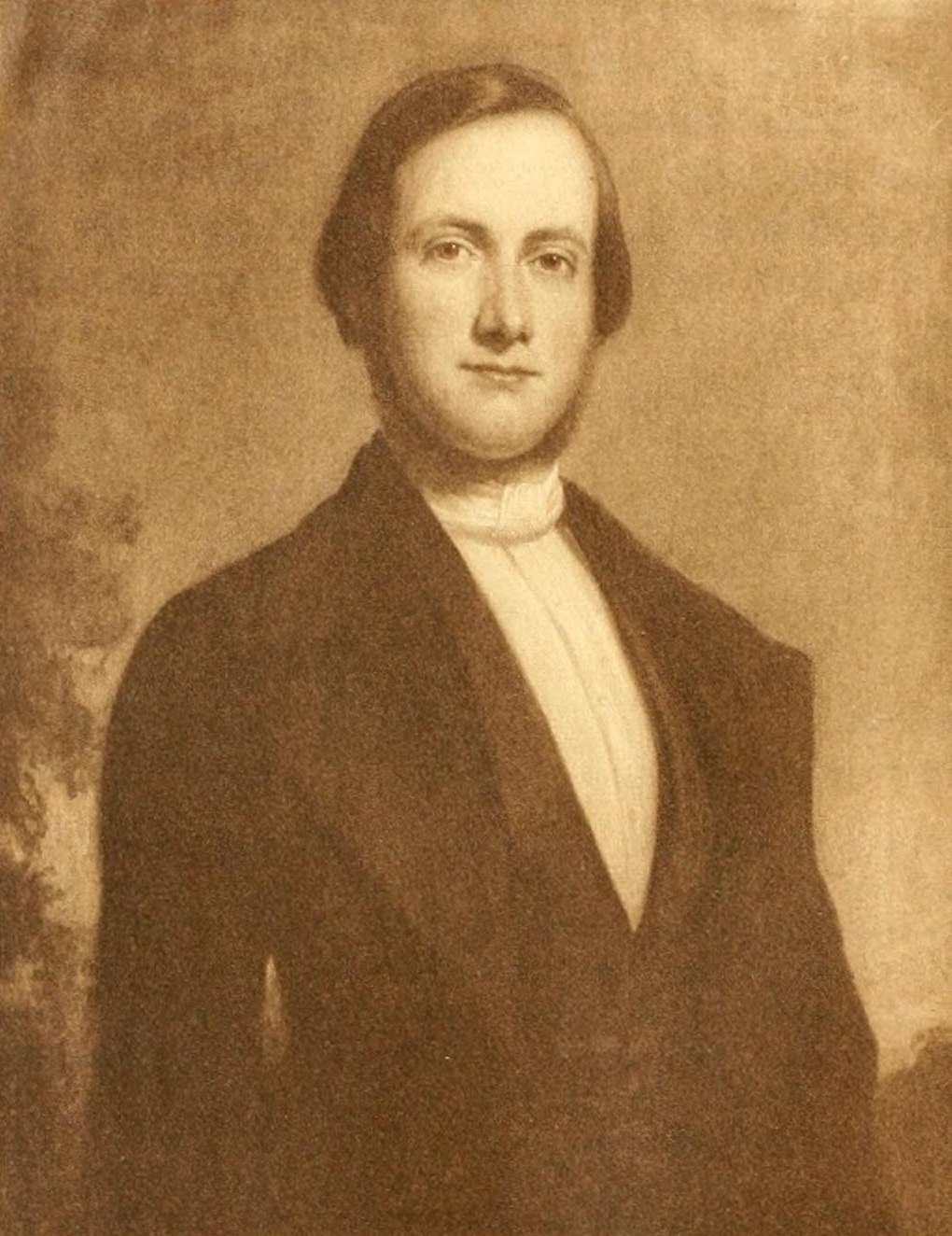
Samuel Fales Dunlap (1825-1905) was an American orientalist and esoteric scholar H.P. Blavatsky used largely as a source and expanded on. Dunlap viewed the Primordial Wisdom Tradition as a universal, divinely revealed esoteric doctrine originating in the antediluvian age with figures like Adam, Seth, and Enoch. The Sōd or hidden knowledge taught soul immortality, cosmic unity, and moral allegory, which was transmitted orally and symbolically through migrating mystery cults (Phoenician Adoni rites, Zoroastrian fire-wisdom, Kabbalistic secrets), influencing all ancient religions and, implicitly, modern speculative systems like Freemasonry through shared mythic archetypes. His works, often compilations and influential on Theosophy, however, consistently posit this Wisdom Tradition as a fragmented remnant of Edenic revelation, preserved amid pagan corruptions.
| Work | Origin of the Primordial Wisdom Tradition | Dunlap’s Writings |
|---|---|---|
| Vestiges of the Spirit-History of Man (1858) | The Primordial Tradition originates in the pre-Flood era with antediluvian patriarchs like Adam and Enoch, who received divine revelation of spiritual truths, preserved through mythic symbols and migrated to ancient mystery schools. | “The spirit-history of man traces back to the vestiges of a primordial revelation to the first fathers, wherein the divine light of moral and cosmic truth was imparted, surviving in the symbols of the ancient mysteries.” (Chapter III, p. 45) |
| Sōd: The Son of the Man (1861) | The esoteric wisdom of the “Sōd” (secret) begins with a universal archetypal doctrine of the divine man (Adoni), revealed in Edenic times and encoded in Kabbalistic and Gnostic traditions as the core of all mystery religions. | “This Sōd, or hidden wisdom, is the son of the primordial man, descending from the eternal Logos through the generations of Seth to the initiates of the secret assemblies.” (Preface, pp. vii-viii) |
| Sōd: The Mysteries of Adoni (1861) | The Tradition stems from the ancient Phoenician and Hebrew mysteries of Adoni (the Lord), rooted in a pre-patriarchal revelation of the soul’s immortality and cosmic unity, influencing Eleusinian and Mithraic rites. | “The mysteries of Adoni unfold the primordial secret of the dying and rising god, a tradition whispered from the first temples of light to the veiled cults of the East.” (Chapter I, p. 12) |
| The Origin of Ancient Names of Countries, Cities, Individuals, and Gods (1856) | Etymological analysis reveals that ancient names encode a primordial wisdom language from divine origin, used by early sages to transmit metaphysical truths across civilizations. | “The roots of these names lie in a primordial nomenclature divinely inspired, serving as keys to the hidden doctrines of the wise.” (Section II, p. 8) |
| The Ghebers of Hebron (1898) | The Zoroastrian Ghebers (fire-worshippers) in Hebron preserve the oldest form of the Primordial Tradition, originating in Sethite antediluvian fire-rites symbolizing divine wisdom, later corrupted into Moloch worship but restored in Mithraic mysteries. | “The Ghebers hold the vestige of the Sethim’s primordial fire-wisdom, the uncorrupted light from the high places before the Flood.” (Introduction, pp. 15-16) |
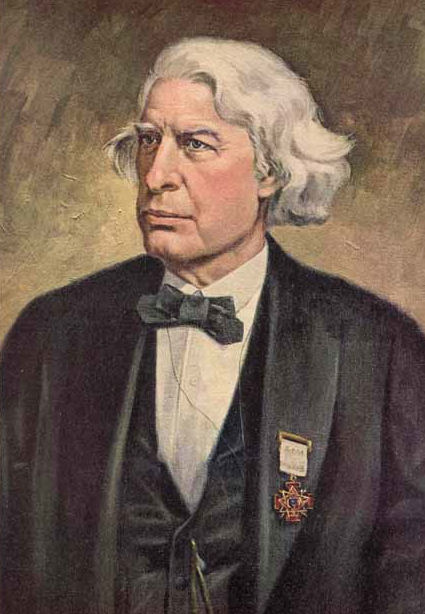
Albert Mackey’s doctrine is remarkably uniform across four decades of writing: the Primordial Wisdom Tradition (sometimes called Primitive Freemasonry, Primordial Freemasonry, or the Primordial Tradition) originated with a direct divine revelation to Adam, was preserved by the antediluvian patriarchs, survived the Flood through Noah, and is now restored in its purest form in modern Speculative Freemasonry. Mackey’s position remains absolutely consistent across every major work he ever published: the Primordial Wisdom Tradition originated as a direct divine revelation to Adam, was preserved by the antediluvian patriarchs, and is today restored in its purest form in Speculative Freemasonry.
| Work | Origin of the Primordial Wisdom Tradition | Mackey’s Writings |
|---|---|---|
| A Lexicon of Freemasonry (1845; rev. eds. to 1873) | The true origin is a single primitive revelation from God to mankind immediately after the Fall, preserved orally, then in the Ancient Mysteries. | “Freemasonry…is derived from the ancient mysteries, which were themselves derived from the primitive revelations made to the first patriarchs.” (s.v. “Freemasonry”) |
| The History of Freemasonry (7 vols, 1898) | The Primordial Tradition began with Adam, Seth, Enoch, and Noah; it was the pure monotheistic wisdom religion given by God before any pagan corruption. | “The pure Freemasonry of the patriarchs… was handed down from Adam to Noah…This was the Primordial Masonry.” (Vol. I, Chapter I, p. 23) |
| The Symbolism of Freemasonry (1869) | The Tradition is the remains of the “one universal primeval religion” taught to Adam and preserved through a succession of sages until fragmented into the Mysteries. | “There was originally but one religion… This primitive revelation…is the source from which Freemasonry derives its symbols.” (Chapter II, pp. 32-33) |
| Encyclopaedia of Freemasonry (1873–1878; rev. 1912) | The “Primitive or Primordial Freemasonry” existed before the Flood; it is identical with the “true religion” taught by God to the antediluvian patriarchs. | “Primitive Freemasonry: That science of Masonry which was supposed to have been practiced by Adam, Seth, Enoch, and the other antediluvian patriarchs… identical with the Ancient Mysteries.” (Vol. II, s.v. “Primitive Freemasonry,” p. 591) |
| The Mystic Tie (1867) | The Tradition originated in divine revelation to Adam in the Garden of Eden; the “Mystic Tie” itself is the remnant of that original divine instruction. | “From Adam the great progenitor… down through the long line of patriarchs, the true light was preserved… This is the Mystic Tie that unites Masons with the Masonry of Eden.” (Chapter I, pp. 14-15) |
| An Introduction to the History and Symbolism of Freemasonry (1874 lecture series) | Explicitly calls it the “Primordial Tradition” handed down from Adam through the “Noachidae” and later incorporated into the Egyptian, Eleusinian, etc. Mysteries. | “The Primordial Tradition… commenced with the first man to whom God communicated the principles of moral truth.” (Lecture II, p. 27) |
| Revised History of Freemasonry (1898) | Repeats that the Tradition is the “pure primeval Masonry” of the patriarchs; the post-diluvian pagan mysteries are corruptions of this original revelation. | “The true source is the Primordial Freemasonry of the patriarchs, which afterward became corrupted in the heathen mysteries.” (Chapter I, p. 46) |
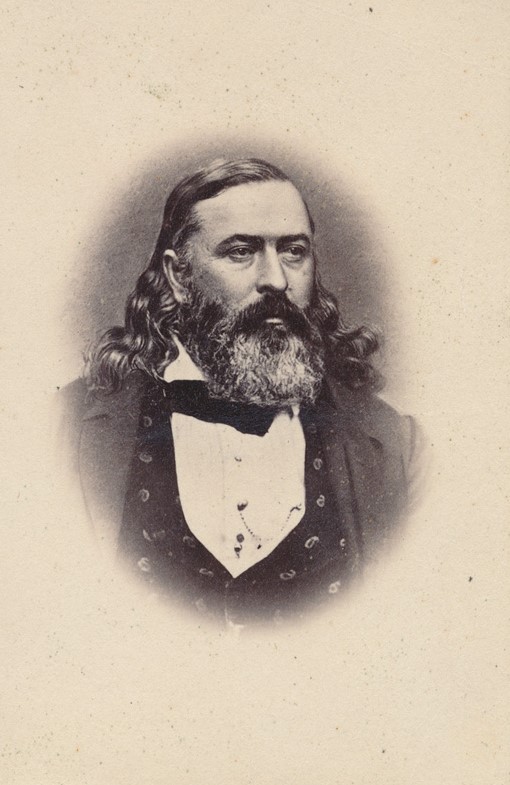
Albert Pike (1809-1891), the Sovereign Grand Commander of the Scottish Rite Southern Jurisdiction, presented his theories on the origins of language, the primordial Wisdom Tradition (what he often called the “Primitive Freemasonic Tradition” or “Ancient Mysteries”), and the Indo-Aryan peoples primarily in Morals and Dogma of the Ancient and Accepted Scottish Rite of Freemasonry (1871, revised 1906). He also touches on these ideas in his lesser-known Indo-Aryan Deities and Worship as Contained in the Rig-Veda (1872) and in some of his lectures published posthumously.
Below is a table that extracts and organizes Pike’s key statements directly from his own books.
| Ideas and Roots | Statements from Albert Pike |
|---|---|
| Primordial Wisdom Tradition | “The true name of the Deity was lost…The Ancient Mysteries were the only custodians of the great truths clothed in glyph and symbol.” (Morals and Dogma, p. 208) “All the Mysteries (…) had one common source (…) in Central Asia, whence came the Aryan race.” (Morals and Dogma, p. 366) “The Sacred Mysteries…migrated from Central Asia with the Aryan race, carried by the Hierophants.” (Morals and Dogma, p. 413-414) |
| Origin in Central Asia | “From Central Asia…came the Aryan race and the Primitive Religion of the ancient Persians, Medes, Hindus, Buddhists, and the Druids of Britain.” (Morals and Dogma, p. 602) “The Aryan people…migrated from the high plateau of Central Asia…taking with them the ancient primeval wisdom.” (Indo-Aryan Deities and Worship, p. 17-18) |
| Language as Sacred and Kabbalistic | “The primitive language…was the sacred language…every letter and syllable had a meaning…the foundation of the Kabbalah.” (Morals and Dogma, p. 246-248) “Sanskrit is the elder sister of all the Indo-European tongues…the most perfect of human languages, and the parent of the others.” (Morals and Dogma, p. 601-602) |
| Indo-Aryans as Carriers of the Light | “The Indo-Aryan race…carried with them into India, Persia, and later into Europe, the ancient doctrines and symbols.” (Morals and Dogma, p. 225-226) “The Aryas…were the depositaries of the primitive revelation…their hymns (the Vedas) contain the purest and most ancient religious truths.” (Indo-Aryan Deities and Worship, p. 12-14) |
| Vedic Sanskrit as Closest to Primordial Tongue | “The language of the Vedas is the nearest to the primeval tongue…the parent of Greek, Latin, and all the European languages.” (Morals and Dogma, p. 601) |
| Migration Routes | “From Bactria and the Hindu-Kush the Aryans spread westward into Persia and eastward into India…carrying the same Mysteries, the same symbols.” (Morals and Dogma, pp. 22-23 & p. 366) |
| Magi-Brahmin Wisdom Continuities | “Zoroaster, Orpheus, Pythagoras, Plato…all drew from the same Central-Asian source…the same doctrines taught in the Mysteries of India, Persia, Egypt.” (Morals and Dogma, p. 256-257) |
| Degeneration and Preservation | “The true pronunciation of the Ineffable Name was preserved only among the Initiates…carried from Central Asia by the migrating Aryans.” (Morals and Dogma, p. 204-205) |
According to Pike, there was one primordial revelation and one sacred language in prehistoric Central Asia. The Aryan (Indo-Aryan) race originated on the high plateaus of Central Asia, often identified with ancient Bactria or the Oxus region. They carried the purest form of the Ancient Mysteries and the closest surviving sacred language (Vedic Sanskrit) westward into Persia and Europe and eastward into India. All later Mystery schools (Persian Magi, Indian Brahmans, Egyptian priests, Greek philosophers, Kabbalists, Templars, and Freemasons) are fragments or continuations of this single Central-Asian tradition.
These ideas appear repeatedly across Morals and Dogma (in the 1°, 4°, 9°, 14°, 18°, 20°, and Knight Kadosh degrees) and in his separate 1872 work on the Rig-Veda.
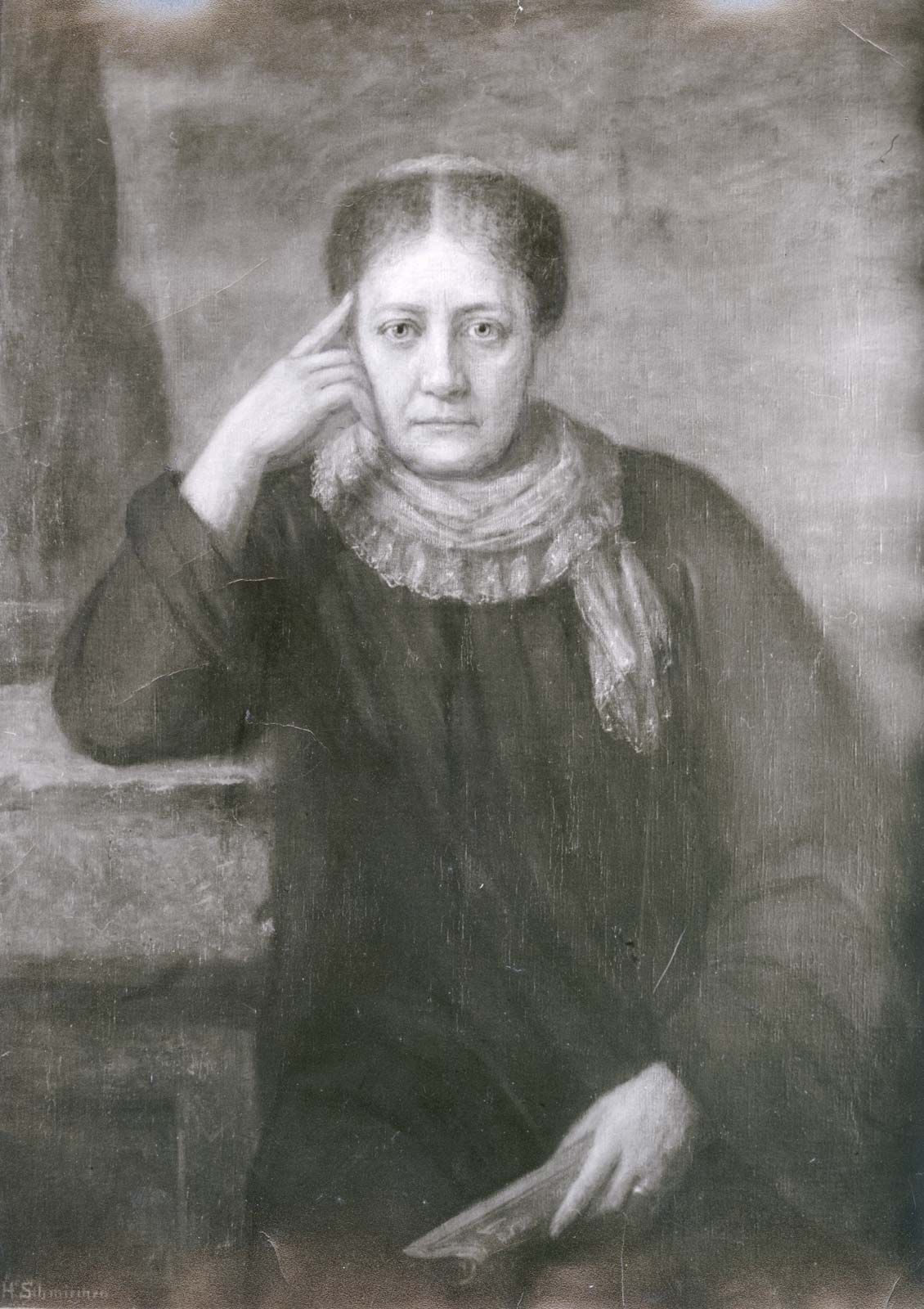
This table presents Helena Blavatsky and her teachers’ theory on the origin of language and the ancient Wisdom Tradition from Central Asia, using two primary sources. According to their position, there is one single primeval Revelation and ancient mystery-language (Senzar) preserved by a nucleus of adepts in Central Asia (The Secret Doctrine I, p. 36; ML 15). Physical and spiritual humanity originated in Central Asia (Pamir, Hindu-Kush, Altai region) (see SD II, pgs. 7, 339-340; ML 23B). The Aryan Fifth Root-Race was born in Central Asia and migrated outward, carrying fragments of the one Wisdom-Religion (SD II, p. 200, 425; ML 23B). Senzar is the mother of all languages; and Sanskrit is its closest surviving daughter. All other tongues (Chinese, Turanian, Semitic, European) descend from the same archaic source (SD I, p. 37; ML 13 & 16). These statements originate exclusively from The Secret Doctrine (1888) and The Mahatma Letters (1923 chronological ed.).
Many ancient traditions in their mythic anthropology place a holy mountain or cosmic center in the north or highlands, such as: Mount Meru (Hindu-Buddhist), Airyana Vaejah (Zoroastrian), Hyperborea (Greek), Shambhala (Tibetan), and the “Land of the Gods” in Central Asian mythologies. In The Secret Doctrine, it posits that Central Asia is the cradle of the Fifth Root‑Race (Aryans), and therefore the origins of the esoteric tradition of the peoples of those regions before their split and migrations. Tibet was the last surviving center (or region) of the ancient esoteric tradition, meaning that the ancient wisdom tradition that survives in Tibet originated in the same region. It is a combination of older mythic motifs in the nineteenth-century that attempts to explain and unify Hindu, Buddhist, Zoroastrian, and Western esoteric traditions into a single narrative. It is within context from a point of view in scholarship, part of Enlightenment‑era romanticism and speculation about Central Asia as the “cradle of civilization.”
So, in the 1800s, many European and American scholars believed that Indo‑European languages originated in Central Asia, the “Aryan race” (in the linguistic sense) came from the steppes, and civilization radiated outward from the Pamir region. We find this preserved in the later heir (Blavatsky) to the legacies of the men above.
| Ideas and Roots | Summation of Statements and Theories with Pages and Surrounding Contexts |
|---|---|
| One Primordial Wisdom-Religion | There is one eternal Wisdom-Religion, the same in all ages, fragments of which have been preserved by the Hierophants of every nation. (see The Secret Doctrine, Vol. I, p. 444) One single source, the primeval Revelation in Central Asia. (see Mahatma Letter No. 15, p. 88) The source came from divine beings in Central Asia. |
| Central Asia as Cradle of Humanity and Wisdom | Central Asia…the high table-lands of which stretch from the Himalayas to the Altai…was the cradle of physical mankind and of the first civilized races. (see The Secret Doctrine, Vol. II, pp. 7, 178, 339-340) The cradle of the physical and spiritual races was in Central Asia…the region around the Pamir and the lakes of the Oxus. (see The Secret Doctrine, Vol. II, pp. 416-417) The birthplace of the Fifth Root-Race was in Central Asia and the region from which the Aryan races subsequently came. (see Mahatma Letter No. 23B, pp. 149-150) |
| Root-Language, the Origin of All Tongues and its Preservation in Central Asia | There was one primordial language which was the language of the Gods. Senzar is the mystery-language of the Initiates. (see The Secret Doctrine, Vol. I, p. xxxvii; Vol. II, p. 199) The Senzar tongue is the parent of Sanskrit and of all the existing languages. (see The Secret Doctrine, Vol. I, pp. 36-37) All the ancient languages derive from the same source, the secret sacerdotal tongue, preserved in Central Asia. (Mahatma Letter No. 13, p. 73) |
| Sanskrit and its Relation to the Primordial Tongue | Sanskrit is the nearest dead language to the mystery-tongue of the Initiates but even Sanskrit is only a daughter of Senzar. (see The Secret Doctrine, Vol. I, pp. 23, 37) The Sanskrit of the Vedas is a comparatively modern language compared with the secret language of the Initiates. (see Mahatma Letter No. 59, p. 340) |
| Aryans and their Migration from Central Asia | The Aryan races issued from Central Asia and spread westward and eastward, carrying with them the same esoteric doctrines. (see The Secret Doctrine, Vol. II, pp. 200-201, 425-426) The Fifth Root-Race began in Central Asia and the Aryans were born there and migrated into India, Persia, and Europe. (Mahatma Letter No. 23B, p. 149) |
| Preservation by the Trans-Himalayan Brotherhood | The Secret Doctrine was preserved in its purity by the Brotherhood in Central Asia and from there migrated in every direction. (The Secret Doctrine, Vol. I, Proem p. 8; Vol. II, p. 416) The chief region of the Brotherhood is in Tibet, but the real source is far north of the Himalayas, in Central Asia. They were in communication with adepts from Tibet to South America. (see Mahatma Letter No. 66, p. 394) |
| Monosyllabic & Agglutinative Origins | The first root-language was monosyllabic. The agglutinative tongues (Turanians) and the later inflected languages all derive from it. (see The Secret Doctrine, Vol. II, pp. 198-200) The original language of mankind was monosyllabic, and the parent of Chinese and of the monosyllabic speech of the Fourth Race. (see Mahatma Letter No. 16, p. 94) |
| Esoteric Buddhism and Central-Asian Source | The esoteric doctrine of Gautama Buddha came from the same Central-Asian source as the secret wisdom of the Brahmans. (see The Secret Doctrine, Vol. I, pp. 107-108) Gautama Buddha received the esoteric doctrine from the same source in Central Asia from where it was brought to India by the pre-Vedic Aryans. (see Mahatma Letter No. 7, p. 34) |
QUICK CONTEXTUAL NOTE 📌
Modern linguistics and anthropology have replaced or revised the theories about Central Asia and reject the diffusionism common in the nineteenth-century, showing convergences of insight (e.g., non‑dualism, cosmic order, rebirth, mystical union) across cultures exist between religions, but can also arise independently through historical contact, trade, conquest, or translation. The earliest symbolic behavior, ritual burials, and complex tools are African and Levantine, but the place of Africa in the narrative did not inform Theosophy in the nineteenth-century and primarily dealt with the origins of this “pre-Vedic Buddhism” Blavatsky and her clandestine network were expounding on. Much of the research dealing with Africa is contemporary, having to correct the data due to agendas and biases surrounding the research on African traditional religions and philosophies.
NARRARIVES ON ORIGINS OF PRIMORDIAL WISDOM IN ANCIENT AFRICAN AND AMERICAN TRADITION
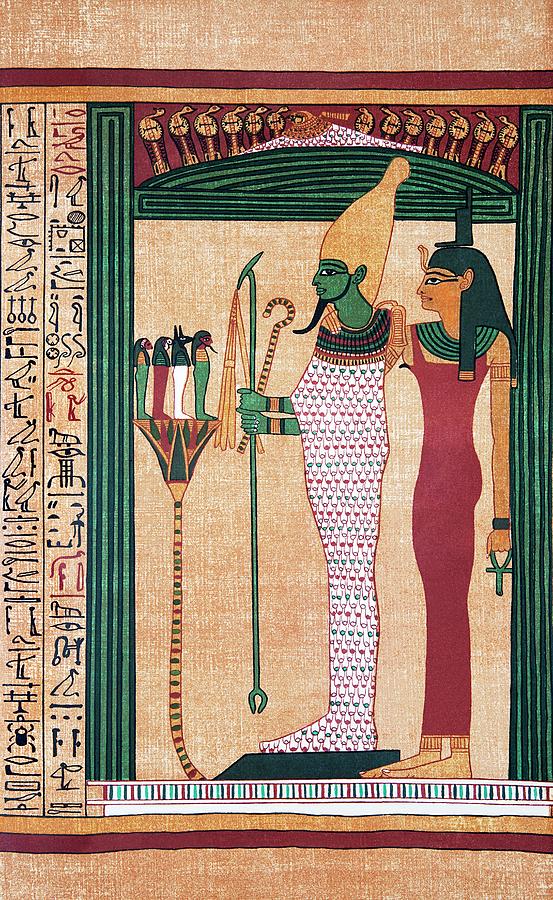
In the philosophy of classical African traditions, a universal divine spark (e.g., Ka/Ba in Kemetic, Emi/Aṣẹ in Yoruba, Kra/Sunsum in Akan, nyama in Dogon, Ntù in Bantu) is inherent in every human, tracing to primordial creators or Supreme Beings, predating colonial influences. This primordial wisdom originates in ancient African oral and textual traditions (e.g., Kemetic Pyramid Texts c. 2400 BCE; Proto-Bantu c. 1000 BCE), preserved through migrations and initiatory systems like Ifá. Esoteric knowledge emphasizes transformation and destiny (e.g., Akh in Kemetic, Ori in Yoruba), affirming equality and divine origin for all, as a pan-African continuum from the Nile to sub-Saharan expansions. These ideas are drawn exclusively from our focus on indigenous sources like Pyramid Texts, Ifá corpus, Akan proverbs, Dogon myths, and Bantu vital force concepts. The influence of African traditions on Greek thought through particularly Egypt are downplayed in historical narratives, particularly during the nineteenth-century, due to Eurocentric biases.
| Ideas and Roots | Direct Statements from African Traditions | Source |
|---|---|---|
| Primordial Wisdom in Kemetic Tradition | “I am yesterday, I know tomorrow…I am pure.” Egyptian texts describe the Ka (vital essence), Ba (mobile soul), and Akh (transfigured spirit), expressing a universal human capacity for divine transformation. | Ancient Egypt: Pyramid Texts & Coffin Texts (c. 2400-1800 BCE) |
| Universal Divine Spark in Kemetic Thought | The Ka and Ba are inherent in all humans, whether Egyptians, Nubians, Libyans, and foreigners, allowing anyone to become an Akh through ritual and moral alignment, not restricted by ethnicity. | Ancient Egypt: Old Kingdom Pyramid Texts; Middle Kingdom Coffin Texts |
| Origins of Kemetic Esoteric Knowledge | Ritual, cosmological, and funerary concepts emerge in Predynastic and Early Dynastic Egypt (c. 3500-2900 BCE), formalized in the Old Kingdom and expanded to non‑royals in the Middle Kingdom. | Ancient Egypt: Predynastic–Middle Kingdom archaeological and textual evidence |
| Primordial Destiny and Divine Spark in Yoruba | “A human being is born with a complete destiny and a portion of the divine asẹ.” Ori (inner head/destiny), Emi (breath of life), and Aṣẹ (divine power) come from Olodumare and are universal. | Yoruba: Ifá Corpus (Odu Ifá), oral tradition from Ile‑Ife (pre‑colonial, deep oral antiquity) |
| Universal Divine Essence in Yoruba Thought | Every person possesses Ori, Emi, and Aṣẹ from Olodumare, affirming a universal divine spark across all humans regardless of lineage. | Yoruba: Southwestern Nigeria/Benin oral traditions (pre‑European contact) |
| Origins of Yoruba Esoteric Wisdom | Ifá divination and cosmology derive from long‑standing oral traditions centered in Ile‑Ife, with roots older than the historical Yoruba states and preserved through priestly lineages. | Yoruba: Ile‑Ife oral histories and Ifá priestly transmission |
| Divine Soul in Akan Tradition | “All persons are children of Nyame.” Kra (divine soul) and Sunsum (personal spirit) express the universal divine origin of every human being. | Akan: Oral proverbs and traditions (proto‑Akan migrations c. 500-1000 CE) |
| Universal Spark in Akan Cosmology | Every person carries Kra from Nyame, the Supreme Being, as the bearer of destiny and divine essence. | Akan: Bono/Asante oral traditions (11th-17th centuries CE) |
| Origins of Akan Primordial Knowledge | Akan cosmology emerges from earlier proto‑Akan migrations and was preserved through oral tradition in pre‑colonial states such as Bono and Asante. | Akan: Early 20th‑century ethnographic accounts and oral histories |
| Cosmic Divine Seed in Dogon Tradition | Nommo beings establish cosmic order and place nyama (vital force) within all beings; humans contain twin spiritual principles reflecting primordial completeness. | Dogon: Oral myths from Bandiagara region (pre‑Islamic, recorded 1930s-1940s) |
| Universal Life Force in Dogon Thought | Nyama is the vital force permeating all existence, linking humans, animals, and the cosmos through a shared divine essence. | Dogon: Oral cosmology connected to pre‑colonial Mali traditions |
| Origins of Dogon Esoteric Lore | Dogon esoteric knowledge is transmitted through secret oral lineages, with roots predating their 13th–15th century migration to the Bandiagara cliffs. | Dogon: Pre‑colonial oral transmission |
| Vital Force as Primordial Essence in Bantu Traditions | Vital force (ntu/muntu) flows from the Supreme Being through ancestors to humans; all beings share this divine life‑principle in varying intensities. | Bantu‑speaking cultures: Proto‑Bantu expansion (c. 1000 BCE-500 CE) |
| Universal Divine Spark in Bantu Wisdom | Human beings possess ntu/muntu as a divine spark, a concept widespread across Bantu cultures and articulated in Luba philosophical traditions. | Bantu: Luba traditions; Tempels, Bantu Philosophy (1945) based on pre‑colonial thought |
ROOTS OF PRE-COLUMBIAN AMERICAN TRADITIONS
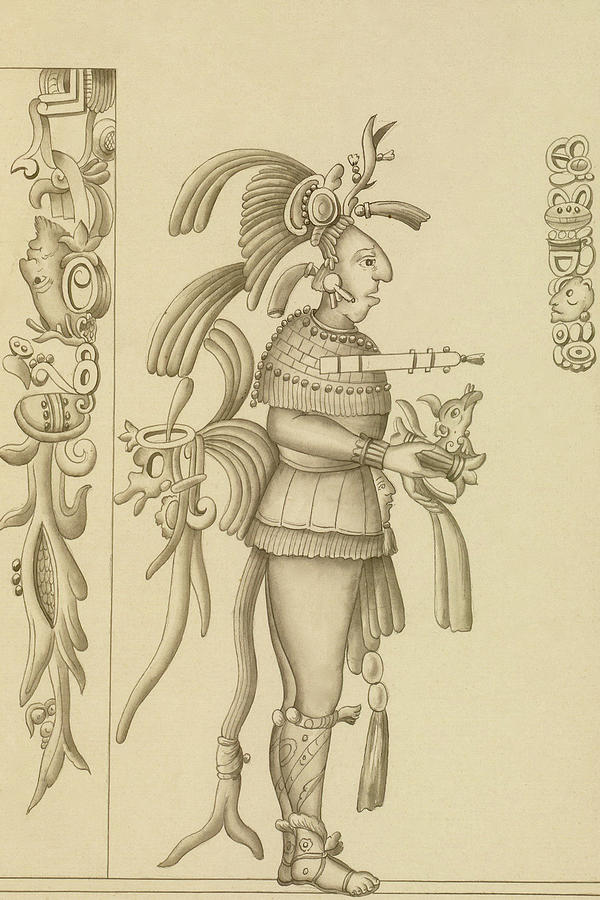
The roots of Primordial Wisdom in pre-Columbian American traditions teach the doctrine of a universal divine spark (e.g., maize-blood in Mayan, tonalli in Aztec, camay in Inca, wakʽą in Lakota, kachina essence in Hopi) animates all existence, originating from primordial creators (Tepeu/Gucumatz, Ometeotl, Viracocha, Taiowa, Wakan Tanka) in a unified cosmos. This primordial wisdom arises from creation myths preserved in oral narratives, codices, and rituals (e.g., Popol Vuh c. 16th from pre-Conquest; tonalpohualli c. 1325 CE; huaca pilgrimages c. 1200 BCE), emphasizing cyclical renewal, destiny, and harmony with nature. Its esoteric knowledge stresses interconnectedness and transformation (e.g., Hero Twins’ triumph in Mayan, tonal divination in Aztec, three-world balance in Inca, emergence worlds in Hopi, vision quests in Lakota), affirming divine origin for all beings in a pan-Indigenous continuum from Mesoamerica to the Plains. These ideas are drawn exclusively from pre-Columbian sources like the Popol Vuh, Florentine Codex, Andean huaca traditions, Hopi oral myths, and Lakota cosmological accounts, with indigenous narratives predating European contact.
| Ideas and Roots | Pre-Columbian Indigenous American Traditions | Source |
|---|---|---|
| Origin of Primordial Wisdom in Mayan Creation | “This is the account of how all was in suspense, all calm, in silence; all motionless, still, and the expanse of the sky was empty.” (Divine creators Tepeu and Gucumatz consult in the primordial void to form the world through word and thought.) | Mayan (K’iche’): Popol Vuh (16th century transcription of pre-Columbian oral myth) |
| Universal Divine Spark in Mayan Thought | Humans formed from maize dough carry the divine breath and blood of the gods, enabling remembrance and worship: “Let us make him who shall nourish and sustain us! … They will walk and lie down in companionship with us.” | Mayan (K’iche’): Popol Vuh (creation of humans from maize, c. 14th-16th century CE) |
| Origins of Mayan Esoteric Knowledge | The sacred narrative originates from the primordial consultation of creator gods, preserved in oral and hieroglyphic traditions predating Spanish contact; embodies cosmic order and cyclical renewal. | Mayan: Highland Guatemala oral traditions (pre-16th century CE) |
| Primordial Destiny and Divine Spark in Aztec | “Tonalli…a vital animistic force or ‘freesoul’ that constitutes one of the three primary components of the human essence, derived from the sun, linking humans to the cosmic order.” (Bestowed by Ometeotl at conception through fire) | Aztec (Nahua): Florentine Codex (Sahagún, c. 1577, based on pre-Conquest accounts) |
| Universal Divine Essence in Aztec Thought | Every person receives tonalli (solar heat), teyolia (divine fire in the heart), and ihiyotl (passions from the liver) from the primordial dual god Ometeotl, animating all without distinction. The three-soul model is pre-Columbian. | Aztec (Nahua): Codex Mendoza & Florentine Codex (pre-1521 cosmology) |
| Origins of Aztec Esoteric Wisdom | Rooted in the Five Suns myth, where gods self-sacrifice to create worlds; preserved in calendrical tonalpohualli (260-day cycle) for divining destiny, predating European contact. | Aztec (Nahua): Tonalpohualli divination system (c. 1325-1521 CE) |
| Cosmic Divine Seed in Inca Tradition | “Camay…vitalizing life force, known by the Quechua verb, which could empower inanimate matter…Stones and places could become living shrines or huacas with superhuman powers.” (Infused by Viracocha in creation.) | Inca (Quechua): Huaca traditions & oral myths (c. 1438-1533 CE, older Andean roots) |
| Universal Life Force in Inca Thought | Camay animates all beings from the three worlds (Hanan Pacha, Kay Pacha, Uku Pacha), bestowed by creator Viracocha; present in humans, animals, and earth as sacred energy. | Inca: Andean Cosmovision (pre-Columbian oral cosmology, Lake Titicaca origins) |
| Origins of Inca Primordial Knowledge | Emerges from pacarinas (sacred emergence sites like Lake Titicaca); transmitted through huacas and initiatory pilgrimages for cosmic harmony, predating Inca Empire. | Inca: Proto-Andean migrations (c. 1200 BCE onward) |
| Divine Soul in Hopi Tradition | “Kachinas… spirits of ancestors and some other beings, with powers good and bad…intercede with the spirits of the other world in behalf of their Hopi earth-relatives.” (Emanate from Taiowa’s creation.) | Hopi: Oral myths & kachina carvings (c. 1100-1300 CE emergence) |
| Universal Spark in Hopi Cosmology | All life infused with essence from Sotuknang and Spider Woman; kachinas as messengers teach harmony, present in nature and humans as vital spirit from the underworld. | Hopi: Creation myths (pre-16th century oral tradition) |
| Origins of Hopi Esoteric Lore | Traced to emergence from underworld via sipapu; kachina cult teaches agriculture and law, originating from San Francisco Peaks visions during drought (c. 1300s CE). | Hopi: Mesa Verde migrations & rock art (c. 1100-1400 CE) |
| Vital Force as Primordial Essence in Lakota | “Wakʽą flows through the cosmos, animating all things…unified totality termed Wakʽą Tʽąkę (Wakan Tanka), the Great Mystery.” (Infuses nagi, niya, and sicun in every being.) | Lakota (Sioux): Oral cosmology (pre-19th century) |
| Universal Divine Hierarchy in Lakota Wisdom | Wakan Tanka manifests in sixteen primordial forces (e.g., Wi the Sun, Maka the Earth); every entity shares wakʽą as sacred essence, from humans to stones. | Lakota: Sun Dance & vision quest traditions (pre-Columbian roots) |
THE MYSTERY TRADITIONS AND JEWISH MYSTERIES
Using Samuel Fales Dunlap as an example of an old habit I noticed since I began collecting these books (before I sold them), Sōd: The Son of the Man (1861) and Sōd: The Mysteries of Adoni (1861), advance a polemical thesis rooted in nineteenth-century Christian apologetics and esoteric historicism not seen much today. Dunlap posits that the ancient Mystery Traditions (e.g., Eleusinian, Mithraic, Dionysian, and Adoni/Phoenician cults) derive from a primordial “Sōd” (Hebrew for “secret”), an esoteric wisdom allegedly revealed to Jewish patriarchs like Adam, Seth, and Enoch in the antediluvian era. This Sōd is framed as a monotheistic, Edenic revelation of soul immortality, cosmic unity, and moral allegory, transmitted orally through Noah’s descendants and later veiled in Kabbalistic and Gnostic traditions.
This narrative is a Christian idea to trace pagan mysteries to a pure Jewish source, that tends to subordinate them to Biblical revelation, implying their corruption (e.g., into polytheistic rites) while elevating Christianity as their redemptive fulfillment. This view echoes contemporaneous Masonic and Theosophical eclecticism, but inverts it to privilege Judeo-Christian primacy. Modern scholarship overwhelmingly refutes this position on chronological, cultural, and evidential grounds.
Mystery traditions emerged independently from diverse pre-Jewish, non-Semitic civilizations rooted in agrarian fertility cycles, Indo-Iranian cosmology, and Near Eastern polytheism long before formalized Jewish esotericism or even the Hebrew patriarchs. When treating the Biblical accounts as rooted in historical memory, rather than pure legend, the Hebrew patriarchs are traditionally dated to high or early Middle Bronze Age c. 2000-1500 BCE. This is due to matches between Biblical descriptions and Middle Bronze Age material culture, economic data and Egyptian parallels to the Thireenth Egyptian Dynasty (late Middle Kingdom) and the Hyksos period. Kabbalah, the primary vehicle for the Sōd as written, speculative-theosophical Kabbalah crystallized in 12th-13th-century medieval Europe, beginning with the Sefer ha-Behir text (c. 1170-1180 CE), which was the first book to present a full mystic theology using the term “sefirot.” This spread from Provence in Southern France and Catalonia, then to Castile (Spain) to Italy and then Safed (or Tzfat) in northern Israel. Theosophy and Rabbinical tradition insist that there is a such thing as the “unwritten” Kabbalah through oral initiatic tradition. H.P. Blavatsky insisted that the real Kabbalah has its roots in Chaldea and Egypt, and atleast two fragments of proof of the Chaldean source of the Kabbalah was known in her time. Many initiated occultists were Jewish Kabbalaists scattered throughout Europe.
Theosophy demonstrates, that the mysteries of the Jews were identical with those of the Greeks, which the Greek philosophers themselves explain, were influenced from Egypt.
However, H.P. Blavatsky stated, that the the Egyptians derived their Mysteries from the Chaldeans, who got them from the Aryans, who got them from “the Atlanteans.” Saharan Africa does not even factor into colonial era theories of the origins of the Mysteries.
Below, I outline key refutations, supported by scholarly sources. The belief that the Mysteries predate Jewish patriarchs and Kabbalistic origins hinge on antediluvian Jewish revelation (e.g., through Seth or Enoch) as the root source, with post-Flood transmission influencing Phoenician Adoni rites. However, core Mystery cults arose millennia earlier in non-Jewish contexts, tied to Bronze Age agrarian rituals rather than monotheistic esotericism.
| Mystery Traditions | Established Origins | Comparative Chronology (Evidence Against Jewish/Sod Origin) | Sources |
|---|---|---|---|
| Eleusinian Mysteries (Demeter-Persephone) | Mycenaean Greece, ca. 1600-1450 BCE; formalized in Classical Athens by the 6th century BCE. | Rooted in pre‑Hellenic agrarian and seasonal rites centered on grain, fertility, and the cycle of death and return. These traditions long predate Israelite religion and show no dependence on Hebrew or monotheistic concepts. | Mylonas, Eleusis and the Eleusinian Mysteries (1961); Cosmopoulos, Bronze Age Eleusis and the Origins of the Eleusinian Mysteries (2015). |
| Mithraism (Roman Mithras cult) | Indo‑Iranian roots in the deity Mitra (ca. 2000-1500 BCE); Roman mystery form emerges in the 1st century BCE-1st century CE. | Develops from Iranian religious traditions and Roman military culture. No evidence of Jewish, Kabbalistic, or biblical influence; ancient authors consistently describe it as Persian or “Eastern,” not Semitic. | Beck, The Religion of the Mithras Cult (2006); Clauss, The Roman Cult of Mithras (2000). |
| Dionysian and Orphic Mysteries | Origins in Minoan, Thracian, and Phrygian ecstatic cults before 1500 BCE; widespread in Greece by the 6th century BCE. | Centered on ecstatic ritual, dismemberment‑rebirth myths, and afterlife purification. These traditions arise from Aegean and Balkan religious cultures, not from Hebrew or Near Eastern monotheistic traditions. | Burkert, Ancient Mystery Cults (1987); Bowden, Mystery Cults in the Ancient World (2020). |
| Adonis/Tammuz Mysteries | Canaanite and Syrian fertility traditions attested in Ugaritic texts (ca. 2000 BCE); adopted into Greek ritual by the 5th century BCE. | Based on Near Eastern seasonal dying‑and‑returning gods (Inanna–Dumuzi, Baal). These polytheistic rites predate Israelite monotheism and develop independently of Jewish religious concepts. | Burkert, Ancient Mystery Cults (1987); Smith, The Early History of God (2002). |
These traditions’ roots in polytheistic, nature-based rituals (e.g., bull-slaying for cosmic renewal) contradict Dunlap’s monotheistic Sōd; and also challenges Pike’s attempt to situate the “Wisdom Religion” in a monotheistic interpretation. It cannot be contained by the concept of monotheism. Scholars who challenged this position, like Jan Assmann in their studies of ancient Egypt, detail the construction of monotheism. As Walter Burkert notes, the mystery cults “developed independently in regions such as Greece, Persia, Anatolia, and Egypt,” driven by local vow-making and fertility needs, not patriarchal revelation.
There is no evidence of Jewish transmission of migrating Mysteries (Sōd) through Noah into Phoenician and Hebrew mysteries. Early Judaism is thought to be polytheistic Yahwism (c. 1200-600 BCE), evolving from Canaanite El worship, with no esoteric mysteries until late Second Temple Apocalypticism ideas (c. 200 BCE-100 CE).
The Kabbalah’s core (e.g., sefirot as emanations not powers) draws from Neoplatonism and Gnosticism. Gershom Scholem’s Major Trends in Jewish Mysticism (1941) dates Merkabah mysticism to post-70 CE, with Zohar (thirteenth-century) pseudepigraphically claiming antiquity to mask medieval innovations. Dunlap was either not aware of, or ignored the Kabbalah’s later syncretism with pagan elements (e.g., Platonic emanations, Zoroastrian philosophy). Altmann (1936) argued, that Jewish esotericism borrowed mystery secrecy from Hellenistic cults, not the reverse. Scholem refuted primordial claims, and carefully explained that Kabbalah in its classic form is a Medieval creation1, while it draws from older Jewish mystical motifs and magical-esoteric practices from late antiquity through the Middle Ages. Kabbalah in its classic understanding is established in twelfth-century southwestern Europe, adapting apocalyptic literature and Gnosis, but not originating them.
Huss in Theorizing Kabbalah (2021) labeled Dunlap-like views ideological, reflecting Christian supersessionism onto historical reading to Judaize paganism retroactively.
Dunlap ties the Gnostic Adoni to Jewish mysteries, but Gnosticism (c. 1st-2nd century CE) arose from Hellenistic-Platonic syncretism, not Enochian purity. Sophia myths blend Jewish Wisdom with pagan demiurges. Boyce in Zoroastrians (1979) dismissed Judeo-Gnostic origins for Mithraic parallels as nineteenth-century conjecture.
It is nineteenth-century Christian apologetics which unfortunately informed Dunlap’s framework and others; and this mirrors Victorian-era efforts like Higgins’ Anacalypsis (1836) to harmonize religions under Judeo-Christian hegemony, often forcing perennial philosophy lineages. King in The Influence of the Mystery Religions on Christianity sought to refute such diffusionism. Similarities (e.g., initiation, afterlife hope) are archetypal, not derivative, or Jewish exports.
Christianity is a mystery religion, and shares ideas with other mystery-cults. This is an inescapable, though uncomfortable fact. Judaism’s influence came from Hellenism, as opposed to being a corrupted influence from Paganism.
As Blavatsky also likely critiqued when adapting Dunlap, his thesis does not hold up against archeology. Mystery Traditions were often polytheistic, localized innovations predating and independent of Jewish esotericism. Dunlap’s Christian lens claims a pure sod to subordinate paganism, reflecting the habits of apologetic wishful thinking, not history. There is a more historical study of these traditions in our times from Burkert’s Ancient Mystery Cults (1987) or Bowden’s Mystery Cults in the Ancient World (2020), which dismantle diffusionist myths with epigraphic and comparative rigor.
REFUTATION OF EDENIC DELUSIONS
We can also critique Samuel Fales Dunlap’s thesis and others against the actual archaeological and textual record of ancient African religious and philosophical roots. In Dunlap’s positions throughout his writing career (1858-1898), all ancient mystery religions descend from a single primordial Sōd revealed to the Hebrew patriarchs (from Adam to Seth to Enoch then Noah) before the Flood and transmitted through Noah. The African archaeological and textual record does not require imposition from the anthropogenesis in Genesis, Exodus, Leviticus, Numbers and Deuteronomy; and cannot adequately provide an answer as to their existence or origin without subordinating the proper place of Africa’s history.
| Archaeological Sites/Tradition | Date (BCE) | Ritual / Cosmological Elements Evidenced | Comparative Chronology (Near Eastern Traditions) | Sources |
|---|---|---|---|---|
| Nabta Playa astronomical complex (southern Egypt / northern Sudan) | ca. 4800-3000 | Stone circles and ceremonial structures aligned to seasonal cycles; cattle tumuli; early ritual landscapes expressing cosmological orientation. | These African ritual systems predate the earliest Levantine or Israelite traditions by several millennia. | Wendorf & Schild, Holocene Settlement of the Egyptian Sahara Vol. 1 (2001); Malville et al., Nature 392 (1998) |
| Ta-Seti / Qustul royal cemetery (Upper Nubia) | ca. 3300-3100 | Incense burners with early royal iconography (falcon imagery, palace façade motifs); elite funerary symbolism; early expressions of sacred kingship. | These Nubian traditions precede the emergence of Israelite religion by over a millennium. | Williams, The A-Group Royal Cemetery at Qustul (1986); O’Connor, Ancient Nubia (1993) |
| Predynastic & Early Dynastic Egypt (Naqada III – Dynasties 0–1) | ca. 3400-2900 | Development of divine kingship, ritual performance, sacred iconography, and early temple institutions; emergence of funerary transformation concepts. | Egyptian religious systems were already well developed long before the earliest Hebrew texts. | Wilkinson, Early Dynastic Egypt (2001); Emery, Archaic Egypt (1961) |
| Pyramid Texts (Old Kingdom) | ca. 2400-2250 | Earliest large religious corpus: spells for royal ascent, protection, and transformation; restricted ritual knowledge preserved in temple contexts. | Predate the earliest Hebrew writings by more than a millennium. | Faulkner, The Ancient Egyptian Pyramid Texts (2007); Mercer, The Pyramid Texts (1952) |
| Coffin Texts & Book of Two Ways (Middle Kingdom) | ca. 2050-1800 | Expanded access to afterlife knowledge; earliest known map of the afterlife; gates, guardians, and moral evaluation themes. | These African afterlife traditions precede Jewish mystical literature (e.g., Merkabah) by over a thousand years. | Faulkner, The Ancient Egyptian Coffin Texts (1973–1978); Lesko, The Book of Two Ways (1977) |
| Osirian Rituals of Abydos (Middle & New Kingdom) | from ca. 2050 onward | Ritual dramatization of Osiris’s death and restoration; public processions and restricted temple rites; themes of renewal, kingship, and cosmic order. | Classical authors (Herodotus, Diodorus, Plutarch) viewed Egyptian rites as antecedents to Mediterranean mystery traditions. | Schäfer, Die Mysterien des Osiris in Abydos (1904); Beinlich, Die “Osirisreliquien” (1984); Assmann, Death and Salvation (2005) |
AFRICAN CONTRIBUTIONS TO THE MYSTERY-TRADITION
The African Nile Valley produced the world’s earliest documented mystery systems with graded initiations, secret teachings, death-rebirth dramas, moral cosmologies, and hidden knowledge a millennia before any Semitic or Hebrew culture existed. The Osirian cults, already fully formed by 2500 BCE, are the acknowledged archetype for the later Phoenician Adonis, Greek Dionysian and Orphic mysteries; and even certain aspects of Mithraic rebirth imagery (in Plutarch, Isis and Osiris; Herodotus 2.42-49). Jewish esotericism (Merkabah mysticism, early Kabbalah) appears only from the first-century CE onward and borrows heavily from Hellenistic and Egyptian motifs (see Gershom Scholem, Major Trends in Jewish Mysticism, 1941; Origins of the Kabbalah, 1987).
Dunlap’s position was common to find from “Orientalist esotericists” of a Christian-oriented bent; and their research subordinated the facts surrounding the origins of the Ancient Mysteries traced to an original revelation from Adam through “ante-diluvian patriarchs.” It can now be strongly argued, that the position that the mystery traditions originated with the Jewish patriarchs, is not merely unsupported, but archaeologically impossible. It can be argued upon archaeological evidences, that African Nile Valley civilizations are a documented primordial source, not a late recipient of Hebrew mysteries.
While I cannot provide Heinrich Schäfer’s German work, since I cannot read German, there are other scholars, that have included some of these evidences through translations in their work on the mysteries of Osiris. The translations contain vivid accounts of the Egyptian mysteries, including Ikhernofret’s (ancient Egyptian treasurer of the twelfth Dynasty, under king Senusret III) role in organizing processions, repelling “enemies of Osiris,” and enacting the god’s passion (death, search, and resurrection), ritual symbolism and historical context. This can be seen through Jan Assmann’s work, Death and Salvation in Ancient Egypt (2005, English trans., pp. 142-145; also see The Construction of Monotheism: Dever, Stavrakopoulou, LePage, Blavatsky and Others), which discusses references to Schäfer. William Kelly Simpson provided one of the most accessible modern renderings of Schäfer’s work on the biographical narrative of an Osirian festival in The Literature of Ancient Egypt: An Anthology of Translations (pp. 425-427, 3rd ed., 2003). Others like Mark-Jan Nederhof also provide translations about Osiris’s resurrection and the theatricality of Osirian rites in Abydos (one of the oldest cities in Egypt) festivals.
PRE-EGYPTIAN/DYNASTIC AFRICAN COSMOLOGY/RITUALISM AND INFLUENCE
This section deals with pre-Egyptian and Dynastic influences. There is archaeological and ethnographic evidence for organized esoteric and initiatory systems before the unification of Egypt c. 3100 BCE. All dates are calibrated radiocarbon or archaeologically secured. These traditions pre-date Dynastic Kemet (Egypt) and are located entirely within the African continent, mostly in the Nile Valley and Sahara.
| Site / Culture | Date (calibrated BCE) | Evidence of Ancient Wisdom / Esoteric Practice | Significance for the History of Mystery Traditions | Sources |
|---|---|---|---|---|
| Nabta Playa (southern Egypt / northern Sudan) | ca. 4800-3000 | Megalithic stone circles and alignments; ceremonial structures; cattle tumuli; seasonal ritual gatherings. | One of the earliest known ritual landscapes in the Sahara, showing organized ceremonial practice and cosmological awareness in the mid-Holocene. | Wendorf & Schild (2001); Malville et al. (1998) |
| Gebel Ramlah (near Nabta Playa) | ca. 5000-4000 | Final Neolithic cemeteries with structured burial layouts; grave goods; earliest known infant cemetery; evidence of ritualized treatment of the dead. | Demonstrates complex funerary ideology and social differentiation among pastoralists of the Western Desert. | Kobusiewicz et al. (2010) |
| Tassili n’Ajjer & Acacus (central Sahara – Algeria / Libya) | ca. 9000-4000 | Early Holocene “Round Head” rock art; masked anthropomorphic figures; ritual scenes; later pastoral ceremonial imagery. | Provides some of the earliest visual evidence for symbolic, ritual, and possibly trance-related practices in Saharan Africa. | Mori (2000); Muzzolini (2000) |
| Dhar Tichitt–Walata (Mauritania) | ca. 1800-400 | Stone-built settlements; ceremonial enclosures; extensive tumulus fields; evidence of ancestor veneration. | Represents one of West Africa’s earliest complex societies with structured ritual landscapes and social hierarchy. | Holl (2004); MacDonald et al. (2009) |
| Kadruka & Kerma (Upper Nubia) | Kadruka: ca. 4500-3000 Kerma: ca. 2500-1500 | Kadruka: Neolithic cemeteries with grave goods and social differentiation. Kerma: monumental tumuli, temples, offering deposits, elite/royal ritual practices. | Shows the development of increasingly formalized funerary and elite ritual traditions in the Nile Valley prior to and parallel with early Egypt. | Honegger (2012); Welsby (1996) |
| Ta-Seti / A-Group (Qustul, Lower Nubia) | ca. 3300-3100 | Elite cemetery with decorated incense burners, processional motifs, and early royal iconography. | Represents one of the earliest expressions of elite ideology and ceremonial kingship in the Nile Valley. | Williams (1986); Gatto (2002) |
| Nekhen (Hierakonpolis) Predynastic | ca. 3800-3000 | Elite cemetery HK6 with animal burials; ritual precincts; ceremonial palettes; early falcon symbolism. | Major center of early ritual authority and elite ideology that directly precedes Dynastic Egyptian religious structures. | Friedman (2010); Hendrickx (2011) |
| Badarian culture (Upper Egypt) | ca. 4400-3800 | Carefully furnished burials; body orientation patterns; early symbolic grave goods; ritual treatment of the dead. | Earliest clear evidence of structured funerary belief systems in Upper Egypt, laying groundwork for later Predynastic ideology. | Brunton & Caton-Thompson (1928); Hendrickx & Vermeersch (2000) |
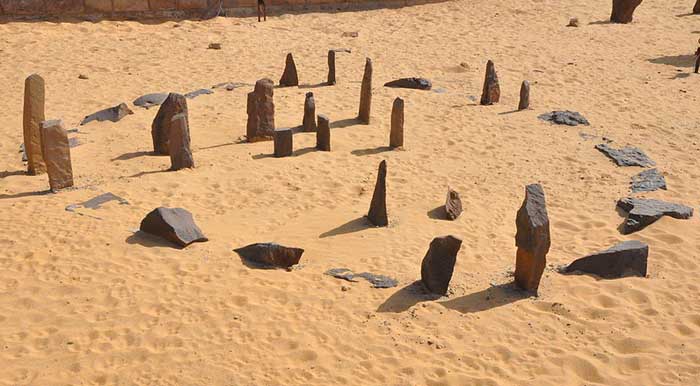
No trace of monotheism, patriarchal revelation, or Semitic influence appears in any of these African systems. Ancient religious and agricultural symbolism existed in Africa at Nabta Playa before the unification of Egypt and before the emergence of any Semitic culture. Cattle rebirth symbolism follows from Nabta Playa to Gebel Ramlah, Ta-Seti, Kerma and the Dynastic Apis cult, and it is an indigenous African motif that becomes central to later Egyptian mysteries. Divine kingship and resurrection ideology originated in Upper Nubia, and flowed northward into Lower Egypt, not the reverse.
Shamanic initiation, masking, and visionary practices, as in Tassili/Acacus rock art, are the oldest documented in the world and remained continuous in sub-Saharan Africa. This demonstrates several ancient traditions in the archaeological record with pre-dynastic Egypt roots — African, polyvalent, agriculturally-centered and astronomically oriented.
Pre-Egyptian African traditions had direct influences on the Egyptian temples which functioned like colleges, with archaeologically documented transmission from African cultures into Dynastic Egypt.
| Pre-Egyptian African Source | Date (BCE) | Specific Element Transmitted | Appearance in Dynastic Kemetic Temple Traditions (evidence) | Sources |
|---|---|---|---|---|
| Nabta Playa astronomical complex/observatory | ca. 4800-3000 | The Nabta Playa region 10,000 years ago was lush. Stone circles and astronomical alignments marked seasonal cycles; ritual use of cattle; ceremonial gathering places. | Development of solar and stellar calendrics in early Dynastic Egypt; ritual cattle symbolism in Hathoric and royal cults; orientation of temples and tombs to cardinal directions. | Belmonte (2001); Wendorf & Schild (2001); Malville et al. (1998) |
| Gebel Ramlah / Nabta Playa cattle burials | ca. 5000-4000 | Ritual deposition of cattle in tumuli; structured funerary practices among pastoralists. | Continuation of cattle symbolism in early Egyptian ritual (Hathor, Bat, Apis); ceremonial use of bovine imagery in elite and temple contexts. | Kobusiewicz et al. (2010); Applegate in Wendorf & Schild (2001) |
| Ta-Seti / Qustul royal incense burners | ca. 3300-3100 | Early royal iconography: falcon imagery, palace façade motifs, processional scenes. | Adoption of falcon kingship (Horus); emergence of serekh as royal emblem; early funerary and royal ritual symbolism in Dynasty 0–1. | Williams (1986); Wilkinson (2001); Dreyer (1999) |
| Tassili n’Ajjer & Acacus Mountains (Central Sahara) | ca. 9000-4000 | Rock art depicting masked anthropomorphic figures, ritual scenes, and symbolic body adornment. | Use of masks, crowns, and ritual performance in Egyptian temple festivals; iconographic parallels in early Predynastic ceremonial art. | Mori (2000); Sansoni (1994); Muzzolini (2000) |
| Badarian & Naqada I–II cosmology | ca. 4400-3400 | Structured burial customs; symbolic grave goods; early elite iconography; color symbolism. | Foundations of later Egyptian funerary ideology; emergence of Osirian concepts; development of elite ritual and symbolic color systems. | Hendrickx (2008); Patch (2011); Hendrickx & Vermeersch (2000) |
| Kerma & Upper Nubian tumulus traditions | Kadruka: 4500-3000 Kerma: 2500-1500 | Tumulus burials; elite grave goods; animal symbolism (lion, cattle, falcon). | Shared Nilotic iconography (lion, falcon); Nubian ritual influence on Egyptian royal and funerary symbolism, especially in later periods. | Honegger (2012); Török (2009) |
| Hierakonpolis Predynastic elite cult | ca. 3800-3000 | Ritual performance scenes; elite tombs with animal burials; early falcon cult. | Institutionalization of royal ritual; development of Sed-festival themes; early forms of sacred kingship that continue into Dynastic Egypt. | Friedman (2010); McNamara (2008) |
While this data does not demonstrate an “intentional” transmission of knowledge, it shows a history of cultural continuity, shared symbolism and long‑term regional influence.
Astronomical and cattle‑centered ritual practices first developed among mid‑Holocene pastoralists at Nabta Playa (whose stone circles, ceremonial structures, and cattle tumuli date to ca. 4800-3600 BCE). Elements of this symbolism of seasonal or solar orientation, sacred cattle imagery, and structured ritual space reappear in modified forms within early Nile Valley cultures such as the Badarian and Naqada traditions. These themes contributed to the religious vocabulary that later formulated in early Dynastic theology, including the Heliopolitan and Memphite cosmologies and the Pyramid Texts, where stellar ascent, solar rebirth, and bovine cults (Apis, Mnevis) become central motifs. Early expressions of divine kingship and elite funerary symbolism in the Ta‑Seti/Qustul region (ca. 3300-3100 BCE) find parallels in the emerging royal ideology at Hierakonpolis and in the first Dynasties of Egypt. This fed into the Horus-Osiris cycle drama performed at Abydos in Upper Egypt from the Middle Kingdom onward.
Central Saharan Round‑Head art preserves some of the earliest African imagery of masked ritual specialists and ecstatic performance, motifs that later reappear in modified forms in Predynastic Egyptian ritual iconography. Egyptian protective deities such as Bes and Aha share visual and functional traits with earlier Saharan masked ritual figures, suggesting long-term African transmission of knowledge in protective and liminal symbolism. While, Greco-Roman mysteries do not derive from Saharan prehistory, the Greco‑Roman Isis mysteries inherited these Egyptian themes of protection, rebirth, and ritual transformation, who were themselves influenced by much older African symbolic traditions. Then, there is the concept of moral cosmic balance with the primordial goddess MAAT. While Badarian symbolic practices show early concern with ritual identity and funerary preparation.
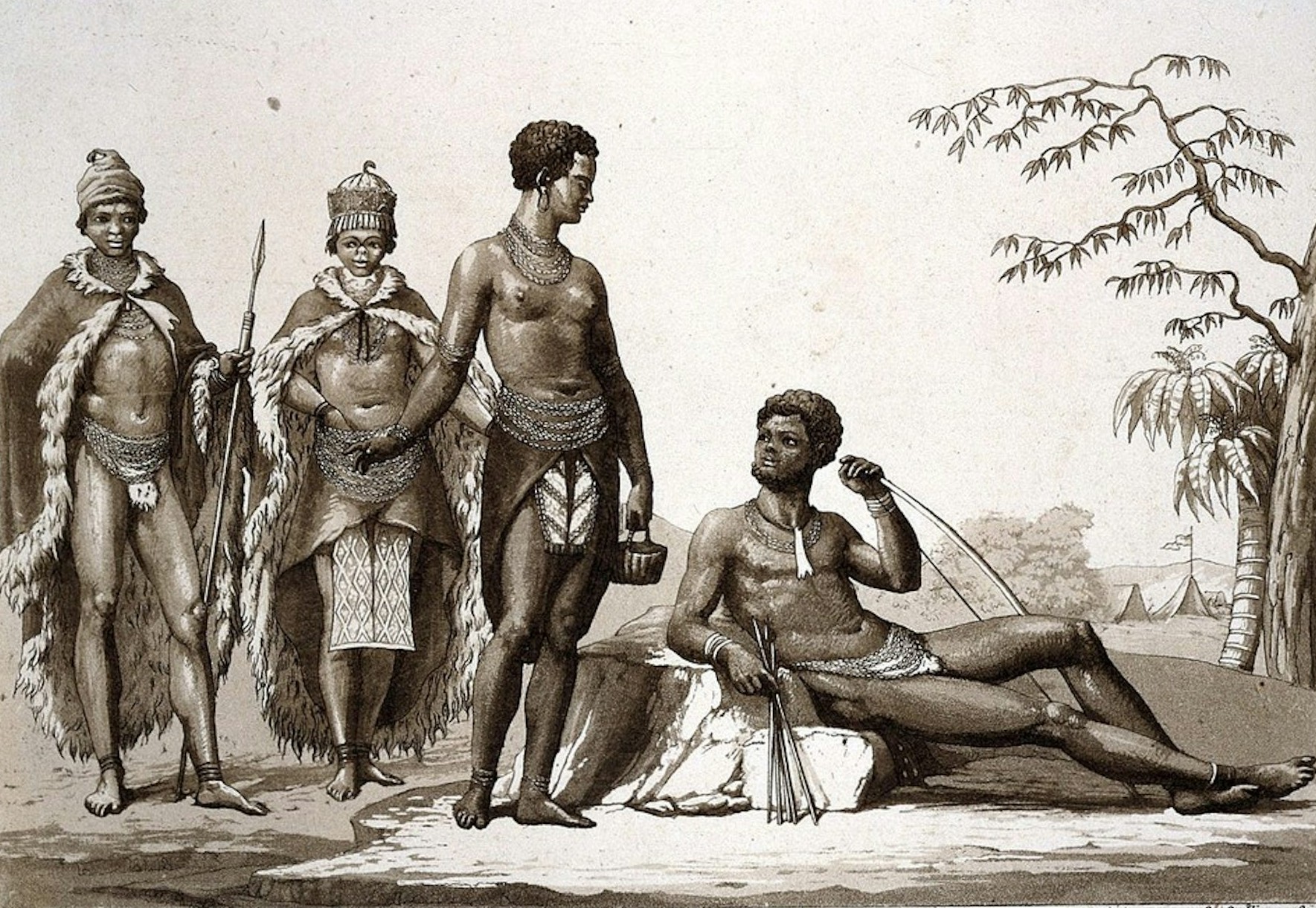
Full of star lore and star-death mythology, the Khoisan-speaking peoples (genetically and linguistically the oldest diverging human populations still extant) preserve some of the most ancient continuously practiced spiritual-esoteric traditions left in our world. The Khoisan traditions demonstrate continuity of the deepest African spiritual substrate. Genetic, linguistic, and ethnographic evidence places their cultural systems as preserving ancient African patterns; and those patterns may predate the emergence of Egyptian civilization. The Khoisan lunar-menstrual-death-rebirth tradition is defined as structurally identical to the Isis-Osiris myth cycle, not genealogical with views on death, female ritual agency, lunar periodicity and rebirth through ritual.
Khoisan ritual traditions, especially trance dance, lunar symbolism, and death‑rebirth narratives represent some of the oldest continuously practiced cosmological systems in Africa. These practices point to ancient mythic structures that long predate the emergence of complex societies in the Nile Valley. While not directly ancestral to the Nubian Neolithic, Ta‑Seti, or Predynastic Egypt, Khoisan cosmology preserves themes, such as a three‑tiered cosmos, lunar‑linked renewal, and animal‑centered ritual power, that resonate with symbolic patterns later expressed in Saharan pastoral cultures and early Nile Valley religion.
As populations moved northward during the mid‑Holocene, Saharan and Nilotic groups carried with them diverse ritual traditions, including cattle symbolism, celestial orientation, and concepts of cyclical renewal. These motifs appear archaeologically in the Western Desert (e.g., Nabta Playa), in early Nubian elite traditions (e.g., Qustul), and in Predynastic Egyptian ritual centers such as Hierakonpolis. Over time, this African symbolism was reworked into the distinctive religious systems of Dynastic Egypt, including the Osirian cycle, royal renewal rites, and the cosmological frameworks preserved in temple theology and funerary texts.
The consensus left on the subject is that important elements of early royal iconography originated in Nubia, not Egypt. The essential structures of Egyptian mystery religion such as stellar rebirth, moral justification, and secret initiation are already present in Predynastic and early Dynastic times and owe their origin to indigenous African developments, according to Jan Assmann. Assmann argued for continuity from Predynastic funerary practices to Dynastic mystery cults, emphasizing indigenous African (Nilotic) roots over Asiatic influences in Death and Salvation in Ancient Egypt (pp. 11-14, 2005). As David O’Connor and Andrew Reid argue in Ancient Egypt in Africa (2003), the religious and ideological foundations of Dynastic Egypt did not arise in isolation. Instead, Nubia and the cultures of the southern Sahara contributed key symbolic, ritual, and cosmological elements that were later formalized within Egyptian temple religion. These earlier African traditions provided part of the conceptual background from which Dynastic religious systems developed, even though Egyptian institutions ultimately reshaped and expanded these ideas into their own distinctive theological frameworks.
The temple colleges of the Dynastic period, including the ritual dramas at Abydos, the Pyramid Texts, and the theological systems of Heliopolis and Memphis, did not arise suddenly. Instead, they represent the formalization of religious ideas and ritual practices that had been developing across the Nile Valley and the Sahara for many millennia. Archaeological evidence from mid‑Holocene Saharan pastoral cultures, early Nubian ceremonial traditions, and Predynastic Egyptian ritual centers show a long, fluid development of cosmology, sacred kingship, and funerary ideology. Dynastic temple institutions therefore embody a deep African heritage, shaped by diverse communities whose symbolic and ritual repertoires gradually converged into the complex religious systems of Pharaonic Egypt.
These earlier African ritual and cosmological traditions form part of the deep cultural background from which Dynastic Egyptian temple religion emerged. Greek, Phoenician, and later Mediterranean writers consistently regarded Egypt’s priestly institutions as custodians of ancient wisdom, and many acknowledged Egyptian religious and philosophical systems as influential in shaping their own traditions. The Egyptian temple complexes represented an older, more elaborate ritual and cosmological framework that Mediterranean thinkers viewed as sacred.
FOOTNOTES
- Read Rhineland Pietists to Mishnaic Period: Medieval and Pre-Medieval Transmission of Jewish Esoteric Traditions: There are pre-Medieval esoteric-magic traditions that fed into or influenced Kabbalah, drawing from oral and initiatory roots, that Theosophy and Rabbinical tradition defend as pre-dating the 13th century. This alludes to: Merkavah and Hekhalot mysticism (2nd-8th centuries CE); the Sepher Yetzirah tradition (3rd-6th centuries CE) as the earliest Hebrew cosmological-mystical text revealing the sefirot as powers; the German Pietists (Hasidei Ashkenaz) in the 12th-13th centuries; pre-Kabbalaistic Provencal traditions (10th-12th centuries) that led to the Sefer ha-Behir text; references in the Talmud and Madras (3rd-6th centuries CE) in Tannaitic and Amoraic periods; and Geonic esoteric writings even held among Babylonian academies for esoteric study (8th-11th centuries). ↩︎
 The American Minervan
Leave a comment