INTRODUCTION
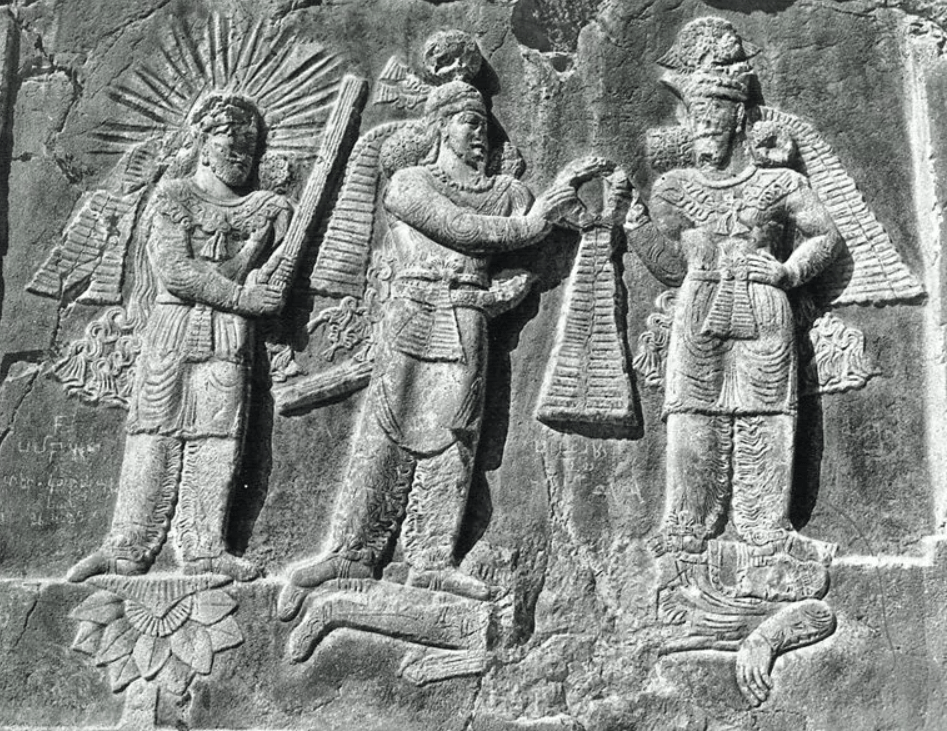
Alireza Assary, an independent researcher of ancient Iranian mythology, David Reigle and Henry Corbin are influences for my approach and dialogue here. Assary explains in Zurvan and the Philosophy of Time: On the Necessity of Reinterpretation, that modern reinterpretations view Zurvan as a philosophical framework for TIME, where infinite time flows cyclically, arguing that this is rooted in dimensions of the nature of being, which demand reevaluation for contemporary physics and metaphysics (Assary, Zurvan and the Philosophy of Time: On the Necessity of Reinterpretation). Alireza Assary is writing about the implications these ideas have for science, philosophy and religion. In Sun and Lunar Worship: Adonai, Baal and Moloch in the Mysteries and the Tragedy of Satan the Double-Headed Dragon I wrote about the philosophy of dualism in antiquity, ancient Persia and Mesopotamia. Now, I am delving into a different side underlying dualism, which deals with the paradoxes of monotheism.
THEOSOPHY REJECTION OF THEISM AND THE MONISTIC HERESY IN ZOROASTRIANISM
Can anyone tell me what is the most important concept in Theosophy?
The most important concept in Theosophy is SPACE. From this or that angle, one could say, no it is DIVINE COMPASSION, or the DOCTRINE OF THE HEART. Yes, but this is included within the concept of SPACE. Probably the two most important Cosmological Notes in my archive on learning about Theosophy is Two Key Subjects in Morya’s Cosmological Notes: Space and Essence and God versus Svabhava and its Importance. The problems with the term and notion of “God” are many, and the term and theory of God is avoided to not limit the mind or mislead it into the habit of anthropomorphism. God, a personalized deity is a projection of human and tribal qualities onto the cosmos. “God” is not rejected out of atheism, but because the word is philosophically useless, culturally corrupted with contradictions, used as a tool of authority, justifies superstition and conditioning and cannot express the metaphysical reality, which cannot be named and is not a being. The universe unfolds according to law, cycles, and inherent motion, and there is no “God” or creator with emotion and will behind it.
Firstly, the fundamental principles of Theosophy are based on the nature of space, or sunyata and its sophisticated meanings. Dhātu, as element or realm in Buddhist-Theosophical contexts, relates to the fundamental constituents of reality, where SPACE is the boundless container interpenetrating all.
There is no requirement to be trained in Buddhist schools of logic to understand this philosophy, because the position of Theosophy exists at the basis of early European Philosophy itself. It also appears in other places, e.g. in a forgotten monistic heresy within Mazdaism (Zoroastrianism) into the Achaemenid period in Persia known as Zurvanism. For Theosophy, the conversation is not about God the creator and monarch and his loyal subjects from the Bible, but the nature of SPACE, DURATION, MOTION and MATTER. Cosmic matter, space, duration and motion are aspects of the Absolute, the ONE, and thus called the one eternal Element, represented as negative, passive, and unconscious. Motion is referred to as endless, absolute, perpetual motion of the universe, inextinguishable and never ceasing; and within which nothing is really motionless. Matter, primordial and indestructible, is animated by Motion within Space over Duration, forming the mystic root of the universe, similar to Zurvan’s embodiment of fate and matter as the source of both good and evil twins. This is ultimately rooted in Eastern esoteric sources, equating Space with Mahakasha (Great Endless Space) or Maha Sunyata (Great Voidness), and Duration with Nyug, just as in Zurvan’s transcendental neutrality and unity beyond duality, or monistic essence.
REJECTION OF THEISM AND RADICAL IMPLICATIONS FOR THE METAPHYSICS OF THEOLOGY
So, the idea of space is central to this position of the secret doctrine of Theosophy or the WISDOM TRADITION, and historically this emphasis on space reflects eighteenth-century developments into the Victorian era away from conventionalist theism.
If we have been paying attention, Theosophy is non-theistic and non-dual. It not only rejects orthodox theism, God (and explains the invention of “God”), but it radically moves away from dependency on the very use of the word “God” in metaphysics after Isis Unveiled was published in 1877 when God is used in the Hermetic sense. After this, Blavatsky begins to only use terms like force, matter, substance, void, etc, and not “God.”
A point of contention with certain Theosophists early in the movement was that Westerners won’t accept a philosophy without God, to which Allan O. Hume and Alfred P. Sinnett were told, that this is an uncompromisable teaching. This indicated that the explanations of these “fundamental principles” of Occult Philosophy from Asian contexts must not be subordinated to the theists. Using Zurvanism and Henry Corbin’s The Paradox of Monotheism may make it simpler to understand the position in Theosophy, though I have also tried to demonstrate this another way through the Kabbalists and pre-Medieval roots of AIN, and the natural philosophy of the pre-Socratic philosophers. These traditions demonstrate the antiquity of the position as not a modern notion only Enlightenment scientists began to understand in the transition from God in theology to Space in science. It helps us understand the Theosophical position against the conventional theism that defines and provides a framework of belief about the structure of the world for a great majority of people in the world.
The concept of God has a particular linguistic history, full of baggage, and is also an exoteric overlay. It further becomes an impediment, particularly from the standpoint of the Buddhist logicians Blavatsky is working through. Like, Blavatsky’s use of the term space is similar to the concept of emptiness and nature of reality in the Jonang school of Tibetan Buddhism. Hardly any of us would be able to immediately discern that, then also be capable of wrestling with the logic these schools are working from while we work from our conditionings, especially when Blavatsky is describing space as fullness and emptiness, which has been also heretical and persecuted position in Tibetan Buddhism itself. However, the position of Theosophy does not only exist in “the East,” but also at the basis of “Western Philosophy” (The Early Greek Natural Philosophers of Physis and the Way of Heaven), completely refuting the idea this position is heretical, foreign or too difficult to understand given the acceptance of the conventional theism.
ZURVANITE MYTHOLOGY AND HELLENIC MYTHOLOGY
We’ve established here, that the nature of Zurvan corresponds to Theosophical teachings on the Absolute or One Reality, where Space, Motion, Duration, and Matter form the eternal, co-existent essence of the unknowable Deity, thus rejecting a personal God in favor of pantheistic immanence. Zurvan is infinite space and infinite Time, or the neutral progenitor of the oppositional poles of Ahura Mazda and Angra Maiyu. Zurvan is described as the God of Space and Time, but Zurvan is SPACE and TIME.
These are in the Hellenic traditions, Primordial Gods (Titans) before Zeus and Hades, so the Greek mythology also taught this position considered “heretical.” Zeus, the supreme ruler fears his Father (who represents infinite Duration or the Circle of Time) and fears the Absolute Darkness, or Nyx who is far older and beyond him. This is the mythological aspect veiling this truth. In Zurvanism, Ahura Mazda is not described as fearing Zurvan.
A Zurvanism article in the Encyclopedia Iranica defines Zurvan in the Avestan texts appearing as a minor abstract deity representing periods of time, invoked in rituals alongside related astronomical concepts like the firmament or infinite expanse (Thwasha) and the void (Vayu), suggesting an early cosmological role in structuring the universe through temporal and spatial preconditions for creation. Zurvan as the primordial deity in Zurvanism, embodies infinite time and space, serving as the neutral, transcendental first principle that precedes and engenders the dualistic forces of good and evil in Zoroastrian cosmology according to Zaehner in Zurvan: A Zoroastrian Dilemma. Its dual aspects of Limitless Time (infinite and eternal) and Time of Long Dominion (finite and cyclical, lasting for long cycles before returning to infinity), reflects Zurvan’s role as both boundless container of existence and regulator of cosmic cycles.
Persian mythology differs from the Greeks, but the basis is the same. Medieval Zoroastrian texts like the Bundahishn equate Zurvan with divine spirits such as the sky (Spihr) and peace (Raman), portraying Zurvan as a weapon against falsehood, while distinguishing infinite Zurvan (ageless, undying) from finite time that facilitates cosmic conflict. Zurvanite iconography and artifacts (Cultural Heritage and Modern Technologies, Zurvanite Iconographic Canon) center around astronomical elements like the zodiac expressing Persian and Hellenic art and emphasizes Zurvan’s role in cyclical time and spatial order. In one of the mythological narratives, Zurvan performs a thousand-year sacrifice to beget a son, but doubt leads to the simultaneous conception of Ohrmazd (Good, or Wise One) and Ahriman (Evil, or Matter) in his womb, symbolizing how infinite time-space inherently contains the potential for both creation and destruction, with fate determining their roles. There is here an interplay between the higher metaphysics and human storytelling.
ZURVANITE NEUTRALITY BEYOND DUALISM
The key point to take with us, is that there is this ineffable super-integrated principle from which Spirit and Matter — though the two are of ONE ELEMENT — enters the stage of manifestation and is the source of all opposition, division, co-operativity, strife, suffering, struggle, etc. Merging infinite time and temporal cyclical time with spatial omnipresence makes Zurvan the undifferentiated ONE, from which all multiplicity (all the NUMBERS and cosmogonical PHASES) issues. This neutrality posits Zurvan therefore as beyond good and evil and the manifested worlds (Zurvanism; The Religion of Zurvan, the God of Infinite Time and Space); a hermaphroditic or sexless entity whose essence is pure potentiality, fate, and matter, influencing later Persian theology where TIME is the arbiter between opposing forces.
In the Tanakh, its scribe in Isaiah 45:7 narrates the role of Avi’ad אֲבִי-עַד or the Father of Eternity, declaring, “I form the light and create darkness; I bring prosperity and create calamity. I, the LORD, do all these things.” Therefore, “Thou shalt not revile the gods,” because to revile and curse the creation would be to curse the creator itself, teaching us humility and respect.
Zoroastrians: Their Religious Beliefs and Practices tells us, that by the late Achaemenid period, Zurvan evolves into the supreme god of Zurvanism, a fatalistic heresy within Zoroastrianism, where he is depicted as the father of the twin spirits Ahura Mazda (Ohrmazd, principle of good, light, and order) and Angra Mainyu (Ahriman, principle of evil, darkness, and chaos), resolving apparent dualism into a higher unity (Boyce, Zoroastrians: Their Religious Beliefs and Practices).
In philosophical terms, Zurvanism (Iran Chamber Society), explains that Zurvan needs nothing yet is needed by all, including gods, for action and creation, as without time-space, no motion or manifestation is possible. Phenomena’s true essence is the ONE REALITY in Theosophy. All this directly corresponds to Jonangpa school teachings in Tibetan Buddhism that Theosophy expresses (Reigle, Theosophy in Tibet: The Teachings of the Jonangpa School), which emphasize a concept termed shentong (empty of other), positing an absolute reality beyond dualism, similar to Zurvanism’s heretical resolution of Zoroastrian dualism into temporal monism. So, this concept considered heresy reveals this very curious Indo-Iranian connection, that Theosophy tried to bring to the dialogue in Western Philosophy.
HENRY CORBIN ON THE PARADOX OF MONOTHEISM
People may be able to relate by questioning monotheism. Henry Corbin’s Paradox of Monotheism has stuck with me for a very long time. We now understand that Zurvanism exemplifies a heretical monism that challenges strict dualistic monotheism by positing a single transcendent principle (ZURVAN) as the source of both divine good and demonic evil, creating a paradox where unity engenders opposition without moral distinction. Corbin, a Protestant theologian explored Iranian Islamic mysticism influenced by Zoroastrian remnants in The Man of Light in Iranian Sufism, and how monotheism’s insistence on one God paradoxically leads to a monistic vision where the divine encompasses contradictions, as in Zurvan’s neutral paternity of twins, blurring creator and creation. This heretical monism in Zurvanism resolves Zoroastrian dualism into a higher temporal unity but creates the paradox that absolute oneness (or tawhid توحيد) must include evil’s origin, threatening orthodox theism by implying Allah’s responsibility for duality.
Here is the problem though, or the crux of the accusation of a theory of the Divine as ambivalent to the Creation. Theosophical parallels amplify the paradox, as the Absolute’s pantheistic essence (SPACE-TIME as one) mirrors Zurvan’s infinite neutrality, where monotheistic Be-ness engenders multiplicity, risking heretical implications of divine ambivalence, which Corbin alludes to in Alone with the Alone: Creative Imagination in the Sufism of Ibn ‘Arabi. In Shi’ite Sufism, Corbin notes the similarities to Zurvanism’s time-space monism in the “Man of Light” archetype, fusing human-divine realms, and paralleling the paradox where monotheism’s transcendence demands immanent unity, like Zurvan’s cyclical return to infinity. We can get from Corbin the idea that ultimately, Zurvanism’s monism heretically subverts monotheism by making SPACE-TIME the ultimate deity, giving us the position that true monotheism paradoxically embraces esoteric dualities within a monistic framework, and for Corbin this influences Islamic gnosis.
REVIVALISM WITHIN OUR RELIGION’S SCHOOLS OF THOUGHT
These ideas require the activity of logos (speech, thought) through praxis (from abstract theory to action), and dare I say, teachers and representatives that embody the ideas as an example to others and avoiding the pitfalls of the ego in a world of celebrity influencers. Our elder teachers will not live forever, and we must also have the thirst for knowledge and action, and with this we can build stronger theological foundations for the future that have been obstructed by orthodoxy.
There are many people that think esotericism is not meant for the masses (“the hoi polloi” in modern terms has become “normies”), because it would burn their brains, but this is an absurd notion. The term is too associated in our time with resembling complicated theorems of physicists and mathematicians in metaphysics to the effect: if you don’t understand this long complex illustration of the constitution of man or the structure of the universe, then you don’t have esoteric knowledge. Then again, it is common for the modern spiritual practitioner to also think, because they can astral project, that they are in the Third Heaven! and thus, no aspect of the scientific and theoretical side of Occultism enters their mind. If the world of the apparent (to our eyes) is full of illusion, then the subtler worlds are even more full of traps and illusions. So, that is a ridiculous novice picture, and it is false. ESOTERIC WISDOM has always lived to some degree among and with the masses, and you can grasp it in the speech and works of people across all geographical distances and religion. The best scholars and teachers are capable of scaling their instructions and speech according to their audience, or choice. “Esotericism” does not indicate a complexity in vocab, but penetrates the being.
G.I. Gurdjieff believed that the task of gradual dissemination of esoteric knowledge among the masses was a problem inherent in human beings, in the structures, struggle and distractions of society and the veiled nature of GOD itself. GOD is therefore for the Christian mystic the most concealed. This concealment is inherent to its nature.
Now, we can say, e.g., that in Christian social teachings, it exemplifies a devotional approach for the masses, even despite its exoteric trappings, simplifies it for them and is capable of drawing hearts closer to the roots of our nature, providing the space for the growth of wisdom in their minds. No one can deny having seen this in the human saints of our time and postmortem. Religions are still capable of leading individual units gradually to the WISDOM.
BREAD OR CYCLICAL GNOSIS
These concepts are mistakenly seen as abstract and far from, e.g., the more grounded focus relatable to the struggles of ordinary daily life such as human rights and responsibilities, war, familial duties, poverty, injustices and human dignity. They are the basis.
What does the “esoteric truth” of TIME’S CIRCLE have to do with war, the impoverished, putting bread on the table, and building destroyed houses from natural disasters? Would humanity rather just pray for rain, or for help against wickedness, or what does this “esoteric wisdom” have that the conventional understandings do not possess; and does it possess the strongest potential for revolution, moral elevation and ethical transformation? Many movements in European history, even inspired by elements from (or originating from) Islamic and ancient Iranian philosophy by Europeans have sought to imbue their civilization with the gnosis — with so-called HERESIES and their potential towards justice, solidarity and the charity of humanity.
And we can once more, because it is modernity’s lifeline from religious superficialism and decadence of civilizational spiritual expression caused by the strife and division led by the ignorant, exploitative and perverse among the ranks of our societies. Together understanding this and the importance of adalah (عدالة) or justice for our practice and revolution, the unity of humanity becomes the unified roar of the heavens. We are called to harness a peaceful world based on equality, respect, and dignity of honor and justice.
RECOMMENDED REFERENCES FOR CREATION OF PRODUCTIVE DIALOGUE
- Alireza Assary, Zurvan and the Philosophy of Time: On the Necessity of Reinterpretation, 2025.
- H.P. Blavatsky, The Secret Doctrine, Vol. 1. 1888.
- Harold Bloom, Omens of Millennium, Riverhead, 1996.
- Mary Boyce, Zoroastrians: Their Religious Beliefs and Practices, Routledge, 2001.
- Britannica. Zurvan. 2026.
- CAIS-SOAS, The Religion of Zurvan, the God of Infinite Time and Space.
- Henry Corbin, Alone with the Alone: Creative Imagination in the Sufism of Ibn ‘Arabi. Princeton University Press, 1969.
- Henry Corbin, The Man of Light in Iranian Sufism, Omega Publications, 1994.
- Henry Corbin, The Paradox of Monotheism: In History of Islamic Philosophy, Routledge, 1993.
- Henry Corbin, Spiritual Body and Celestial Earth, Princeton University Press, 1977.
- Cultural Heritage and Modern Technologies. Zurvanite Iconographic Canon. Astronomy and Mythology.
- Encyclopædia Iranica. Zurvanism. 2014.
- Iran Chamber Society. Zurvanism.
- David Reigle, Atman/Anatman in Buddhism and Its Implication for the Wisdom Tradition, Eastern Tradition Research Institute, 2015.
- David Reigle, God’s Arrival in India, Eastern Tradition Research Institute, 2015.
- David Reigle, Samkhya and the Wisdom Tradition, Eastern Tradition Research Institute, 2015.
- David Reigle, Technical Terms in Stanza I: Book of Dzyan Research Reports, Eastern Tradition Research Institute, 1999.
- David Reigle, The First Fundamental Proposition of the Secret Doctrine: The One Reality, Eastern Tradition Research Institute, 2015.
- Reigle, David, Theosophy in Tibet: The Teachings of the Jonangpa School, Eastern Tradition Research Institute, 1999.
- World History Encyclopedia, Zorvanism. 2020.
- R.C. Zaehner, Dawn and Twilight of Zoroastrianism, Weidenfeld & Nicolson, 1961.
- R.C. Zaehner, Zurvan: A Zoroastrian Dilemma, Clarendon Press, 1955.
 The American Minervan
Leave a comment