Six Short Articles
CONTENTS
- SETTING NO LIMITATIONS BEGINS WITH CONCEPTS OF CULTURE, GOD AND NATURE
- O’ GOD OF MAN, WOE GOD OF MAN
- SECULAR MODERNITY AND RECONSTRUCTIONS OF WISDOM UNDERLYING BUDDHISM, ZOROASTRIANISM AND EARLY INDIAN DARSANA
- PRINCIPLE BEYOND THE TWIN BROTHERS
- TOUGH INQUIRY, MODES OF THINKING AND AIDS IN MEDITATION
- THEOLOGICAL LIMITATIONS AND CONFLICTING TITANS
SETTING NO LIMITATIONS BEGINS WITH CONCEPTS OF CULTURE, GOD AND NATURE
SPACE, DURATION, MATTER, MOTION — a tetractys of interconnected aspects of the timeless Absolute in Theosophy differs from what is called “God,” and it is the understanding of these interlocked four that elevates Theosophy. This is not what the theists call “God,” since God is seen as and understood through conditioned human attributes, acting human with finite characteristics, but is yet seen as beyond these four when we turn to theologians. This is philosophically unsound for Theosophy, and the oft untold context of modern Theosophy is that its early thinkers are working from within frameworks different from Western philosophy and cultures.
Theosophy’s early thinkers also are in philosophical dialogue with Hermetic, classical Indian and pre-Islamic Iranian philosophy. Blavatsky herself after leaving Russia carried her pan-Slavic and Russian patriotism with her and began her journeys in esoteric circles in the Ottoman world, Syria, Lebanon and Egypt, which provided depth to her philosophical and political views, and affirmed many of her deepest intuitions about religion. Theosophy’s universalist framework allowed intimate engagement with global traditions without centering Ottoman or Islamic esotericism, and her concept of masters and disciples in that world is common in the Islamic world still today.
What is missed however, is that some of these frameworks seemingly foreign, lie at the foundations of “Western philosophy” and are not alien from it, e.g., in Athena, Virgin Guardian of Aries: Courage and Noetic Enlightenment in Hellenic Esotericism, breaking our modern (confused with advanced) assumptions. This directly challenges Polemics theology.
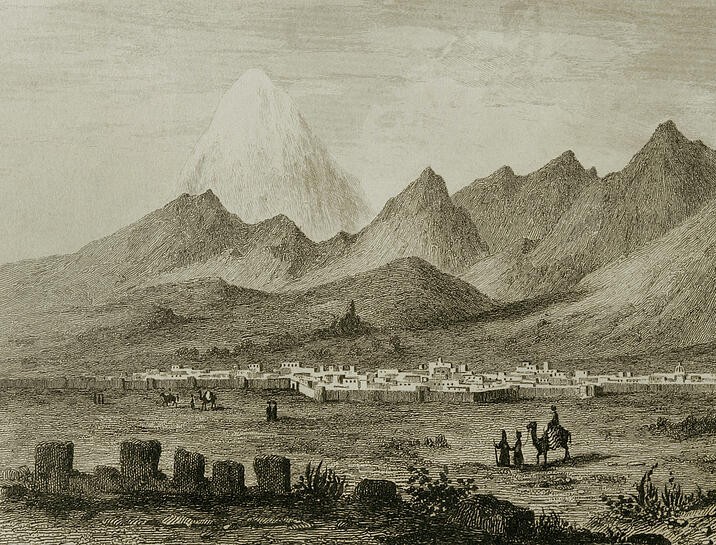
Also, in the historical context, Europeans were enamored with Persia, Turkey and Asia, but this is only spoken of today in its negative sense of the colonialist history fostering alienation, separation and encouraging demonization narratives of “the West” in reverse; while “the modern West” still learns little about others and live under the delusions that globalism means we already know so much about each other’s different cultures and religions, because a fragment of each is on a particular given corner.
However, an equally bad and impermissible excuse at this point would be to then still construct strict dichotomies between so-called Occidental and Oriental formulas of logic and cultures and say we (as the Occident) are incapable of understanding “Oriental” or “Eastern” cultures, metaphysics, etc.
This is a lie, and part of the problem are the constructed racial and ethnic barriers that have been built that create strict boundaries, where even just past eras’ romanticizations of other cultures generated enthusiastic curiosity, wonder and appreciation for human diversity and philosophies. We can identify frameworks, rework their structures and find cross-cultural semblances, and still avoid the mistakes of the past.
 The American Minervan
Leave a comment