An analysis and historical context surrounding Thomas Jefferson’s private correspondence to Bishop James Madison (president of the College of William & Mary and cousin of future President James Madison) in defense of Adam Weishaupt’s ideals written from Philadelphia on 31 January 1800 against Abbé Barruel’s Memoirs Illustrating the History of Jacobinism. Occurring during the height of the “Illuminati scare” in the United States (1798-1800), this was a period of intense partisan and religious anxiety in the early republic. Jefferson had not yet become president, and he was serving as Vice President under Federalist John Adams while leading the opposition Democratic-Republican Party. Jefferson defended negative associations of republicanism with anarchy as the basis of Enlightenment ideals of human progress against conservative Federalist and clerical attacks that portrayed rationalist philosophy as a dangerous international conspiracy.
“Wishaupt seems to be an enthusiastic Philanthropist. He is among those (…) who believe in the indefinite perfectibility of man. He thinks he may in time be rendered so perfect that he will be able to govern himself in every circumstance so as to injure none, to do all the good he can, to leave government no occasion to exercise their powers over him, & of course to render political government useless. This you know is Godwin’s doctrine. . .” (Thomas Jefferson, Letter to Bishop James Madison: Thomas Jefferson Papers, Philadelphia, 31 January 1800).
📝
LETTER TO BISHOP JAMES MADISON
“I have received your favor of the 17th, & communicated it to Mr. Smith. I lately forwarded your letter from Dr. Priestley, endorsed `with a book’; I struck those words through with my pen, because no book had then come. It is now received, & shall be forwarded to Richmond by the first opportunity: but such opportunities are difficult to find; gentlemen going in the stage not liking to take charge of a packet which is to be attended to every time the stage is changed. The best chance will be by some captain of a vessel going round to Richmond. I shall address it to the care of Mr. George Jefferson there.
I have lately by accident got a sight of a single volume (the 3d.) of the Abbe Barruel’s `Antisocial conspiracy,’ which gives me the first idea I have ever had of what is meant by the Illuminatism against which `illuminate Morse’ as he is now called, & his ecclesiastical & monarchical associates have been making such a hue and cry. Barruel’s own parts of the book are perfectly the ravings of a Bedlamite. But he quotes largely from Wishaupt whom he considers as the founder of what he calls the order. As you may not have had an opportunity of forming a judgment of this cry of `mad dog’ which has been raised against his doctrines, I will give you the idea I have formed from only an hour’s reading of Barruel’s quotations from him, which you may be sure are not the most favorable. Wishaupt seems to be an enthusiastic Philanthropist. He is among those (as you know the excellent Price and Priestley also are) who believe in the indefinite perfectibility of man. He thinks he may in time be rendered so perfect that he will be able to govern himself in every circumstance so as to injure none, to do all the good he can, to leave government no occasion to exercise their powers over him, & of course to render political government useless. This you know is Godwin’s doctrine, and this is what Robinson, Barruel & Morse had called a conspiracy against all government. Wishaupt believes that to promote this perfection of the human character was the object of Jesus Christ. That his intention was simply to reinstate natural religion, & by diffusing the light of his morality, to teach us to govern ourselves. His precepts are the love of god & love of our neighbor. And by teaching innocence of conduct, he expected to place men in their natural state of liberty & equality. He says, no one ever laid a surer foundation for liberty than our grand master, Jesus of Nazareth. He believes the Free masons were originally possessed of the true principles & objects of Christianity, & have still preserved some of them by tradition, but much disfigured. The means he proposes to effect this improvement of human nature are `to enlighten men, to correct their morals & inspire them with benevolence. Secure of our success, sais he, we abstain from violent commotions. To have foreseen the happiness of posterity & to have prepared it by irreproachable means, suffices for our felicity. The tranquility of our consciences is not troubled by the reproach of aiming at the ruin or overthrow of states or thrones.’ As Wishaupt lived under the tyranny of a despot & priests, he knew that caution was necessary even in spreading information, & the principles of pure morality. He proposed therefore to lead the Free masons to adopt this object & to make the objects of their institution the diffusion of science & virtue. He proposed to initiate new members into his body by gradations proportioned to his fears of the thunderbolts of tyranny. This has given an air of mystery to his views, was the foundation of his banishment, the subversion of the masonic order, & is the colour for the ravings against him of Robinson, Barruel & Morse, whose real fears are that the craft would be endangered by the spreading of information, reason, & natural morality among men. This subject being new to me, I have imagined that if it be so to you also, you may receive the same satisfaction in seeing, which I have had in forming the analysis of it: & I believe you will think with me that if Wishaupt had written here, where no secrecy is necessary in our endeavors to render men wise & virtuous, he would not have thought of any secret machinery for that purpose. As Godwin, if he had written in Germany, might probably also have thought secrecy & mysticism prudent.”
🖋
ANALYSIS OF THE LETTER OF JEFFERSON IDENTIFYING THE DOCTRINE OF WEISHAUPT
In the letter, we see while Thomas Jefferson does not endorse Weishaupt’s order, he criticizes Abbé Barruel’s conspiracy paranoia about the Illuminati, rejects the idea that Weishaupt was a dangerous mastermind, and then praises and identifies Weishaupt’s ethical ideas with other Enlightenment thinkers. Weishaupt, in Jefferson’s mind takes his place as another moral philosopher within the Enlightenment tradition opposed to superstition and priestcraft. Weishaupt was against European clericalism like Jefferson himself, and conspiracies during this era were used to discredit republicanism. This religious skepticism and anti-clericalism is at the heart of Jefferson’s defense in a climate of reactionary writers. This defense of Enlightenment philosophy against counter‑revolutionary propaganda is underappreciated, and due to its early misuse.
Barruel portrayed Enlightenment philosophy as leading to atheism, revolution, and chaos, and as a leading voice of the American Enlightenment, anything Jefferson said was used to accuse him of being a radical, an atheist, and a Jacobin sympathizer. Between 1798-1799, New England clergy and Federalist politicians spread the idea that, the Bavarian Illuminati had infiltrated America; that the French Revolution was part of a global conspiracy; and Republicanism itself was a subversive Illuminati project. This was preached from pulpits and printed in newspapers. Jefferson’s private correspondence was made public a decade later, and within this history emerges the Anti‑Masonic movement (1820s-1840s), which was America’s first major third‑party political movement. Mostly composed of New England Protestants, it thrived on the idea that elite secrecy was a threat to republican virtue. Jefferson’s private letter about Weishaupt was used to weaponize Jefferson’s Enlightenment language, to attack Freemasonry and construct a villainous Founding Father to anchor credibility within a grand narrative of clandestine radicalism.
For many Americans, Thomas Jefferson himself evokes admiration for his visionary ideals, as much as he evokes a painful discomfort with the contradictions that shaped his life as a villainous Founding Father. The early American republic’s core principles, i.e., liberty, natural rights, government by consent, equality under law, and opposition to arbitrary power clashed directly with the ownership of human beings as property. Jefferson as a symbol forces us to reckon with the disparity between American ideals and American realities, and at the heart of our problem is that the public is suspicious of institutions and the institutions don’t embody the values of the Republic. The point of social movements are to revive ideals and principles through action.
Thomas Jefferson, despite his own mistakes, recognized this in Weishaupt, who was clearly one of the most slandered and radical men during the Enlightenment.
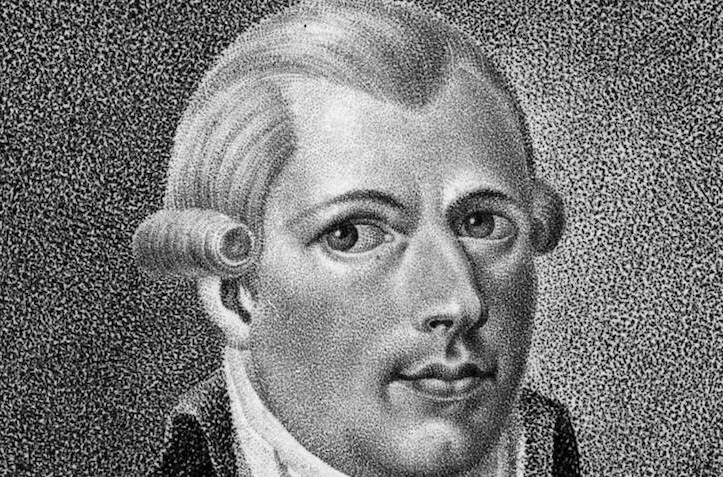
Adam Weishaupt (1748-1830) was a professor of canon law at the University of Ingolstadt in Catholic Bavaria who founded the Order of the Illuminati on 1 May 1776 (initially called the “Perfectibilists”). The society adapted various elements to promote the Enlightenment values of reason, science, moral improvement, with opposition to superstition, religious intolerance, clerical power and monarchical despotism. Weishaupt believed in gradual human “perfectibility,” meaning the indefinite improvement of character and intellect through education, benevolence, and the diffusion of natural morality, until individuals could govern themselves without coercive institutions. He recruited through existing Masonic lodges (which he joined in 1777), using graded initiations and secrecy to protect members from persecution in a repressive absolutist state dominated by Jesuits and the Bavarian Elector. The order grew at its peak to 2,000-3,000 members across German-speaking Europe before internal disputes and external opposition led to its suppression: Bavarian edicts in 1784-1785 banned secret societies, seized documents from members’ homes (revealing membership lists, correspondence, and radical writings), and forced Weishaupt into exile in 1785. By the late 1780s the order had effectively dissolved in Bavaria, though scattered Masonic and reading-society networks persisted.
Jefferson had no prior direct knowledge of Weishaupt’s writings until he encountered volume 3 of Abbé Augustin Barruel’s Mémoires pour servir à l’histoire du Jacobinisme (first English translation titled The Antisocial Conspiracy, 1799). Barruel, a French Jesuit exile and Scottish professor John Robison (Proofs of a Conspiracy, 1797) claimed without conclusive evidence that the Illuminati had survived its suppression, infiltrated Freemasonry, allied with French philosophes (Voltaire, Diderot, etc.), and orchestrated the French Revolution as the first step in a global plot to abolish Christianity, monarchy and all civil government. These books arrived in the United States in 1798 during the Quasi-War naval conflict with France (1798-1800), the XYZ Affair (1797 and 1798), and fears of French-inspired subversion.
Federalist newspapers and clergy amplified these claims, connecting them to Democratic-Republican societies, deism, and Jefferson himself!
There are some important social and political contexts in the early republic founding era of United States to consider. Republicanism in the founding era of the U.S. remained grounded in its classical sources (e.g., positions on virtuous self-government and civic participation) and Enlightenment natural rights of Locke and Montesquieu. It rejected monarchy and hereditary aristocracy, but assumed a society of independent, propertied citizens capable of virtue. Slavery violated the universal claims in the Declaration and republican aversion to despotism, yet it was embedded in the colonial economy the founders inherited. The U.S. Constitution itself contained compromises protecting it, without ever naming it, as it was seen as necessary to secure Southern ratification and union.
Not every founder was equally entangled. Benjamin Franklin became an abolition society president, while Alexander Hamilton opposed it, but Southern planters like Jefferson, Madison, and Monroe were entangled in the enterprise. They embraced the contradiction of the slaveholding “republic” by continuing the practice while lamenting it, because alternatives seemed worse for the republic they built or for racial peace as they saw it. Many of these early political leaders failed to resolve the contradiction in their lifetimes because of economic self-interest, beliefs against the practicalities of integration, racial pseudoscience of the era, legal inertia, and fears of chaos, which outweighed the moral logic they themselves articulated. The republic they created, however imperfectly, carried the tools for its own correction.
This young republic was deeply polarized and fragile. Southern states (Virginia produced four of the first five presidents) would not have joined a union threatening their “property” (or slaves). Immediate abolition risked disunion or rebellion and these fears were amplified by Haiti’s 1791-1804 revolution and Gabriel’s plot near Monticello in 1800. The Founders prioritized creating a viable republican government over perfect consistency; and where compromises enabled independence and the Constitution. When Jefferson became president, he avoided aggressive anti-slavery moves to preserve sectional balance. Like many, Jefferson assumed slavery might fade naturally in a free-labor republic or through diffusion. They took incremental steps (e.g., Washington’s private manumission and the Northern gradual emancipation laws). However, profitability in the South and expansion westward entrenched it further. Personal circumstances made full separation difficult.
Federalists like Adams, Hamilton and New England clergy favored a strong central government with closer ties to Britain, and a quasi-established Protestant order (e.g., Congregationalism in New England). Democratic-Republicans like Jefferson and Madison championed states’ rights, sympathy for the French Revolution in its early phases, religious disestablishment, and expanded popular participation. Post-Revolutionary anxieties such as economic instability, immigration, declining church attendance in some regions, and the spread of deist and Unitarian ideas begin to heighten fears that “infidelity” and “Jacobinism” threatened social order.
The most vocal American promoter of the Illuminati conspiracy was Jedidiah Morse, the influential Congregational minister and geographer known as “illuminate Morse” in Jefferson’s letter. In fast-day sermons of May 1798 and April 1799, Morse warned that Illuminati “branches” had been established in the United States since the 1780s, citing Robison and Barruel as authoritative proof. He and allies such as Yale president Timothy Dwight portrayed the threat as an existential assault on “religion, government, and human society.” Federalist orators linked Jefferson since he was author of the Virginia Statute for Religious Freedom (1786) to deism and associated his perceived French sympathies to the conspiracy, calling him the “real Jacobin, the very child of modern illumination.”
Democratic-Republicans countered by labeling the New England clergy and Federalist elite the true “New England Illuminati,” a secretive aristocratic cabal using religion to maintain power. Conspiracy theory is interwoven into the fabric of the United States as a weapon, and the Illuminati scare became a partisan weapon in the bitterly contested 1800 presidential election.
Jefferson’s eventual victory is sometimes attributed in part to the backlash against Federalist “priestcraft” and hysteria.
On Weishaupt’s Perfectibilism and Godwin’s doctrine, the strong basis of Jefferson’s analytical contribution is his reading of Barruel’s hostile quotations from Weishaupt. He identifies Weishaupt as “an enthusiastic Philanthropist” who belongs to the same intellectual tradition as British dissenters Richard Price and Joseph Priestley, both of whom Jefferson admired and who championed the French and American Revolutions and William Godwin.
The shared doctrine between Weishaupt and Godwin is belief in the indefinite perfectibility of man, which I repeatedly refer to as a kind of Western Confucianism — this is PERFECTIBILISM. It is a philosophy that teaches, through reason, education, moral enlightenment, and benevolence, humanity can reach a state of such virtue and self-command that coercive political government becomes unnecessary.
So, Jefferson paraphrases Weishaupt:
“he thinks he may in time be rendered so perfect that he will be able to govern himself in every circumstance so as to injure none, to do all the good he can, to leave government no occasion to exercise their powers over him, & of course to render political government useless. This you know is Godwin’s doctrine, and this is what Robinson, Barruel & Morse had called a conspiracy against all government.” (Jefferson, Letter to Bishop James Madison, 31 January 1800)
William Godwin’s An Enquiry Concerning Political Justice (1793) articulated a rationalist anarchism in which progressive moral improvement, guided by disinterested benevolence and truth would gradually dissolve the need for laws, prisons, or states. Weishaupt expressed this same vision in Illuminati documents, that Jesus Christ’s true mission was to “reinstate natural religion” and teach self-governance through the precepts of love of God and neighbor, restoring humanity’s original state of “liberty & equality.” According to Jefferson’s readings, Weishaupt praised Jesus as “our grand master” who laid “a surer foundation for liberty than our grand master, Jesus of Nazareth,” and saw the primordial Freemasonry as preserving fragments of this pure moral doctrine, now disfigured.
Due to his operation being under Bavarian despotism and priestly censorship, Weishaupt advocated cautious, graded initiation and secrecy as his method for organization “to enlighten men, to correct their morals & inspire them with benevolence” through non-violent means, or without “violent commotions.” Jefferson argues this secrecy was a prudent adaptation to tyranny, not evidence of sinister intent, stating that “if Wishaupt had written here, where no secrecy is necessary in our endeavors to render men wise & virtuous, he would not have thought of any secret machinery.” Jefferson adds that Godwin, writing in repressive Germany, might likewise have resorted to “secrecy & mysticism.” The critics’ real fear, Jefferson concludes, is “the spreading of information, reason, & natural morality among men,” which would undermine their own ecclesiastical and monarchical “craft.”
In short, Jefferson reframes the Illuminati conspiracy as a conservative reaction against the core Enlightenment faith shared by Price, Priestley, Godwin, and Weishaupt, that human beings are capable of indefinite moral and intellectual progress, rendering authoritarian control obsolete. By equating Weishaupt’s PERFECTIBILISM with Godwin’s doctrine and grounding both in a purified, rational reading of Christian ethics, Jefferson defends the intellectual foundations of the American Revolution and his own political philosophy against Federalist attempts to equate republicanism with atheism and anarchy. The letter thus stands as a concise, private manifesto of Jeffersonian deism and optimism at the threshold of his presidency.
Anti-Jesuit sentiment formed one of the most powerful and widespread intellectual currents of the European Enlightenment and the revolutionary era (c. 1750-1800), directly shaping the environment in which Adam Weishaupt founded the Illuminati and in which Jefferson encountered Barruel’s accusations. We just studied in my history class today about The Society of Jesus (founded 1540). The Society of Jesus had grown into the Catholic Church’s most dynamic, intellectually formidable, and politically influential order running elite colleges across Europe, advising monarchs, defending papal supremacy, and conducting global missions that challenged colonial exploitation (most famously in the Paraguayan Reductions). By the mid eighteenth-century this very success provoked a coalition of enemies.
Catholic monarchs such as Portugal’s Marquis of Pombal, France’s Duc de Choiseul, Spain’s Count of Aranda viewed the Jesuits as obstacles to royal absolutism and Gallican/Ferbronian ideas of national churches independent of Rome. Enlightenment philosophes (Voltaire, Diderot, the Encyclopedists) saw them as the chief defenders of “superstition,” papal authority, and anti-rational orthodoxy. Jansenists accused them of lax probabilist moral theology that allegedly justified sin. Popular pamphlets portrayed Jesuits as Machiavellian plotters, regicides linked to attempts on Henri IV and alleged plots against Louis XV and José I of Portugal and even blamed them for the 1755 Lisbon earthquake as divine punishment for their “crimes.”
The result was coordinated expulsions in Portugal (1759), France (1764), Spain and Naples (1767), followed by the global suppression. In Suppression of the Jesuits in the Britannica, on 21 July 1773 Pope Clement XIV issued the brief Dominus ac redemptor, dissolving the order “for the peace of the Church.” Thousands of Jesuits were exiled, imprisoned, or forced to become secular priests with their schools, missions, and properties seized. Only Frederick II of Prussia and Catherine the Great of Russia refused to publish the brief, allowing small continuations. The suppression lasted until Pius VII’s restoration in 1814.
The perceptions of the Jesuits at the time were mainly conspiratorial. Their superior general was called “the black pope,” their order — a “state within a state,” and also referred to as practitioners of “Jesuitical” equivocation and lying under oath if it served the order. In Protestant countries and among deists they symbolized everything retrograde about Catholicism. In Catholic absolutist courts they symbolized Ultramontanism (loyalty to the Pope over the king). Even after suppression, lingering ex-Jesuits and the memory of their power fueled paranoia.
In Bavaria, where Weishaupt taught, the University of Ingolstadt had been a Jesuit stronghold until the 1773 suppression. Jesuits had held the chair of canon law exclusively, and Weishaupt became the first layman to occupy it in 1775. Residual Jesuit influence at the university and in Bavarian politics remained strong, and they repeatedly tried to block or discredit non-Jesuit (especially “enlightened”) faculty. Weishaupt’s Illuminati explicitly positioned itself against this clerical and intellectual monopoly. The order’s internal documents and later pamphlets (produced with Adolf von Knigge) denounced Jesuitism as the archetype of superstitious, hierarchical tyranny that the Illuminati sought to replace with rational perfectibility. Weishaupt himself was never a Jesuit, and though he was educated by them, he rejected their methods once he gained academic freedom. Ironically, the Illuminati adopted graded initiations and secrecy partly modeled on Jesuit discipline but turned the weapon against clerical power itself.
This anti-Jesuit backdrop is essential to Jefferson’s 31 January 1800 letter. The investment of Abbé Augustin Barruel, as a former Jesuit priest and fierce counter-revolutionary exiled during the suppression blamed the French Revolution on a centuries-long conspiracy of philosophes, Freemasons, and Weishaupt’s Illuminati to destroy throne and altar. Jefferson dismissed Barruel’s polemics as “perfectly the ravings of a Bedlamite.” In the United States c. 1798-1800 the Jesuit presence was composed of a handful of ex-Jesuits like John Carroll, who became the first U.S. Catholic bishop and founded Georgetown in 1789. Yet anti-Jesuit tropes merged with broader anti-Catholicism and the Illuminati panic. Protestant clergy could invoke the same language of “secret societies” and “popish plots” that had circulated in Europe for decades. Later Theosophists developed an intensely negative view of the Jesuits that radicalizes eighteenth-century Enlightenment critiques, repeatedly accusing the Jesuits of being the chief persecutors of genuine esoteric movements, practicing black magic and using techniques of psychological control for worldly power while posing as defenders of orthodoxy.
RECOMMENDED SOURCES
- Alan V. Briceland, The Philadelphia Aurora, the New England Illuminati, and the Election of 1800, Pennsylvania Magazine of History and Biography, vol. 100, no. 1, 1976, pp. 3–36.
- Vernon Stauffer, New England and the Bavarian Illuminati, Columbia University Press, 1918.
- Helena P. Blavatsky, “Theosophy or Jesuitism?” Lucifer, Vol. 2, no. 9, 1888, pp. 177-88.
- Jeffrey D. Burson and Jonathan Wright, editors, The Jesuit Suppression in Global Context: Causes, Events, and Consequences, Cambridge UP, 2015.
- Dale K. Van Kley, Reform Catholicism and the International Suppression of the Jesuits in Enlightenment Europe, Yale UP, 2018.

 The American Minervan
Leave a comment