STUPID CONSPIRACIES AND THE ANTI-REPUBLICANISM OF RELIGIOUS CONSPIRACISM
The eighteenth-century Illuminati and Anti-Masonic panic first initiated by Barruel had successfully spread conservative, monarchist, anti-revolutionary propaganda in this country to attack and curb democratic reform and spread hatred of the principles associated with republican forms of government.
As I had explained in Explaining Modern Theosophy: Hyponoia, Analogy and Eclecticism in Classical Philosophical Rigor, the “MYSTERIES of the kingdom of heaven” describe two things: (i.) the structure and nature of the worlds of MATTER and the coveting inherent to the nature of the cosmos itself, and (ii.) describes a hieratic system that is effectively a language of great antiquity — and the “keys” are its dialects, or modes of interpretation. This hieratic system is a language and science, and those who possessed a knowledge of this language of symbolism were called various titles.
Far from Christianity’s exclusivist claim to unique divine truth, the Bible itself embodies the same veiled hieratic system employed by every ancient scripture, from the Puranas and Zend-Avesta to Egyptian papyri. It can be distinguished whether (a) the individual or group conveying the meanings of the ancient art, glyphs, symbols, etc, actually possesses various depths of knowledge about this language, methods and the bewildering technical jargon, or (b) they are misusing, borrowing, innovating or distorting.
PHILOSOPHY AND HISTORY ABOUT LIBERTAS AND BARTHOLDI’S INTENTIONS
The idea that the Statue of Liberty is Lucifer, or Satan is one of those amateur and distorted notions of modern construction in the style of Bill Cooper, that circulate in the public and betrays the actual mythological origins and interpretations of the goddess LIBERTAS (Isis-Minerva), who evolved out of notions of Roman civic virtue, legal status and ethical autonomy.
Her Greek counterpart is Eleutheria, the personification of liberty, and she shares affinities with earlier Italic or Etruscan-Sabine deities like Feronia, an agricultural and freed-slave goddess.
Philosophically, Roman libertas was the antithesis of servitus (slavery). This philosophy of civic virtue and ethical autonomy, as recognized even in the anarchist and utilitarian philosophy of William Godwin (1756-1836) by U.S. founding father Thomas Jefferson is the Stoic ideal, and Stoicism is at the heart of REPUBLICANISM. “Libertas,” Roman goddess of personal and civic liberty (often depicted with the pileus cap of manumission and a rod or spear), finds her deepest philosophical expression in Masonry’s republican core triad of Liberty, Equality, and Fraternity.
Historically, Libertas rose to prominence with the founding of the Roman Republic in 509 BCE, symbolizing the overthrow of the Tarquin kings and resistance to tyranny. She was particularly venerated by the Junia gens, a patrician family instrumental in establishing republican governance. A temple dedicated to her stood on the Aventine Hill from around 238 BCE, and her image appeared on republican and imperial coinage often as a matronly figure holding the pileus (the felt liberty cap given to manumitted slaves) and a vindicta or rod (symbol of emancipation). Politically, she became a rallying emblem for the populares faction, Caesar’s assassins, and later emperors like Galba, who minted “Freedom of the People” coins. Temples and shrines proliferated in times of political upheaval, such as Publius Clodius Pulcher’s short-lived shrine on Cicero’s confiscated property (58 BCE), telling us that her role served as bulwark against personal and civic oppression.
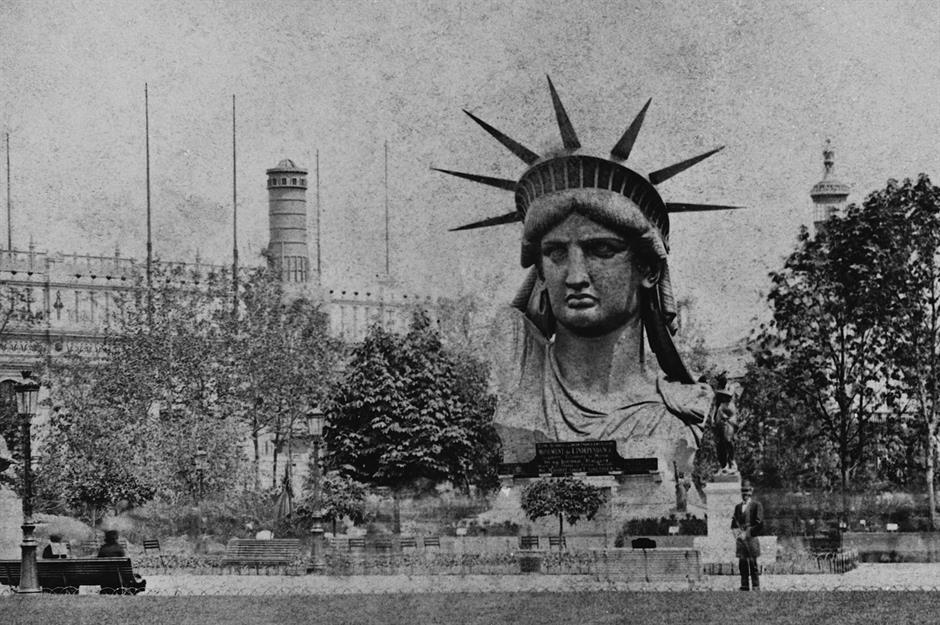
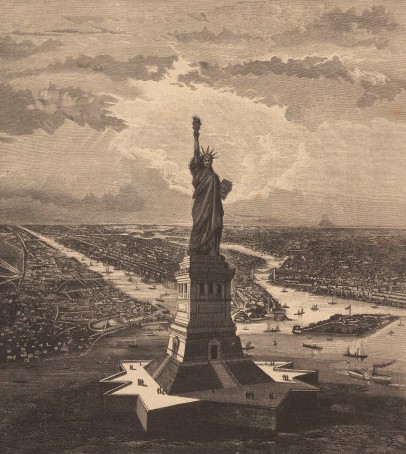
The Statue of Liberty (“Liberty Enlightening the World”) is a modern Masonic hieroglyph conceived by Freemason Frédéric Auguste Bartholdi, who envisioned the goddess with her torch aloft while entering New York harbor. It was engineered with Masonic involvement, including Gustave Eiffel, financed by French and American Masons, and dedicated in a Masonic ceremony with the Grand Master of New York laying the cornerstone.
ORPHIC AND STOIC ROOTS
Her torch is explicitly the beacon of enlightenment, and not revolutionary violence but lawful, reasoned liberty. the Latin concept of lībertās (“freedom” or “liberty”), derived etymologically from līber (“free”), traces back through Proto-Italic leuþero– to a Proto-Indo-European root meaning “belonging to the people” and thus “free” (as opposed to enslaved or subject).
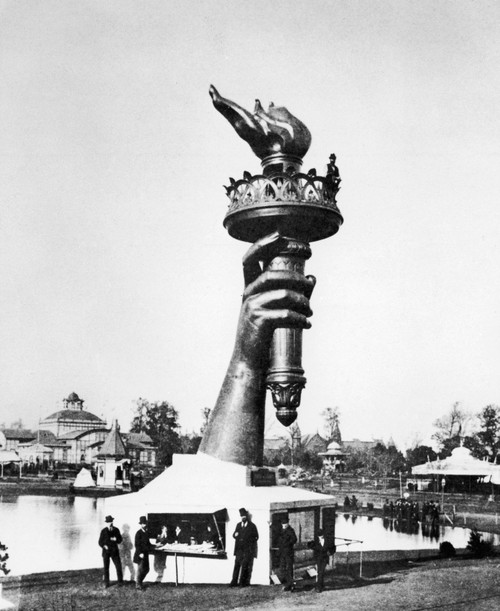
This torch Libertas carries is a living emblem of Phanic’s light (FIRE πῦρ; see Luke 3:16), who is LOGOS, which also lives in man, and this was most famously taught in ancient Greek philosophy by Heraclitus. PHANES as Androgyne, represents the two pillars or poles of Matter and Spirit as the ONE. She, Libertas rules through enlightened wisdom, not force and domination. This is the philosophy of REPUBLICANISM.
One must have studied PHANES and PROTOGONOS in Orphism, and Stoicism to understand the goddess LIBERTAS. She, Libertas, the solar goddess is enlightened or dynamic will in Rosicrucian-Masonic symbolism, and represents spiritual emancipation, or the soul’s liberation from the bonds of ignorance, materialism and lower passions. The birth of Phanes, the first-born Light in Orphism, from the Cosmic Egg is a necessary precondition for Libertas. Without the primordial Light making the hidden visible (material visibility), there can be no conscious choice, no moral agency, and no path to freedom. The meaning of this symbolic mythology follows the same law in the vegetative symbolism of religions in ancient Southwestern Asia.
Liberty does not mean Epicurean libertinism but is the fruit of the “search for Light,” where the soul, having pierced the illusory veil of duality, claims co-creative freedom within the cosmic order — free from dogma, yet bound by the fundamental identity of all humanity with the ONE ESSENCE.
EXAMPLE OF AN UNINFORMED CITIZEN
Mind you, the first sign this guy does not know what he is talking about, is that Bartholdi modeled the face of the Statue of Liberty after his mother, not Lucifer.
MASONS AS CHAMPIONS OF ENLIGHTENMENT REPUBLICANISM
The idea that the Statue of Liberty is Lucifer forces and overlays Christian interpretations onto an ancient Roman republican emblem. There are individuals that peddle the same tired conspiracy with no evidence to it, that the Statue of Liberty is secretly a statue of Lucifer, “let loose” with a broken chain for a biblical “little season,” complete with cherry-picked Google searches, overlaid “Satan” letters on the crown, Masonic plaques, and a “Big Apple” pun to imply forbidden-fruit temptation. The claim is that this proves therefore that America’s Enlightenment republican foundations are Satanic. This is not harmless “questioning.” They weaponize ignorance to breed hatred for the very ideas such as reason, liberty, self-government that created the United States, but centuries of documented mythology, art, architecture and history dismantle it. Neoclassical art deliberately revived Greco-Roman republican imagery and does not prove devil-worship. Every documented fact about the statue’s creator, intent, and symbolism reflects Enlightenment REPUBLICANISM.
When Libertas appeared on Roman coins after Julius Caesar’s assassination, symbolizing the restored Republic, she holds a torch (enlightenment) and a tablet (law). The broken chain at her feet originally referenced emancipation from slavery and tyranny but was updated for America’s centennial. The torch she bears is the light of liberty and reason illuminating the world — exactly the Enlightenment ideal of dispelling superstition and monarchy. It has zero connection to a “fallen angel of light.” The seven-rayed crown represents the seven seas and continents as a symbol of global liberty, not seven horns or “seven deadly sins.” Many nineteenth-century American public monuments involved Freemasons, because they championed Enlightenment values, unlike conspiratorial instigators. The tactic of the conspiracy is in the way it cunningly flips cause and effect: Masons helped build the Republic, not secretly dedicate it to Satan. No serious historian or art expert has ever endorsed the Lucifer theory.
Deists, liberal Christians and classical scholars used pagan symbols (Libertas, Minerva, the fasces) precisely because they represented republican liberty against divine-right monarchy and theocratic tyranny. America’s founders and nineteenth-century artists chose classical gods of wisdom and liberty (Minerva, Libertas) because they embodied the light of reason — ideas long pre-existing the invention of Lucifer. These writings exist to preserve the Republic’s intellectual foundations and recover its classical and Enlightenment heritage from modern conspiratorial distortion. Prometheus as the father of Man (of Anthropos) or Humanity, Protogonos as first-born radiance, Libertas with her torch — these are symbols of the perseverance.
COUNTER-ENLIGHTENMENT AND THE RISE OF THE RELIGIOUS RIGHT
Many Christians, particularly in certain evangelical, fundamentalist, and Christian nationalist circles in the United States have been conditioned to view Enlightenment republicanism, classical pagan-derived symbols (like Libertas or the “light-bearer” motif), and the broader emphasis on reason, liberty and self-government with deep suspicion or outright hostility. Christian doctrine, especially post-Reformation emphases on original sin and God’s absolute sovereignty often frames unaided human reason as unreliable or arrogant. Thinkers like Joseph de Maistre and Edmund Burke, who were influential in Counter-Enlightenment thought argued that Enlightenment optimism about progress, liberty and self-rule ignored humanity’s fallen nature, in the basis that man is too wicked to be free.
The French Revolution’s violent dechristianization, Reign of Terror, and “Cult of Reason” provided a vivid historical trauma: secular materialist republicanism seemed to produce atheism, guillotines, and chaos, not utopia. This narrative stuck, portraying the Enlightenment as inherently anti-Christian.In Protestant traditions (especially American fundamentalism), the equation of “Lucifer” with Satan became ironclad. Isaiah 14’s poetic taunt against Babylon’s king was read as literal devil biography, and with this, any torch-bearing, knowledge-promoting, or classical symbol (Libertas, Minerva, the morning star) is mapped onto the Adversary. Sermons, prophecy literature and end-times teaching further reinforce this idea thar Enlightenment values become “humanism,” “secularism,” which is equated to “Luciferian” plots to dethrone God.
In the modern conditioning in America in the post-1960s with the rise of the Religious Right, this hardened into a political-cultural script. Figures like Jerry Falwell explicitly framed battles against “humanism,” liberalism, and rationalism as warfare against “Satan himself.” The Moral Majority era, combined with dispensationalist prophecy (Revelation’s “little season,” New World Order fears), turned public monuments, Freemasonry and founding symbolism into “proof of conspiracy.”
SYSTEMATIC REFUTATION OF AMERICAN CHRISTIAN HYSTERIA
The Statue of Liberty Lucifer theory is a textbook example becoming viral in evangelical media, on YouTube, and social platforms because it weaponizes visual evidence (e.g., torch as light-bearer or the broken chain as Satan unbound) against the Republic’s Enlightenment roots. Online algorithms, conspiracists even preachers and priests who perpetuate myths within Illuminati-Freemason pipelines amplify it, creating echo-chambers where questioning it feels like defending the devil.
This is a modern synthesis. Early American Christians included Deists and classical republicans who happily used pagan imagery for liberty. Nineteenth to twentieth-century revivalism and culture-war polarization narrowed the lens. Reason became suspect, classical revivalism was associated with paganism, and republican self-government threatened theocratic or authoritarian political preferences. What resulted from this, is that large segments of conservative Christianity were primed to see Enlightenment ideals not as bulwarks against tyranny, but as gateways to moral collapse.
The American Minervan stands out as a rare voice in its revival of the civic republican tradition as the antidote and systematic refutation of Christian hysteria against Occult Philosophy. It arms citizens with ideas to preserve, shield and aid the Republic against the modern, continuously repackaged threats of religious fundamentalism, foreign disinformation and conspiratorial anti-American narratives.
The American Minervan is distinct, creating a living ethos for civic virtue. The religious conditioning you all observe in this country is real and historically explicable with these feedback loops of theology, trauma from revolutionary excess, and modern culture-war mobilization. An unapologetic American republican voice must be uniquely potent at piercing the conspiracy fog with discipline.

 The American Minervan
Leave a comment