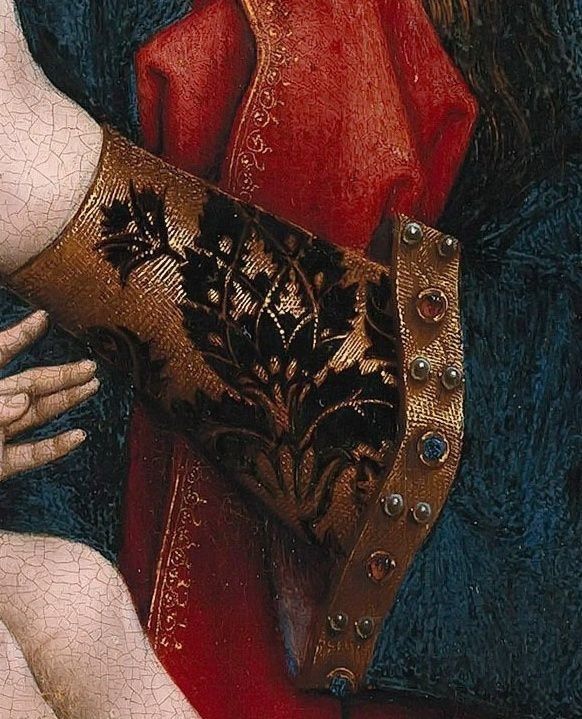
“Energy in the Executive is a leading character in the definition of good government.”
ALEXANDER HAMILTON, FEDERALIST NO. 70, THE EXECUTIVE DEPARTMENT FURTHER CONSIDERED, 15 MARCH 1788

Recommended Reading
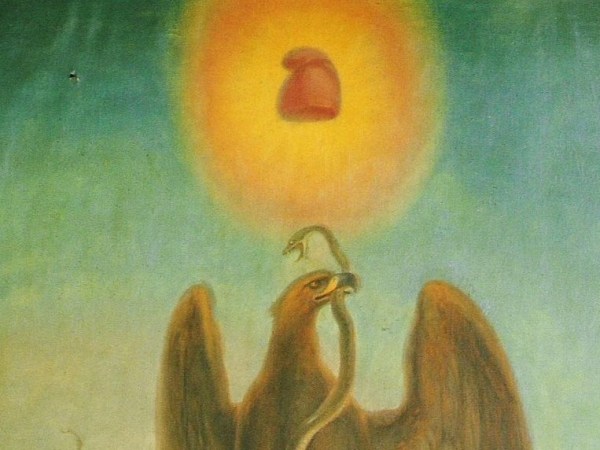
The Organic State of Fascism: Two Commandments of Rule
In the Fascist concept of government, the ORGANIC STATE, there is no King Immanuel III, no right or left faction. All are absorbed into a totalistic organism with one absolutist Hero at the apex under a unified, obedient Fasces. Remember as stated, that the fasces in United States REPUBLICANISM does not represent or symbolize authoritarian…
ON THE BASIS OF JUDGEMENT OF THE CHARACTER OF A WORTHY PRESIDENT
The ideal ruler to me is similar to the faqih (or jurist-scholar), but within our republic, the chief is merely a representative of the people, truly, not of his particular sect or political party expressed through a factionalism. Has this been properly grasped, that the presidential office is representative of the whole Fraternity (or Union), reflective of the body of citizens. Those who have been critical of popular sovereignty, like Ruhollah Khomeini preferred a system guided by religious expertise, and he was influenced by Greek Philosophy. These are lineages distilled in different ways. Our (U.S. American) system does not need to be guided by a religious cleric, sharia law, or Noahide law, though the constitution does not prevent a politician who happens to also be a preacher to be elected to office. But our system is not guided by a leader that must be a religious cleric and jurist. This would constitute a subversion, and infiltration, subversion, inversion and collapse can be prevented by an already informed citizenry or rising enlightened citizenry. Our republic is an intentionally constructed and constitutional system and does not require a singular religion to express a moral-philosophical character. It is ours to carry, and not an elite body at the top of a pyramid.
The ideal and vision of this character is in REPUBLICANISM, and it is a composition of philosophical Wisdom as guidance to the People, not to be enforced as in a totalist, clerical-jurist or despotic system. The ideal executive chief in U.S. politics is not an executive as in a corporation. This is not an understanding of the system. The executive chief will firstly be republican-minded (a unifier) and fully-grasp and promulgate the democratic potentiality in the citizen. When the leader dies, the people will have matured and the nation advanced a little more with each one — internally and with wisdom. The executive chief is an embodiment of our principles and should be using their presidency also as a means to grow further. If they do not possess this quality, they are a political fraud or not fit for the office. The executive chief does not need to be knowledgeable of religious law, but they do need to be knowledgeable of the lineage of the spiritually regenerative principles and philosophy of the Revolution and history of spiritual movements that contributed to its vision, the roots of the Revolution, constitutional law, development of the education system on humanist principles, the sciences and republican theory on ethics, the history of war and the application of wisdom in all these areas. The republic is a unified moral order, and it is not about enforcing the philosophy of this order, moreso than the fact that base function of the system depends on the character of the humans who embody it as a living philosophy, and collapses upon the lack of this. The people should find in the representatives and chief of these in the political life of the nation luminaries of the highest understanding of the philosophy underlying our government, not hypocrites and sexual perverts hiding behind political and religious institutions. Those who say, humans are bound to fail, and human failure explains the error and impossibility of this system have varied; but those who do not believe that this is possible for collective mass of humans do not and cannot understand the belief in the potentiality of the citizen and the demos in the heritage of our Republic firstly, should not be placed in positions of political leadership.
In my last article on Muhammad in the Spirit-History of Man: Noetic Illumination, Gabriel and Historical Contexts, there is mentioned the integrative concept of of the Ideal Man in Neoplatonism and the Perfect Man (al‑Insān al‑Kāmil) in Islam exemplified by the prophets and saints (awliyāʾ). Early Islamic philosophy was in heavy dialogue with the various historical phases of Hellenic philosophy developing their emanationist cosmologies. The Neoplatonic “ideal man” and the Islamic “Perfect Man” represent a single figure who unifies multiple levels of reality or authority. The ideal man in Stoicism is embedded in American REPUBLICANISM, and thus features in our own system of government, but this is not often considered.
What do I mean?
The multi‑role concentration of authority in the U.S. presidency under REPUBLICANISM is the political analogue to this philosophical archetype. The U.S. President is not called chief for nothing. The U.S. president combines the roles simultaneously of an:
- Executive chief
- Commander in chief
- Head of state
- Chief diplomat
- Political leader
This is a structural similarity.
The Neoplatonic ideal man unites intellect, soul, and the One; mediates between the sensible and intelligible. The Perfect Man unites divine attributes and created existence; mediates between God and creation, i.e., waḥdat al‑wujūd (Unity of Being). The U.S. president is a statesperson that unites executive, military, diplomatic and symbolic roles. The role is similar to Muhammad’s multi-concentrated role, but in a secular system serving a mythic and mechanical (administrative) function. Philosophical archetypes combine metaphysical symbolism with practical guidance, and the presidency combines symbolic nationhood with concrete executive power.
This is the political instantiation of a very old philosophical pattern in Neoplatonism, Stoicism, Islam, Confucianism (the sage-king), Medieval Christian kingship combined into the republican executive. This is not a modern interpretation, but the actual unified executive theory of our system to stabilize the system, and the U.S. presidency is a secularized, constitutional version of this archetype.
More accurately than drawing on the Neoplatonic and Islamic philosophical tradition, I will state, that SECULAR REPUBLICANISM carries a deep, often unspoken monistic inheritance from ancient Stoicism and its monism of One Cosmos, One Reason, One Law. Politicians sense this but abuse it through their Christian dogmatism. The American Republic is a philosophical inheritance, not a singular religious one. This is not theological in a religious sense, but about the structure of reality and authority. I will elaborate on these principles:
- PHYSIS-KOSMOS is a single living organism.
- A single divine LOGOS permeates everything. The founders called this PROVIDENCE.
- Natural law is universal and rational.
- All humans participate in the same rational order.
Unity is the deepest truth of this system, resolving the plurality in a unity. It is in our motto E PLURIBUS UNUM (see The Classical Roots of America’s Motto and the Forgotten Meaning of Unity in the Founding Era).
 The American Minervan
Leave a comment