Exploration of Lajos Kossuth’s cynical refusal to denounce slavery during his 1851-52 American tour vs. Mazzini, Garrison and other abolitionists’ unwavering moral consistency, and what that fault line revealed about European revolutionary movements. It is a matter of political convenience or moral consistency, and moral consistency was no matter of doubt to Mazzini who saw the cause of emancipation as a religious duty.
- INTRODUCTION: THE ITALIAN INDICTMENT OF EARLY U.S. REPUBLIC — Introduction to the history and betrayal of Italian Republicanism.
- FROM THE CARBONARI TO MAZZINI — tracing the transformation from reactive conspiracy to affirmative moral philosophy grounded in Doveri dell’Uomo.
- THE CATTANEO-MAZZINI DIVERGENCE — expanded treatment of how both men condemned American slavery from different structural angles (unitary vs. federal republicanism), with Cattaneo’s surgical argument that slavery was a royalist remnant, not a federal defect.
- THE KOSSUTH CONTRAST — exploration of Kossuth’s cynical refusal to denounce slavery during his 1851-52 American tour vs. Mazzini’s unwavering moral consistency, and what that fault line revealed about European revolutionary movements.
- THE ITALIAN STAGE — on Rota’s Bianchi e neri, Verdi’s Un ballo in maschera, satirical journalism, and how Italian audiences laughed at America’s pretensions to freedom.
- GARIBALDI’S SOUTH AMERICAN REVOLUTIONS — the multi-racial, internationalist context of the Guerra Grande.
- THE TRANSATLANTIC CIRCUIT — Garrison-Mazzini parallels, Fuller’s Roman dispatches, Roberts’s research on Mazzini’s influence on John Brown, and the pathway into Black Republican political thought.
- ITALY’S DIARCHY AND FASCIST ALLIANCE DESTROYS REPUBLICAN INHERITANCE — the Rosselli assassinations, the outlawing of Masonic networks, and how the monarchist-conservative line triumphed over the Mazzinian tradition.
- NECESSITY FOR RETURN OF RADICAL REPUBLICANISM — the argument that this republicanism is foundational, not foreign, and belongs most urgently to those for whom its promise was most violently betrayed.
THE KOSSUTH CONTRAST WITH AMERICAN AND ITALIAN ABOLITIONISTS: EMANCIPATION AS HOLY CAUSE
There is very interesting historical context behind white American views of Italians before their assimilation into the racial hierarchical caste in this country, i.e., into “White America,” “whiteness,” and “White Identity.” The racial order has functioned like a caste for most of its history and still carries caste-like racial structures and features. When groups entered the U.S. as immigrants, they entered through a pre-existing racial hierarchy. Some were pushed downward, upward or locked out, and all groups were positioned relative to Black Americans; and many groups gained “whiteness” by distancing themselves from Black Americans. The history of the abolitionists and republican thinkers reveals that the excuse “man of his time” is not a strong argument for the defense of American hypocrisy.
Long before Fascism, many Italian intellectuals such as Mazzini, Cattaneo, and the liberal press, condemned the United States for slavery and racist hypocrisy. At the same time, many Americans (especially in the North) viewed Italians as racially suspect, politically dangerous, or morally inferior. These two dynamics definitely fed into each other.
Still today, there is an apathy towards the topic I present to you among Americans. Italian republicanism judged America for slavery, while many Americans judged Italians as racially suspect. These mutual perceptions hardened into hostility. So, Americans saw Italians as “foreign radicals” who dared to criticize the U.S., while Italian abolitionist culture made some Americans defensive. Clearly, this has not changed, even while an American Catholic has become Pope in Italy. I am sure Pope Leo XIV is aware of this historical connection. Mazzini criticized the Vatican in his time as needing to be engaged in the practice of its social teachings, which several Popes have tried to remedy.
We understand the position of Mazzini, as given here on America viewing Emancipation as a holy cause and a religious duty, in stating:
“We are fighting the same sacred battle for freedom and the emancipation of the oppressed — you, Sir, against negro, we against white slavery.” (Letters on American Slavery, Letter 8, “Another Letter from Mazzini,” 1859)
“No man ought ever to inscribe on his flag the sacred word ‘Liberty’ who is not prepared to shake hands with those who work for the emancipation of the black race.” (Letters on American Slavery, Letter 7, “Letter from Mazzini,” 1854)
Bringing in Kossuth’s story makes for relevant timing in the habits of our current political situation in his relations with the South, given the history of the Southern states against Black representation into the present hour. In the nineteenth-century Italians were viewed as “not fully white,” especially Southern Italians from which the republican secret societies and networks emerged. Italians were seen as racially Mediterranean, which Anglo‑Americans saw as inferior to “Teutonic” or “Anglo‑Saxon” stock, and these stereotypes were so widespread, especially among Protestant nativist movements. This is all apart of the forgotten episode of pre-assimilated groups; in this case Italians who were victims of lynchings (including the 1891 New Orleans massacre), segregation in housing and employment, exclusion from certain unions and immigration quotas targeting Southern and Eastern Europeans.
No episode in the mid-nineteenth-century struggle for democratic nationalism revealed the fault line between principled and opportunistic republicanism more starkly than the contrasting positions of Giuseppe Mazzini and the Hungarian patriot Lajos Kossuth on the question of American slavery that this history takes place. The contrast is instructive precisely because both men were heroes of the 1848 revolutions, both fought against Habsburg domination, both suffered exile, and both sought the support of the transatlantic democratic public. But on the question that most urgently tested the universality of their professed principles, being the enslavement of four million human beings in the world’s most prominent republic, they diverged widely.
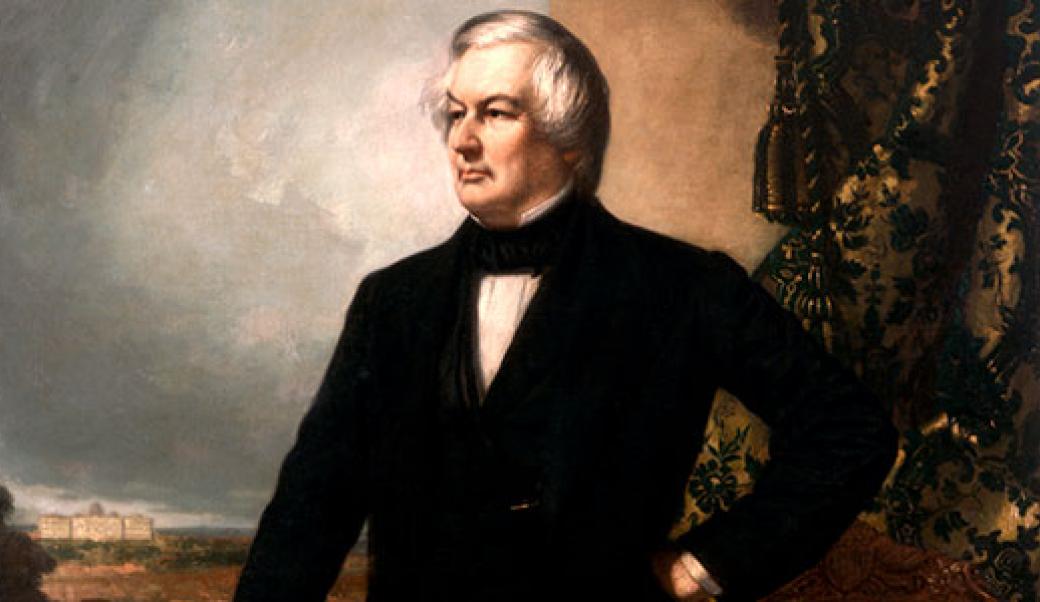
Kossuth, the former Governor-Regent of Hungary, arrived in the United States in December 1851 to enormous popular enthusiasm. He made over five hundred speeches and public appearances during his tour. He was feted by Congress, received by the President, Millard Fillmore (served 1850-1853), and celebrated in the press as the living embodiment of the European struggle for liberty. His purpose was practically to secure American financial and military support for the potential renewal of Hungary’s struggle for independence from the Habsburg Empire, but it was precisely this practical purpose that led to his moral catastrophe.
Kossuth calculated that he could not afford to alienate the slaveholding South. Southern planters and their political representatives controlled a significant portion of American wealth, congressional power, and military capacity. To denounce slavery for him would be to lose the republican South’s support, and with it any hope of American intervention on behalf of Hungarian independence, which he came to America to secure. So, Kossuth adopted what he called a policy of “non-interference,” declaring in New York on December 12, 1851, that “every nation has the sovereign right to dispose of its own domestic affairs, without foreign interference; that I, therefore shall not meddle with any domestic concerns of the United States.”
It desires to league with you against the league of despots, and with you to stand sponsor at the approaching baptism of European liberty. Now, gentlemen, I have stated my position. I am a straightforward man. I am a republican. I have avowed it openly in monarchical but free England. . .I hope I shall not lose here, in republican America, by that frankness, which must be one of the chief qualities of every republican. So I beg leave openly to state the following points: FIRSTLY, that I take it to be duty of honour and principle not to meddle with any party-question of your own domestic affairs. SECONDLY, I profess my admiration for the glorious principle of union, on which stands the mighty pyramid of your greatness. Taking my ground on this constitutional fact, it is not to a party, but to your united people that I will confidently address. . .the present absolutist atmosphere of Europe is not very propitious to American principles.” (Lajos Kossuth, Greetings from Great Britain, Select Speeches of Kossuth)
The cynicism of this position did not go unnoticed. William Lloyd Garrison, the editor of The Liberator and the foremost voice of radical abolitionism in America, had initially welcomed Kossuth with admiration and hope. Garrison initially believed that Kossuth was European patriot who understood that the struggle for Hungarian freedom and the struggle for Black emancipation were aspects of a single universal cause. Kossuth’s refusal to denounce slavery shattered that expectation. Garrison’s responded viciously in a book-length polemic, in Letter to Louis Kossuth Concerning Freedom and Slavery in the United States (1852), in which Garrison accused Kossuth of betraying the very principles he claimed to champion.
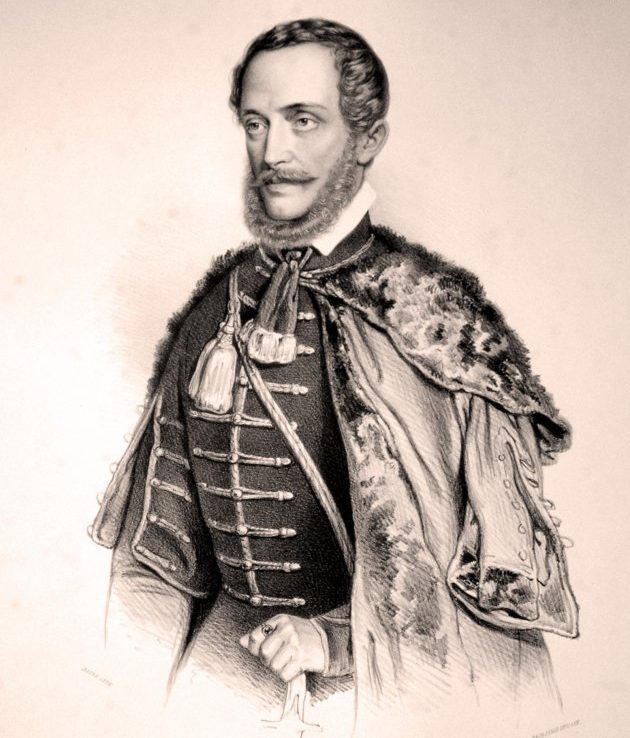
Kossuth, one who had described the United States in different speeches during his 1851-52 American tour as “glorious shores,” the “soil of freedom,” and an “asylum for the oppressed,” but would not acknowledge that three and a half million human beings on that very soil were held in chains. He who spoke as the “wandering son of a bleeding nation” would not speak for the sons and daughters of a bleeding race. To the republican abolitionist thinkers like Mazzini and Garrison, this was a betrayal of the principle of solidarity.
Mazzini did the opposite of Kossuth. He denounced both slavery and racism without equivocation, characterizing abolitionism as a “holy cause” and, after the Emancipation Proclamation, supporting Black voting rights as the necessary fulfillment of republican principle. For Mazzini, a republicanism that carved out exceptions for political convenience was no republicanism at all. The duty toward Humanity admitted no strategic exemptions. To remain silent about slavery in order to court the slaveholders’ support was merely complicity and violated the moral law that rendered the silent party unfit for the cause of liberty, or any liberty, anywhere.
This contrast shows a fault line that ran through the entire landscape of European revolutionary movements in the mid-nineteenth century — between those who treated liberty as a universal principle, applicable to all peoples without exception or compromise, and those who treated it as a tactical instrument, to be deployed selectively in pursuit of particular national objectives. Kossuth represented the latter tendency. His nationalism was genuine, his courage undeniable, his suffering real — truly it seems; but his universalism was contingent, and available when it cost nothing, and retracted when it became inconvenient or potentially threatening to his own nation’s chance for independence. Mazzini’s universalism was structural, built into the foundations of his philosophical system, and incapable of being suspended without bringing the entire edifice down.
These implications for the transatlantic abolitionist network were profound. Kossuth’s betrayal, and it was experienced as a betrayal by American abolitionists (Black and white) strengthened the Mazzinian position among those radical Americans who understood that only a principled, universal republicanism could serve the cause of emancipation. If even the hero of Hungarian independence would compromise on slavery to serve his national interest, then the only safe allies were those whose principles structurally excluded such compromises. Mazzini was such an ally. His philosophy, by its own internal logic, could not tolerate the enslavement of any human being, anywhere, for any reason. Black and radical American republicans who studied the European revolutionary movements of their era were led to Mazzini’s philosophy as trustworthy, against Kossuth’s.
The parallel between Garrison and Mazzini was not lost on contemporaries. Enrico Dal Lago’s comparative study documented how the two men born in the same year of 1805 constructed remarkably parallel models of journalism as revolutionary apostolate. The Liberator and La Giovine Italia were not merely newspapers, but instruments of moral transformation, designed to convert their readers to a cause that demanded not incremental reform but total commitment.
When Garrison and Mazzini met for the first time in 1846, at the London home of William Henry Ashurst, the radical solicitor who served as a node in the transatlantic reformist network, the encounter was one of recognition. These were men who had arrived at the same conclusion by different paths: that the liberation of the enslaved and the liberation of subjugated nations were “two sides of the same coin,” and that no compromise with the forces of domination was morally permissible.

 The American Minervan
Leave a comment