
NOTES
Theosophical Positions are rooted in pre-Islamic doctrines, and this is supported by the research from Eastern Tradition archive’s Book of Dzyan Research Reports series. This series methodically verifies Blavatsky’s sources as traceable in extant Buddhist scriptures, such as Tsongkhapa’s Gelugpa texts on the Wisdom Tradition.
Be very careful in connecting the socio-political and Masonic networks of Jamal al-Din and James Sanua to doctrinal promulgation in the early history of the Theosophical Movement in the nineteenth-century. There are persons who are very intent on framing the Republican Revolutions as the work of Jews and trace it to the later contexts of the historical development of Jewish Zionist colonialism, Sabbatai and the Dönme. There are also Muslims who do not like Jamal al-Din al-Afghani, and view him as involved in Masonic “Western models” conspiring to lead Muslims astray. Lets not get caught in Islamist discourse, and ‘Orient versus Occident’ (pan-Islamic disputatious) framework.
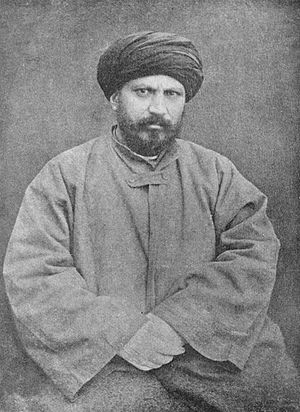
The idea and assertion, that Sayyid Jamal al-Din al-Afghani and Ismaili cosmology shaped Helena P. Blavatsky ideas (thus Theosophy) are drawn from circumstantial evidence presented in The Masters Revealed (2005) by K. Paul Johnson. K. Paul Johnson’s suspicion was that Jamal al-Din was Serapis Bey. Johnson argued that Theosophy was also influenced by pan-Islamic reformist and Ismaili philosophy. We can only say that there exists connection between Shia Islamic esotericism, Tibetan Buddhism and the “Aryan-Arhat esotericism.”
We will not delve into the claim of Serapis Bey’s identity, however, the first assertion on the origin of Theosophical cosmology being rooted in Sufi and Ismaili teachings is not accurate, and scholars have critiqued this thesis, because it lacks primary textual support. However, the research for the public has not caught up on certain details about Theosophy, and the doctrinal positions and cosmology advanced within the nineteenth-century.
There is no primary textual evidence, or Blavatsky manuscript that cites Ismaili texts directly. Her opinions on Islam are very scant. The cyclic, non-dual, non-theistic structure of Theosophy conflicts with the Ismaili emanative, imam-centric system. Such an emanative, imam-centric system is however similar to the models of messianism in Neo-Theosophical systems. There is still the perception, that there is no authentic connection to Buddhist texts, or that Blavatsky understands Buddhism badly by random persons. This position has for a decade been put in serious repute.
As discussed in the Case of the Masters, their Disciples and Sponsors behind the Theosophical Movement, Daniel Caldwell’s K. Paul Johnson’s House of Cards dismantled the theory that Serapis Bey was Jamal al-Din by cross-referencing Olcott’s diaries and the Mahatma Letters, demonstrating inconsistencies in K. Paul Johnson’s mappings. Afghani’s timeline doesn’t align with Serapis Bey’s letters. Isis Unveiled (1877) details Sufi and Syrian Druze influences, but this influence is not the core or source. We may say at best, that Afghani’s role within this transnational network of political and religious reformists in relation to Theosophy is social (anti-colonial themes), but not doctrinal.
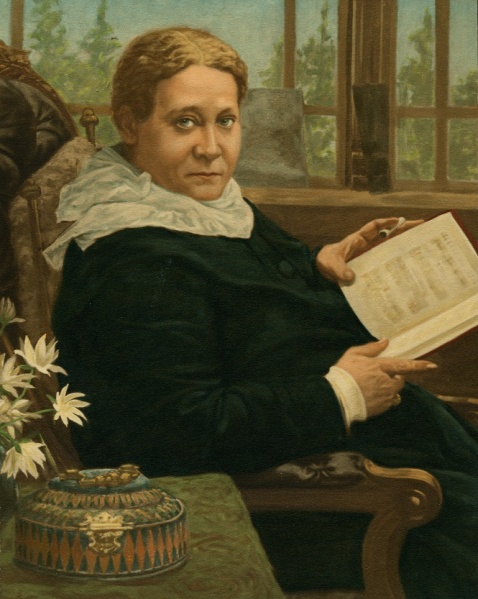
The Theosophical Positions are definitely pre-Islamic. Briefly, the Eastern Tradition archive’s Book of Dzyan Research Reports series methodically verifies Blavatsky’s sources as traceable in extant Buddhist scriptures, such as Tsongkhapa’s Gelugpa texts on the Wisdom Tradition.
There is sufficient and extensive analysis tracing Theosophy’s doctrine of monadic evolution (which people like Guenon said did not exist in Buddhism) to classical Indian Philosophy on atomism, and the Svabhavika school’s interpretation of svabhāva (self-existence) in Mahayana Buddhism.
This was discussed in Nepalese and Tibetan sources like the Doctrines of the Nepalese Svabhavikas (1874), emphasizing its roots in anātman (no-self) and śūnyatā rather than Ismaili emanationism.
Blavatsky’s sevenfold planetary chains and root-races are traced to the Buddhist kalpas (eons) and the Abhidharma’s cosmological scheme of world-systems (lokadhātu), where universes arise and dissolve in endless cycles. This predates Ismaili notions of prophetic cycles (dawr) by centuries and aligns with texts like the Viṃśatikā.
You have learned to understand thus far that, the concept of cosmic cycles and cyclical evolution with root-races and manvantaras are parallel to kalpas and saṃsāra in Abhidharma cosmology as in key sources like the Viṃśatikā (Vasubandhu, 4th–5th CE). The concept of Śūnyatā and ātman/anātman in the Madhyamaka school leads to the works of Nāgārjuna (2nd CE) in the Mūlamadhyamakakārikā. Blavatsky’s mahatmas parallel the Buddhist lineage of gurus. The concept of great souls (mahatmas) as custodians and guides of human evolution is parallel to the guru-paramparā in Vajrayana lineages (sources such as the Prajñāpāramitā Sūtras, 1st–4th CE).
There is lastly, the concept of svabhāvata in connection to the inherent divine spark in every Man, or the doctrine of innate buddha-nature., which also has pre-Homeric and pre-Hellenic origins in the Mediterranean. This doctrine of buddha-nature is traced to the Jonangpa school texts (14th CE and earlier). Jonangpa school’s teachings on buddha-nature (tathāgatagarbha) and other-voidness (shentong) describe cosmic cycles of manifestation and dissolution independent of later Islamic esoteric hierarchies, particularly Ismailism, which solidified itself in the 8th–10th centuries CE as a branch of Shia Islam.

Tracing the Ancient Wisdom-Religion in Theosophy and Samkhya
TRACING THE ANCIENT WISDOM-RELIGION: NOTE ON THE NATURE OF MATTER IN THEOSOPHY AND THE Sāṃkhya SYSTEM “What we desire to prove is, that underlying every ancient popular religion was the same ancient wisdom-doctrine, one and identical, professed and practised by the initiates of every country, who alone were aware of its existence and importance. To…
 The American Minervan
Leave a comment