Tag: Helena Blavatsky
-

The “real Path” to esoteric knowledge is very difficult
“There are several ways of acquiring knowledge: (a) by accepting blindly the dicta of the church or modern science;(b) by rejecting both and starting to find the truth for oneself. The first method is easy and leads to social respectability and the praise of men; the other is difficult and requires more than ordinary devotion…
-
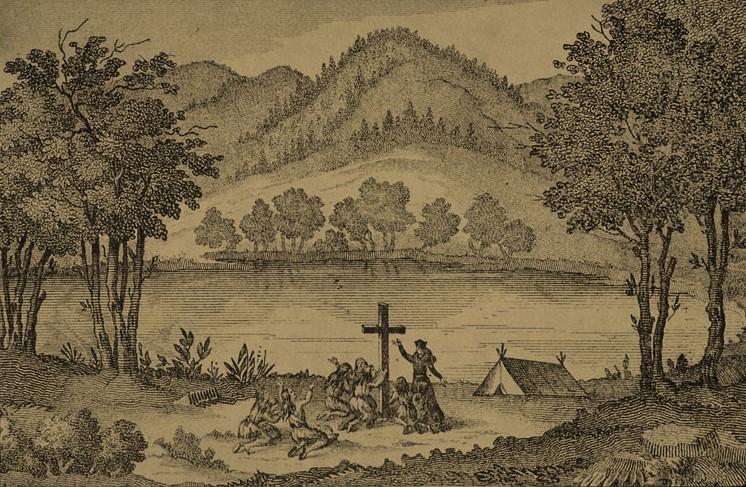
Theosophists on the Society of Jesuits and the Roman Catholic Church
There’s a collation of H.P.B.’s writings on Jesuitry and Masonry in The Christian Scheme: Jesuitry and Masonry in Parts I, II, III, IV, V, VI (via web archive). H.P.B. defends in her writings the ethics and morality in systems ancient, misunderstood, and demonized arguing, that as one theosophist stated — “The Occultists . . . believe the time has come to…
-
Edith Starr Miller’s “Occult Theocrasy” on Theosophy and the Illuminati
Known as Lady Queensborough, her real name was Edith Starr Miller (1887-1933). Edith Starr Miller, an active member of Fascist leagues, sought it her utmost duty as an anti-Mormon Christian to find every religion other than her Christianity conduits in a ‘Satanic and Luciferian plot’ to overthrow “Judeo-Christian civilization.” Like the conspiracists of today, various groups…
-
Jean-Louis Siemons: “Theosophy” in Neo-Platonic and Christian Literature
Dr. Jean-Louis Siémons article Theosofia in Neo-Platonic and Christian Literature (2nd to 6th Century A.D.), Theosophical History Centre, London, 1988, pp. 24-26. Dr. Siémons was an Associate of the United Lodge of Theosophists for over fifty years. This is to give us perspective on the 19th century Theosophical Movement’s place within the broader scope of theosophical…
-
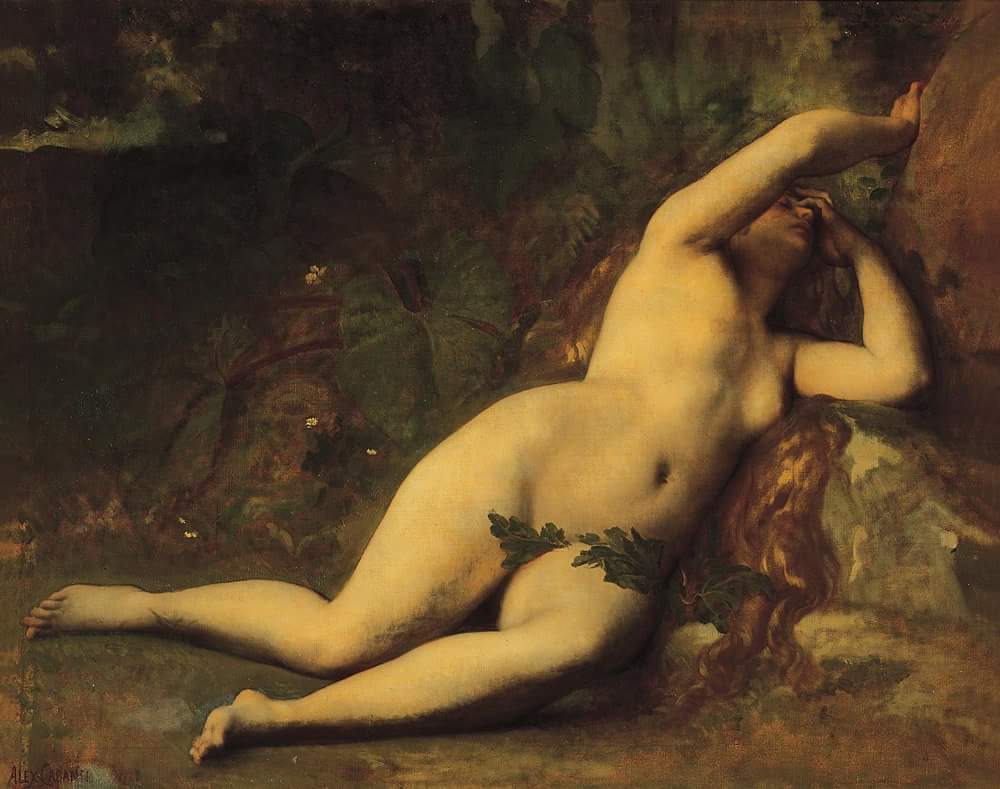
Blavatsky’s Interpretation of the Tree of Life and Tree of Knowledge of Good and Evil
“Were it light alone, inactive and absolute, the human mind could not appreciate nor even realise it (…) According to the views of the Gnostics, these two principles are immutable Light and Shadow, Good and Evil being virtually one and having existed through all eternity, as they will ever continue to exist so long as…
-

Transactions of the Blavatsky Lodge: ‘Though They Are Gods, Still They Are Not To Be Worshiped’
“I say there are many gods, but one God of all these gods, incomprehensible and unknown to all (…) a Power of immeasurable and ineffable Light, whose greatness is held to be incomprehensible, a Tower which the maker of the world does not know.” (Simon Magus, Clemens Recognitiones from the Clementine Literature) “They boast ethereal vigour and…
-

Samuel Fales Dunlap on the Ancient Origin of Names of Great Gods, Cities, Rivers and Countries
In Samuel Fales Dunlap’s work The Origin of Ancient Names of Countries, Cities, Individuals, and Gods (Cambridge, 1856), he argued that the proper names of countries, cities, individuals, and gods, drawn from regions including Greece, Italy, Asia Minor, Babylon, Egypt, Phoenicia and Judaea, are generally compound words incorporating the names of ancient sun-gods. This reveals…
-

Helena Blavatsky Biography Russian Documentary
HELENA PETROVNA BLAVATSKY RUSSIAN DOCUMENTARY (ENGLISH DUBBED) The fascinating life of H.P.B. Helena Petrovna von Hahn was born in Dnepropetrovsk (Ekaterinoslav), a town in Southern Russia (now Ukraine), under the Romanov Dynasty and old Russian Empire. Her mother Helena de Fadeyev was a renowned novelist, and her grandmother, Princess Helena Pavlovna Fadeyeva-Dolgorukov was a botanist and writer. Her maternal…
-
What are the Principles of a Theosophical Group?
The principles of a group called Theosophical would be: [1] “Brotherhood [camaraderie] of man, without distinction of race, color, religion, or social position. [2] The serious study of the ancient world-religions for purposes of comparison and the selection therefrom of universal ethics; [3] the study and development of the latent divine powers in man (…)” —Theosophical…
-

James M. Pryse On The Delphian Key-Note of Esotericism: Plato’s Four Degrees of Knowledge
Theosophist, James Morgan Pryse describes the true meaning of the Delphian axiom, “Man, Known Thyself,” in his highly interesting work, Apocalypse Unsealed: Being an Esoteric Interpretation of Initiation (1910). Pryse argued, that the “Book of the Revelation” of Iaonnes (John) is not a book detailing the past, nor the future; but was a book designed to…
-

G.I. Gurdjieff on Esoteric Christianity and the Slavery of the Masses
Peter D. Ouspensky, a Russian philosopher and student of Armenian mystic, George Ivanovitch Gurdjieff around 1870 recounts a conversation he had with him in his book, In Search of the Miraculous: Fragments of an Unknown Teaching (1949). In one account, Peter D. Ouspensky asks Gurdjieff: “Why if ancient knowledge is preserved, why aren’t such men…
-
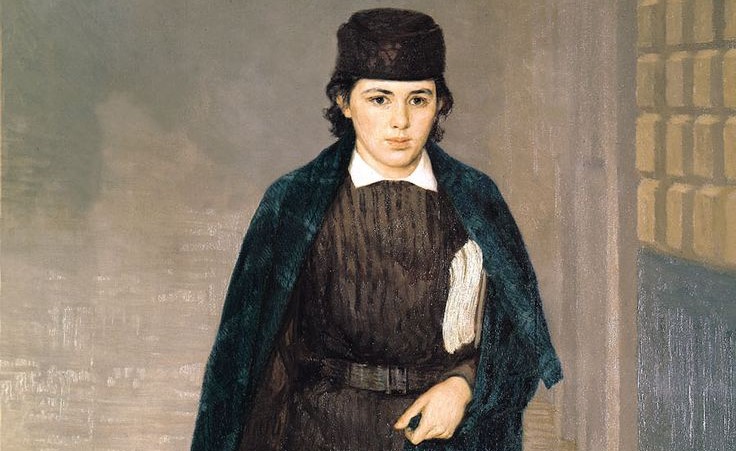
Limitations of Christian Cabalists and Bible Challenge Authority of Western Esotericism
Does the limitations of Kabbalah and the Christian Bible in the Studies of Esotericism blind Western Philosophers? Helena P. Blavatsky challenged the esotericists of her time, who saw in the Bible, the final authority, even in the area of esoteric study. “And now it has come to this: The student interested in the Secret Sciences…
 The American Minervan