Tag: Helena Blavatsky
-

Getting Technical about “The First Cause”
The word God is generic for a collective, or plethora of beings, a multitude under a unity, and not a singular entity. The “First Cause” is a philosophical conception, that is in-fact, not the same as what is termed, e.g., the “ever Unknowable Eternal Cause.” There’s for example a historical distinction drawn between El’ and…
-

Readings from Isis Unveiled: Man’s Yearning for the Proofs of Immortality
The narration explains some theosophical ideas of H.P. Blavatsky from her early major work, Isis Unveiled on the source and possibility of thaumaturgical powers in man. MEDITATION ON READINGS FROM H.P. BLAVATSKY’S ISIS UNVEILED TITLED “MAN’S YEARNING FOR THE PROOFS OF IMMORTALITY“
-

Did the Valentinian Gnostic Marcus use Gnosticism to Sexually Harass Women?
“It is also worth noting that some of the Gnostic leaders’ supposedly pro-woman stance is not all it is cracked up to be. The Valentinian Gnostic Marcus was actually known for bringing women into the movement so that he could sexually seduce them (Irenaeus, Haer. 1.13.5).” (Michael J. Kruger, Five Myths About the Ancient Heresy…
-
Post-Risorgimento Idealism: Historical Context of Giovanni Gentile’s Fascism, Mazzini and Carbonari Theosophists
NOTES ON GENTILIAN THOUGHT AND RISORGIMENTO IDEALISM IN RELATION TO BLAVATSKY AND THEOSOPHY This explains the historical and philosophical context underlying theosophy versus fascism in a way most people have not considered. Let us for the time being forget what H.P. Blavatsky states about Central Asian origins of Theosophy, the origins of Zoroastrianism, the preserved…
-

Helena Blavatsky Critique of the French Revolution of 1789, Material Progress and the Rich
In an excerpt from this Parisian paper, Le Lotus (Paris, Vol. I, No. 6, Sep 1887), Helena P. Blavatsky speaks about the falsity of fraternity in the French Revolution of 1789, rails against material (industrial) developments, and the conditions of the poor. The poor and child factory workers labor and are sacrificed for progress. Theosophists…
-

Madhava Ashish: Contribution of Blavatsky to World Thought
“The world’s many religious teachings are human attempts to express mankind’s half defined ideas about himself and the world he lives in. As we become richer in our wealth of concepts and more knowledgeable about our environment, we find it necessary from time to time to reformulate our religious ideas. H.P. Blavatsky’s contribution to world…
-

A Second Look at Blavatsky on Indigenous People in The Secret Doctrine
There are a couple passages in The Secret Doctrine that come to mind when dealing with accusations against H.P. Blavatsky. When she mentions for example, “sterility between two human races” as observed by Darwin, H.P.B. references Sir William Henry Flower, a leading authority on mammals and especially on the primate brain of his time, in speaking of “semi-animal…
-

Theosophy versus Evola’s “Ultra-Fascism” on Race: Julius Evola’s view of Black People in “Negrified America”
It never mattered whether the Black man sang Jazz, while smoothly puffing the finest cigar in the finest suit or rapped about slinging guns and drugs. The critical opinions about us in everything we do and create were the same then and now. This is not to negate critiques, even by Black people themselves of…
-
Helena Blavatsky on Government Systems: “They have no sway over the inner man…”
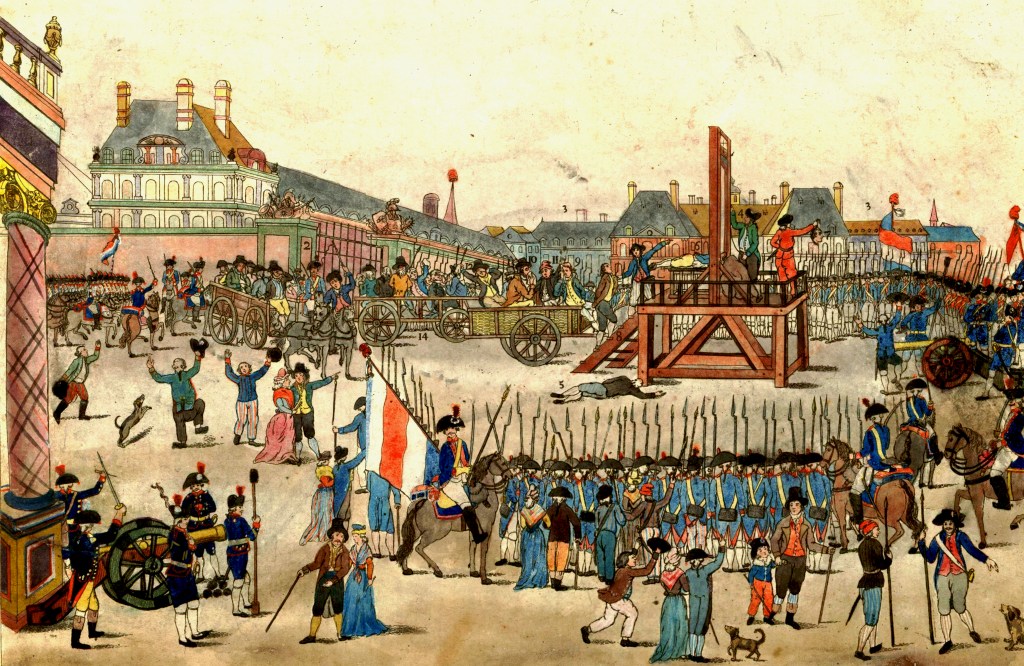
“…Whether the physical man be under the rule of an empire or a republic, concerns only the man of matter. His body may be enslaved; as to his Soul, he has the right to give to his rulers the proud answer of Socrates to his Judges. They have no sway over the inner man.” (H.P.…
-

Blood, the Universal Proteus: Significance of Blood in Ancient Magic and Religion
“…it was then that I understood for the first time a little of that message proclaimed by my ancestors on the banks of the Ganges thirty centuries ago–‘They who see but One in all the changing manifoldness of this universe, unto them belongs Eternal Truth, unto none else!’” (MODERN SCIENCE AND THE VEDANTA, THE BRAHMAVADIN,…
-

Stunning Visual TIMELAPSE OF THE FUTURE: A Journey to the End of Time
Absolutely contemplative, and stunning visual timelapse of the future, based on modern science, created by Melody Sheep https://www.patreon.com/melodysheep., who creates science videos and soundtrack music mashups. When I first happened onto Timelapse of the Future, it had a near 10 thousand views, and I did not see the date, and thought it was one of…
-
The Septenary Principles of Man: Zurvanite Zoroastrian and Theosophical Classification
R. C. Zaehner, Zurvan. A Zoroastrian Dilemma, Oxford, 1955, pp. 323, 334) demonstrates, that the Zurvanite Zoroastrian (a now extinct school of thought) classification (referring to levels of being or existence) is near identical to the Tāraka Rāja Yoga classification. However, as the Theosophical [esoteric] classification show, that the septenary division of man is explained in…
 The American Minervan