“Anyone who admits one of the practical truths of the Occult Sciences taught by the Cabala, tacitly admits them all. It must be Hamlet’s “to be or not to be…”
HELENA BLAVATSKY, A FEW QUESTIONS TO HIRAF
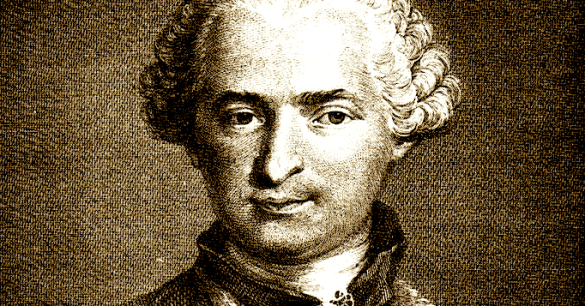
The noble courtier, Comte de Saint-Germain, not to be confused with Frenchmen Claude Louis de Saint-Germain (1707-1778), was active in the 1740s-1780s across Europe, and regarded by Prince Charles of Hesse-Kassel in his Mémoires as “one of the greatest philosophers who ever lived, the friend of humanity, whose heart was concerned only with the happiness of others.” We are led to rely mainly on anecdotes from Horace Walpole, Casanova, Voltaire, Prince Charles’s memoirs, and his time in Schleswig-Holstein and alchemical circles under Prince Charles within military and court reforms, and the history of eighteenth-century esoteric networks. This is also within the pre‑modern intelligence and diplomatic world of the eighteenth-century when there were no MI6, CIA, or DGSE. These groups exchanged political intelligence, scientific knowledge, coded messages, and ideological influence across Europe, operating in a world where postal systems were monitored, diplomacy was personal (not bureaucratic), courts were full of intrigue, and secret knowledge carried political weight.
Saint-Germain is situated within this order of society as a self-mythologizing polymath and adventurer, which was also often the role of court spies and informal agents who were able to move freely and overhear things in the courts that diplomats could not. Court spies, informal agents, merchant networks, postmasters, cryptographers, and secret societies all functioned like transnational networks. Esoteric groups became important in this period, because members were often scientists, philosophers, military officers and court officials that blended science, mysticism, and politics. They indeed shaped the Enlightenment, and even the “Republic of Letters” was itself a semi‑esoteric network of intellectuals, or basically esoteric diplomatic networks.
Theosophist, Helena Blavatsky claimed that Saint-Germain was a pupil of Indian and Egyptian hierophants, proficient in the celestial science, and arts of the East, “the greatest Oriental Adept Europe has seen during the last centuries.” Scholars read this as a romanticization, like she invented the “adepts.” In Europe, the “adepts” within these networks signified specialty and diplomatic roles.
Rosicrucian adepts (“unknown superiors”) were believed to possess advanced medical, chemical, and philosophical knowledge. Alchemical adepts were sought by princes for metallurgical and financial expertise. Masonic “Masters” (or high-degree “secret chiefs”) were literally adepts in ritual, geometry, architecture, engineering (Blavatsky, Skinner and Movers: The Polysemic and Semiotic Hybrid System in Ancient Religions) and symbolic philosophy. Jesuit polymaths in China, India, and the Americas were treated as adepts in astronomy, mathematics, and languages.
“But Europe knew him not” Blavatsky says of Saint-Germain in her Theosophical Glossary. In nineteenth-century theosophical circles, he was regarded historically as the greatest Adepts Europe had in the last centuries of the past millennia. In his world, an adept was someone who could navigate hidden knowledge and hidden politics, like the trans eighteenth-century spy, Chevalier d’Eon. With Blavatsky’s “mahatmas,” it is not merely romantic embellishment, but with the Theosophical Movement, the snapshot of history pans out from the networks of Europe over to the turbulent climate of North, Central and South Asia. These “mahatmas” or adepts in India were patriotic and sought a national rebirth of India, so the Theosophical Movement among other movements and reformers were involved in developing diplomatic bridges between the Anglos and India. This shows that Blavatsky reframed the concept of the adept, which refutes the view developed from the habit of couching this history merely as “romanticizations,” specifically of “a woman,” who supposedly shouldn’t be involved in the things she got into, according to certain viewpoints. However, if you understand the eighteenth-century milieu of these networks and adventurers in the century prior to her, then the way she moved in and through these circles in the nineteenth-century makes sense.
In that eighteenth‑century esoteric world, an adept in alchemy was a chemist, an adept in Hermetic philosophy was a scholar of ancient texts, an adept in Masonry was a ritual and symbolic expert, and an adept in diplomacy was a polyglot courier or negotiator and so on. It is not a term like angel or archon. In Theosophy, the idea in European esotericism becomes merged with the real scholar‑yogis, pandits, and ascetics of India and Tibet, who “do not meddle in politics” as Blavatsky claims. In the deeper, occult sense, according to Blavatsky’s teachers, the “real adept” is the “inner man” (ὁ ἔσω ἄνθρωπος), or basically the daimon or nous. The “adept” here is a mortal in the world who has realized their inner genius or daimon.
This manner in which they thought challenges modern secular notions about the separation between religion and politics. People accuse Blavatsky of romanticizing adepts, but the Mahatma Letters repeatedly de‑romanticize them, emphasizing psychology, ethics, and discipline. Adepts are repeatedly stated to not be gods or supernatural beings, nor omniscient — the union (or alchemical wedding) produces a lucidity and condition of a seeming or near omniscience.
Many people in the mid-eighteenth-century spoke of Saint-Germain with high distinction among the royals, and the towns he visited under different names and titles. He was known to eat a small and regulated diet, played instruments, as a noble character with fine clothing, handsome, and masterfully spoke over nine languages. The Comte was said to always carry around gold and precious diamonds, speaking with erudition at dinners about transmutation.
H.P. Blavatsky claimed that her aunt, Nadyezhda Andreyevna de Fadeye possessed important documents of the Count, which might otherwise be the Souvenirs sur Marie-Antoinette, written by Baron Étienne-Léon de La Mothe-Langon (1786-1864).
Charles W. Leadbeater and Annie Besant made claims that they purportedly met the Comte de Saint-Germain, and call him “the Master, Prince Rákóczy.” Mr. Leadbeater also claimed to meet “Master Jesus” (see The Problems with the “Master Jesus” Wikipedia Article). Leadbeater’s claims could not be true. The Count’s association with the House of the Hungarian family Rákóczy, though admitted by him to Prince Charles of Hasse-Kassel, does not place him namely as the purported son of Francis Rákóczy II. That claim is not historically justified by any tangible evidence. The innovation of the later concept of adepts in the late nineteenth-century to twentieth-century immortalizes these personages into angelic caretaker-like beings in the manner that Catholic Saints operate.
After death, Saint-Germain acquired the title of “Prince of Imposters,” like Cagliostro (“charlatan”), and Blavatsky (“one of the greatest frauds”). Both Cagliostro and Count Saint-Germain taught, according to H.P.B., “Divine Magic,” within the larger era of courtly wonderworkers.
She uses the term “divine magic” to contrast against the corrupted popular usage of “magic” and Christian theology’s tendency to attribute unexplained (but natural) effects to devils or exclusive biblical miracles to maintain authority. She praises ancient traditions (e.g., Alexandrian Eclectics, Theurgists, Platonists, and “Magi”) for studying these laws as “the Science of sciences” or “worship of the Light.”
“Our Society believes in no miracle, diabolical or human, nor in anything which eludes the grasp of either philosophical and logical induction, or the syllogistic method of deduction. But if the corrupted and comparatively modern term of “Magic” is understood to mean the higher study and knowledge of Nature and deep research into her hidden powers – those Occult and mysterious laws which constitute the ultimate essence of every element – whether with the ancients we recognize but four or five, or with the moderns over sixty; or, again, if by Magic is meant that ancient study within the sanctuaries, known as the “worship of the Light,” or divine and spiritual wisdom – as distinct from the worship of darkness or ignorance (…) then, we Theosophists “plead guilty.”
We do study that “Science of sciences,” extolled by the Eclectics and Platonists of the Alexandrian Schools, and practised by the Theurgists and the Mystics of every age. If Magic gradually fell into disrepute, it was not because of its intrinsic worthlessness, but through misconception and ignorance of its primitive meaning, and especially the cunning policy of Christian theologians, who feared lest many of the phenomena produced by and through natural (though Occult) law should give the direct lie to, and thus cheapen, “Divine biblical miracle,” and so forced the people to attribute every manifestation that they could not comprehend or explain to the direct agency of a personal devil. As well accuse the renowned Magi of old of having had no better knowledge of divine truth and the hidden powers and possibilities of physical law than their successors (…)” (Helena Blavatsky, Magic)
RECOMMENDED SOURCES
- Pierre Lhermier, Le mysterieux comte de Saint Germain, Paris, Edition Colbert, 1943.
- Paul Chacornac, Le Comte de Saint-Germain (Paris: Chacornac Frères, 11 Quai Saint-Michel, 1947).Isabelle Cooper-Oakley: The Comte de St. Germain, The Secret of Kings: A Monogram (Milano: G. Sulli-Rao, 1912)
- Comte de Saint-Germain: The Immortal German Alchemist
- Theosopedia, Comte De Saint-Germain.
- H.P. Blavatsky on the Count St. Germain – Philaletheians.
- David Pratt, The Count of Saint-Germain.
- H.S. Olcott, Count de Saint Germain.
- The Count de Saint Germain.


 The American Minervan
Leave a comment