
H.P. Blavatsky’s interest in Italian politics has been very scanty in the historical record of her life. H.P.B. herself had claimed and proven to H.S. Olcott, as detailed in his Diary Leaves, that she had joined the Garibaldians (see Garibaldi and the Red Shirts) at the bloody Battle of Mentana, where she was stabbed with a stiletto, her right shoulder with a musket-bullet wound, and her left-arm broken by a sabre-stroke.
She was associated with a few Carbonaros (of the Italian Carbonari liberals), Mazzinists, and Garibaldians, including his sons, whom she stated alone knew the whole truth of the story of her participation in these events prior to the formation of the Theosophical Society.
The woman was therefore intimately involved in an early nationalist movement, which deals with a history preceding any of the research on the Italian philosopher of Actualism, Giovanni Gentile who considered Giuseppe Mazzini a political prophet.
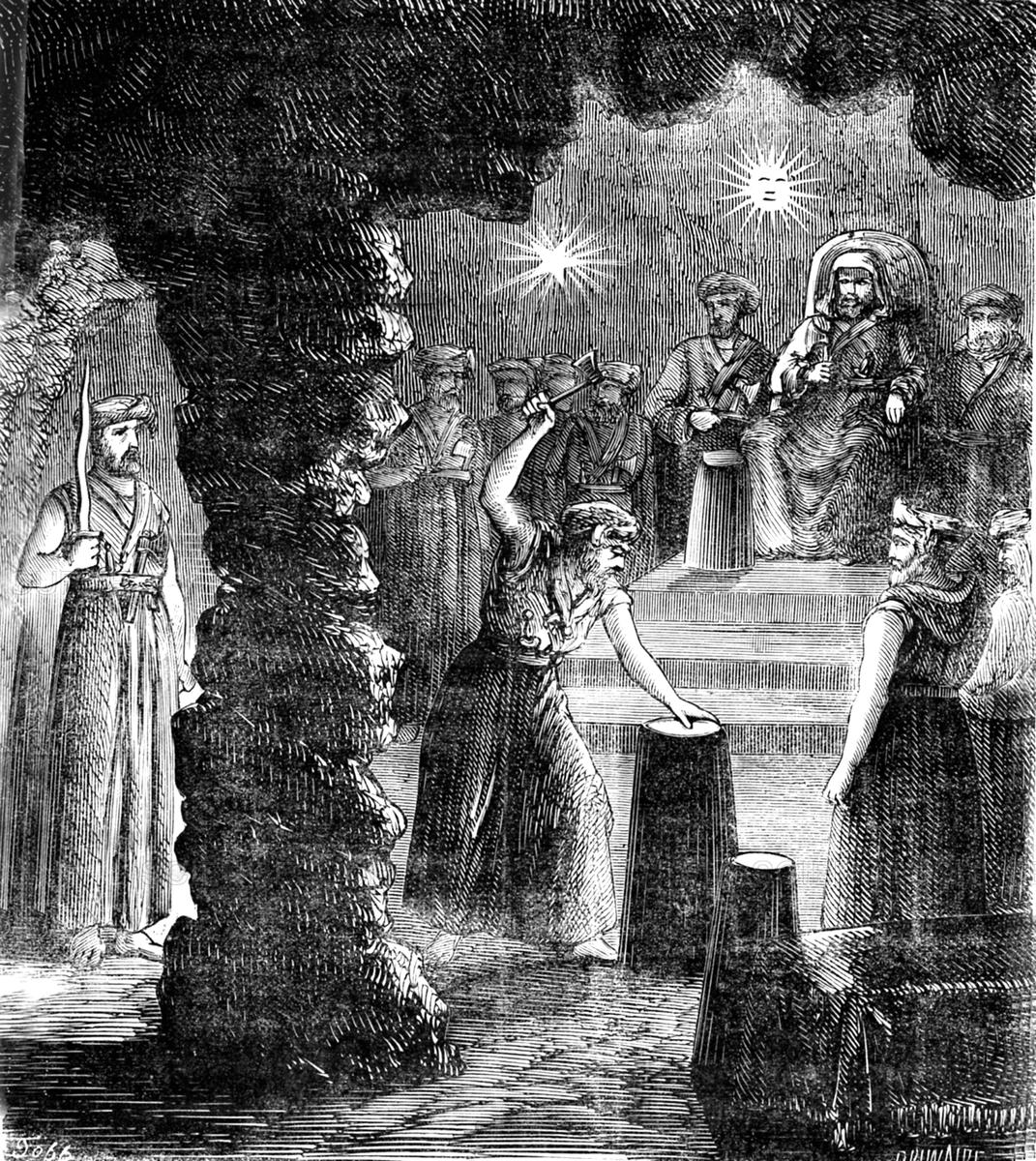
The Southern Italian Carbonari was a secret society and political organization founded to advocate liberal ideas in the early nineteenth-century Europe.
The Carbonari spread into Northern Italy by 1815, when Napoleon was defeated, and they were initially united in the goal to oppose Napoleonic ruler of Naples, Joachim Murat. The Carbonari were composed of advocates of both constitutional monarchy and republicanism, and Freemasons. What united the Freemasons and Carbonari was “militant opposition to the Roman Catholic Church domination of Italy,” K. Paul Johnson explains in The Masters Revealed (Johnson 38). Marquis de Lafayette often known in the United States simply as Lafayette (as spoken of by W.Q. Judge and H.P.B. on the Freemasons and Rosicrucians roles in the Revolutions in Adepts in America in 1776: William Q. Judge’s Speculations prompt Blavatsky to Question “Illuminati” Theory), was a vital figure in the historical fight for American and French Independence served as leader of the Charbonnerie in France. Thus far, in the public’s opinion, they are made to think of this as nefarious and suspect. The goal of opposition to the Church for the Carbonari and Freemasons was primarily for a secular Italy, and to restrict the power of the Church, promote freedom of religion and secular education. Although, there is more to this vision in the operation of the Theosophical Movement.
In a footnote in A Few Questions to Hiraf about the Rosicrucians, Illuminati, and Kabbalists, H.P. Blavatsky connected the “political cataclysms” of the time with the Carbonari, who were responsible for the establishment of new constitutional governments in some states in Italy, and fighting for Greek independence, before the European powers united to overthrow these governments. She stated of them:
“For those who are able to understand intuitionally what I am about to say, my words will be but the echo of their own thoughts. I draw the attention of such only, to a long series of inexplicable events which have taken place in our present century; to the mysterious influence directing political cataclysms; the doing and undoing of crowned heads; the tumbling down of thrones; the thorough metamorphosis of nearly the whole of the European map, beginning with the French Revolution of ’93, predicted in every detail by the Count de St.-Germain, in an autograph MS., now in possession of the descendants of the Russian nobleman to whom he gave it, and coming down to the Franco-Prussian War of the latter days. This mysterious influence called “chance” by the skeptic and Providence by Christians, may have a right to some other name. Of all these degenerated children of Chaldaean Occultism, including the numerous societies of Freemasons, only one of them in the present century is worth mentioning in relation to Occultism, namely, the “Carbonari.” Let some one study all he can of that secret society, let him think, combine, deduce. If Raymond Lully, a Rosicrucian, a Cabalist, could so easily supply King Edward I of England with six millions sterling to carry on war with the Turks in that distant epoch, why could not some secret lodge in our day furnish, as well, nearly the same amount of millions to France, to pay their national debt — this same France, which was so wonderfully, quickly defeated, and as wonderfully set on her legs again. Idle talk! — people will say. Very well, but even an hypothesis may be worth the trouble to consider sometimes.” (H.P. Blavatsky, A Few Questions to Hiraf)

 The American Minervan
Leave a comment