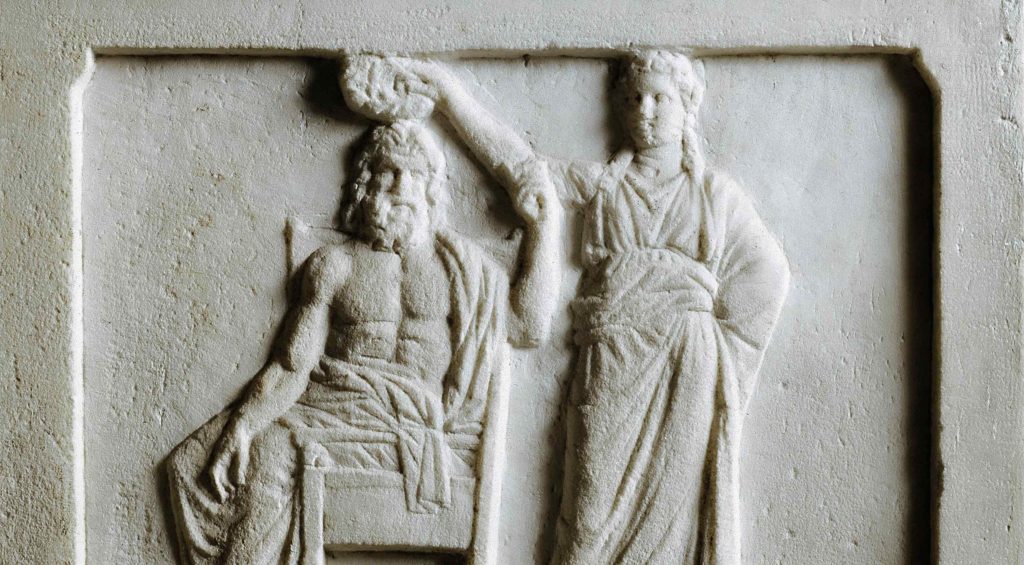
On the sacred philosophical tradition underlying the foundations of Western Civilization influencing republican theory of human rights in the United States from Heraclitus of the Ionian tradition, even preceding him. Tracing this history demonstrates how the concept of a divine (primordial) element becomes gradually secularized through the Renaissance Humanists, Enlightenment and Neo-Classical Republican traditions.
ORIGINS IN ANTIQUITY BEFORE THE STOICS
THERE ARE MANY WAYS TO APPROACH THE ORIGINS OF ROMAN REPUBLICANISM, ATHENIAN DEMOCRACY AND THEIR FOUNDERS, but one angle that is ignored is the root of sophisticated and even sacred philosophical concepts tied into classical early history of science. One consistent concept is the DIVINE ELEMENT, particularly the theory of an obscured Primordial Fire, or “divine spark” (also called scintilla divinitatis, spark of the divine, the fragment or seed of Zeus, or logos spermatikos), which involves the idea that every human being possesses an innate fragment of the divine reason, fire, soul, or God within them. This concept has profoundly shaped Western thought, and did not come by way of modern alternative spiritual movements in the twentieth-century.
Its clearest philosophical articulation comes from ancient Greek and Roman Stoicism, and through Stoicism this idea exercised enormous influence on Roman Republicanism, early Christianity, Renaissance Humanism, and eventually modern human-rights doctrine.
These ideas appear in various traditions preceding the Stoic philosophers, and do not just appear from no contextual developments in ancient philosophy. These ideas emphasize the soul’s immortality, divine origin, or participation in a higher reason, laying groundwork for later Stoic systematization. These ideas formed the roots from which Stoicism grew.
In the Orphic and Pythagorean traditions (6th-5th century BCE), the soul was seen as being immortal and divine, trapped in the body though capable of purification and returning to the divine source. Heraclitus (c. 500 BCE) taught that everything is governed by LOGOS (divine reason or PRIMORDIAL FIRE). Humans participate in this LOGOS, and the wise soul is “kindled” from it. He searched himself and spoke of the Logos as common to all. In Fragment 115 (Diels-Kranz numbering), Heraclitus says “To the soul belongs the logos that increases itself.” “One would never discover the limits of soul, should one traverse every road — so deep a measure does it possess.” (Fragment 45). These are compiled in The Fragments of Heraclitus (trans. Brooks Haxton, Penguin, 2003, pp. 27-29).
Plato in Timaeus and Phaedrus also teaches that the human soul is immortal and has beheld the FORMS; and the highest part of the soul is the divine NOUS itself. Aristotle wrote about the NOUS (intellect) as “coming from without” and being immortal and divine (Generation of Animals 736b). In Orphic texts, the soul is seen as a divine element needing liberation from the body. Pythagoreans viewed the soul as immortal and transmigrating, with a divine origin. In Plato’s Cratylus (400c), Socrates references Orphic ideas of the body as a prison for the soul. For Pythagoreanism, see Diogenes Laertius, Lives of Eminent Philosophers (Book VIII, Pythagoras), where the soul is described as a fragment of the divine ether (sections 26-28 in the Loeb edition). Also, in Plato’s Phaedo (80a-84b), the soul’s immortality and divine affinity are discussed in a Pythagorean context.
STOICISM AND THE CLASSIC FORMULATION OF THE DIVINE ELEMENT IN MAN
Stoicism turned the “divine spark” into a universal democratic principle, since for Zeno of Citium (founder, 3rd century BCE), LOGOS is the active, rational principle permeating the cosmos. Every human being, regardless of status, possesses a portion or fragment (apospasma) of this divine LOGOS, not just a specific race or tribe. See Diogenes Laertius, Lives of Eminent Philosophers VII.135-136 where Zeno defines God as the rational soul of the world, with humans sharing in it (trans. R.D. Hicks, Loeb, 1925, vol. 2, pp. 239-241). In Cleanthes’ Hymn to Zeus (3rd century BCE), e.g., it is said, “From thee we are born, and alone of all / That live and move on earth we have the gift of reason…For we thy offspring are.” The full hymn is preserved in the Eclogae I.1.12 of Stobaeus.
Chrysippus developed the idea of the logos spermatikos (“seminal reason”), teaching that every human soul is a fragment (apospasma) of the divine fire or Logos. This is in Diogenes Laertius, Lives (VII.136) on seminal logos as divine reason in all (Loeb, vol. 2, p. 241). Recorded in his Discourses (2.8.11) by his student Arrian, Epictetus (1st-2nd century CE), a former slave taught that “You are a fragment (apospasma) of Zeus; you have in yourself a part of Him…You carry Zeus about with you, poor wretch, and know it not.”
In his Meditations, Marcus Aurelius repeatedly calls the ruling faculty (hēgemonikon) within us “divine,” a “god within the breast,” and insists that because all humans share in reason, all are kin and equal in dignity. Seneca reiterated, that “God is near you, he is with you, he is within you…a holy spirit dwells within us” in his Moral Letters to Lucilius (Epistle 41).
Also, because the divine spark of reason is present equally in every human whether slave, woman, barbarian, emperor, all humans possess equal moral worth and natural dignity. This teaching was revolutionary in a world built on hierarchy and slavery.
ROMAN REPUBLICANISM AND THE DIVINE SPARK
Stoicism became the dominant philosophy of the Roman elite during the Republic and early Empire with proponents such as Scipio Africanus, Cato the Younger, Cicero, Brutus and others. Cicero in De Legibus, De Officiis, De Re Publica explicitly connects the divine spark to natural law and republican equality, stating that true law is right reason in agreement with nature. It is of universal application, unchanging and everlasting. “We are born for justice,” he declares, and right is not established by opinion but by nature. “There will not be different laws at Rome and at Athens, but one eternal and unchangeable law will be valid for all nations and all times, and there will be one master and ruler, that is DEUS, over us all, for he is the author of this law…” (see De Re Publica III.33, De Legibus I.42-43).
Cicero’s formulation is the direct ancestor of later natural-rights and human-rights language. As it can be seen in the Roman legal concept of persona, or in the Stoic idea that every human has an inner divine reason. This helped foster a revolutionary legal concept at the time, that even slaves have moral personality and rational capacity.
TRANSMISSION THROUGH CHRISTIANITY
The notion was transmitted though early Christianity, which absorbed Stoic language. In Acts 17:28, Paul is made to say to the Athenians, that “For in him we live and move and have our being…For we too are his offspring.” Whoever wrote the line is mirroring the words of Cleanthes. Again, in John 1:9, Christos is described as the LOGOS “who enlightens every man who comes into the world.” The Church Fathers Justin Martyr, Tertullian and Augustine repeatedly use the logos spermatikos and “divine spark” in their language, while overlaying the classical formulations with the newly-invented Christology.
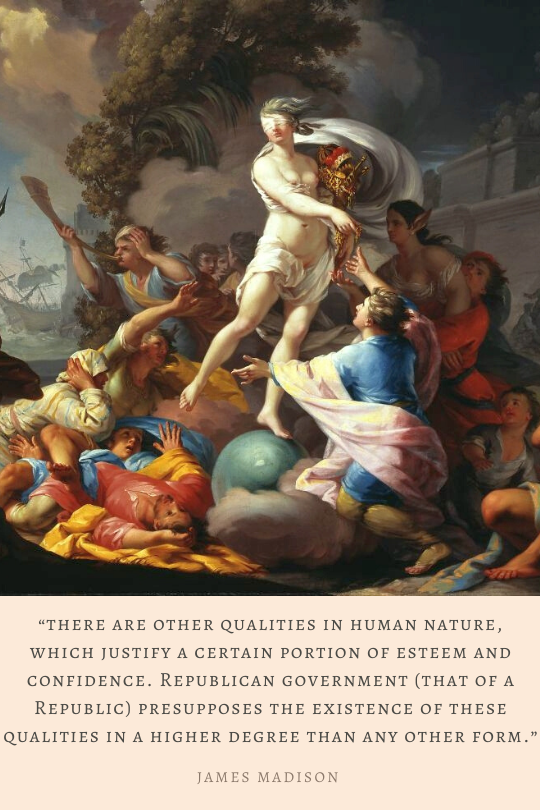
The Christian doctrine of the IMAGO DEI in Genesis 1:26-27 fused with Stoic language to create the idea that every human is sacred because they bear God’s image, fragment or spark.
Renaissance, Enlightenment, and Modern Human Rights
The Stoic-Christian synthesis fed directly into modern human-rights theory beginning with the Renaissance humanists like Petrarch, as in Pico della Mirandola’s Oration on the Dignity of Man (1486) celebrating man as possessing a divine spark that makes humanity quasi-divine and free. In the 17th century, Hugo Grotius founded modern natural law and international law on the Stoic-Ciceronian idea that certain rights belong to all humans by virtue of their rational nature. The “natural rights” (life, liberty, property) of John Locke are explicitly grounded in the fact that humans are “the workmanship of one omnipotent and infinitely wise maker…they are his property whose workmanship they are, made to last during his, not one another’s pleasure” reflecting both Genesis and Stoic kinship. Then, we have the American Founding Fathers, who were heavily Epicurean and Stoic-influenced through their education on Cicero, Seneca and others.
Thomas Jefferson’s “all men are created equal…endowed by their Creator with certain unalienable Rights” famous statement is almost a direct paraphrase of Cicero’s and Seneca’s arguments about the universal divine spark. In Article 1 of the Universal Declaration of Human Rights (1948), “All human beings are born free and equal in dignity and rights. They are endowed with reason and conscience…” is the modern secularized version of the Stoic doctrine that every human carries the divine LOGOS (reason) within.
The single most revolutionary implication of the “divine spark” doctrine originating in Stoicism and must never be again lost in the Western tradition is that human dignity and certain basic rights are not granted by the state, by birth, or by social status, but are inherent in every human being simply because each carries a fragment of the ROOT ELEMENT within. That idea is the ultimate foundation of what we today call universal human rights.
It follows from the Ancient Greeks, from Heraclitus to Plato then the Stoics, transmitted to Roman Stoicism and Republicanism through Cicero, Seneca, Marcus Aurelius and others. Early Christianity absorbs it through Stoicism, then Medieval and Renaissance Humanism transmitted it to be adopted and secularized through Enlightenment natural-rights theory principally through Grotius and Locke, influencing modern human-rights declarations.
 The American Minervan
Leave a comment