
MAZZINI’S DIVINE IDEAL, THE CARBONARI NETWORKS, AND THE REPUBLICAN STRUGGLE AGAINST MONARCHISM AND THEOCRACY
Introduction to Spiritual and Political Foundations of Italian Republican Nationalism
- INTRODUCTION
- MAZZINI AND THE ROMAN CATHOLIC CHURCH
- THE CARBONARI AS A DECENTRALIZED NETWORK AGAINST ABSOLUTISM
- CARBONARI STRUGGLES AND THE CARBONARO INVOLVED
- MAZZINI’S DIVINE IDEAL: DIO E POPOLE
- THE REPUBLICAN NETWORKS FROM YOUNG ITALY TO GARIBALDI’S CAMPAIGNS
- GIUSEPPE GARIBALDI AS THE SWORD OF REPUBLICANISM
- THE ROMAN REPUBLIC OF 1849
- THE STRUGGLE AGAINST DIVINE-RIGHT MONARCHY AND THEOCRACY
- A “THIRD REPUBLIC” OF THE PEOPLE
- LEGACY OF ITALIAN REPUBLICANISM IN THE RISORGIMENTO
- THE LONG AFTERMATH
- RECOMMENDED READINGS
INTRODUCTION
In the summer of 1815, the Congress of Vienna concluded its deliberations and imposed upon the Italian peninsula a settlement designed, above all, to extinguish the revolutionary fires that had burned across Europe for a quarter-century. The map of Italy was redrawn not by the aspirations of its peoples but by the calculations of Austrian, Russian, Prussian, and British statesmen. The Bourbon dynasty was restored to the Kingdom of the Two Sicilies. The Habsburg-Lorraine line reclaimed Tuscany; Austrian garrisons occupied Lombardy-Venetia outright; the petty duchies of Parma, Modena, and Lucca were parceled out among compliant princes; and the Pope recovered the Papal States stretching across central Italy. What Prince Metternich, the architect of the Restoration, famously dismissed as a mere “geographical expression” was in fact a patchwork of absolutist regimes sustained by foreign bayonets, censorship, secret police, and the ideological buttress of divine-right kingship allied with papal authority.
Yet the ideas unleashed by the French Revolution and the Napoleonic era — popular sovereignty, constitutional government, civic equality, and national self-determination could not be erased by diplomatic decree. Across the fragmented Italian states, secret revolutionary networks arose almost immediately. Chief among these were the Carbonari, the “charcoal-burners,” whose loosely federated cells conspired against Restoration absolutism from Naples to Turin. Their revolts of 1820, 1821, and 1831, though all ultimately crushed, demonstrated that the Congress system rested upon coercion rather than legitimacy. And from the wreckage of Carbonari failure emerged a figure who would transform Italian revolutionary thought from a conspiratorial impulse into a coherent philosophy: Giuseppe Mazzini.
The Carbonari and their successor movements, above all Mazzini’s Young Italy, mounted a challenge to the Restoration order that was philosophical and spiritual, not merely political. Their republicanism was not a pragmatic preference for one form of government over another. This was a moral and metaphysical claim. Mazzini’s motto, “Dio e Popole” (“God and People”) condensed a vision in which republican self-governance was nothing less than a divine imperative: the fulfilment of a moral law implanted in humanity by God, a law that hereditary monarchy and papal theocracy alike violated. The struggle of the Italian republicans was thus simultaneously a war against Austrian domination and Bourbon tyranny, a philosophical revolt against the doctrine of divine-right kingship, and a spiritual contestation with the Catholic Church’s claims to temporal authority.
The arc of this inquiry proceeds from the Carbonari’s decentralized liberal-patriotic networks, through Mazzini’s systematic articulation of a “divine ideal” rooted in duty, popular sovereignty, and the unity of God and humanity, to the broader republican struggle against both temporal monarchy and clerical absolutism — a struggle whose ultimate vindication came not in Mazzini’s lifetime but in the Italian Republic proclaimed in 1946.
MAZZINI AND THE ROMAN CATHOLIC CHURCH
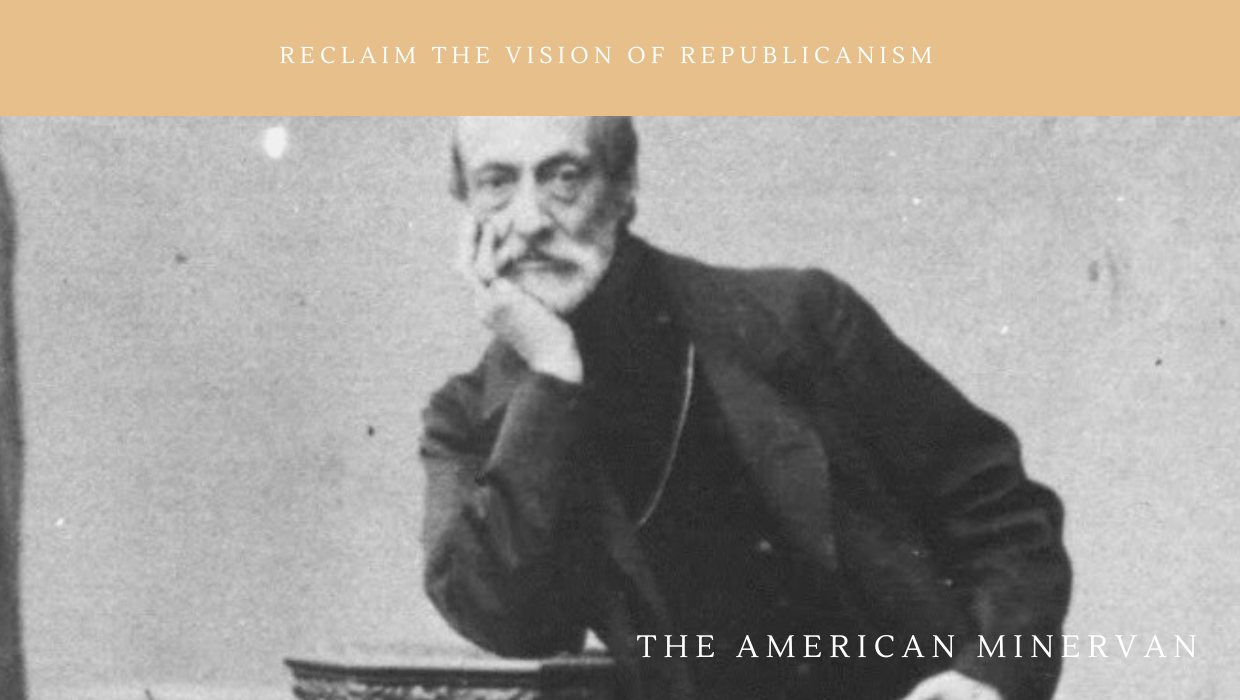
Mazzini held deeply spiritual beliefs that were central to his political philosophy, but they were far from orthodox. Raised in a Catholic family with Jansenist influences, which emphasized predestination, moral rigor, and a direct personal relationship with God, Mazzini retained a fervent religiosity throughout his life, bordering on mysticism. Most importantly, he described himself as a Christian and deist, vehemently denouncing atheism and rationalism as threats to moral order. For Mazzini, God represented divine providence, an immutable law of progress, and the ultimate source of human duty. He famously proclaimed “Dio e Popolo” (“God and People”) as his motto, viewing patriotism and national missions as sacred imperatives ordained by God.
In his view, humanity’s purpose was a collective ascent toward moral and social unity, guided by faith in one God, one Law, and one end. This theology is expressed in his writings, such as The Duties of Man (1860), where he argued that true religion demands active participation in the betterment of society, not passive observance. Mazzini’s conception of religion was essentially a “civic religion” or “religion of politics,” that prioritized ethical duties over ritual or dogma. He envisioned a “Humanitarian Catholicism” as the foundation for a new moral unity, calling for believers to “rise again as a religious party” in Fede e avvenire (1835).
God, in this framework, was not a distant judge but a dynamic force propelling historical progress toward universal fraternity, and the cosmopolitan dimension of his nationalism defined nations as serving humanity, not themselves.
Mazzini’s views did conflict with Catholicism, particularly in its institutional and doctrinal forms, though he remained selectively in conversation with its ethical traditions, or framework. While he shared Catholicism’s emphasis on faith and moral duty, his anti-clericalism and rejection of ecclesiastical authority created irreconcilable tensions. He did not believe in the authority of the Church, viewing the Papacy as a political obstacle to Italian unification and human emancipation. Mazzini initially supported Pope Pius IX’s liberal reforms upon his 1846 election, addressing an open letter urging him to lead Italy’s moral and national revival.
However, when Pius IX sided with conservative forces and issued the reactionary Syllabus of Errors (1864), Mazzini unleashed a fierce critique in Sull’Enciclica di Papa Pio IX (1849), accusing the Church of betraying progress and allying with tyranny.
At its core, the conflict stemmed from Mazzini’s belief that traditional Christianity, including Catholicism, was incompatible with progress due to its hierarchical structure, emphasis on individual salvation over collective action, and resistance to secular reforms. The Church’s temporal power, or its control over the Papal States was seen as a bulwark of absolutism that stifled republican ideals.
In Catholic Europe, Mazzini was reviled as the “personification of virulent anticlericalism,” embodying a laicist vision where religion served the nation rather than the Vatican. His promotion of a national religion, inspired by Enlightenment individualism but infused with divine purpose, directly challenged Catholic universalism and orthodoxy. Excommunicated implicitly through his revolutionary activities, Mazzini tolerated religious processions during his brief Roman Republic (1849) but subordinated faith to civic duties, permitting the Te Deum chant only as a symbol of unity.
MAZZINI AND PROTESTANTISM
Mazzini criticized Protestantism as a divisive force that fragmented religious unity into “a thousand sects” based on “individual conscience,” fostering “anarchy of beliefs” and social turmoil. Coming from an Italian Catholic milieu, he opposed the rationalist and sectarian tendencies he associated with Protestantism, favoring instead a unified, duty-bound moral, metaphysical and political system with a collective purpose in the spiritual evolution of humanity.
His views have been described by some as deism with his lack of strict denominational ties, but Protestantism’s emphasis on personal interpretation clashed with his collectivist theology.
Mazzini’s religion was unique, and he is the model republican — a view profoundly theistic and moralistic, yet revolutionary and anti-institutional. It glorified God as the architect of human progress but rebelled against Catholicism’s dogma and power, making him a heretic in the eyes of the Church and a prophet of secular faith for his followers.
THE CARBONARI AS A DECENTRALIZED NETWORK AGAINST ABSOLUTISM
ORIGINS AND ORGANIZATION
The Carboneria, or Society of the Charcoal-Burners, emerged in southern Italy around the turn of the nineteenth century. Its precise origins obscured by the secrecy inherent to its purpose. It utilized the organizational models of Freemasonry and the traditions of earlier Italian sects. The Carbonari constituted a decentralized network of local cells called vendite (shops), each operating with considerable autonomy. Members were initiated through elaborate rituals replete with Christian symbolism: references to Christ’s Passion, the imagery of purification by fire, and the language of brotherhood and sacrifice. The movement’s very name invoked the charcoal-burners of the Apennine forests, humble artisans who labored in obscurity, as a fitting metaphor for clandestine brothers who worked to ignite the flame of liberty.
The Carbonari flourished most vigorously between approximately 1800 and 1831, spreading from their Neapolitan heartland northward into the Papal States, the Romagna, Piedmont and the duchies of central Italy. Context to consider, is that their membership was socially diverse, encompassing army officers, lawyers, landowners, students, merchants, and even minor clergy as a cross-section of the educated and professional classes who had tasted the civic possibilities of the Napoleonic period and found the Restoration order intolerable.
GOALS AND IDEOLOGICAL RANGE
The Carbonari’s goals, though united by a common opposition to Restoration absolutism, varied considerably from region to region. In the Kingdom of the Two Sicilies, the movement’s primary aim was to force the Bourbon monarchy to grant a constitution, specifically the Spanish Constitution of 1812, which had become a talisman of liberal aspirations across southern Europe. In Piedmont, constitutionalist sentiment mingled with a nascent Italian patriotism that looked to the House of Savoy as a potential leader of national liberation. In the Papal States and the Romagna, Carbonari cells agitated against the Pope’s temporal government, which was widely regarded, even by moderate Catholics, as among the most oppressive and anachronistic administrations in Europe.
Some factions leaned toward republicanism, while others envisaged a federated Italy under constitutional monarchs. What united them all was the rejection of absolutism, the demand for popular participation in government, and the conviction that foreign domination, above all Austrian hegemony, must be overthrown.
The philosophy of the Carbonari expanded upon the legacy of the French Revolution and the Napoleonic reforms, which had introduced civil codes, abolished feudal privileges, and demonstrated that rational governance was possible. Yet most Carbonari were not Jacobins. They rejected the Terror’s extremism and the radical atheism of certain French revolutionary currents. Their movement retained a deeply Christian character, meaning many Carbonari were devout Catholics who objected not to religion itself but to the Pope’s exercise of temporal sovereignty and the Church hierarchy’s alliance with reactionary monarchs. Anticlericalism, in this context, meant opposition to the political power of the clergy, not hostility to Christian faith.
CARBONARI STRUGGLES AND THE CARBONARO INVOLVED
The Carbonari’s most consequential insurrections occurred in rapid succession between 1820 and 1831. In July 1820, a military revolt in the Kingdom of the Two Sicilies, led by General Guglielmo Pepe and inspired by the successful Spanish liberal revolution of the same year, compelled King Ferdinand I to grant a constitution. The Neapolitan constitutional experiment lasted barely nine months: in March 1821, an Austrian army, sanctioned by the Holy Alliance at the Congress of Laibach, marched south and restored Ferdinand’s absolute power. The constitution was annulled, the liberals persecuted, and Pepe forced into exile.
Almost simultaneously, in March 1821, a liberal revolt erupted in Piedmont, led by Count Santorre di Santarosa, a nobleman and army officer who combined constitutional liberalism with ardent Italian patriotism. Santarosa hoped that the heir to the Piedmontese throne, Carlo Alberto, would embrace the constitutional cause and lead a war of liberation against Austria. Carlo Alberto briefly wavered but ultimately submitted to legitimist pressures; Austrian forces intervened; the revolt collapsed; and Santarosa fled into exile, eventually dying fighting for Greek independence in 1827 — a fate emblematic of the broader European liberal-national struggle of the era.
A decade later, in February 1831, the central Italian states experienced a fresh wave of insurrection. In Modena, the patriot Ciro Menotti led a conspiracy that briefly overthrew ducal authority before Austrian troops crushed the revolt. Menotti was captured and executed — a martyrdom that resonated powerfully through Italian nationalist memory. Across the Romagna and the Papal Legations, provisional governments proclaimed constitutional rule, only to be swept away by the same Austrian military force that served as the ultimate guarantor of the Restoration settlement.
Among the most influential Carbonari legacies was not a military victory but a literary one. Silvio Pellico, a Milanese writer arrested in 1820 for his association with the Carbonari-linked journal Il Conciliatore, spent ten years in the Austrian fortress of Spielberg. His memoir, Le mie prigioni (My Prisons), published in 1832, offered a restrained, dignified account of his suffering that moved readers across Europe and did more to discredit Austrian rule in Italy than any armed uprising. Klemens von Metternich, most influential statesman, champion of Conservatism and architect of Post‑Napoleonic Europe in the nineteenth-century, himself reportedly lamented that Pellico’s book had cost Austria more than a lost battle.
LIMITATIONS OF THE OLD ORDER AND NEED FOR NEW VISION
For all their courage and sacrifice, the Carbonari ultimately failed; and they indeed failed, moreover, in ways that illuminated structural weaknesses beyond mere military inferiority. The movement lacked ideological clarity: its cells pursued divergent and sometimes contradictory goals, from constitutional monarchy to republic, from regional autonomy to pan-Italian federation. There was no unified program, no coherent philosophy of the nation, no systematic vision of what a liberated Italy should look like. The Carbonari could conspire, revolt, and die; but what they could not do was articulate a compelling and unified political theology capable of mobilizing the Italian masses. That task fell to a young Genoese lawyer who had joined the Carbonari around 1827, been arrested, briefly imprisoned, and exiled — and who, from the crucible of that experience, forged the most influential republican philosophy of the nineteenth century.
MAZZINI’S DIVINE IDEAL: DIO E POPOLE
FROM CARNONARO TO PROPHET
Giuseppe Mazzini was born in Genoa in 1805, into a family of the educated professional class — his father a physician and university professor, his mother a woman of deep religious conviction. Genoa, formerly an independent republic before its annexation to the Kingdom of Sardinia-Piedmont, nurtured in the young Mazzini both a republican sensibility and an acute awareness of national subjection. He studied law at the University of Genoa but was drawn irresistibly toward political activism. Around 1827, he joined the Carbonari; by 1830, he had been arrested, interrogated, and — upon his release — forced into exile. It was a transformative experience. Mazzini concluded that the Carbonari’s failures stemmed not merely from organizational deficiencies but from a fundamental absence of moral and philosophical coherence. The movement needed not better conspiracies but a new faith.
In 1831, from his exile in Marseille, Mazzini founded Giovine Italia (Young Italy), which was basically an organization that was at once a political party, a revolutionary network, and a vehicle for moral education.
Its motto was that of Mazzini: “God and the People.”
Its aim was the unification of Italy as a democratic republic achieved through popular insurrection and the moral awakening of the masses. Young Italy was explicitly republican where the Carbonari had been ambiguous; it was openly national where the Carbonari had been regional; and it was grounded in a systematic philosophy where the Carbonari had offered only ad hoc grievances.
THE DIVINE IDEAL: REPUBLICANISM AS MORAL NECESSITY
Mazzini’s philosophy, elaborated across decades of prolific writing, and most systematically in I doveri dell’uomo (The Duties of Man, 1860) and in the manifestos and journals of Young Italy, constituting a remarkable synthesis of political theory, moral philosophy and civil theology. At its heart lay a single, radical conviction: that republican self-governance was not merely a superior political arrangement but a moral and logical necessity, ordained by the divine structure of the universe itself.
“Neither pope nor king — only God and the people.”— Giuseppe Mazzini
This formula embodied Mazzini’s entire worldview. DIO, in Mazzini’s understanding, was not the distant clockmaker of the Deists nor the jealous sovereign of orthodox theology, but the immanent source of a moral law progressively revealed through human history. That moral law directed humanity toward ever-greater association, solidarity and self-governance. Every human being carried within them a spark of the divine, a capacity for moral discernment, a sense of duty and a longing for justice that could be realized only through free participation in collective self-rule. Monarchy, by its very nature, contradicted this divine plan. It substituted the hereditary accident of birth for the sovereign moral will of the people; it reduced citizens to subjects; it interposed between God and humanity a merely human intermediary who claimed divine sanction for worldly power. The republic, and the republic alone, aligned political organization with the moral order of the universe.

DUTY OVER RIGHTS
Mazzini’s greatest originality, and the feature that most sharply distinguished his thought from the mainstream of liberal political philosophy lay in his insistence that the foundation of political life was duty, not rights. The French Revolution had proclaimed the rights of man. Sure, Mazzini acknowledged rights but subordinated them to a prior and higher principle. Rights, he argued, were individual and potentially selfish. They could degenerate into mere claims for personal advantage. Duty, by contrast, was inherently social, moral and sacrificial. It bound the individual to purposes greater than the self: duty to God, the source of moral law; duty to Humanity, the great family of nations progressing toward universal brotherhood; duty to the Fatherland, the divinely appointed instrument of each people’s contribution to human progress; duty to the Family, the school of domestic virtue and the foundation of civic life.
“We must convince men that they are all sons of one sole God, and bound to fulfil and execute one sole law here on earth :— that each of them is bound to five, not for himself, but for others : — that the aim of existence is not to be more or less happy, but to make themselves and others more virtuous :— that to struggle against injustice and error, wherever they exist, in the name and for the benefit of their brothers, is not only a right, but a Duty :— a duty which may not be neglected without sin :— the duty of their whole life.” (Giuseppe Mazzini, The Duties of Man, 1835, p. 18)
A republic, in Mazzini’s vision, was the only political form that could cultivate this ethic of duty. Only where citizens governed themselves through universal suffrage, free association, and collective deliberation could the virtues of sacrifice, brotherhood, and social justice flourish. Monarchy, whether absolute or constitutional, fostered passivity, obedience, and the habits of servitude. The constitutional monarchy favored by moderate liberals was, in Mazzini’s view, merely a transitional compromise that preserved monarchical privilege, aristocratic distinction, and the sovereign’s prerogative to make war, all fundamentally incompatible with genuine democracy and popular sovereignty.
THE “HEREDITARY LIE” AND CRITIQUE OF MONARCHY
Mazzini’s critique of monarchy was unsparing. He regarded hereditary kingship as a “hereditary lie” — a system that clothed arbitrary power in the garments of tradition and sanctity. The doctrine of divine right, by which kings claimed to rule as God’s anointed, was for Mazzini a blasphemous usurpation: it transferred to a single family a sovereignty that belonged by divine intention to the entire people. Monarchy was not merely unjust; it was irrational and immoral, a relic of humanity’s political infancy that the progress of civilization must inevitably supersede.
“Countries of kings and privileged castes must give way to countries defined by the vote of free men.”— Giuseppe Mazzini
Mazzini extended this critique even to constitutional monarchy, which he regarded as an unstable halfway house between despotism and democracy. The monarch, however constrained by a constitution, retained prerogatives with command of the army, the power to dissolve parliament, influence over ministerial appointments that perpetuated inequality and frustrated the sovereign will of the nation. True democracy required the abolition of monarchy altogether and its replacement by a republic founded upon universal suffrage, civic education, and the ethic of duty.
THE NATION AS DIVINE GIFT

The environment in which Mazzini was born was characterized by great moral rigorism, with his early education entrusted to two Jansenist abbots, and this attitude thoroughly imbues his civic theology. Central to Mazzini’s thought was a concept of nationhood that was simultaneously political, cultural, and spiritual. The nation, for Mazzini, was not an accident of geography or a mere product of historical circumstance. It was a providential creation, a divinely ordained instrument through which each people fulfilled its distinctive mission in the progress of humanity. This must not be viewed in an abstract sense, as it views nature as process, and God moving in this process.
“God gave you a country… God divided humanity into distinct groups upon the face of our globe, and thus planted the seeds of nations.” — Giuseppe Mazzini, The Duties of Man
Each nation possessed a unique genius, a particular contribution to make to the common civilization of mankind. Italy’s mission, in Mazzini’s vision, was nothing less than the inauguration of a new epoch of human history, or a “Third Rome” that would succeed both the Rome of the Caesars (universal empire) and the Rome of the Popes (universal theocracy) with the Rome of the People: a republic that would inspire a federation of free nations across Europe and, ultimately, the world. National liberation was therefore not an end in itself but a stage in the progressive realization of humanity’s divine destiny.
INSPIRER OF EARLY THEOSOPHICAL EXPRESSION
Blavatsky was not a distant observer of the Italian republican struggle — she placed herself inside it. She reportedly met Mazzini in London in 1851, the very year he was organizing the Central European Democratic Committee, bringing together exiled republicans, radicals, and revolutionaries from across Europe. London in 1851 was the nerve center of European revolutionary exile with Mazzini, Ledru-Rollin, Kossuth, and others being all there; and the young Blavatsky moved through these circles during her early years of travel across Europe and the East. She claimed to have fought alongside Garibaldi’s volunteers at the Battle of Mentana on November 3, 1867, which was the failed attempt to liberate Rome from papal rule, crushed by French and Papal troops armed with the new Chassepot rifle. She stated that his sons could attest to this.
Mazzini’s vision of a “brotherhood of man” — nations united in a world republican federation, not a singular theocracy or despotism, humanity progressing toward moral unity under divine law correlated directly with the first and most fundamental Object of the Theosophical Society (1881): “To form a nucleus of the Universal Brotherhood of Humanity, without distinction of race, creed, sex, caste, or colour.” Clearly, “universal brotherhood” was seen as a sacred mission of necessity and the safety of humanity. It was seen as an ontological fact rooted in divine unity, not a sentiment, as it is manipulated to seem in our day.
Mazzini’s republican path insisted that the masses had to be awakened through moral obligation, not mere self-interest. In The Key to Theosophy, Blavatsky likewise insisted that a true theosophist must practice “renunciation of one’s personality,” “never to think of himself,” and to live “the life of abstinence, self-denial, and strict morality, doing his duty by all men.” They also both attacked materialism and dogmatic religion. One could say that Blavatsky saw herself as extending the Mazzinian revolution from the political-national plane to the spiritual-cosmic plane. Where Mazzini sought to overthrow kings and popes to establish the sovereignty of the people under God, Blavatsky sought to overthrow dogmatic religion and materialist science to establish the sovereignty of will of individuals. The enemies were the same: clericalism, absolutism, superstition, priestcraft, but the battlefield had shifted from the barricades of Naples and Rome to the inner life of humanity, for numerous reasons.
THE SPIRITUAL ELEMENT OF MAZZINI’S “RELIGION OF HUMANITY”
It is essential to understand that Mazzini was not an atheist, and neither is the concept of secularism in the republican vision. Mazzini was, in fact, deeply hostile to the atheistic and materialist currents within European radicalism, which he regarded as morally corrosive and politically sterile. He insisted that without a sense of the divine and without the conviction that human life was governed by a transcendent moral law, political movements would degenerate into selfish factionalism or nihilistic violence. His quarrel was not with God but with the Catholic Church as an institution. He regarded the papacy as a corrupted vessel: an institution that had betrayed its spiritual mission by accumulating temporal power, allying with reactionary monarchs, and reducing the living faith of Christianity to a system of rigid dogma, clerical privilege, and political manipulation.
In place of institutional Catholicism, Mazzini advocated what might be called a civil religion of humanity — a faith in moral progress, popular sovereignty, and the brotherhood of nations that drew upon Christian ethics while rejecting ecclesiastical authority. The republic was not a place to enjoy a superficial Epicurean-libertinian life or is merely a form of government but a moral community, a sacred enterprise in which citizens fulfilled their duties through the exercise of self-governance.
Mazzini’s intellectual lineage reached back through the Enlightenment to the civic humanism of the Italian Renaissance. Machiavelli’s Discourses on Livy, with their celebration of the Roman Republic’s civic virtue and their insistence that free institutions produced superior citizens, provided a crucial precedent. Leonardo Bruni’s humanist vision of the Florentine Republic as a school of civic excellence; the Enlightenment critiques of papal temporal power by figures such as Pietro Giannone; the French Revolutionary declaration that sovereignty resided in the nation — all these currents flowed into Mazzini’s synthesis and were transfigured by his distinctive moral and spiritual vision.
THE REPUBLICAN NETWORKS FROM YOUNG ITALY TO GARIBALDI’S CAMPAIGNS
YOUNG ITALY AS ORGANIZATIONAL REVOLUTION
Young Italy represented a decisive advance upon the Carbonari in both ideological clarity and organizational purpose. Where the Carbonari had operated as a loose confederation of cells with divergent aims, Young Italy possessed a defined program: Italian unification as a democratic republic, achieved through popular insurrection and moral education. Mazzini understood that revolution required not merely conspirators but a mobilized people, and that the people could be mobilized only by an idea powerful enough to demand sacrifice. His method combined two elements: educazione (education) and insurrezione (insurrection). The masses must first be awakened to their rights and duties through propaganda, journalism, and political instruction, then they must be summoned to overthrow their oppressors through collective action.
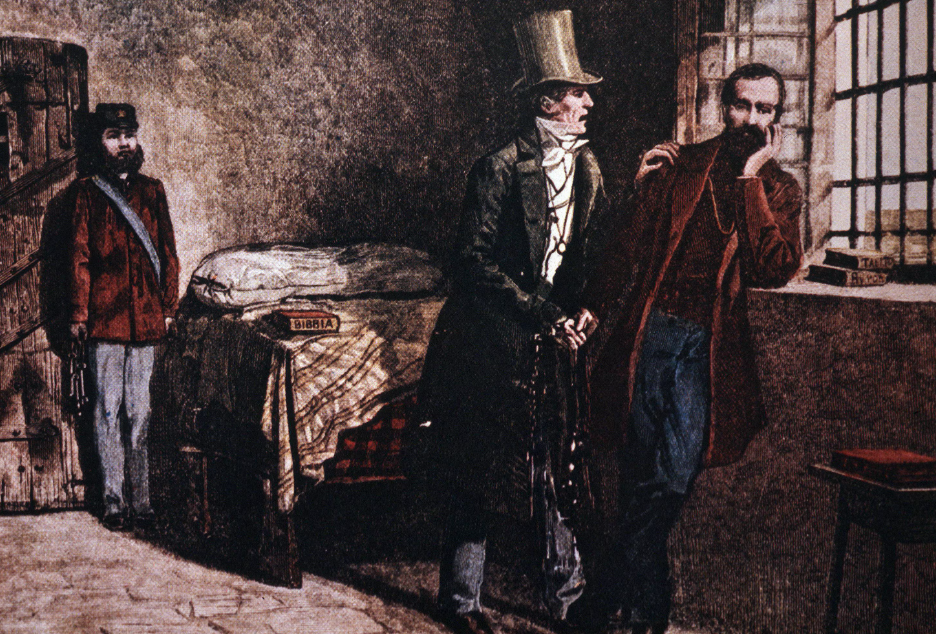
In practice, Young Italy’s early insurrectionary efforts met with disaster. Conspiracies in Piedmont and Genoa in 1833-1834 were detected and crushed; several participants were executed; others fled into exile. Mazzini himself was condemned to death in absentia. Yet the failures did not discredit the movement so much as diffuse its ideas. Young Italy’s manifestos circulated clandestinely across the peninsula, reaching an audience far wider than any Carbonari vendita had ever achieved. By the 1840s, Mazzinian republicanism had become one of the principal currents of Italian political thought, competing with the moderate liberalism of figures such as Vincenzo Gioberti and Cesare Balbo, who looked to the Piedmontese monarchy as the instrument of national liberation.
GIUSEPPE GARIBALDI, THE SWORD OF REPUBLICANISM
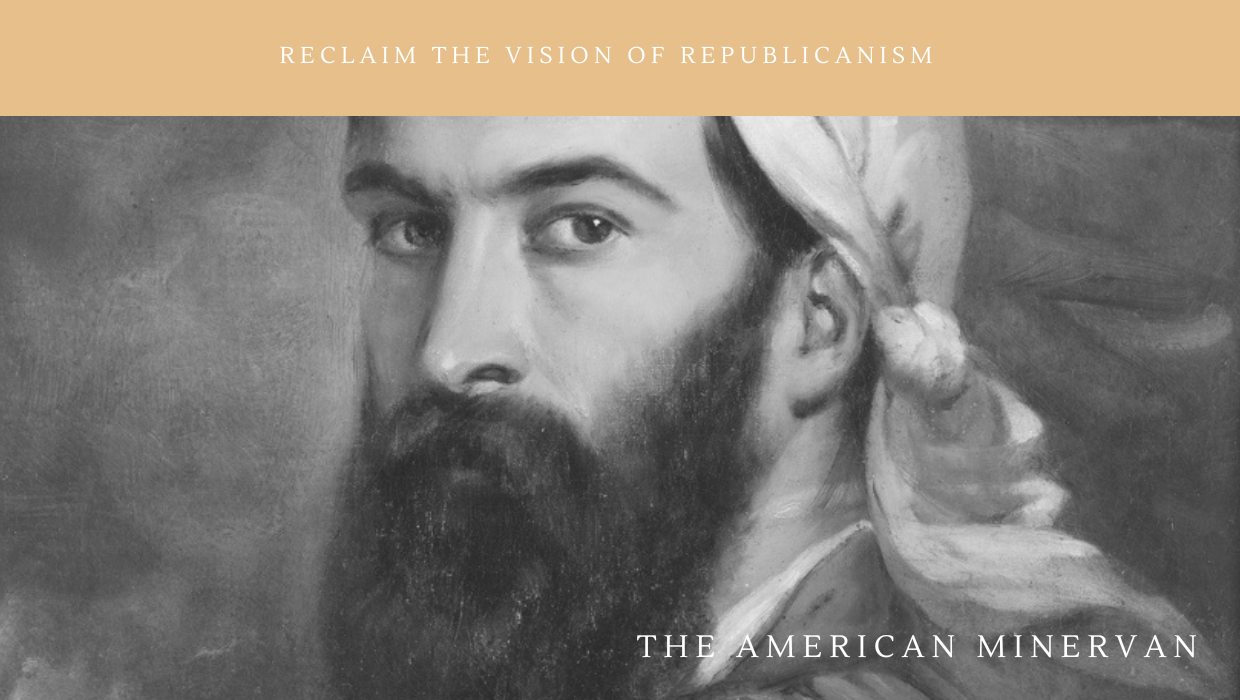
No figure better embodied the translation of Mazzinian ideals into revolutionary action than Giuseppe Garibaldi. Born in Nice in 1807, Garibaldi was a sailor and adventurer who joined the Carbonari and then Young Italy around 1833, inspired by Mazzini’s vision of a united Italian republic. Condemned to death for his participation in the failed 1834 Piedmontese insurrection, Garibaldi fled to South America, where he spent over a decade fighting in the wars of liberation of Brazil and Uruguay, an experience that honed his skills as a guerrilla commander and deepened his conviction that the people, not kings, must create the nation through sacrifice and heroism.
Garibaldi’s republicanism was pragmatic rather than philosophical. He shared Mazzini’s ultimate goal of an Italian republic but was willing to subordinate ideological purity to the practical necessities of unification. When it became clear that the Piedmontese monarchy under King Victor Emmanuel II and his minister Cavour offered the most viable path to Italian unity, Garibaldi accepted the alliance, however reluctantly. His watchword became “Italy and Victor Emmanuel” — a formula that acknowledged monarchical leadership while preserving the aspiration for eventual republican transformation. This pragmatism was the source of enduring tension between Garibaldi and Mazzini, who regarded any compromise with monarchy as a betrayal of principle.
THE ROMAN REPUBLIC OF 1849
The supreme expression of Italian republican ideals came during the revolutionary year of 1848-1849, when the upheavals that swept across Europe reached the very seat of papal authority. In November 1848, following the assassination of his chief minister Pellegrino Rossi, Pope Pius IX fled Rome. In February 1849, a constituent assembly proclaimed the Roman Republic, abolishing the Pope’s temporal sovereignty and establishing a democratic government based on universal male suffrage. Mazzini arrived in Rome and was elected one of three Triumvirs, effectively heading the new republic’s government.
For the first and only time in his life, the prophet of Italian republicanism held executive power.
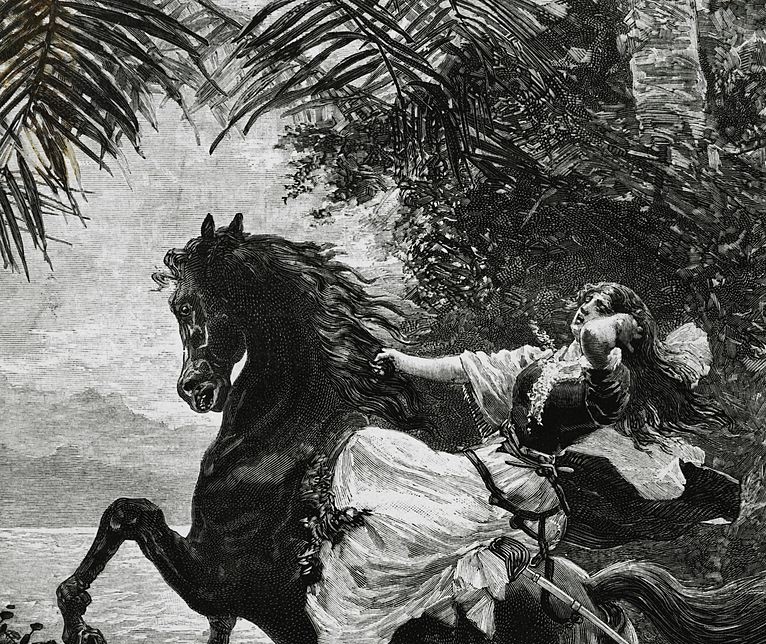
The Roman Republic of 1849, though it survived only five months, became a sacred chapter in the mythology of Italian nationalism. Under Mazzini’s political leadership and Garibaldi’s military command, the republic enacted progressive legislation by abolishing clerical censorship, confiscating Church estates for redistribution and guaranteeing freedom of religion, while simultaneously defending itself against a French expeditionary force dispatched by Louis-Napoleon Bonaparte to restore papal authority. Garibaldi’s defense of Rome against overwhelmingly superior French forces became an epic of republican resistance. When the republic fell in July 1849, Garibaldi led a harrowing retreat across central Italy, losing his pregnant wife Anita to illness during the flight — a personal tragedy that sealed his status as the Risorgimento’s martyr-hero.
THE EXPEDITION OF THE THOUSAND AND UNIFICATION COMPROMISE
Garibaldi’s most spectacular achievement came in 1860, when he led the Spedizione dei Mille (the Expedition of the Thousand), a force of barely a thousand volunteers who sailed from Genoa to Sicily, overthrew the Bourbon Kingdom of the Two Sicilies, and liberated southern Italy in a campaign of astonishing audacity. The expedition demonstrated the power of popular mobilization, guerrilla initiative and republican idealism, yet its outcome illustrated the tension between republican aspiration and monarchical pragmatism. At the famous meeting at Teano in October 1860, Garibaldi handed his southern conquests to King Victor Emmanuel II, saluting him as “King of Italy.” It was an act of patriotic self-sacrifice that made Italian unification possible but ensured that the new Italy would be a constitutional monarchy, not a republic. Garibaldi retired to the island of Caprera, a republican at heart who had subordinated his deepest convictions to the cause of national unity.
THE STRUGGLR AGAINST DIVINE-RIGHT MONARCHY AND THEOCRACY
REACTION TO THE DOMINANCE OF ABSOLUTISM: THE DOCTRINE OF DIVINE RIGHT
To grasp the full radicalism of the Italian republican challenge, one must understand the ideology it opposed. The Restoration order rested upon the doctrine of divine-right kingship: the claim that monarchs derived their authority directly from God, were answerable to no earthly power, and governed by a mandate that no revolution could legitimately revoke. This doctrine, systematized by theorists such as Joseph de Maistre and Louis de Bonald in the aftermath of the French Revolution, held that monarchy was the natural and divinely ordained form of government, that revolution was a sin against the providential order, and that the Catholic Church, as the guardian of divine truth, was the rightful ally and moral guarantor of legitimate sovereignty. So, take note of this pattern in our times.
In post-1815 Italy, this Catholic-monarchist alliance took concrete institutional form. The Austrian Empire, the Bourbon kingdoms, and the petty Italian duchies all relied upon the Church to legitimate their authority and discipline their populations. The papacy, for its part, depended upon the Austrian army to maintain its temporal rule over the Papal States. The result was a mutually reinforcing system in which monarchical absolutism and clerical authority sustained each other — and in which any challenge to one was implicitly a challenge to the other.
THREE FRONTS OF THE REPUBLICAN STRUGGLE
The Italian republicans fought the Restoration order on three distinct but interconnected fronts. In the north, they confronted Austrian domination: the Habsburg Empire’s direct control of Lombardy-Venetia and its indirect hegemony over the smaller states. In the south, they challenged the Bourbon dynasty, whose Kingdom of the Two Sicilies was perhaps the most reactionary state in western Europe — a regime that imprisoned, tortured, and executed political dissidents with a ferocity that shocked even conservative British statesmen such as William Gladstone, who described Bourbon rule as “the negation of God.” In the centre, they contested the Pope’s temporal sovereignty over the Papal States — a territory stretching from Rome across the Apennines to the Adriatic, governed by a clerical bureaucracy that combined religious authority with political absolutism in a manner uniquely offensive to liberal and republican principles.
THE ANTI-THEOCRATIC PLEA
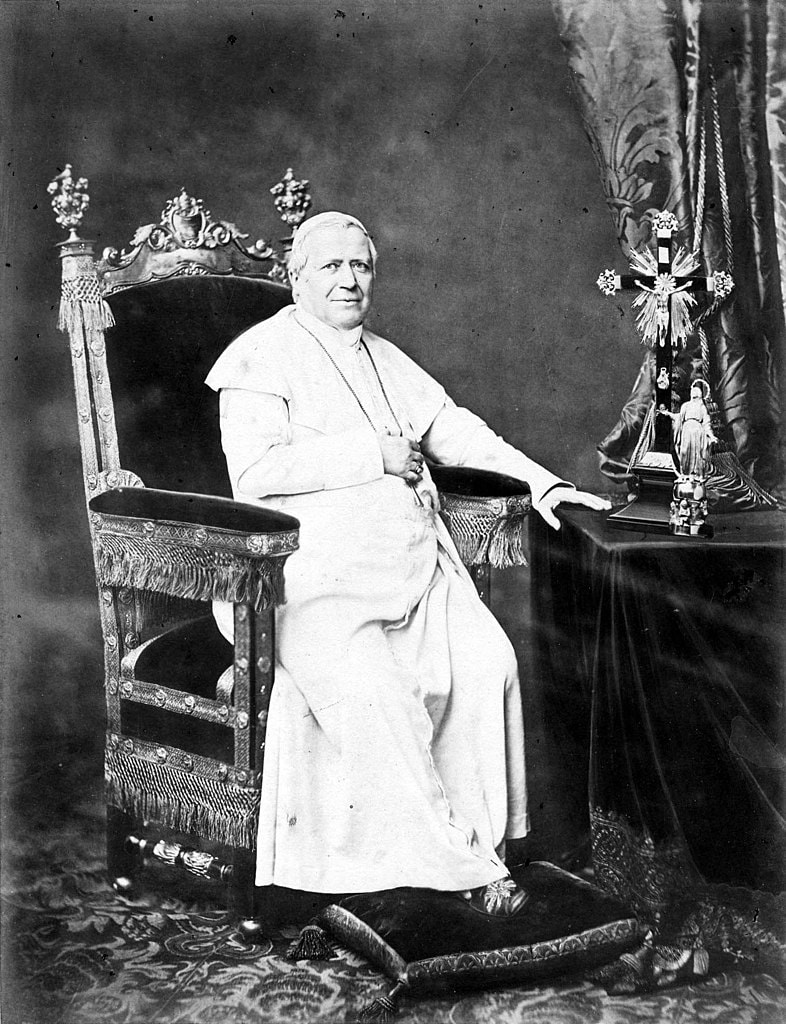
The anti-theocratic dimension of the republican struggle was of particular significance. The Papal States were not merely one absolutist regime among many; they represented a distinctive fusion of spiritual and temporal authority that the republicans regarded as doubly illegitimate. The Pope claimed to govern not by the consent of his subjects but by divine commission; his government was administered largely by clerics; and his foreign policy was determined by religious considerations that had nothing to do with the welfare of his territorial subjects. The Papal States were, in the republican analysis, a theocracy; and their existence at the geographical heart of Italy constituted the single greatest obstacle to national unification.
Republican anticlericalism must be carefully distinguished from irreligion. Mazzini, as we have seen, was a deeply spiritual thinker who regarded atheism as a moral and political error. Garibaldi, though more bluntly anti-Catholic in his rhetoric, framed his opposition in terms of the Church’s political corruption rather than theological objection. The republican critique was directed not at Christianity but at the institutional Church’s alliance with reactionary power — its opposition to constitutional government, freedom of the press, religious toleration, and national self-determination. Republicans demanded the separation of spiritual from temporal authority: the Pope might remain the head of the Catholic faith, but he must cease to be a territorial sovereign.
This conviction found its most dramatic expression in Garibaldi’s rallying cry of “Roma o Morte” (“Rome or Death”), which framed the capture of Rome as an existential necessity for the Italian nation. Pius IX responded with excommunication of all who participated in the assault on papal sovereignty. After 1870, when Italian troops finally occupied Rome and the Pope’s temporal power was definitively abolished, Pius IX rejected the Italian government’s Law of Guarantees, that offered the papacy legal protections and financial compensation, and declared himself the “Prisoner in the Vatican,” a posture maintained by his successors until the Lateran Treaty of 1929.
THE EUROPEAN CONTEXT
The Italian republican struggle against theocracy was part of a broader European conflict between secular-liberal ideas and the Catholic-monarchist alliance. Pius IX’s Syllabus of Errors (1864), which condemned liberalism, rationalism, religious indifferentism, and the separation of Church and State, represented the papacy’s most comprehensive rejection of the modern political order. Ultramontanism or the assertion of absolute papal authority in matters both spiritual and political was the ecclesiastical counterpart of monarchical absolutism. Against this combination, the Italian republicans deployed the intellectual weapons of Enlightenment popular sovereignty, Renaissance civic humanism, and French Revolutionary constitutionalism, fused with Mazzini’s distinctive vision of a civil religion of nationalist duty.
A “THIRD REPUBLIC” OF THE PEOPLE
PHILOSOPHICAL AND SPIRITUAL VISION
The philosophical and spiritual ideas that animated the Italian republican movement may be synthesized around several interconnected propositions. The first and most fundamental was that republican government was the only political form consonant with divine moral law and human dignity. Mazzini’s God was a God of progress, association, and liberty — a God whose purposes were fulfilled not through the submission of subjects to kings but through the free self-governance of equal citizens. Monarchy, by interposing hereditary privilege between God and the people, violated the moral order of the universe. The republic was therefore not merely a political preference but a theological imperative.
The second proposition was that popular sovereignty constituted a sacred trust, not a mere political arrangement. When the people governed themselves, they exercised a faculty implanted in them by God: the capacity for moral self-determination. Self-governance was not license but responsibility; it demanded the cultivation of civic virtue, the acceptance of sacrifice, and the subordination of private interest to the common good. In this sense, Mazzini’s republicanism was profoundly conservative, and not in the partisan sense, but in its insistence that freedom was inseparable from moral discipline.
The third proposition was that the nation was a divinely ordained instrument for human progress and moral education. Each people possessed a distinctive character, a unique mission to contribute to the civilization of humanity. The fragmentation of Italy into petty states ruled by foreign princes and domestic tyrants was not merely a political misfortune; it was a sin against divine providence, a frustration of God’s plan for the Italian people. National unification was therefore a religious duty.

THE THIRD ROME IN THE PHASES OF ROME
Mazzini’s vision of a “Third Rome” crystallized these ideas into a single powerful image. The first Rome was the Rome of the Caesars, and it had given the world the idea of universal empire, of a single political order embracing all peoples. The second Rome, the Rome of the Popes, had given the world the idea of universal spiritual authority, of a single faith uniting all Christendom. Both had been necessary stages in human development, but both were now exhausted. The Third Rome, or the Rome of the People would transcend both empire and theocracy, inaugurating an epoch of free nations federated in brotherhood, each contributing its distinctive genius to the progress of humanity. This was not merely a political program; it was a prophecy, a vision of historical destiny that invested the Italian republican cause with the grandeur of a sacred mission.
DUTY, SACRIFICE AND BROTHERHOOD
As has been introduced, the moral foundations of this vision rested upon the ethic of duty, sacrifice, and brotherhood. Where kings demanded obedience and popes demanded submission, the republic demanded something more exacting: the willing assumption of responsibility for the common good. Republican citizenship, in Mazzini’s conception, was not a passive status but an active vocation. The citizen was called to educate the ignorant, defend the oppressed, sacrifice personal comfort for national liberation, and subordinate selfish interest to collective well-being. This ethic of duty distinguished Mazzini’s republicanism from the rights-based liberalism of the Anglo-French tradition and gave it a distinctively communitarian and spiritual character.
The republicans framed their cause as one of moral regeneration: not the destruction of religion but its purification; not the rejection of authority but its relocation from kings and popes to the sovereign people; not atheism but the separation of spiritual from temporal power. They sought to regenerate and express a rich intellectual heritage — the civic virtue celebrated by the Roman Republic, the civic humanism of Renaissance Florence, the anti-theocratic arguments of Enlightenment thinkers such as Pietro Giannone, and the revolutionary constitutionalism of 1789 — and fused these elements into a distinctive political theology that was at once modern and rooted in Italian tradition.
LEGACY OF ITALIAN REPUBLICANISM IN THE RISORGIMENTO
TENSION BETWEEN IDEAL AND REALITY
The story of Italian republicanism in the Risorgimento is, in one sense, a story of failure unfortunately or, more precisely, of a triumph so deeply compromised as to constitute, for the republicans themselves, a bitter disappointment. Italy was unified in 1861, but as a constitutional monarchy under the House of Savoy, not as the republic that Mazzini had spent his life advocating.
The unification was achieved not by popular insurrection and moral awakening — the methods Mazzini prescribed — but by Cavour’s diplomatic maneuvering, Piedmontese military power, and the alliance with Napoleon III. The new Kingdom of Italy was a liberal state, governed by a constitution and a parliament, but it was also a monarchy, and a monarchy that incorporated the very compromises Mazzini had spent his career denouncing: a restricted franchise, an aristocratic Senate, and a sovereign who retained significant prerogatives in foreign policy and military affairs.
Mazzini himself refused to accept the settlement. He never entered the Italian Parliament, declined to swear an oath to the monarchy, and spent his final years in exile and semi-clandestine existence, continuing to agitate for the republic he believed Italy must eventually become. He died in Pisa in March 1872, under an assumed name, just months after the capture of Rome had fulfilled one part of his dream — the end of papal temporal power, while leaving the other part (the republic) unrealized. His funeral became a massive public demonstration of the reverence in which he was held, even by an Italy that had not adopted his political program.
THE LONG AFTERMATH
Mazzinian republicanism survived as a political tradition within unified Italy, though it was increasingly marginalized by the rise of mass politics, socialism, and the transformative forces of industrialization. The Italian Republican Party (Partito Repubblicano Italiano, or PRI), founded in 1895, preserved the Mazzinian legacy but remained a minority force. Under Fascism, the republican tradition was suppressed along with all other forms of democratic politics, and many republicans joined the anti-Fascist resistance.
ITALIAN MONARCHY IS ABOLISHED
The vindication of Mazzini’s vision came at last on 2 June 1946, when the Italian people, voting in a national referendum, chose to abolish the monarchy and establish a republic. The margin was narrow, the country divided, and the new Italian Republic owed more to the catastrophe of Fascism and the Second World War than to the direct influence of Mazzinian ideology. Yet the symbolic resonance was profound. The Italian Republic, enshrined in the Constitution of 1948, realized the aspiration that Mazzini, the Carbonari, Garibaldi, and the martyrs of 1820, 1831, and 1849 had fought and died for: a sovereign nation governed by its people, free from the twin tyrannies of hereditary monarchy and theocratic authority.
ENDURING LEGACY OF MAZZINI
The enduring significance of the Italian republican tradition lies not only in its political outcomes but in its philosophical and moral vision. Mazzini offered a conception of politics as moral vocation and a vision in which self-governance was inseparable from self-improvement, in which the nation was not an idol but an instrument of human progress, and in which duty to the common good took precedence over the assertion of individual rights. His was a moral, duty-based alternative to both monarchy and theocracy that shaped the radical edge of the Risorgimento and left a lasting imprint on European republican thought.
In an age when the relationship between religion and politics, between nationalism and democracy, and between individual rights and collective duty remains as contested as ever, the ideas of Mazzini and the struggles of the Carbonari retain a striking and instructive relevance. Their vision of a republic grounded not in mere procedural democracy but in moral conviction and civic duty. This is the vision of a republic in which, as Mazzini would have it, God and the People are reconciled through the free exercise of human conscience and continues to challenge and inspire the people.
RECOMMENDED READINGS
- Giuseppe Garibaldi, Autobiography of Giuseppe Garibaldi, Translated by A, Werner, 3 vols, London: Walter Smith and Innes, 1889.
- Giuseppe Mazzini, The Duties of Man and Other Essays, Translated by Ella Noyes, London: J,M, Dent and Sons, 1907.
- Giuseppe Mazzini, “Istruzione generale per gli affratellati nella Giovine Italia” [General Instructions for the Members of Young Italy], 1831, In Scritti editi ed inediti di Giuseppe Mazzini, vol, 2, Imola: Cooperativa Tipografico-Editrice Paolo Galeati, 1907.
- Giuseppe Mazzini, Life and Writings of Joseph Mazzini, 6 vols, London: Smith, Elder and Co,, 1864-1870.
- Giuseppe Mazzini, “To the Italians,” In Scritti editi ed inediti di Giuseppe Mazzini, Edizione nazionale, 106 vols, Imola: Cooperativa Tipografico-Editrice Paolo Galeati, 1906-1943.
- Silvio Pellico, Le mie prigioni [My Prisons], Turin, 1832, Translated by Thomas Roscoe as My Prisons: Memoirs of Silvio Pellico, London: Henry Colburn, 1833.
- Pius IX, Syllabus Errorum [Syllabus of Errors], Rome: Vatican, 1864.
- Stringfellow Barr, Mazzini: Portrait of an Exile, New York: Henry Holt and Company, 1935.
- Derek Beales and Eugenio F, Biagini, The Risorgimento and the Unification of Italy, 2nd ed, London: Routledge, 2002.
- John A, Davis, ed, Italy in the Nineteenth Century, 1796-1900, Oxford: Oxford University Press, 2000.
- Christopher Duggan, The Force of Destiny: A History of Italy Since 1796, Boston: Houghton Mifflin, 2008.
- E,E,Y, Hales, Mazzini and the Secret Societies: The Making of a Myth, London: Eyre and Spottiswoode, 1956.
- Harry Hearder, Italy in the Age of the Risorgimento, 1790-1870, London: Longman, 1983,
- Maurizio Isabella, Risorgimento in Exile: Italian Émigrés and the Liberal International in the Post-Napoleonic Era, Oxford: Oxford University Press, 2009.
- Denis Mack Smith, Mazzini, New Haven: Yale University Press, 1994.
- Denis Mack Smith, The Making of Italy, 1796-1870, New York: Harper and Row, 1968,
- R, John Rath, “The Carbonari: Their Origins, Initiation Rites, and Aims,” American Historical Review 69, no, 2 (January 1964): 353-370.
- Stefano Recchia and Nadia Urbinati, eds, A Cosmopolitanism of Nations: Giuseppe Mazzini’s Writings on Democracy, Nation Building, and International Relations, Princeton: Princeton University Press, 2009.
- Lucy Riall, Garibaldi: Invention of a Hero, New Haven: Yale University Press, 2007,
- Lucy Riall, The Italian Risorgimento: State, Society, and National Unification, London: Routledge, 1994.
- Roland Sarti, Mazzini: A Life for the Religion of Politics, Westport, CT: Praeger, 1997,
- Denis Mack Smith, Victor Emanuel, Cavour, and the Risorgimento, London: Oxford University Press, 1971.
- Margaret C.W. Wicks, The Italian Exiles in London, 1816-1848, Manchester: Manchester University Press, 1937.


 The American Minervan