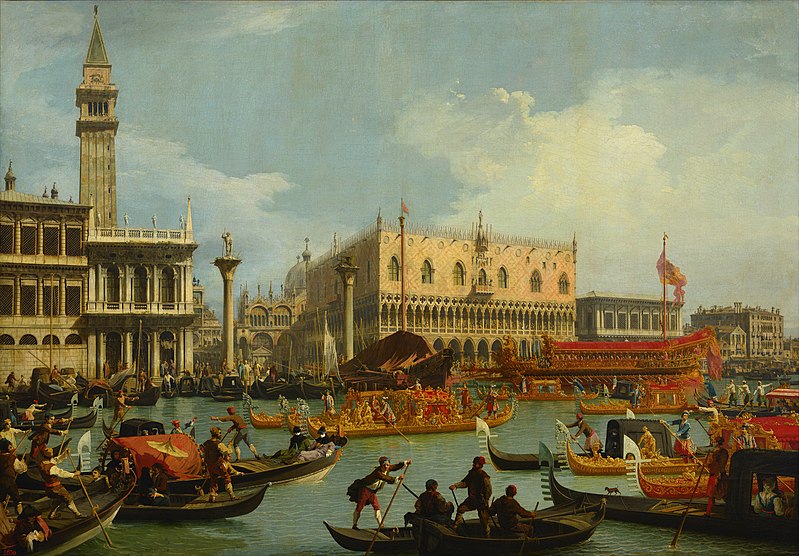
Advocating a matured Republicanism for a new generation towards a post-partisan, post-Trump U.S. future, and how factionalism in America is starving citizens of real political ideas. The Democratic Party has not put out their full autopsy report on Kamala Harris defeat in the 2024 Presidential Election; and besides the obvious issue of her position on Israel, it is likely because their party cannot “market” in relation to these facts.
EROSION OF POLITICAL VOCABULARY AND HATRED FOR THE WORD ‘REPUBLICAN’
Americans tend to dislike the word republican or republicanism (in the classical sense) because the term has been absorbed by a modern political party, overshadowing its older meaning. This creates confusion, weakens civic understanding, and makes Americans avoid a foundational concept of their own political system. The dislike and automatic reaction, or assumptions are psychological, but we do not have time for people’s psychological limitations. The limitations must be broken through, and the way to break through this is to present REPUBLICANISM as what it actually is, an inherited tradition. The U.S. Constitution explicitly calls for a republican government (Article IV, Section 4), not pure democracy, to balance popular input with safeguards against both mob rule and oligarchy. Federalist 10 and 51 diagnose factions and ambition counteracting ambition directly.
The erosion of that conceptual vocabulary leaves people cycling between “democracy” as sacred slogan and frustration when outcomes feel rigged or chaotic. I discussed this sacralization of democracy recently and the imbalance it is contributing to. This has led to the shallowing of public vocabulary around “democracy,” the atrophy of civic education, and the reduction of politics to tribal signaling and elite capture.
On stage, none of the current political parties would be capable of competing against one who truly embodied it, calmly, moderately, and maturely. One who did not look down upon the People as incapable of understanding it but raised their head up. The historical context is rich and puts into perspective every division in this country that underpins the choices made during Elections. In the U.S., “Republican” is now a partisan identity, not a philosophy.
Though the U.S. Constitution is built on classical republicanism, not pure democracy, its classical republican ideas are not taught explicitly; and at the same time, Republican Party thinkers abuse both the People’s lack of knowledge of this and the ideas, inverting their meanings (e.g., “the Rule of Law”) to support authoritarian approaches to the power of their decisions in office. Americans grow up thinking “democracy” is the only civic ideal, and “republicanism” sounds archaic, old-fashioned or partisan. But this is not true.
A republic survives only if each generation chooses to become citizens rather than consumers, participants rather than spectators, guardians rather than beneficiaries. Modern consumer society encourages perpetual adolescence, private comfort, avoidance of responsibility, retreat into entertainment and dependence on institutions (our parents, the planned economy, etc). The revival of republicanism in general challenges this, while the word “democracy” has been culturally redefined to mean personal license, or what I term, an “antinomian‑libertinism.” In the modern popular democracy: obligations mean oppression, civic expectations mean authoritarian; shared identity leads to exclusion; public virtue means moralizing (preachiness), limits on wealth leads to envy and limits on behavior mean tyranny. Popular “democratic” freedom is freedom from constraint, which rejects civic discipline, but republican freedom means freedom from domination, which requires civic discipline. So, the two in modern terms become incompatible through redefinitions, and contribute to conflict.
THE SACRILIZATION OF “DEMOCRACY” AND ITS MODERN REDEFINITION
The term “republic” has been most abused and used to cover for U.S. imperial domination, but so has democracy, as demonstrated. It is the term the man in the street could not intellectually and philosophically define. It has become a term equivalent to an excuse for an antinomian-libertinian lifestyle mixed with the right to vote. It demands nothing. The politician and the media say the word “democracy” from sun-up to sun-down and abuse the people rights in the next breath. It has also lost its meaning to support mass civil uprising of the most disparate, chaotic energy with no true, designated aim, except to leave businesses and cities burned to the ground if need be.
The term “democracy” has become an excuse to unleash all fury on “the system.” It is not concentrated, or focused, nor is it organized and strategic. “Democracy” today functions as applause light for everything from elections to judicial outcomes to protest legitimacy, while excusing poor incentives or majoritarian excesses. At the same time, no serious republicanism dispenses with popular sovereignty or consent, but it channels and constrains it. The inversion of the meaning of “Rule of Law” in the rhetoric of, e.g., the Republican Party is a power play, alongside the use of the word “democracy” licensing destruction, illustrating semantic decay and institutional drift.
So, this idea that ‘democracy’ is this pristine term to express all of our political hopes and aspirations is an illusion. The older vocabulary of republicanism has faded from public consciousness, and so with it, significant depths of its philosophical, historical and symbolic expression. The history of REPUBLICANISM in Italy, not even Venetian republicanism, but right before and during Italy’s Unification period recovers its ancient moral meaning and demonstrates that this philosophy is the best and only philosophy to enlighten citizens, and the best way to restore the republic and civic education through human-to-human propagation, rather than concentrating all notions and validity of radical tradition into Marxism (and Socialist-adjacent variants). This has provided a boon to Conservatism and the “radical Right.” These are predictable, unnecessary and compromised; and “both sides” take us into hundreds of years of conflict, de-stabilization, new civil wars, balkanization fantasies (on the right) and strategic maneuvering.
A small fraction of those years spent fighting in a predictable game of Tables and Chairs for other visions could have been spent collectively restoring the philosophical, ethical and spiritual foundations in an increasingly technologically developed society.
DESPERATION TO COPY OR OUT-COMPETE CHINA REVEAL DEPTHS OF LOST IDENTITY & REPUBLICAN TRADITION

We do not have to copy China, at all. Our model is not a failure. We are conflicted within.
Modern political science (e.g., studies on social trust, institutional decay, elite overproduction) echoes many of our present-day concerns without needing Marxist framing. Pre-Marx ideas of commonweal, mixed constitution, and anti-corruption do not require adaptation through dialectical materialism or class struggle narratives, which often imported their own rigidities and failures.
NOT A DEMOCRATIC SOCIALIST
I want to offer to the Americans a competitor to the modern political Right, modern Left, the Democratic Party elite gatekeepers, even the ideas of Michael Harrington who believed that Marx’s ideas had to be adapted into democracy. Marx is not needed. Citizens are making it difficult for themselves. Attachment to Socialist and Communist frameworks make it easier to denounce or reject you politically. Our political system needs competition, against consolidation of lobby and oligarchic powers, so oligarchic consolidation, authoritarian central planning, militarized policing, surveillance culture, expanded executive authority, concentrated corporate capitalism and state socialism should be rejected. Socialism’s visibility on social media as a response to these structural and capitalist failures makes Socialism rhetorically sticky, but it historically correlates with reduced innovation, authoritarian tendencies, and new elite formations — problems that republicanism diagnoses.
It is not free from the structural incentives of government. Powerful surveillance technologies controlled by private billionaires, feels like it’s outpacing democratic consent, because it is. However, it is not “the system” rewarding the expansion of surveillance faster than democratic processes can regulate it. It is elected officials and security agencies rewarding this expansion, and specific bureaucratic actors benefit from it, while private companies reward surveillance (popular during crisis), creating a loop. You as young citizens still have control of this, except it ought to be approached strategically through new movements, not one concentrated political force. Many Americans are currently aware of Mamdani and the Democratic Socialists. I am not a Democratic Socialist, clearly.
But I do not “punch on them.” I simply think the age absolutely necessitates an intentional revival of republicanism, which we do not have. We have political factions with elements from it, fighting for other vision, but not republicanism fully, as its champion.
ANTI-DOMINATION IN REPUBLICAN THEORY AND KARP’S REPUBLIC
I can highlight Alex Karp’s use of the term “technological republic,” but here is the problem. He is a billionaire claiming to protect the People and hates conspiracies about him. He has higher credentials than me, e.g., but his view is an inversion. There is the concept of republican liberty, in which freedom means not being dominated by anyone, including the rich.
A republican thinker (in this context, the Anglo‑American neo‑republican idea) is anti-domination and believes that a republic collapses when wealth becomes too concentrated in a few hands, so republicanism supports broad property ownership, land reform in agrarian societies, limits on oligarchic accumulation, anti‑monopoly laws, and civic equality through economic independence, not redistributionism. In Mazzinite republicanism, anti-domination is about nations and peoples, not just individuals. This is anti‑domination at the national level.
In this republican idea, no one (king, aristocrat, empire, oligarchy, or foreign power) should rule a people without their active, moral, collective participation — so citizens must actively participate in a moral, collective self‑government. Anti-domination in republicanism is not just about one person controlling another, nor can it be inverted to mean, “do as you please.” Domination here means, a people controlled by a monarch, foreign empire, citizens controlled by elites without civic participation and a society controlled by material interests instead of moral purpose. The latter describes our consumerist economy and culture, which erodes from republican standpoint, collective self-rule. It’s like a pig being fed scraps on a trail.

In a Republic, anti-domination requires that no elite rules over the public, shared civic responsibility, no domination of private wealth in civic life, a unified national community, moral education and active citizenship — things the modern man seems to resist in preference of retreating into a materialist-consumerist life protected by the Empire. When citizens retreat into private comfort, elites can claim they are not dominating anyone because “the people chose this.”
The revival of REPUBLICANISM is about cultivating and educating citizens and rebuilding the civic foundations that make a republic capable of resisting domination, whether by empires, corporations, or elites. This is its rooted STOICISM. This may demand a time for the younger generations to mature early and step into the political world, not the business world or the technological. Move into the avenues of political power in droves, and organize against the generation of political, business and tech class that got us to this point. Your grandparents and parents in political power will not live forever, nor will the oligarchs. Will you merely take their place and office, and maintain the cycle?
Good thing is, ordinary citizens are rejecting the large proliferation of Data Centers, revealing that the politicians they elect do not listen to them. It is good, that many people reject a future, totalitarian, surveillance state as a threat to democratic processes, but we ignore, e.g., the way Karp is appropriating ‘the Republic.’ There is no one to defend “Republicanism” against his meaning. So, you see why you need to reclaim the original meaning of the government. A CONSTITUTIONAL REPUBLICANISM protects (or shields) democracy; it is not a form of Democracy. Without the legacies of both, and mainly the prominence of the republican tradition, you cannot defend against abusive powers, and our government slides and decays quickly into something else and arguably has already.
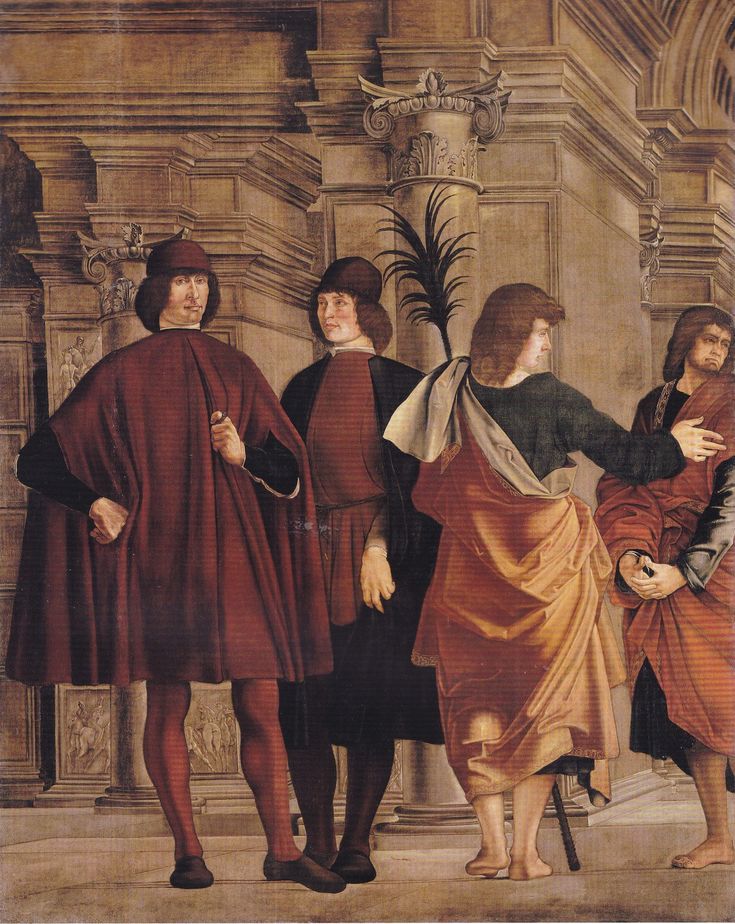
So, as can be seen, the vision I advocate is steeped in the foundations, not in socialist theory or Marx’s writings. The lineage of republicanism runs from Rome (Cicero, Livy, the Gracchi era tensions), through Italian city-states and Machiavelli’s Discourses (emphasizing renewal through return to principles), English commonwealthmen, the American Founders, and nineteenth-century figures. Italy’s Risorgimento invoked republican and liberal national themes under unification struggles with Mazzini’s emphasis on duty and moral education, for instance. These are not archaic and address perennial human patterns visible in every era of decadence or overreach. Both good-minded and serious Democrats and Republicans of their respective parties or “factions” should indeed be inspired and influenced by a revived propagation, as a corrective measure to ignorance and corruption.
RESTORATION OF PHILOSOPHICAL AND ECONOMIC FOUNDATIONS
The mission should be to restore the republic’s economic foundations and avoid guilt by association with twentieth-century failures and the dross of ideological attachment to them. We ought to show how smallholder/cooperative models in various contexts outperform pure state models in resilience and human-scale flourishing and be honest in addressing the root cause of inequality and instability and move from increasing centralization. American System thinkers predated and outperformed Marxist predictions in building a commercial republic, and it is important to understand that Republican-compatible economics requires more maturity internally and in policy, hence in character, law, and diffusion to sustain the republic. The economy serves the polity, not vice versa. This is the motto of classical REPUBLICANISM.
Teaching you to ground your political vision in inherited American tradition, is often in our political age, misconstrued as leading to defenses of “power structures” of imperialism, colonialism, etc. It is actually the standard approach to renewal in most functioning polities called renovatio (or return to principles). Classical republicanism was never purely “White” or Anglo anyway. It drew from Rome, Greece, Renaissance Italy, Enlightenment Scotland and England, and was applied widely.
The common good should outweigh factional loyalty, and I believe in moving into a more post-partisan era (rare historically), and this work can be done within and outside of government.
DEMAND EXISTS FOR REVIVAL OF CIVIC REPUBLICANISM
In fact, the ideas that have been expressed here are on the ascendant. Polls show broad parental support (across ethnic lines) for teaching founding principles, Declaration, Constitution (Nationwide Parents’ Poll on Civic Education). Even, new state-level institutes (Arizona, Florida, Texas, Tennessee) are pushing back with viewpoint diversity and historical depth (Kody W. Cooper, A Renaissance of Civic Education and Civic Engagement). One of my ideas is to get local groups going. The interest is there, and should be tapped into, but it has to approach it as a means towards national renewal, outside of the controlled, manipulated and vulnerable space of partisan politics. This can vary state to state, but the main goal would be renewal of civic education and civic republicanism as a living inherited tradition, as living exemplars to the People, not an archaic one, so this is a mission in recovery for all citizens’ benefit, not nostalgia or exclusion.
Apathy to my project or rejection is real, but latent demand exists due to institutional distrust. Can anyone deny this? At the same time grounding a new political vision in inherited American tradition has to compete against various forces and narratives, not one side.
FULL REPUBLICAN EXPRESSION MEANS MATURITY TO HANDLE THE HISTORICAL FACTS

Presenting the inherited tradition (Declaration, Constitution, republican political economy, civic virtue) as “white supremacy, imperialism, colonialism” became a rhetorical move to emphasize and elevate the historical significance of 1619 against 1776, which marks the arrival of the first recorded Africans in the English colony of Virginia, and beginning of what would become 246 years of race‑based chattel slavery in the United States. This framing treats slavery and racial exclusions as the essence of the history rather than mere contradictions to universalist principles (“all men created equal”) that subsequent generations fought to fulfill.
In a great way, our maturity as a nation depends on how we incorporate the historical facts, since 1619 was seen as a foundational moment in American history because it set in motion the legal, economic, and racial systems that shaped the nation.
But this why I began to include the history of Italian Republicanism and critiques from European proponents of Republicanism looking from the outside at the slaveholding Republic, given that the twentieth-century World War, the Fascists and Nazis, not 1619, is the high comparison (and reference) point for many Americans. Revealing the birth of anti-revolutionary and anti-republican conspiracy in Europe, and its “poisoning of the well” in the birth of the paranoia in American politics itself from this leads to so much insight into American political habits.
Many would say, e.g., that “America has always been Fascist,” and the history of this inherited tradition is just the history of “old white men,” and they are going to write a new history once the failures of the capitalist system agitate the public into their romanticized Cultural Revolution as it took place in China. Do you really want what happened during China’s Cultural Revolution, or during and after the Partition of India to happen in this country? The idea is the flip side of the political Right’s salivating desire for a Civil War against the “demonic Left.” Then, we say, that only “the oligarchy” is responsible for this national decay! It seems that the rich are not the only people responsible for this decay.
We bear a great brunt of responsibility also for the fate of our civilization, and cannot merely blame it on a particular race, class and mechanistic operation of a vague thing like “the system.” We are “the system.”
TOWARDS RECONSTRUCTIVE POST-PARTISAN ERA
The Founders included anti-slavery voices, the Constitution enabled eventual abolition and Lincoln and Douglass rejected white-supremacist interpretations of the founding in favor of its aspirational core. The core is there, and the rest depends on human action, not machines. Actual history is messy being both progress and hypocrisy, but the effort to reduce this history to an “original sin” makes tradition radioactive, opening the idea of alternatives (often socialist-adjacent) as the moral default. So, the root of this habit in the education of, e.g., the youth of the country is that emphasis on critical deconstruction (power, identity, oppression narratives rooted in variants of critical theory, postcolonialism, and critical pedagogy) is laid over affirmative reconstruction (or reinvigoration) of institutions, traditions, or founding principles. You cannot “reinvigorate” the sin. Students learn to unpack “how things are constructed” through lenses of systemic injustice, often leaving nihilism or radical overhaul (“burn it down”) as the implied path forward, since the tradition itself is framed as irredeemably tainted.
This produces habits, which have become observable and consequential: perpetual critique without balanced engagement with classical republicanism, natural rights, mixed government, or the positive achievements and self-correcting mechanisms in the American experiment (abolitionism, amendments, civil rights advances grounded in founding ideals). Civic knowledge gaps are widespread, as many undergraduates cannot identify basic constitutional facts (Most college students ignorant of American democracy, Survey Finds).
SALUS REIPUBLICAE was the core principle of classical republicanism, reminding us that every citizen, of every class is the salvation of the Republic.

 The American Minervan
Leave a comment