COMMENTARY ON THE UNITED FRONT AGAINST THEOCRATIC MONARCHISM
Sam Aronow explains the history of Jewish participation in the Italian Risorgimento, framing it as intertwined with the republican, liberal, and nationalist struggles against absolutism, foreign domination (Austrian and Bourbon), and papal temporal power.
33,000 Italian Jews (mostly northern, post-Napoleonic) faced varying restrictions (ghettos, badges, forced sermons in Papal States) but actively joined secret societies and revolutions as emancipation became synonymous with Italian unification.
Hundreds of Jews joined these republican networks. Mazzini (from exile) explicitly praised Jewish emancipation and formed a close friendship with Sarina Levi Nathan (Jewish exile whose London home became Young Italy headquarters). They shared visions of republicanism, women’s rights, and a “Third Rome” of the people.
Jews were emancipated in several states, elected to assemblies, and enlisted in armies. The 1858 Edgardo Mortara kidnapping (Jewish boy seized for baptism by papal authorities) galvanized international outrage and unified nationalists and nationalist Jews against Pius IX.
The history of the Wars of Independence and 1870 capture of Rome is also discussed. Jewish volunteers fought under Garibaldi Redshirts funded partly by Nathan’s inheritance, and in Piedmontese forces. Jewish captain Giacomo Segre had also ordered the artillery shelling that ended papal rule.
The Montefiore diaries and Kertzer’s kidnapping of Edgardo Mortara shows how Jewish emancipation symbolized liberal civic nationalism over theocratic monarchism.
With this, I segway into the historical link of this history to Fascism. Italian Jews’ disproportionate, fervent support for the Risorgimento, fighting in 1859-70 wars, integrating as “one of Italy’s tribes,” created deep patriotic assimilationism. This carried into the early Fascist era (1922-1938), when many Jews viewed Fascism as a continuation of Risorgimento nationalism, as anti-liberal, unifying, and modern.
230 Italian Jews participated in the 1922 March on Rome, and the 1938 census recorded 590 Jewish “old fighters” who joined the National Fascist Party (PNF) before 1922 (Alex Hinston, Mussolini’s Jews: How Il Duce bewitched Italy’s Jewish communities). This includes individuals like Margherita Sarfatti (Jewish intellectual, Mussolini’s mistress and biographer Dux); Ettore Ovazza (founder of pro-Fascist Jewish paper La Nostra Bandiera); Aldo Finzi (early interior minister); Renzo Ravenna (Fascist podestà of Ferrara and friend of Italo Balbo); and Guido Jung. Mussolini had initially rejected antisemitism (“Italy knows no Jewish Question”), and Jews held party, military, and advisory roles until the declared 1938 Racial Laws imposed under Nazi pressure, after which support collapsed and many joined the Resistance. There is actually so much depth that goes into this conversation, in relation to why the Italian Fascists eventually adopted theories they had been resisting.
I think Sam Aronow did well emphasizing Jews as patriotic “founding brothers” of modern Italy fighting for Italian interests as a unique context. Risorgimento republicanism produced hyper-patriotic Italian Jews who initially saw Fascism as defending that legacy against socialism and liberalism, until it betrayed them. Pre-Herzl Zionist precursors, e.g., Moses Hess’s 1862 Rome and Jerusalem were inspired by Mazzini’s Risorgimento model of romantic nationalism, popular sovereignty, and national regeneration as a template for Jewish self-determination, and Hess blended it with socialism. Benedetto Musolino, a Risorgimento figure is sometimes called a proto-Zionist. Later Revisionist Zionists like Vladimir Jabotinsky idolized Mazzini and Garibaldi as paradigms of heroic nationalism and was called the “Jewish Garibaldi.”
Herzl (founder of political Zionism) visited Rome in 1904 seeking Italian support and met Jewish officials like Giacomo Malvano but focused on broader diplomacy. Italian Jews remained mostly assimilationist until 1938. Some Italian rabbis later framed Zionism as a “Jewish Risorgimento.” Sam Aronow shows Italian Jews prioritizing Italian nationalism, which delayed widespread Italian Jewish Zionism.
There is sufficient writings to argue that Mazzini (died in 1872) would have been deeply critical of Fascism (founded 1919) and Mussolini (born 1883), and would have cautioned Gentile, seeing Fascism as a profound betrayal of republican principles despite rhetorical similarities.
Fascism exploited the shared stress on “Thought and Action,” national duty over individual rights, moral regeneration, youth, anti-materialism, and turned Mazzini’s “religion of humanity” into a “religion of the nation.” Both also shared a criticism of socialism, class conflict, and pure liberalism, and Fascist thinkers claimed Mazzini as precursor for the “totalitarian” spiritual state.
The reality also demonstrates fundamental between Mazzini’s core philosophy and Fascism.
REPUBLICANISM VS AUTHORITARIAN MONARCHY
Mazzini rejected even constitutional monarchy as “hereditary lie” and dynastic privilege. He boycotted the 1861 Kingdom of Italy and refused oaths to Savoy. Fascism retained the King (Victor Emmanuel III appointed Mussolini) and compromised with the monarchy.
Anti-papal theocracy:
Mazzini fought papal temporal power (1849 Roman Republic). Fascism signed the 1929 Lateran Pacts, restoring Church influence—Mazzini would see this as regression to the hecatomb of creeds he opposed.
DEMOCRATIC EDUCATION VS DICTATORSHIP
Mazzini emphasized awakening the masses through duty, sacrifice, and moral education for a republican federation of free nations. Fascism imposed top-down totalitarian control, suppressed opposition, and glorified the Leader and State over the people.
COSMOPOLITAN INTERNATIONALISM
Mazzini saw nations as steps toward humanity’s brotherhood. Fascist imperialism and aggressive expansion (which he might have tolerated in moderation for unification) became ends in themselves.
ANTI-AUTHORITARIANISM
His republicanism was revolutionary but not despotic, and critics noted potential for “popular theocracy,” but he rejected pure coercion. Fascism’s suppression of liberties, press, and parties would have appalled him.
Mazzini would view Fascism as a corrupted, authoritarian perversion of Risorgimento nationalism, much like he criticized Piedmontese monarchists for hijacking the movement for Unification. Fascism would have been seen as a serious betrayal of republicanism. Fascism “twisted” Mazzinian rhetoric into something he would likely denounce as despotism.
So, given this, we have ways to critique other movements and ideologies that have since post-Risorgimento era, claimed Mazzini. Sam Aronow enriches our republican history by showing how Jews embodied and advanced those ideals, only for later twentieth-century developments to both continue and tragically undermine them.
CONNECTION OF THE JUDEO-MASONIC CONSPIRACY TO JEWS INVOLVED IN THE RISORGIMENTO
Now, the Judeo-Masonic conspiracy claims are not history. They allege a secret Jewish-led cabal (often through Freemasonry) orchestrated the Risorgimento (Italian unification) and early Fascism to destroy Christian monarchies, the Papacy, and traditional order for global Jewish domination. These theories as presented before, originated in post-French Revolution Catholic reaction (e.g., Augustin Barruel’s writings, the forged Protocols of the Elders of Zion), and were amplified by nineteenth-century Jesuit polemicists like Antonio Bresciani. Bresciani depicted the Risorgimento as a “satanic” Masonic-Jewish plot and was later adopted and adapted by Nazis and late Fascists. Remember this, when you are adopting these theories, believing them to be harmless, since the fact that these conspiracies are deliberately constructed pieces of propaganda are being used to defend present-day internet censorship. The historical Jewish involvement in both the movements of Italian Unification and Fascism, documented through memoirs, military records, parliamentary debates, and contemporary newspapers is real, but proves exactly the opposite of conspiracy.
This is the history of patriotic assimilation by a tiny, long-oppressed minority of an extremely small fraction of the population of Italian Jews in the nineteenth to twentieth centuries seeking civil equality in a secular nation-state. Mazzini understood this in his defense of universal civil rights and opposition to religious discrimination. In this Italy as a secular republic, the state should not impose religious identity or restrict rights based on faith. Interests aligned, because unification promised equal citizenship, the Papal States imposed legal disabilities on Jews and liberal nationalism offered social mobility.
Jewish role in the Risorgimento was open patriotism, as Italian Jews lived under varying restrictions (ghettos, badges, forced sermons) especially in the Papal States and absolutist regimes. Emancipation was explicitly tied to liberal-nationalist unification. They supported Mazzini’s Young Italy, Garibaldi’s Redshirts, and Piedmontese forces because this promised full citizenship, not because of a “Judeo-Masonic” master plan.
Taking the examples of funding and participation Sam Aronow provides, we learn that Sara Levi Nathan (Jewish widow) hosted Mazzini in London and funded the Expedition of the Thousand, which was Garibaldi’s 1860 campaign that overthrew the Bourbons. Jewish families like the Todros of Turin financed Mazzinian incursions. Hundreds of Jews fought in Garibaldi’s militias and 1848-49 revolutions, and Jewish officers like Giacomo Segre gave the order to shell papal forces in 1870. Isacco Artom, who was Cavour’s secretary, and others held public roles.
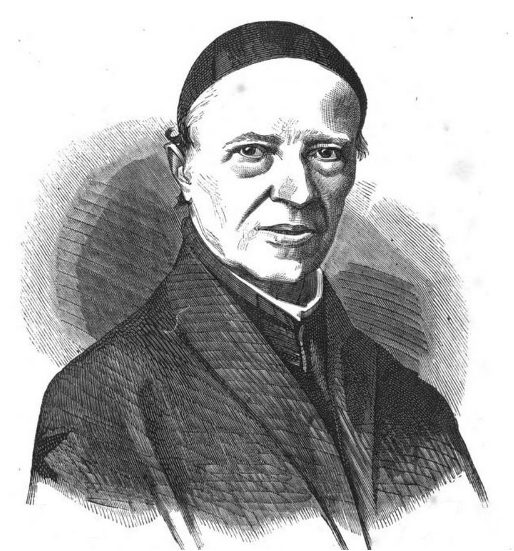
Freemasonry’s actual role in the Risorgimento was limited as some Masons, including non-Jews like Garibaldi and Mazzini, supported unification as a liberal, anticlerical network. However, unification succeeded through broad forces such as through Piedmontese diplomacy (Cavour), popular revolts, and international realpolitik, not a “Jewish-Masonic cabal.” Conservative Catholic historiography as noted from Bresciani’s novels (L’Ebreo di Verona, Della Repubblica Romana, Lionello) as a retort to the Risorgimento, construct a very specific kind of conspiratorial narrative structure to explain what he and other intransigent Catholics saw as the Church’s defeat by modernity. He was basically trying to construct conspiratorial plots to explain the Church’s loss of cultural dominance. Bresciani’s view was that secret societies, Freemasons, Illuminati, Giovine Italia, various satanic forces were involved in a coordinated assault on Catholic civilization (see Professor John Dickie’s paper, Antonio Bresciani and the Sects: Conspiracy Myths in an Intransigent Catholic Response to the Risorgimento).
People who are not even Catholic adopt these conspiracy plot narratives. Mussolini and the Fascists begin to adopt and adapt a conspiratorial narrative that had been building and was being touted by a conservative Catholic. A tiny group’s visible, enthusiastic support for national liberation, after centuries of exclusion, is evidence of integration, not domination. No documents show Jews directing Freemasons or Mazzini and Garibaldi as puppets. The conspiracy and those who adopt these theories ignore that most Risorgimento leaders were Catholic or secular Italians pursuing Italian interests.
We can establish, that Jewish support and energy for early Fascism (pre-1938) was the continuity of the hyper-patriotism infused during the Risorgimento era, and the belief, based on the adaptation and adoption of Mazzinianism into Gentilian thought, that Fascism was a continuation of the Risorgimento.
230 Italian Jews marched in the 1922 March on Rome, and Jewish membership in the Fascist Party was higher than the national average pre-1938. Prominent examples include Margherita Sarfatti (Mussolini’s mistress and biographer), Aldo Finzi (early Interior undersecretary), Ettore Ovazza (pro-Fascist Jewish newspaper founder), and Guido Jung (Finance Minister).
“On hearing my affirmation of the unshakable loyalty of Italian Jews to the Fatherland, His Excellency Mussolini looks me straight in the eye and says with a voice that penetrates straight down to my heart: ‘I have never doubted it.’” (Ettore Ovazza, Fascist Party member and prominent member of the Turin Jewish community, 1929)
Fascism, which initially positioned itself as the heir to Risorgimento nationalism was, up until the Axis alliance, non-antisemitic. Mussolini in the 1920s-early 1930s called antisemitism a “German vice” and said, “Italy knows no Jewish Question.” Many Jews saw it as defending the secular, patriotic Italy they helped build (When Jews backed a fascist).
The turn came with the institutionalization of the 1938 Racial Laws driven by the Nazi alliance (Pact of Steel), Mussolini’s desire to “radicalize” the regime, and domestic politics. You will find, that many American do not seem to be know this history.
- Catholic intransigents (opposed to unification and loss of Papal States) constructed the “Judeo-Masonic” narrative in the nineteenth-century. Nazis and late Fascists revived it after 1938 to justify persecution and align with Hitler, ignoring decades of Jewish loyalty.
- Antisemites treat “Jews” as a monolithic cabal acting in secret, ignoring diversity (religious vs. secular, republican vs. monarchist) and the obvious motive — emancipation and patriotism. This is the same trope used against any minority succeeding in liberal societies.
- Conspiracists cite forgeries (the Protocols) or circular reasoning (“Jews were involved, therefore plot”). Archival records show open, documented civic engagement.
Individual Jews (like any group) acted from self-interest, paranoia from real existential threat and idealism, seeking equality after ghettoization. Their disproportionate patriotism in the Risorgimento and early Fascism reflects a successful assimilation, despite their subsequent betrayal and the betrayal of the Risorgimento by the Italian monarchy and Fascist regime. Ideas of a “Third Rome” existed before Mussolini and sharply diverge from the humanist ideas of Mazzini. This divergence from systems claiming Mazzini as influence and Mazzini’s universalist nationalism allows us to critique Fascism, modern political Zionism and messianic accelerationism, because they are particularist and teleological. Despite this, conspiracy theories were (and remain) tools to scapegoat a minority for complex historical changes like secular nationalism and modernization.
The conspiracies collapse under scrutiny because they contradict these documented facts of integration, and lead citizens to adopt the worldview of the conservative-monarchists and of the traditionalist order. It will demonstrate why so many of the people of the West are in conflict within themselves, and what underlies the modern rise of the “Dissident Right” who manipulate this inner conflict while also perpetuating the same tactics (story‑patterns, anxieties, and scapegoating mechanisms) developed and built upon (e.g., the revolutions allied with ‘satanic forces’) not merely since the eighteen-century but deeply rooted in Medieval Christendom.
RECOMMENDED SOURCES
- Michele Sarfatti, Italy’s Fascist Jews: Insights on an Unusual Scenario.
- Italy, Holocaust Encylopedia.
 The American Minervan
Leave a comment