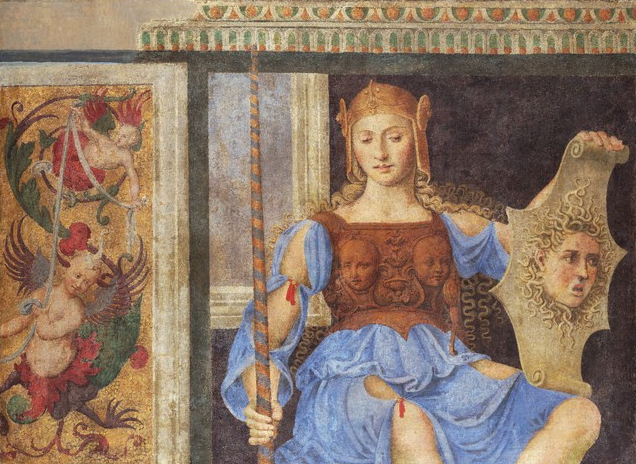
This FAQ directly confronts common doubts, objections, and skeptical questions about the blog’s purpose, approach, content, and claims. It is written in the spirit of open inquiry and civic honesty that defines this project.
A: It is the enduring political-moral tradition centered on liberty, resistance to arbitrary power, civic virtue, mixed government, and the common good. Rooted in Cicero and classical antiquity, revived in the Renaissance and Enlightenment, and realized in revolutions including the American and Haitian, it demands active, educated citizens as the ultimate guardians of the republic.
A: The United States was founded squarely within this tradition. Today, civic illiteracy, historical deconstruction, materialism, and partisan tribalism erode its foundations. Republicanism offers a corrective: a shared framework of liberty and virtue that transcends left-right culture wars and equips citizens to understand their government and defend it honestly.
A: Republicanism emerged alongside classical humanistic, eclectic and theosophical currents. I am now more specifically focused on the classical roots of Theosophy, and working through assisting the development of the current of American Esotericism. The classical eclectic, theological and humanistic currents provided the moral and intellectual fire for anti-tyrannical movements, the Renaissance, and revolutionary humanism. This blog is situated outside of later twentieth-century apolitical attitudes, organization quietude and insularity. This habit of viewing these things as disengaged from civic life is an after-effect of later secularization and differs from the manner it has been viewed historically within and outside of republican tradition.
A: It looks toward a post-Trump era in U.S. political culture, injecting itself to disrupt the game of extreme political polarity and the Heritage Foundation’s project with a counter-project. It rejects subordinating the republican tradition to modern ideologies, identity politics, or quietude. It draws on history, philosophy, primary sources, and the full American story (including Black republican voices and critiques of slavery) to serve all citizens committed to truth and the common good. It is not a “religious” or “esoteric blog” though it contains these elements. It is eclectic, theosophic, pluralist and secular.
A: It is written for every American citizen, for educating those outside the United States, anyone who values republican government who wants depth instead of slogans and standard campaign speeches, and those frustrated by polarization and superficial data analysis-driven politics. The tradition belongs to all who inherit the Republic. Yes, posts require attention; but civic literacy has always demanded effort. The project rejects adaptation to TikTok-level brevity because shallow understanding cannot sustain self-government. It is for students, educators, independent thinkers, history enthusiasts, and concerned patriots tired of superficial politics and seeking the real foundations of liberty, virtue, and civic strength.
A: Tribalism and superficial thinking weaken republics. The tradition teaches vigilance against corruption and arbitrary power (from any direction), the necessity of virtue and education, and honest reckoning with history. Without it, paper rights and democratic forms eventually fail. (See our open letters and series on why American students need republicanism, deconstruction vs. reconstruction, etc.)
A: No. This is not a niche blog at all, and every article I have written, though not directly aimed at a specific topic in the news cycle provides related context to modern events. Most people seem to be engaged with and receive engagement from reiterating what other journalists are already writing about every day. It is repetitive, and the reactions to ignorance spread in the world has become repetitive. I am in creative mode. There are Americans always posting about Heritage Foundation Project, and I ask where is your counter to their project? There is none, still. It has been years now, and still no equivalent grand vision to compete against it on the calculated level that Republican Party representatives in politics are moving. The Democrats act stunned and say, “that is white supremacist.” The days of civility are gone, and you are being robbed of future political power. If the public was educated on very fundamental things I discuss, this could and should immediately impact their thinking and get them to question, but I am buried beneath the pay-to-play system, the noise and repetitive content. The core focus is the civic republican tradition, which is a well-documented lineage in political philosophy from Cicero through Renaissance humanists, the American Founding, and related revolutions. Topics like Theosophy, Bavarian Illuminati, Freemasonry, Occult Philosophy, American Esotericism and Atlantic Republican Tradition are examined in their actual historical contexts to correct popular myths, institutional and conspiratorial distortions. The American Minervan, or MINVRA positions itself as justifiably, an eclectic blend of their highest aspirations.
Q. WHY MIX U.S. CIVIC HISTORY AND REPUBLICANISM WITH THEOSOPHY AND ESOTERICISM?
A: The connection is historical, not invented, and there has been active inversion and suppression of this. Republicanism emerged intertwined with classical humanistic and eclectic traditions that emphasized prisca theologia, moral courage, and resistance to arbitrary power. Prisca theologia was the Renaissance Platonist doctrine and underlies the view of Christian Masonry, providential deism and republican secularism, which in turn is integral to the prism through which the neo-Roman (or neoclassical) Republicanism was transmitted to and expressed itself through the U.S. Prisca theologia refers to the belief that there existed an ancient, primordial, divinely revealed wisdom shared across the earliest civilizations, and that this wisdom formed a single, unified theological tradition from which later religions (including Christianity) descended. Every well-known Christian-Mason tyro subscribed to this theory. Prisca theologia (ancient theology) becomes directly relevant to Christian Masonry and U.S. religious pluralism because all three share a core assumption: that religious truth is ancient, universal, and expressed through multiple traditions. These currents involve Renaissance revivals, Enlightenment thought, and revolutionary movements (including Italian Risorgimento figures with theosophical or Masonic ties). This synthesis aims to recover the active, illuminative fire that historically supported republican virtue, not to promote occultism detached from civic life.
The notion that “occult philosophy” is something private, marginal, or cut off from civic life is an assumption born in the post-Enlightenment part of a process of Protestant demystification and later rationalist secularization. In Antiquity and the Middle Ages, “occult” knowledge was civic knowledge. So, what we now call “occult,” “esoteric,” or “mystical” knowledge was woven directly into political theory, statecraft, law, architecture, medicine, and even public ritual; and Plato, Cicero, Plotinus, and Augustine treated metaphysics, cosmology, and ritual as essential to the health of the polis. The Renaissance Platonists like Ficino, Pico, Patrizi and Bruno went further and saw natural magic, astrology, and prisca theologia as tools for shaping virtuous citizens, advising rulers, and cultivating the soul as a civic duty. The Renaissance Platonists wrote for statesmen, not hermits; and early modern statecraft relied on esoteric sciences (see, e.g., Crusades to Late Renaissance Occultism to Enlightenment Timeline, 1075-1680. Rulers employed court astrologers, alchemical physicians, Hermetic advisors, Kabbalistic Christian theologians and architects using sacred geometry.
This is not a fringe theory, and it is one the most difficult to get through to people who want to find an evil plot in this. This is the history of the intellectual bridges between Renaissance esotericism, Freemasonry, and early American republicanism. Early American republicanism absorbed Renaissance esoteric ideas through Freemasonry, which acted as the transmission belt between European Hermetic-Platonic thought and American political culture. This means that the enchanted world of the Renaissance didn’t disappear, but was naturalized into American republican ideals of virtue, liberty, and pluralism. Freemasonry preserved and institutionalized this prisca theologia which it inherited from Renaissance esoteric universalism. The idea of a virtuous republic is not a mere non-religious thing. The Masonic political symbolism has roots in Renaissance Hermetic-Platonic cosmology, with the Mason as both the builder of the self and the republic.
A: Not Fascism, but REPUBLICANISM and FASCISM share heritage from Rome. I lay out the foundations, historical contexts and philosophy of Fascism to refute modern definitions and distortions of it as a competitor to the stability and Atlanticist narrative of the post-war liberal international order. The narrative after the war scapegoated various groups who themselves were victims of Catholic instigation, absolutist, Communist and Fascist persecutions, which have still gone uncorrected, e.g., Christians connecting Fascism to Theosophy or Theosophy to Socialism and Communism to perpetually modify variant constructed anti-republican conspiracies. I have documented this pattern, which also refutes conspiracies about Adam Weishaupt (an Enlightenment anarchist Christian philosopher) and the Illuminati, which has not received an update in American scholarship as it has in Germany. My project is anti-arbitrary power in all forms — whether monarchical, corporate, ideological, or majoritarian tyranny. It examines Fascist philosophy and figures like Giovanni Gentile historically to clarify distinctions from republicanism (e.g., actual vs. misused definitions, Risorgimento context vs. later betrayals). Republicanism prioritizes mixed government, rule of law, civic virtue, and vigilance against corruption. It celebrates revolutionary moments only insofar as they advanced liberty and confronted injustice. The aim is re-alignment and fortification of the existing Republic through informed citizenship, not overthrow or authoritarianism.
A: On the contrary, republicanism provides essential safeguards modern liberal democracy often neglects. There is no pluralism without republicanism. It is compatible with (and historically contributed to) rights discourse, and the U.S. Founding blended republican and liberal elements. Reviving republican habits counters contemporary ills like tribalism, historical amnesia, materialism, and declining civic literacy, without returning to pre-modern exclusions. It explicitly includes Black republican voices and reckonings with slavery’s contradictions.
A: Radical movements (early Theosophy, Bábí movement) often shift internally and to apoliticism for survival, legitimacy, or institutionalization, which can neuter their original anti-establishment impulse and implicitly support existing powers. There is no such thing as “above politics,” as even detachment from politics still has political effects. This is not a call for reckless activism but for engaged, virtuous citizenship grounded in wisdom. Inaction risks moral abdication in the face of corruption or injustice. History does not show that “staying out of politics” is wiser. The attitude contradicts our duty as citizens.
A: It is religio-philosophical in the classical sense — exploring underlying meanings in literature, mythology and folklore. It is an expression of eclecticism, and the moral-intellectual roots of humanism and republicanism. It is not sectarian, promoting any single faith or modern occult organization, and is not anti-religious. The focus remains civic, in arming citizens with wisdom for virtuous public life.
A: No. My first introduction to political philosophy was Edmund Burke. I carry with me a different political and social understanding. The beginning of the Trump era brought out of me political ideas originally from Burke that were at that point subconscious, but I eventually broke from this. I never went left, but I set myself on a path similar to Nietzsche — someone who deliberately stands outside their own culture in order to diagnose, judge, and overcome it. I just follow the research. It explicitly distinguishes civic republicanism (anti-arbitrary power, virtue, common good, mixed constitution) from the modern Republican Party, which the blog has critiqued as often anti-republican in practice (oligarchic, factional). It includes strong anti-slavery, anti-racist and Black classicist threads, and rejects identity tribalism or Christian nationalism. The framework however transcends left-right by returning to foundational principles applicable to all citizens. Also, though I am not working from an intellectual conservative framework, or the ideas of Russell Kirk on the roots of the American Order. I used to try to work fully within conservative framework for about a year, but my research is now wholly outside of “conservative tradition,” so I know about Kirk’s material.
Kirk believed, as I also argue, that the United States did not invent its political philosophy out of thin air. However, there is for him, a long traceable civilizational lineage from Jerusalem to Athens to Rome to London and to Philadelphia — the symbolic Civilization Genealogy. Kirk is grounding the history in “Judeo-Christian” roots as the foundation. “Judeo-Christian” is not, from a factual historical or philosophical basis, the foundations for republican government, or the “American Order.” This “American Order” was not like the French Revolution, but a conservative defense of inherited order built on English common law, Greek intellect, Roman order, Christian moral vision and Burkean continuity. This is the basis of American conservative tradition. Increasingly, modern conservatives are latching onto this, and the political opposition does not have a competing vision or narrative except to entrench themselves further in Marxist and Socialist theory, which the Right is anticipating.
Russell Kirk’s conservative philosophy is the perspective that has been adopted by Stephen Miller in the Trump administration (a defining moment), but liberals and the left called it “Fascist,” and do not read classical liberal and intellectual conservative material, clearly. In this tribal political climate, I am not the conservative’s guy, because I do not write as a representative of conservative tradition, and I am not the guy for liberals or progressives, because they do not care about these things from my observations. I have been told that my ideas are “old,” “outdated,” and “nobody thinks like that anymore,” but this is a lie. Conservatives exploit this gap, building a captivating American mythos that has matched that of any modern liberal/left utopianism. I am simply building from within this gap, and kind of reacting to Russell Kirk. A tall order.
Russell Kirk’s idea that the American political order is rooted in ancient moral, philosophical, legal, and religious traditions that developed over millennia is correct. In this view, America is “new,” but its order is old as a synthesis of Hebraic morality, Greek reason, Roman law, Christian theology, and British constitutionalism. As one of the fathers of modern conservativism, American conservatives see themselves protecting this against a left flank that engages in constant reductionism of this legacy. Their opponents criticize them of “Fascism.” I have to correct them, by saying, “actually that’s not Fascism. It’s apart of our history.” Then I am accused of defending “Fascists,” and they’d rather poke their eyes out than admit of this history, without reducing it to its worst elements. The gap enables modern right-wing to incorporate the framework into their logical conclusion to “destroy the left” through the lens of “White replacement theory.” Russell Kirk built a narrative structure that leads to Christian Zionism, and is what is behind the ideological zeal and loyalty to Israel and the idea that the destinies of Jerusalem and the United States is eternally interlocked. This is also a tall order to challenge; due to the fact Christian Zionism reaches across parties. Russel Kirk’s civilizational genealogy is not really an accurate portrayal of the history, but a crafted mythos omitting many other influences and context, which displaces Jerusalem from the center of the narrative.
A: It equips you with historical context, philosophical tools, and moral vocabulary to understand American government, critique power, teach civic literacy, engage debates honestly, and resist manipulation by superficial trends or tribal narratives. Open letters like “Every Citizen is the Salvation of the Republic” and series on education and deconstruction vs. reconstruction translate ideas into contemporary relevance. The ultimate aim is practical: stronger, more virtuous citizenship that helps keep the Republic safe. Also, I am of the working class. I am not influencer rich. If no one helps me, how can I help anybody.
A: As someone in life that has always been made to question, “am I the problem,” I constantly learn or adjust to understand and overcome the problem. Algorithms reward outrage, brevity, and emotional triggers over sustained depth and synthesis. Combining republican history with classical and the history of esoteric philosophy challenges multiple tribal silos (mainstream history buffs avoid “theosophy”; esoteric circles often prefer apolitical universalism; partisans dislike non-aligned corrective framing). Low visibility reflects platform dynamics and cultural preference for easy narratives. The persistence reflects commitment to the long-term work of cultural and civic reconstruction, not quick virality. Perhaps, my time is yet to come, but then again, I have done all that I can yet to spread.
A: Start with open letters and accessible series (Risorgimento guides, Black republicanism, Deconstruction or Reconstruction, Gordon Wood pieces). Cross-reference primary sources and cited historians. Approach with the republican spirit of inquiry, and test ideas against evidence and the common good, rather than dismissing by association. This is how I began this research. Feedback, comments, and honest critique are welcomed as part of civic discourse, and I would expect substance, and signs that the reader is mature, inquisitive and sane — not a troll.
A: No pay wall. Substantive articles, historical recoveries, open letters on republican philosophy, and resources that deepen your civic understanding, provide intellectual armament, and inspire practical civic engagement. You’ll join a project of liberty dedicated to keeping the Republic safe through informed, courageous citizenship. It is needed precisely because, so few are doing it.
A: Read the featured open letters (“Every Citizen is the Salvation of the Republic” and “The Real Republican Mind“). Subscribe to the newsletter. Share pieces. Apply the ideas in teaching, discussions, seminars, presentation and your own civic life. The Republic depends on active minds, and is kept safe by active, informed citizens.
This FAQ reflects the project’s commitment to transparency and depth. The American Minervan exists because republics decay without citizens who understand their foundations and actively uphold liberty paired with virtue. Skepticism is healthy, but disengagement, ignorance, apathy and nihilism is the greater risk. Explore the archives, form your own judgment, and contribute to the living tradition if the ideas resonate.
 The American Minervan
Leave a comment