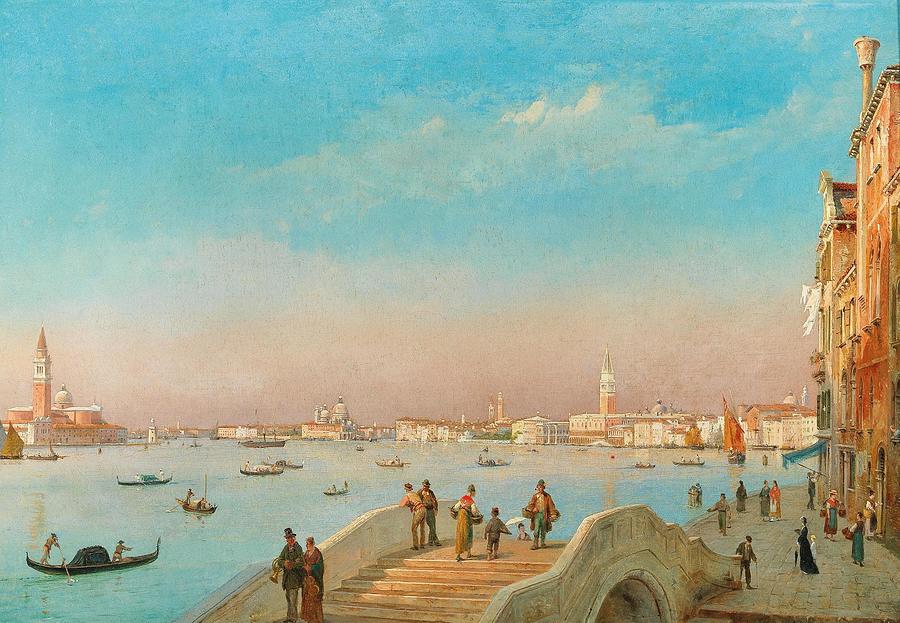
Garibaldi activies in South American revolutions included the Ragamuffin War (1835-1845) in Brazil alongside the short-lived Riograndense Republic, Uruguayan Civil War (1846-1851), and the Uruguayan Civil War (1846-1851). Uruguay still remembers Garibaldi as a national hero in their great civil war in the mid-nineteenth-century, as he became one of the most famous foreign volunteers and commanded troops in the conflict. This experience in South America molded him into a military leader to help later unify Italy. This is about his involvement within the underlying multi-racial, internationalist context of the Guerra Grande (“Great War”), or the Uruguayan Civil War fought from 1839 to 1851 between Uruguay’s two main political factions, the Colorado Party (urban, liberal, commercial interests, led by Fructuoso Rivera) and the Blanco Party (rural, conservative, protectionist interests, led by Manuel Oribe) that involved Garibaldi. The war began when Rivera overthrew Oribe in 1839 and then declared war on Argentine dictator Juan Manuel de Rosas, who supported Oribe.
- INTRODUCTION: THE ITALIAN INDICTMENT OF EARLY U.S. REPUBLIC — Introduction to the history and betrayal of Italian Republicanism.
- FROM THE CARBONARI TO MAZZINI — tracing the transformation from reactive conspiracy to affirmative moral philosophy grounded in Doveri dell’Uomo.
- THE CATTANEO-MAZZINI DIVERGENCE — expanded treatment of how both men condemned American slavery from different structural angles (unitary vs. federal republicanism), with Cattaneo’s surgical argument that slavery was a royalist remnant, not a federal defect.
- THE KOSSUTH CONTRAST — exploration of Kossuth’s cynical refusal to denounce slavery during his 1851-52 American tour vs. Mazzini’s unwavering moral consistency, and what that fault line revealed about European revolutionary movements.
- THE ITALIAN STAGE — on Rota’s Bianchi e neri, Verdi’s Un ballo in maschera, satirical journalism, and how Italian audiences laughed at America’s pretensions to freedom.
- GARIBALDI IN SOUTH AMERICA: PRACTICALITY OF REPUBLICAN INTERNATIONALISM — the multi-racial, internationalist context of the Guerra Grande.
- THE TRANSATLANTIC CIRCUIT — Garrison-Mazzini parallels, Fuller’s Roman dispatches, Roberts’s research on Mazzini’s influence on John Brown, and the pathway into Black Republican political thought.
- ITALY’S DIARCHY AND FASCIST ALLIANCE DESTROYS REPUBLICAN INHERITANCE — the Rosselli assassinations, the outlawing of Masonic networks, and how the monarchist-conservative line triumphed over the Mazzinian tradition.
- REPUBLICANISM AS A DIVINE IDEAL — describing the philosophical displacement of republicanism in the world, why Washington and Mazzini refer to republicanism as a divine ideal, its fight against theocracy, and the argument that this republicanism is foundational, not foreign, necessitates revival, and belongs most urgently to those for whom its promise was most violently betrayed.
GARIBALDI’S REVOLUTIONARY EXPERIENCES IN SOUTH AMERICA AND REPUBLICAN INTERNATIONALISM
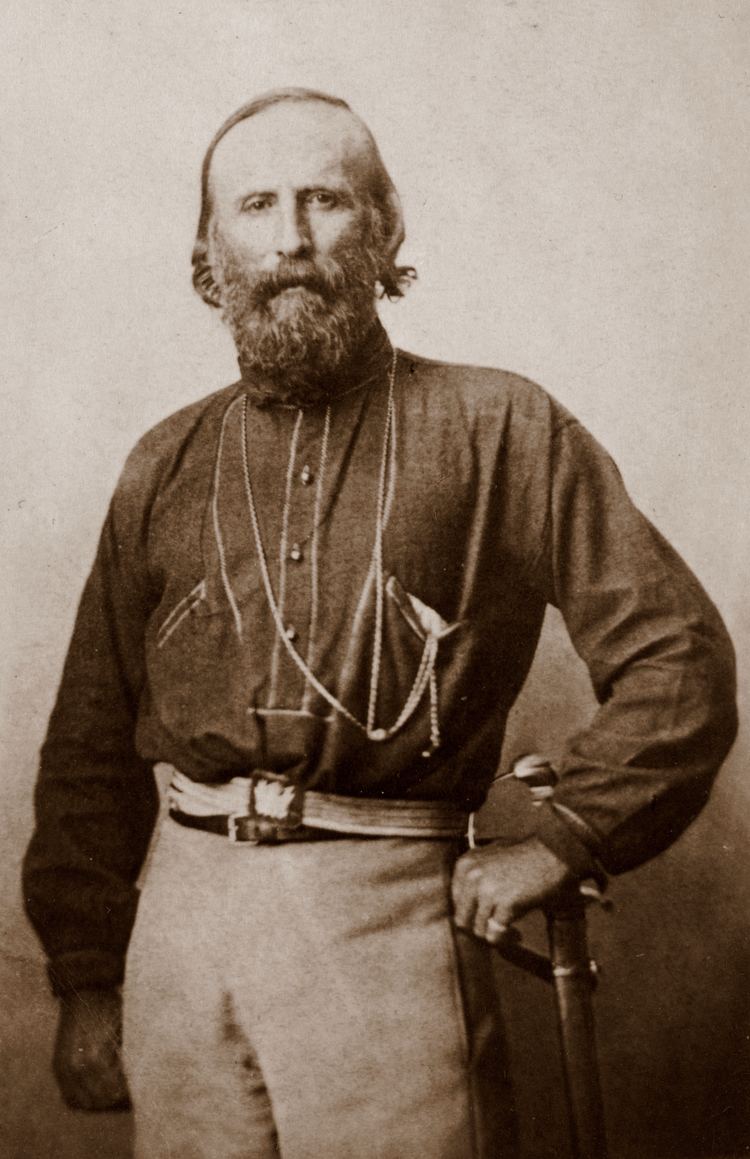
IF MAZZINI PROVIDED THE PHILOSOPHY AND THE ITALIAN cultural establishment provided the public critique, it was Garibaldi who provided the praxis of the lived demonstration of Italian republican universalist vision enacted in the world, across racial and national boundaries, in the chaos of actual warfare.
Garibaldi’s twelve-plus years in South America, from his arrival in Rio de Janeiro in 1836 to his return to Italy in 1848, constituted the most important practical laboratory of Italian republican internationalism. In Brazil, he fought for the breakaway Republic of Rio Grande do Sul, a secessionist movement in the country’s southernmost province. In Uruguay, he commanded the Italian Legion in the defense of Montevideo during the Guerra Grande, the prolonged and devastating civil war (1839-1851) that engulfed the young republic. In both theaters of war, Garibaldi fought alongside men of multiple races, nationalities, and social conditions of Italian exiles, Uruguayan republicans, African-descended freedmen, indigenous fighters, and adventurers from across the Americas and Europe.
This was Mazzinian universalism in action. Garibaldi did not fight in South America for Italian national interests, since Italy, as a unified state, did not yet exist. He fought because revolutionary republicanism demanded that the struggle for liberty was universal, and that wherever tyranny oppressed a people, the republican was obligated to resist. Garibaldi is described as not simply a nationalist patriot, but the quintessential internationalist, fighting for whatever he thought would support the liberties of subjugated peoples everywhere (Alessandro Bonvini, Review of Garibaldi in South America: An Exploration by Richard Bourne, Modern Italy, Vol. 28, No. 2 (2023), pp. 185-186).
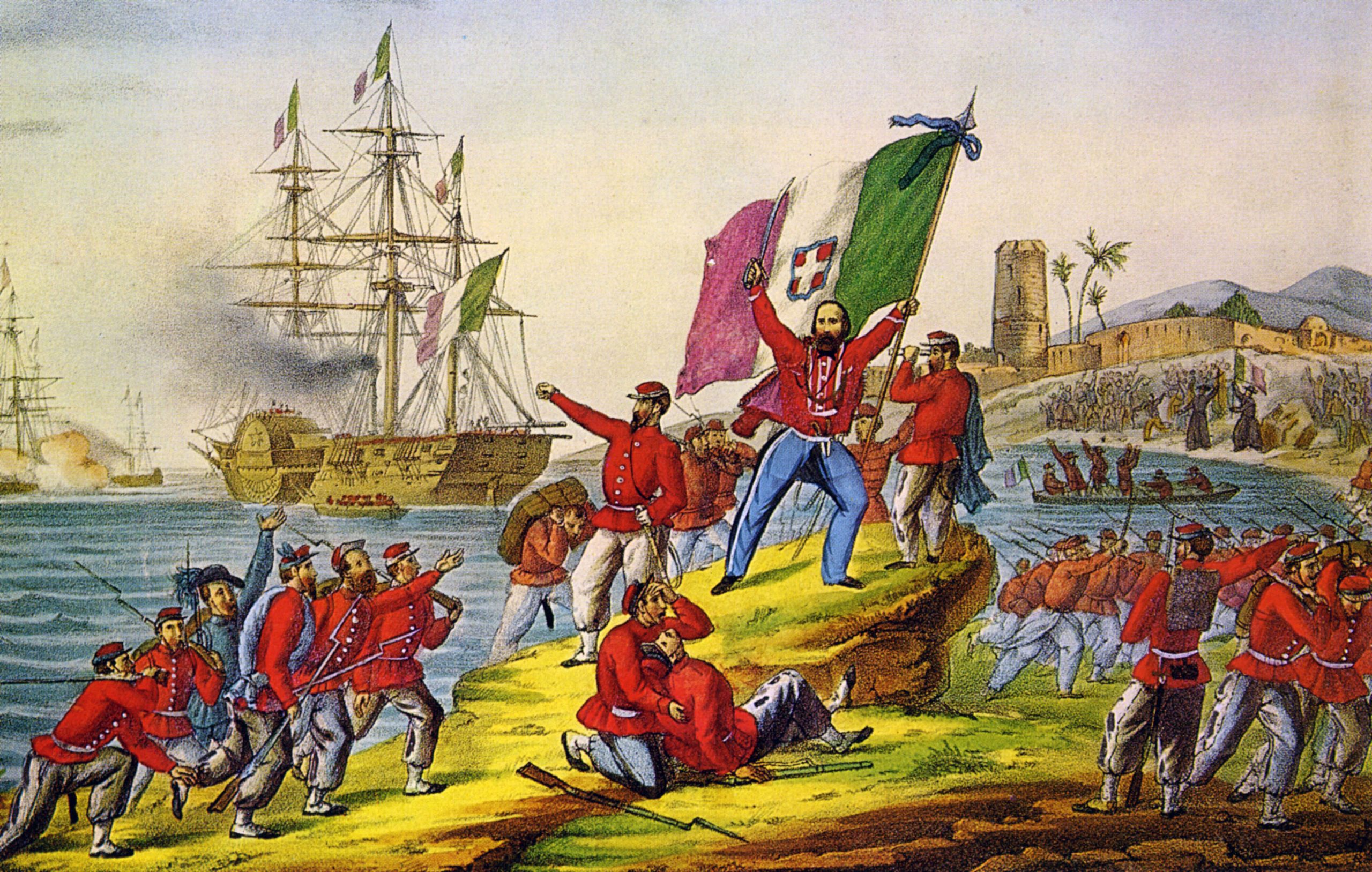
The South American years shaped Garibaldi in ways that profoundly influenced the subsequent course of Italian and transatlantic history. The Redshirts with the iconic red tunics that his volunteers wore during the liberation of Sicily and Naples in 1860 were adopted from South American ponchos that his Italian Legion had worn in Montevideo, but the influence was more than sartorial. Garibaldi learned guerrilla warfare in the Brazilian backlands and the Uruguayan pampa to command diverse, multilingual, and multiracial forces, learning that the fight for liberty was not a European monopoly; and that the peoples of the Americas, including peoples of African descent, were full participants in the universal struggle. When he married Anita Ribeiro da Silva, she became his comrade in arms and one of the great heroines of the Risorgimento. In his view, the personal life was a political struggle devoted to global emancipation in a world where it was necessary. Garibaldi’s life in South America was a living refutation of the racial hierarchies upon which the slaveholding republic depended.
ANITA GARIBALDI
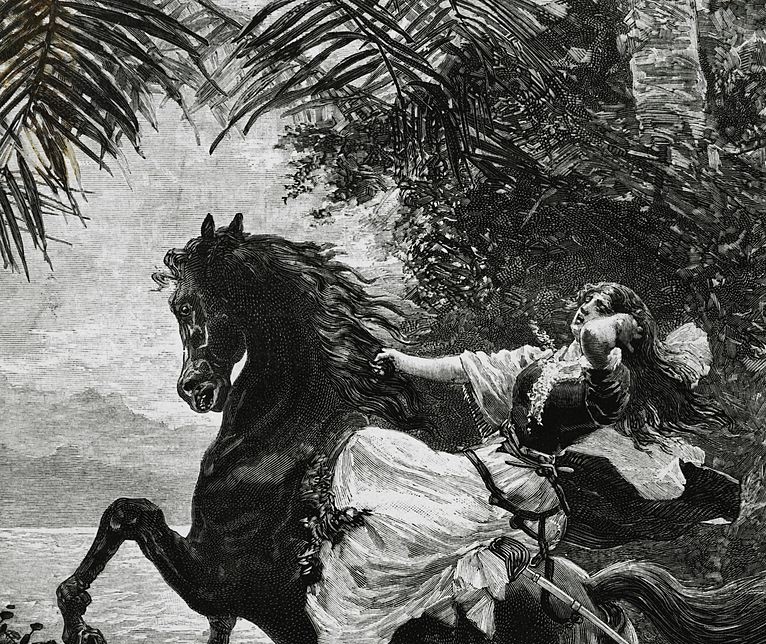
One could not speak of Giuseppe Garibaldi without speaking of his wife, Anita. Anita Garibaldi was born in Brazil and met Garibaldi during the Farroupilha Revolution (Rio Grande do Sul) in 1839. She left an arranged marriage to join him, fighting alongside him at sea and on land. She was a skilled horsewoman who participated in battles, escapes, and campaigns in South America. She traveled to Italy, supported the 1848-49 revolutions, and fought in the defense of the Roman Republic. Pregnant with their fifth child, she died of malaria and exhaustion during the retreat from Rome in 1849 near Comacchio. She is known for her radical commitment to republicanism, abolitionism, and women’s involvement in revolution. Anita shaped Garibaldi’s internationalist outlook and became a feminist and anti-slavery icon in her own right.
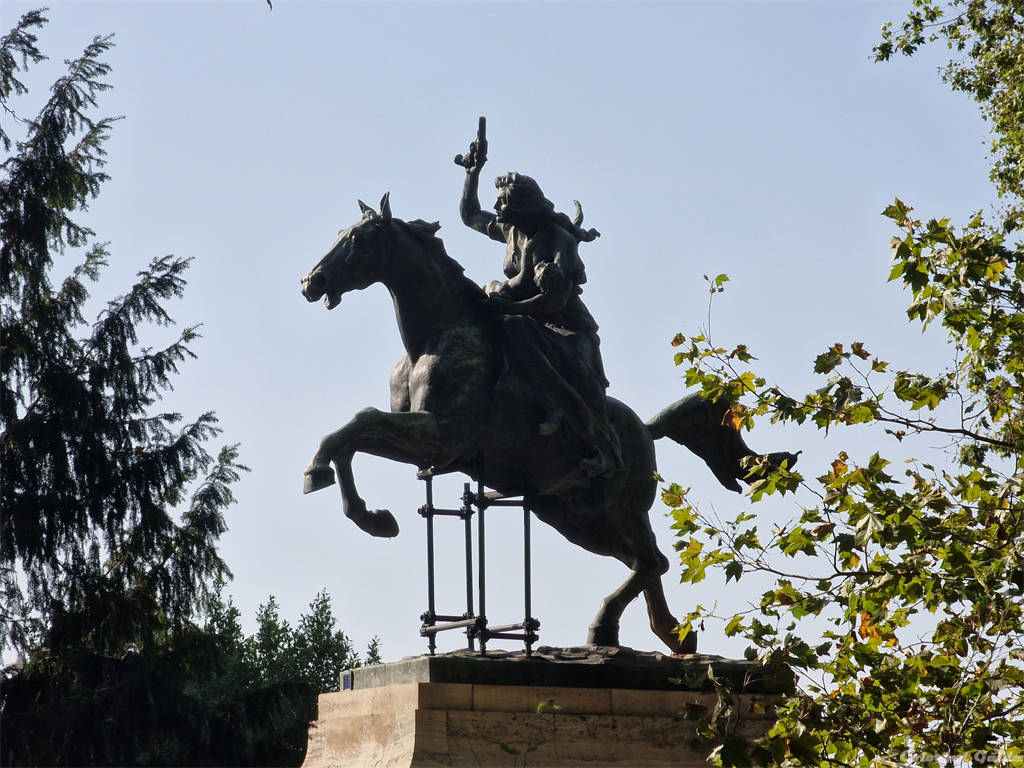
This famous monument in Rome depicts her on horseback with a pistol and child.
The South American circuit also established the networks through which Mazzinian principles traveled into broader hemispheric political consciousness. Italian exiles in Montevideo and Buenos Aires maintained correspondence with Mazzini in London and with republican networks across Europe and the Americas. The Italian Legion was not merely a military unit, but a political community, a diaspora cell of Giovine Italia transplanted to the New World, carrying with it the universalist commitments of Italian republican ideals. Through such networks, the Italian republican indictment of slavery circulated among South American abolitionists, radical journalists, and political organizers, contributing to the hemispheric movement that would eventually achieve emancipation in Brazil (1888), which was the last country in the Americas to abolish slavery.
Garibaldi’s volunteer Redshirts inspired global revolutionaries, and his South American experiences, fighting slaveholding regimes and for local republics, reinforced a broader fight for liberty beyond Italy. Anita’s death became a romantic symbol of sacrifice, and Garibaldi lived on as a national hero but retired to Caprera. Both championed democratic republics, anti-imperialism, and popular sovereignty. Garibaldi subordinated his republican preferences for unification under the monarchy, a decision that disappointed purists but enabled the Kingdom of Italy in 1861. Mazzini and Garibaldi represent the passionate, people-driven side of Italian republicanism that was romantic, militant, and brought ideal into action within the broader, often compromise-filled history of the Risorgimento.
 The American Minervan
Leave a comment