Brown’s Covenental Republican Philosophy of Resistance against the Myths of Gradual Emancipation and the Confederate Lost Cause
THE CONTEXT BEHIND THIS HISTORY AND THE IDEA OF GRADUAL EMANCIPATION VERSUS ACTIVE RESISTANCE against tyranny is probably one of the easiest barometers in testing a fellow American. Active resistance of republican thinkers aligned more closely with core republican principles of non-domination, civic virtue and engagement against tyranny than the idea that slaves ought to have waited for gradualism or “benign paternal” mercy. Gradual emancipation would have prolonged mass suffering for generations with no guaranteed full emancipation.
Northern U.S. states adopted gradual emancipation acts (e.g., Pennsylvania 1780, Connecticut and others in the 1780s) that freed children born to enslaved mothers after specific dates, often binding them to long indentureships into adulthood. Existing enslaved people frequently remained in bondage for life, and enforcement was uneven with enslavers sometimes selling people south to evade laws. This process dragged on for decades, because slavery persisted in parts of the North into the 19ᵗʰ century. Southern states showed little serious movement toward it. Founders like Jefferson expressed qualms but owned slaves and favored colonization or gradual approaches that never materialized broadly. (Diane Orson, Think slavery wasn’t in the North? Think again. Slavery has roots in Connecticut dating to 1600s).
Post-1800, the domestic slave trade intensified, cotton production boomed, and scientific racism hardened justifications. Without the pressure of abolitionist agitation, rebellions (e.g., Nat Turner, Haitian influences), and eventual war, a “benign president” or federal gradualism was unlikely to overcome entrenched economic and cultural interests. Lincoln himself initially favored compensated gradual emancipation and colonization for border states, but the Confederacy’s secession and the war’s dynamics led to more decisive action through the Emancipation Proclamation and 13ᵗʰ Amendment.
Enslaved people’s self-liberation, Union Black soldiers, and radical pressure accelerated what top-down mercy would not have.
Waiting passively risked normalizing the system further. Slavery was not a static or dying institution by the 1850s, but dynamic, expansive, and ideologically fortified. False ideas like scientific racism were not fringe, and shaped policy and culture. Republicanism, in its civic form, defines liberty as non-domination, or the structural inability for one to exercise arbitrary power over another. Chattel slavery exemplified the ultimate violation of this, and passive acceptance contradicted the duty to resist tyranny.
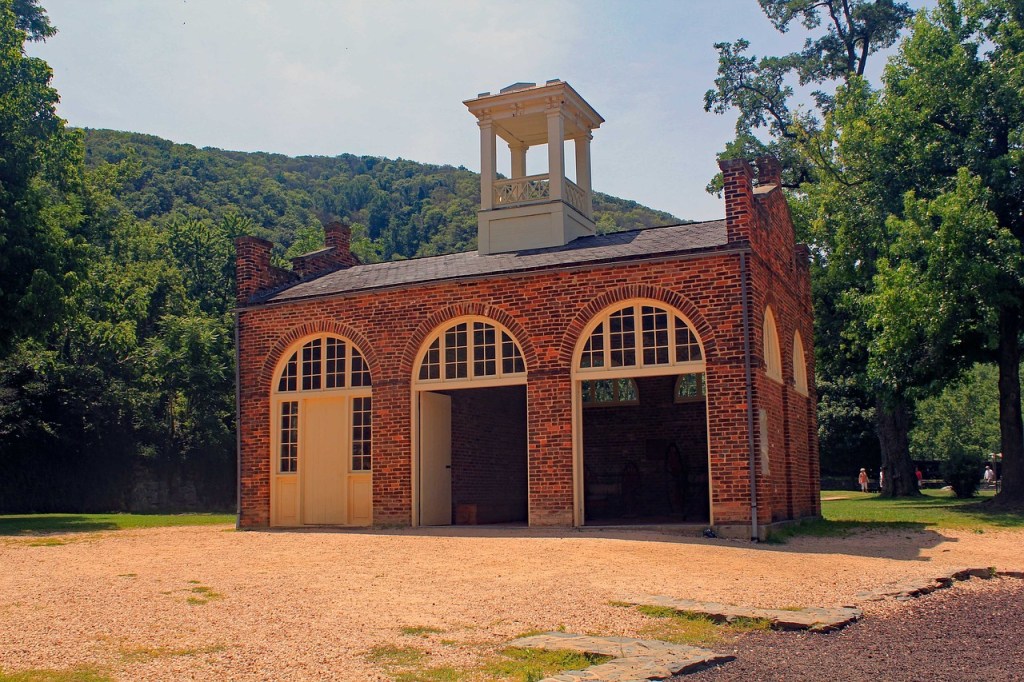
John Brown’s Harpers Ferry raid (1859) is often critiqued for its violence and immediate failure. In the chaos of John Brown’s raid on Harpers Ferry, Heyward Shepherd, a free Black baggage handler for the Baltimore & Ohio Railroad, encountered armed raiders on the Potomac bridge in the early hours. The raiders ordered him to halt, and accounts indicate he did not comply, turned away, and was shot in the back, a wound that proved fatal after several hours of agony. He left behind a wife and five children in Winchester, Virginia. His death was tragic, the first casualty of an operation meant to strike at the heart of the slave system by seizing arms for the enslaved. Pro-Confederate “Lost Cause” narratives later elevated him as a symbol against “insurrection” and radical terrorism embodied by the defeated John Brown.
Brown’s group included Black fighters (e.g., Dangerfield Newby, Shields Green), and the raid aimed to spark wider liberation, not indiscriminate murder. It heightened sectional tensions, inspired some, and terrified others, contributing to the path to war.
Critics on “the Right” (and some gradualist Founders’ admirers) label Brown a terrorist or failure, contrasting him with orderly processes. This strategy in depicting militant abolitionists as terrorists and “radicals” downplay the daily violence of slavery itself involving family separations, rape, torture and murder. The moral asymmetry between state-sanctioned hereditary bondage and armed resistance to it is rarely weighed evenly. Brown’s violence was targeted at an arsenal to arm the enslaved, in a tradition of revolutionary action. The “orderly process” of gradualism is less exemplary of the truly republican-minded.
If the goal was liberating millions held in hereditary bondage, does a freedman’s instinctive loyalty to the existing order, or simple confusion in a nighttime confrontation, justify sabotaging the effort and then elevating him as a symbol against the raiders? Civic republicanism, with its insistence on liberty as non-domination, answers no. A genuine republic cannot tolerate arbitrary mastery over others, whether by kings, majorities, or enslavers. Alerting authorities to preserve the system that treated human beings as property would, in principle, defend tyranny rather than undermine it. Yet the historical record suggests Shepherd’s actions were not a calculated betrayal, but the messy reality of a man caught between worlds: free himself yet operating in a slave society where open alignment with violent insurrection carried mortal risk, and where immediate survival or duty pulled against broader solidarity.
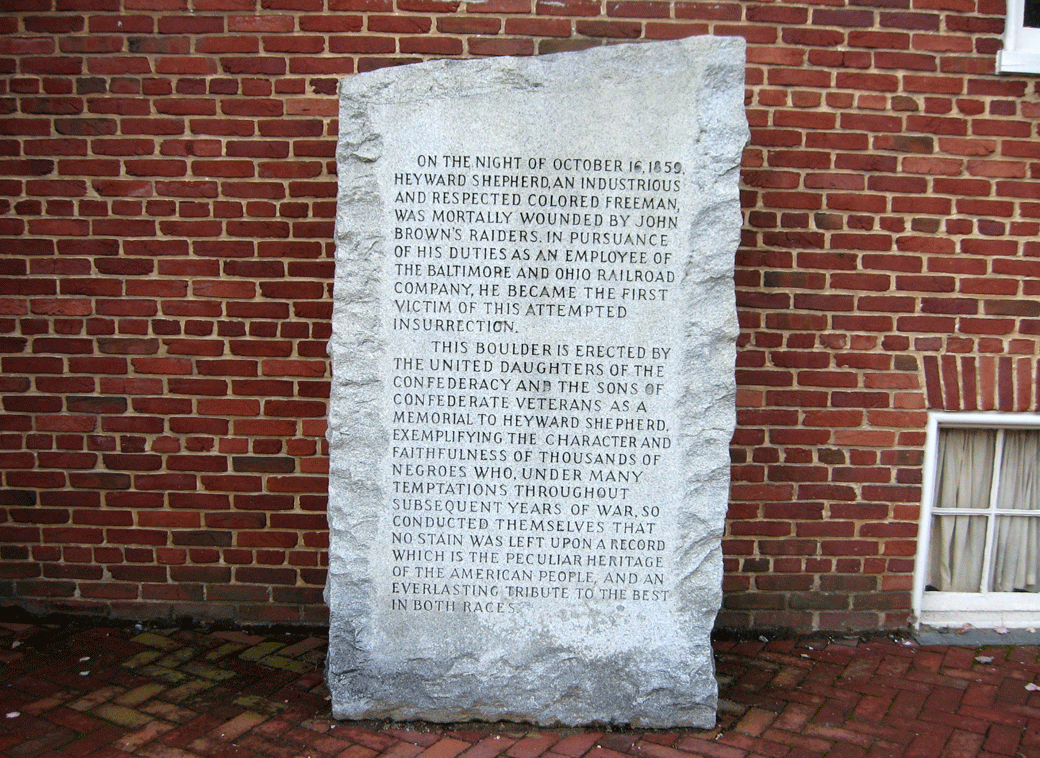
The deeper inconsistency lies in how Heyward’s memory was weaponized. Post-Reconstruction, the United Daughters of the Confederacy and Sons of Confederate Veterans erected a monument to him in 1931, framing him as an “industrious and respected colored freeman” whose death exemplified the “faithfulness” of Black people to the South, as part of the broader Lost Cause effort to sanitize slavery as benign paternalism and recast Brown’s raid as senseless murder rather than a republican strike against domination. This was propaganda, not nuanced history, that exploited one free Black man’s death to imply contentment with a system that denied the same freedom to millions, including those still in chains nearby. Preferring the preservation of that order over the risks of liberation reveals a compromised republicanism; and one willing to accommodate tyranny for the sake of order or racial hierarchy.
The Haitian Revolution was the only successful slave revolt that created the second independent American republic (Haiti) by abolishing slavery outright through armed struggle. Toussaint, influenced by classical republican texts (e.g., Raynal’s call for a “Black Spartacus”), framed it in republican principles. His 1801 Constitution and Dessalines’s 1805 version emphasized civic identity over racial hierarchy, which directly inspired John Brown and Black abolitionists, proving forceful self-emancipation worked where gradualism or appeals failed, and it exposed U.S. hypocrisy. Italian Republicanism through Mazzini influenced transatlantic abolitionism and Black republican thought, and Garibaldi’s multi-racial fights in South America embodied practical internationalism. This tradition indicted gradual compromise and praised principled action. True civic republicanism, as articulated across the Atlantic, rejects such compromise. Toussaint Louverture and the Haitian revolutionaries did not wait for French mercy or gradual colonial reform. They forged a republic through armed assertion of non-domination, abolishing slavery outright and inspiring Brown directly. Italian Carbonari and Mazzinian republicans similarly viewed any polity tolerating mastery, whether monarchical absolutism or chattel slavery, as illegitimate, unworthy of the name “republic.” They emphasized duty to humanity over local loyalties that propped up arbitrary power.
The republican founders themselves used violence against perceived tyranny in their 1776 revolution, and applying stricter pacifism or gradualism only to the enslaved is revealing. Fighting oppression when peaceful avenues were blocked was not “leftist terrorism” but an extension of the republican logic that no just polity tolerates arbitrary mastery. Haiti and militant abolition accelerated freedom. Republican tradition values action in service of non-domination over abstract order or paternal mercy. Critiques of Brown often focus on tactics or collateral outcomes while ignoring the system’s baseline violence. Broader history shows self-assertion, informed by republican ideals across the Atlantic, advanced liberty more effectively than reliance on oppressors’ goodwill. This doesn’t glorify every violent act. It recognizes that chains rarely dissolve through patience alone.
Black contributions to this republican lineage, as reflected in broader historical reckoning is a story of agency over victimhood. From early figures mastering classics to refute racist misreadings of antiquity, to the Haitian model that inspired Brown, the tradition reveals enslaved and free Black people as active participants reclaiming and expressing republican ideals in practice. They did not beg for inclusion in a compromised order but asserted that no true republic can coexist with hereditary mastery. White critics who apply blanket negativity to abolitionist “radicalism” or “insurrection” while praising founders’ gradualism overlook this inconsistency, since the American Revolution itself rested on violent rejection of tyranny. Extending republican logic fully demanded confronting slavery’s ultimate domination, not awaiting paternalistic reform that history suggests would have been glacial at best.
Black contributions to this republican lineage, as reflected in broader historical reckoning is a story of agency over victimhood. From early figures mastering classics to refute racist misreadings of antiquity, to the Haitian model that inspired Brown, the tradition reveals enslaved and free Black people as active participants reclaiming and expressing republican ideals in practice. They did not beg for inclusion in a compromised order but asserted that no true republic can coexist with hereditary mastery. White critics who apply blanket negativity to abolitionist “radicalism” or “insurrection” while praising founders’ gradualism overlook this inconsistency, since the American Revolution itself rested on violent rejection of tyranny. Extending republican logic fully demanded confronting slavery’s ultimate domination, not awaiting paternalistic reform that history suggests would have been glacial at best.
In the end, the weaknesses of gradualism lay in its dependence on the goodwill of those profiting from the system and its underestimation of slavery’s adaptability. Active resistance, embodied by Brown and informed by Haitian success and Italian republican universalism, better honored the republican imperative: liberty as non-domination requires vigilance and, when necessary, the transformative fire of principled action. Waiting might have preserved surface order, but at the price of prolonged human bondage; fighting, however imperfectly, helped forge the conditions for its end. This transatlantic and classical heritage affirms that republicanism thrives not through compromise with tyranny, but through the courageous recognition that some chains must be seized and broken.
Heraclitus of Ephesus provides a philosophical undercurrent for this rejection of static submission, that has come down to us through republican Stoicism. His doctrine of the ever-living fire portrays reality as perpetual flux and transformation, where strife and opposition drive harmony under the governing logos. “You cannot step twice into the same river,” he taught; and that permanence is illusion, and change is justice. David Walker and militant abolitionists channeled this fire into concrete praxis, transforming this underlying force of nature in man into a call for active resistance as the divine rational force in history igniting souls against oppression. Gradualism, by contrast, bets on the river remaining still long enough for oppressors to release their grip voluntarily, ignoring the dynamic forces already at work with economic entrenchment, ideological reinforcement, and the human cost of delay. Passivity amid flux risks deeper entrenchment, as the system adapts and hardens rather than yielding.
Elevating Shepherd primarily as a cudgel against abolition, while downplaying the baseline violence of slavery itself, inverts priorities. It suggests comfort with domination for some so long as surface stability holds, a stance at odds with the vigorous resistance that defined both the American founding against British tyranny and the transatlantic republican tradition that indicted America’s hypocrisy. A consistent republicanism demands weighing the structural evil of hereditary bondage against the collateral costs of breaking it. Preferring perpetual enslavement to imperfect action in its defense fails that test. Liberty as non-domination requires choosing the side that expands freedom, even when the path involves fire and risk, over loyalty to the masters’ bridge.
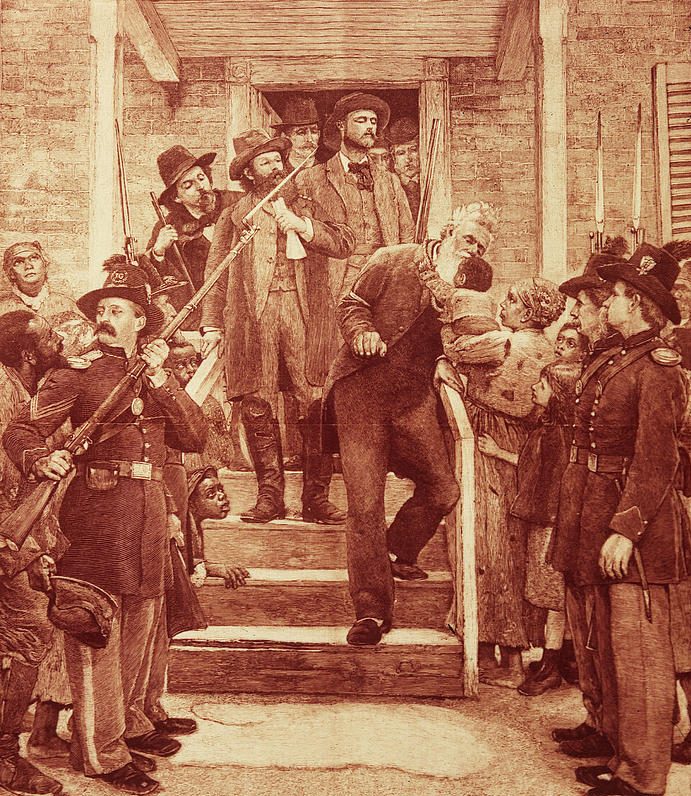
John Brown was an abolitionist and romantic who embodied a radical, deeply principled form of constitutional republicanism — a covenantal republican moral philosophy rooted in the Founders’ language of natural rights, civic virtue, and resistance to tyranny, as I have been endeavoring to teach to you. Brown believed the Constitution had been hijacked by slaveholders and no longer reflected republican principles, and his cause was the logical fulfillment of American republican ideals. John Brown was executed on charges of treason, murder and insurrection on December 2, 1859.
RECOMMENDED SOURCES
- Jonathan A. Noyalas, et al., Challenging the Lost Cause in Harpers Ferry Portal, McCormick Civil War Institute, Shenandoah University.

 The American Minervan
Leave a comment