Expansion of insights given in Italian Republicanism and the Transatlantic Indictment of the Early U.S. Republic on how both Cattaneo and Mazzini condemned American slavery from the different structural angles of unitary and federal republicanism, with Cattaneo’s surgical argument that slavery was a royalist remnant, not a federal defect. Cattaneo and Mazzini were both major republican thinkers. While Cattaneo emphasized federalism, empirical reasoning, and civic autonomy, Mazzini emphasized duty, unity, and spiritual nationalism.
- INTRODUCTION: THE ITALIAN INDICTMENT OF EARLY U.S. REPUBLIC — Introduction to the history and betrayal of Italian Republicanism.
- FROM THE CARBONARI TO MAZZINI — tracing the transformation from reactive conspiracy to affirmative moral philosophy grounded in Doveri dell’Uomo.
- THE CATTANEO-MAZZINI DIVERGENCE — expanded treatment of how both men condemned American slavery from different structural angles (unitary vs. federal republicanism), with Cattaneo’s surgical argument that slavery was a royalist remnant, not a federal defect.
- THE KOSSUTH CONTRAST — exploration of Kossuth’s cynical refusal to denounce slavery during his 1851-52 American tour vs. Mazzini’s unwavering moral consistency, and what that fault line revealed about European revolutionary movements.
- THE ITALIAN STAGE — on Rota’s Bianchi e neri, Verdi’s Un ballo in maschera, satirical journalism, and how Italian audiences laughed at America’s pretensions to freedom.
- GARIBALDI’S SOUTH AMERICAN REVOLUTIONS — the multi-racial, internationalist context of the Guerra Grande.
- THE TRANSATLANTIC CIRCUIT — Garrison-Mazzini parallels, Fuller’s Roman dispatches, Roberts’s research on Mazzini’s influence on John Brown, and the pathway into Black Republican political thought.
- ITALY’S DIARCHY AND FASCIST ALLIANCE DESTROYS REPUBLICAN INHERITANCE — the Rosselli assassinations, the outlawing of Masonic networks, and how the monarchist-conservative line triumphed over the Mazzinian tradition.
- NECESSITY FOR RETURN OF RADICAL REPUBLICANISM — the argument that this republicanism is foundational, not foreign, and belongs most urgently to those for whom its promise was most violently betrayed.
THE CATTANEO-MAZZINI DIVERGENCE ON FEDERALISM AND SLAVERY
One of the richest and most intriguing debates within Italian republican thought, being one that has been insufficiently explored in anglophone scholarship, was the intellectual confrontation between Giuseppe Mazzini and Carlo Cattaneo on the question of the federal structure of the state and its relationship to the problem of slavery. Both men were republicans. Both condemned slavery without reservation. But they disagreed fundamentally on the structure that a liberated Italy should take, and that disagreement produced two distinct but complementary critiques of the American slaveholding republic with one built on moral and philosophical critique, and the other as structural and political.
Mazzini, as we have seen, advocated a unitary republic: one Italy, undivided, governed by a single democratic legislature and executive, bound together by the moral law of duty. For Mazzini, federalism was a recipe for fragmentation, for the reassertion of the local tyrannies and petty despotisms that had kept the Italian peninsula divided and subjugated for centuries. The unity of the nation was, in his architecture, a precondition for the fulfillment of its mission toward Humanity.
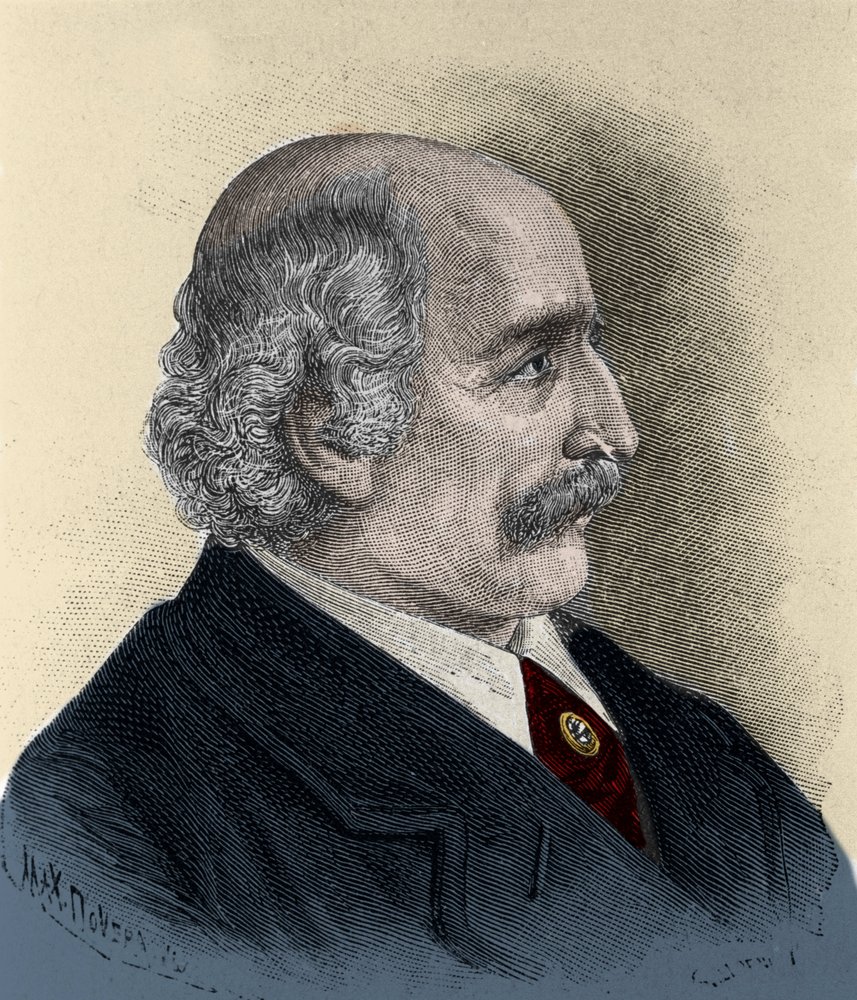
Cattaneo, the great Milanese polymath was an economist, linguist, philosopher, and patriot participant in the Cinque Giornate insurrection of 1848 that advocated a federal republic modeled partly on the Swiss confederation and, selectively, on the American federal example. Cattaneo was no uncritical admirer of the United States. He was a precise and rigorous thinker who studied institutions with the eye of a comparative social scientist. Cattaneo believed that federalism, the distribution of sovereign power across multiple self-governing units bound by a common constitutional pact, was not only compatible with republican liberty but essential to it. Centralized power, even democratic centralized power, could become tyrannical. The federal form protected diversity, local initiative, and the autonomy of civic communities.
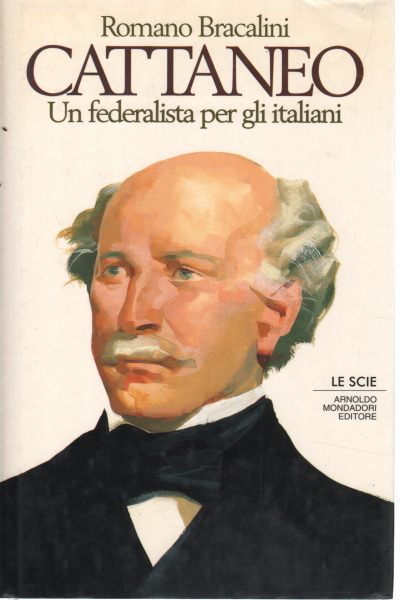
This disagreement placed Cattaneo in a delicate position when Italian newspapers and political commentators used American slavery as a weapon against the federal idea itself. The attack was potent and widely circulated. Cattaneo contrasts the political liberty of the American republic with the moral abomination of slavery in publications such as Notizie naturali e civili su la Lombardia in Il Politecnico (1844). This work contained a synthesis of Lombardy’s political and cultural history, including Cattaneo’s moral commentary on other nations, including the United States. He condemns the American federal republic by calling slavery “l’iniqua e fetida cancrena della schiavitù” (“the iniquitous and foul gangrene”) in the republic’s heart, arguing that federalism itself (the division of sovereignty, the autonomy of the states) was the structural cause of slavery’s persistence. If only America had been a unitary republic, the argument ran, the national will could have extirpated slavery decades earlier. FEDERALISM was the shield behind which the slaveholding South protected its peculiar institution.
Cattaneo responded to this argument with characteristic precision and intellectual rigor. Slavery, he contended, was not a product of federalism as such but of the aristocratic, royalist remnants in the Southern states where the royalist party and civil strife were dominant during the War of Independence. The slaveholding South was not federal in spirit — it was feudal. Its planter aristocracy was the American analogue of the European ancien régime, and its defense of slavery drew on the same ideological resources — hierarchy, inherited privilege, and the naturalization of inequality, that European monarchists and aristocrats had always deployed. Cattaneo sharpened this point with a devastating comparative observation in the same section: slavery had been (“…una piaga che fu abolita in tutte le federazioni dell’America Spagnuola…” (“abolished in all the federations of Spanish America”), while it “survives in the royal colony of Cuba, and in the imperial possessions of France and Brazil.” (Cattaneo, La Lombardia). The federal form, properly understood, demanded emancipation. It was the monarchical and aristocratic form that tolerated and perpetuated bondage.
This was an analytical move, and its implications extended far beyond the Italian debate. Cattaneo was defending the federal republican form while condemning the American content, proving that the form itself, when faithfully enacted, required the liberation of all citizens. The United States, despite its republican institutions, still tolerated slavery. Meanwhile, Spanish American republics (Mexico, Colombia, Chile, Peru, etc.) had abolished slavery after independence. So, he was making an argument that American abolitionists themselves struggled to articulate with the same clarity: that slavery was not the fruit of American constitutionalism but its betrayal, not the consequence of federalism but of the feudal aristocratic residues that the American Revolution had failed to eradicate.
The interplay between Cattaneo’s structural critique and Mazzini’s moral and philosophical critique enriched Italian republican thought to great measure. From Mazzini came the thundering moral verdict, that any republic that tolerated slavery violated the universal law of human duty and forfeited its claim to republican legitimacy. From Cattaneo came the institutional diagnosis that slavery persisted in America not because of the federal structure but because of the aristocratic deformation of that structure in the Southern states, as a deformation that federalism, properly understood, was designed to prevent. Together, these two critiques constituted a comprehensive indictment both philosophical and structural, principled and analytical, that no American defender of the slaveholding republic could answer.
Other Italian intellectuals contributed to this constellation of critique. Francesco De Sanctis, the great literary critic and statesman who served as Minister of Public Instruction in the newly unified Italy, brought his own perspective to bear, connecting the question of political liberty to the question of cultural and intellectual emancipation, arguing that a people could not be truly free until its literature, education, and public discourse reflected the democratic principle. The debates played out across the Italian press in Il Risorgimento (founded by Cavour in Turin), La Nazione (Florence), L’Unità Italiana (Genoa and Naples), and Il Diritto (Turin), reaching audiences far beyond the philosophical academies and the conspiratorial cells.

 The American Minervan
Leave a comment