
THE REPUBLICAN NETWORKS FROM YOUNG ITALY TO GARIBALDI’S CAMPAIGNS
YOUNG ITALY AS ORGANIZATIONAL REVOLUTION
Young Italy represented a decisive advance upon the Carbonari in both ideological clarity and organizational purpose. Where the Carbonari had operated as a loose confederation of cells with divergent aims, Young Italy possessed a defined program: Italian unification as a democratic republic, achieved through popular insurrection and moral education. Mazzini understood that revolution required not merely conspirators but a mobilized people, and that the people could be mobilized only by an idea powerful enough to demand sacrifice. His method combined two elements: educazione (education) and insurrezione (insurrection). The masses must first be awakened to their rights and duties through propaganda, journalism, and political instruction, then they must be summoned to overthrow their oppressors through collective action.
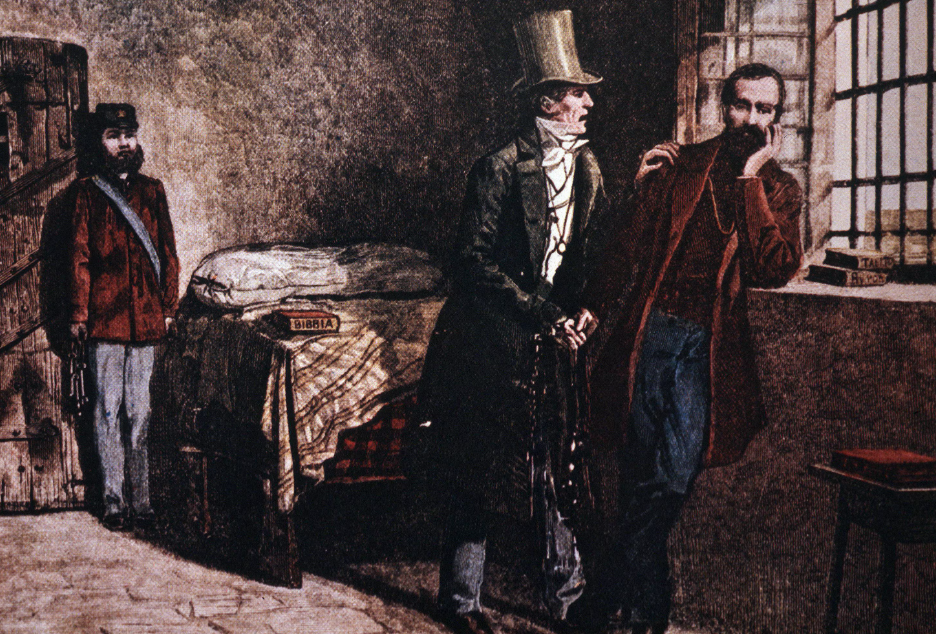
In practice, Young Italy’s early insurrectionary efforts met with disaster. Conspiracies in Piedmont and Genoa in 1833-1834 were detected and crushed; several participants were executed; others fled into exile. Mazzini himself was condemned to death in absentia. Yet the failures did not discredit the movement so much as diffuse its ideas. Young Italy’s manifestos circulated clandestinely across the peninsula, reaching an audience far wider than any Carbonari vendita had ever achieved. By the 1840s, Mazzinian republicanism had become one of the principal currents of Italian political thought, competing with the moderate liberalism of figures such as Vincenzo Gioberti and Cesare Balbo, who looked to the Piedmontese monarchy as the instrument of national liberation.
GIUSEPPE GARIBALDI AS THE SWORD OF REPUBLICANISM
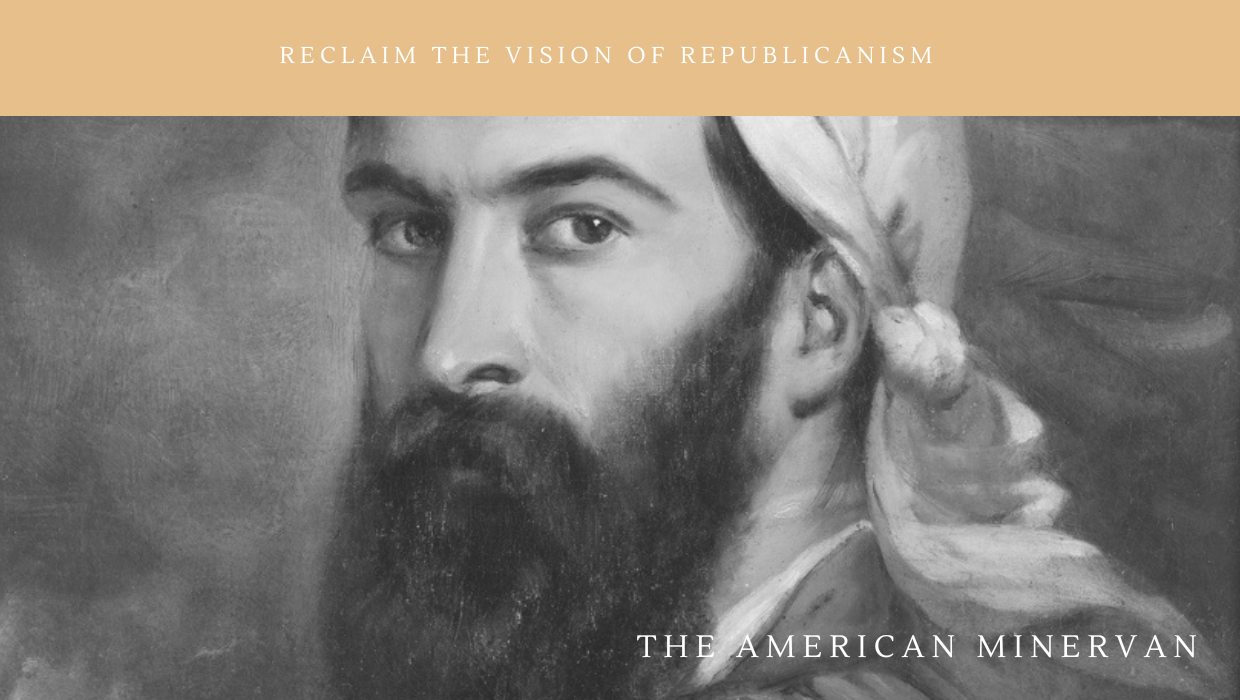
No figure better embodied the translation of Mazzinian ideals into revolutionary action than Giuseppe Garibaldi. Born in Nice in 1807, Garibaldi was a sailor and adventurer who joined the Carbonari and then Young Italy around 1833, inspired by Mazzini’s vision of a united Italian republic. Condemned to death for his participation in the failed 1834 Piedmontese insurrection, Garibaldi fled to South America, where he spent over a decade fighting in the wars of liberation of Brazil and Uruguay, an experience that honed his skills as a guerrilla commander and deepened his conviction that the people, not kings, must create the nation through sacrifice and heroism.
Garibaldi’s republicanism was pragmatic rather than philosophical. He shared Mazzini’s ultimate goal of an Italian republic but was willing to subordinate ideological purity to the practical necessities of unification. When it became clear that the Piedmontese monarchy under King Victor Emmanuel II and his minister Cavour offered the most viable path to Italian unity, Garibaldi accepted the alliance, however reluctantly. His watchword became “Italy and Victor Emmanuel” — a formula that acknowledged monarchical leadership while preserving the aspiration for eventual republican transformation. This pragmatism was the source of enduring tension between Garibaldi and Mazzini, who regarded any compromise with monarchy as a betrayal of principle.
THE ROMAN REPUBLIC OF 1849
The supreme expression of Italian republican ideals came during the revolutionary year of 1848-1849, when the upheavals that swept across Europe reached the very seat of papal authority. In November 1848, following the assassination of his chief minister Pellegrino Rossi, Pope Pius IX fled Rome. In February 1849, a constituent assembly proclaimed the Roman Republic, abolishing the Pope’s temporal sovereignty and establishing a democratic government based on universal male suffrage. Mazzini arrived in Rome and was elected one of three Triumvirs, effectively heading the new republic’s government.
For the first and only time in his life, the prophet of Italian republicanism held executive power.
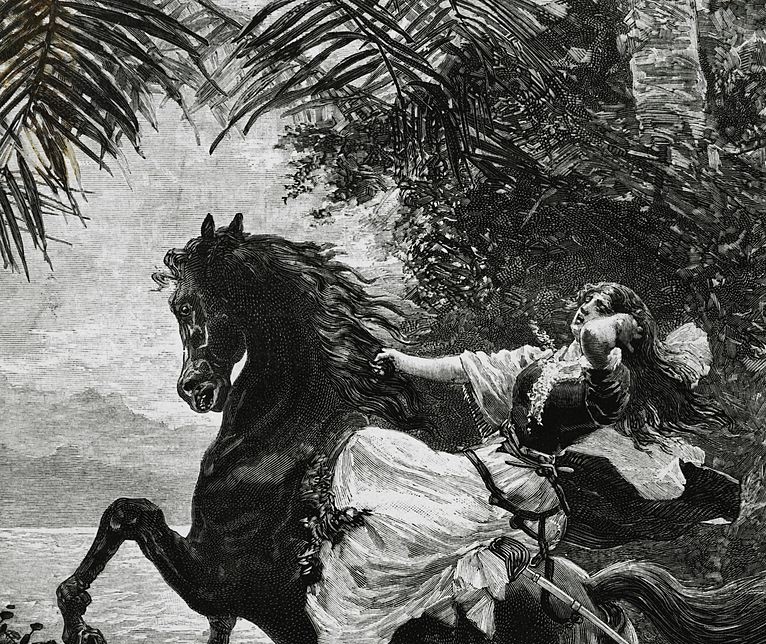
The Roman Republic of 1849, though it survived only five months, became a sacred chapter in the mythology of Italian nationalism. Under Mazzini’s political leadership and Garibaldi’s military command, the republic enacted progressive legislation by abolishing clerical censorship, confiscating Church estates for redistribution and guaranteeing freedom of religion, while simultaneously defending itself against a French expeditionary force dispatched by Louis-Napoleon Bonaparte to restore papal authority. Garibaldi’s defense of Rome against overwhelmingly superior French forces became an epic of republican resistance. When the republic fell in July 1849, Garibaldi led a harrowing retreat across central Italy, losing his pregnant wife Anita to illness during the flight — a personal tragedy that sealed his status as the Risorgimento’s martyr-hero.
THE EXPEDITION OF THE THOUSAND AND UNIFICATION COMPROMISE
Garibaldi’s most spectacular achievement came in 1860, when he led the Spedizione dei Mille (the Expedition of the Thousand), a force of barely a thousand volunteers who sailed from Genoa to Sicily, overthrew the Bourbon Kingdom of the Two Sicilies, and liberated southern Italy in a campaign of astonishing audacity. The expedition demonstrated the power of popular mobilization, guerrilla initiative and republican idealism, yet its outcome illustrated the tension between republican aspiration and monarchical pragmatism. At the famous meeting at Teano in October 1860, Garibaldi handed his southern conquests to King Victor Emmanuel II, saluting him as “King of Italy.” It was an act of patriotic self-sacrifice that made Italian unification possible but ensured that the new Italy would be a constitutional monarchy, not a republic. Garibaldi retired to the island of Caprera, a republican at heart who had subordinated his deepest convictions to the cause of national unity.
THE STRUGGLR AGAINST DIVINE-RIGHT MONARCHY AND THEOCRACY
REACTION TO THE DOMINANCE OF ABSOLUTISM: THE DOCTRINE OF DIVINE RIGHT
To grasp the full radicalism of the Italian republican challenge, one must understand the ideology it opposed. The Restoration order rested upon the doctrine of divine-right kingship: the claim that monarchs derived their authority directly from God, were answerable to no earthly power, and governed by a mandate that no revolution could legitimately revoke. This doctrine, systematized by theorists such as Joseph de Maistre and Louis de Bonald in the aftermath of the French Revolution, held that monarchy was the natural and divinely ordained form of government, that revolution was a sin against the providential order, and that the Catholic Church, as the guardian of divine truth, was the rightful ally and moral guarantor of legitimate sovereignty. So, take note of this pattern in our times.
In post-1815 Italy, this Catholic-monarchist alliance took concrete institutional form. The Austrian Empire, the Bourbon kingdoms, and the petty Italian duchies all relied upon the Church to legitimate their authority and discipline their populations. The papacy, for its part, depended upon the Austrian army to maintain its temporal rule over the Papal States. The result was a mutually reinforcing system in which monarchical absolutism and clerical authority sustained each other — and in which any challenge to one was implicitly a challenge to the other.
THREE FRONTS OF THE REPUBLICAN STRUGGLE
The Italian republicans fought the Restoration order on three distinct but interconnected fronts. In the north, they confronted Austrian domination: the Habsburg Empire’s direct control of Lombardy-Venetia and its indirect hegemony over the smaller states. In the south, they challenged the Bourbon dynasty, whose Kingdom of the Two Sicilies was perhaps the most reactionary state in western Europe — a regime that imprisoned, tortured, and executed political dissidents with a ferocity that shocked even conservative British statesmen such as William Gladstone, who described Bourbon rule as “the negation of God.” In the centre, they contested the Pope’s temporal sovereignty over the Papal States — a territory stretching from Rome across the Apennines to the Adriatic, governed by a clerical bureaucracy that combined religious authority with political absolutism in a manner uniquely offensive to liberal and republican principles.
THE ANTI-THEOCRATIC PLEA
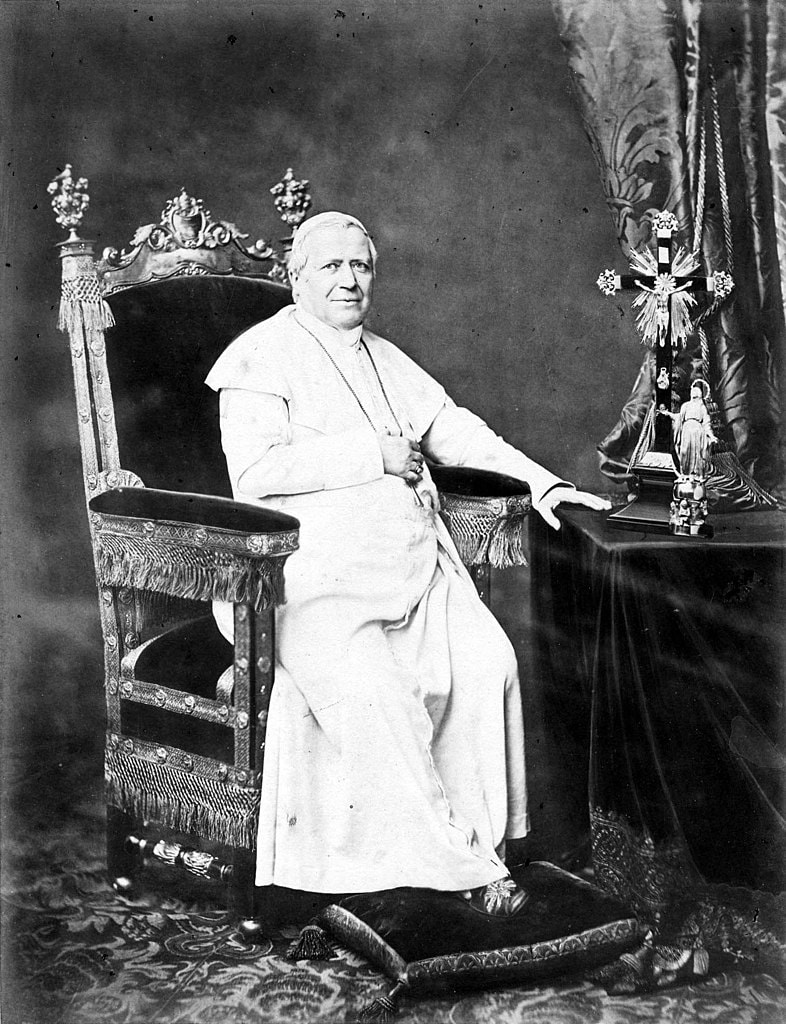
The anti-theocratic dimension of the republican struggle was of particular significance. The Papal States were not merely one absolutist regime among many; they represented a distinctive fusion of spiritual and temporal authority that the republicans regarded as doubly illegitimate. The Pope claimed to govern not by the consent of his subjects but by divine commission; his government was administered largely by clerics; and his foreign policy was determined by religious considerations that had nothing to do with the welfare of his territorial subjects. The Papal States were, in the republican analysis, a theocracy; and their existence at the geographical heart of Italy constituted the single greatest obstacle to national unification.
Republican anticlericalism must be carefully distinguished from irreligion. Mazzini, as we have seen, was a deeply spiritual thinker who regarded atheism as a moral and political error. Garibaldi, though more bluntly anti-Catholic in his rhetoric, framed his opposition in terms of the Church’s political corruption rather than theological objection. The republican critique was directed not at Christianity but at the institutional Church’s alliance with reactionary power — its opposition to constitutional government, freedom of the press, religious toleration, and national self-determination. Republicans demanded the separation of spiritual from temporal authority: the Pope might remain the head of the Catholic faith, but he must cease to be a territorial sovereign.
This conviction found its most dramatic expression in Garibaldi’s rallying cry of “Roma o Morte” (“Rome or Death”), which framed the capture of Rome as an existential necessity for the Italian nation. Pius IX responded with excommunication of all who participated in the assault on papal sovereignty. After 1870, when Italian troops finally occupied Rome and the Pope’s temporal power was definitively abolished, Pius IX rejected the Italian government’s Law of Guarantees, that offered the papacy legal protections and financial compensation, and declared himself the “Prisoner in the Vatican,” a posture maintained by his successors until the Lateran Treaty of 1929.
THE EUROPEAN CONTEXT
The Italian republican struggle against theocracy was part of a broader European conflict between secular-liberal ideas and the Catholic-monarchist alliance. Pius IX’s Syllabus of Errors (1864), which condemned liberalism, rationalism, religious indifferentism, and the separation of Church and State, represented the papacy’s most comprehensive rejection of the modern political order. Ultramontanism or the assertion of absolute papal authority in matters both spiritual and political was the ecclesiastical counterpart of monarchical absolutism. Against this combination, the Italian republicans deployed the intellectual weapons of Enlightenment popular sovereignty, Renaissance civic humanism, and French Revolutionary constitutionalism, fused with Mazzini’s distinctive vision of a civil religion of nationalist duty.

 The American Minervan
Leave a comment