
Civic Republicanism in the United States began to erode, then was hollowed out by the late 19ᵗʰ century, became a largely forgotten tradition by the mid‑20ᵗʰ century and finally collapsed by 1975. The period of the 1900s-1960s saw a shift in power from citizens to expert-run agencies, administrative governance, data-driven politics and technocratic problem-solving. The final blow came when mass parties, mass media, and mass bureaucracy replaced the citizen with the spectator. I explain why democracy alone cannot restore a republic, and why elites prefer democracy‑language.
- INTRODUCTION: EROSION OF CIVIC REPUBLICANISM IN THE U.S.
- AGE OF MASS PARTIES
- AGE OF INDUSTRIALIZATION AND CORPORATE CAPITALISM
- AGE OF PROGRESSIVISM AND BUREAUCRACY
- DECLINE OF CIVIC ASSOCIATIONS
- POST-WASTERGATE SCANDAL
- THE SACRILIZATION OF DEMOCRACY
- DEMOCRACY AIDED THE TRANSITION TO A “TECHNOCRATIC REPUBLIC”
- GOP WEAPONIZATION OF “CONSTITUTIONAL REPUBLIC”
- THE DIOGENESIAN IDEAL: REPUBLICANISM AS LIVED CIVIC PHILOSOPHY
INTRODUCTION: EROSION OF CIVIC REPUBLICANISM IN THE U.S.
THERE IS NOT AN EXACT MOMENT WHEN THE UNITED STATES STOPPED cultivating the kind of citizen the Founders believed a republic requires. The truth is that civic republicanism didn’t disappear all at once. It eroded in stages and has disappeared or effectively become lost to Americans. “Democracy” alone can never save the Americans, because the soul of the system is dead.
Civic republicanism in the United States began to erode in the early 19ᵗʰ century, was hollowed out by the late 19ᵗʰ century, and became a largely forgotten tradition by the mid‑20ᵗʰ century. The final blow came when mass parties, mass media, and mass bureaucracy replaced the citizen with the spectator. This wasn’t a single moment, but a structural transformation.
AGE OF MASS PARTIES
The rise of mass parties in the 1820s-1840s (Jacksonian Era) is the first major break. Washington and other Founders feared political parties because they knew parties would centralize power, create factions, replace citizens with loyalists and reward obedience over virtue. Jacksonian democracy introduced mass party machines, patronage networks, loyalty politics and emotional populism.
This was the beginning of the shift from republican Catonian ideal of “the citizen” in the early Republic to partisan political identity, weakening civic republicanism.
AGE OF INDUSTRIALIZATION AND CORPORATE CAPITALISM
The 1860s-1890s constitutes a period of industrialization and corporate capitalism creating massive wealth concentration, corporate political influence, urban political machines and patronage‑based governance. Citizens became workers, consumers and clients of party machines, not republican citizens. This is when the Founders’ pluralist vision is effectively replaced by elite‑driven politics.
AGE OF PROGRESSIVISM AND BUREAUCRACY
Then comes the period of Progressivism and Bureaucracy in the 1900s-1930s. Progressives meant well, but they unintentionally weakened civic republicanism by professionalizing politics, expanding bureaucracy, empowering experts over citizens and centralizing administrative power. The citizen becomes a client of the state, not a participant in governance. This is the rise of the administrative state, which the Founders never imagined.
In the period of mass media and the nationalization of politics from the 1940s-1960s, radio and television transformed politics into spectacle, personality, national narratives and passive consumption. Citizens became audiences.
The Founders’ model of local participation, deliberation, pluralism and civic virtue was replaced by mass messaging. This is the moment civic republicanism becomes culturally invisible.
DECLINE OF CIVIC ASSOCIATIONS
The decline of civic associations occurred exactly between 1960 and 1975, because civic fraternal orders collapsed, local clubs died, churches and church groups (also PTAs and auxiliaries mostly ran by women pre-1970s) lost civic function, unions weakened and neighborhood club politics dissolved. We are talking about service-oriented institutions, civic universalists and pluralists that the younger generations by the 1990s saw as relics of exclusionary, pre-civil rights era and stoic WASP character like Freemasonry, Rotary, Lions, Kiwanis, Elks, Moose, Knights of Columbus and generally local civic clubs. However, these were the training grounds for republican citizenship, and once they disappeared, the civic republican tradition had nowhere to live. These were the last institutions that taught republican virtue, and once they declined, the tradition died.
The civic carriers are basically gone.
The entire civic infrastructure was sustained by the country clubs, the Rotary chapters, the fraternal orders, the local newspapers, the school boards, the chambers of commerce, the civic rituals, the philanthropic networks, and “good governance” norms. WASPs were the last group that saw themselves as the custodians of this civic order, and though they were not always inclusionary or fair, this was the civic ethos. It was part of the civic eco-system.
Tim Dillon and the hosts of History Hyenas exhibit the attitude towards such clubs in general, not towards simply the “WASPS.”
I must state however, that a common misunderstanding of the story involves portraying WASPs as the lone group that upheld America’s civic tradition, or that America is fundamentally a “Germanic Protestant culture.” Also, republicanism was never the property of one ethnic or religious group. The American republican tradition was never exclusively WASP, never exclusively Germanic, and never reducible to Protestant culture. Other factors at play led to the decline in general of both WASPS and the American civic tradition. When they declined, the civic world collapsed; not because they were special, but because no one replaced the custodial role.
WASPs were eventually replaced by the technocrats, and technocrats do not join such clubs. Once the WASP elite collapsed, so did that civic world. The history of civic institutions was reframed by identity politics as merely “white clubs,” patriarchal and outdated. However, they were being replaced by a new elite detached from local life, global, data-driven, just as arrogant, and mobile; and do not see themselves as “custodians of the republic,” but experts.
So, the 1970s-1990s marks the period of Neoliberalism and Party professionalization, and I grew up during the last years of Bush Sr. into the Clintonian era of the presidency. Both parties became donor‑driven, consultant‑managed, poll‑tested and media‑oriented. Now, citizens became demographic targets, voters mainly every four years and consumers of political brands. So, this is when the republican citizen disappears from American political imagination.
Then, from the 2000s-Present, comes the period of polarization, sportification of politics, identity politics, digital platforms, leading to an unprecedented convergence of internet regulation, centralization, and censorship, driven by governments, corporations, and algorithmic systems. Politics in this age is tribal, algorithmic, outrage-driven, identity-based and elite-managed.
The citizens are spectators, influencers, content consumers and protest participants, but not republican citizens in the Founders’ sense. This is the final stage of the tradition’s disappearance.
POST-WATERGATE SCANDAL
Civic republicanism died culturally between 1945 and 1975, but it died institutionally between 1828 and 1910. By the time the modern Democratic and Republican parties matured by the 1930s, the Founders’ model of pluralist self‑government, civic virtue, citizen participation and anti‑elite politics was already gone.
Corporate America itself stopped supporting civic life. People on social media ask, “what happened? When I was young, there were so many commercials about global sustainability of the ecosystem and kumbaya globalism. I prefer that than what we have today.” Well, that was a charade, and this period was at the tail-end of the decline. In the mid-20ᵗʰ century, corporations supported civic life and service as being a professional, and by the 1980s, corporate culture became globalized, local ties weakened, and civic engagement was no longer encouraged.
1975 is important, because of the Watergate scandal. After the Watergate scandal, Americans lost trust in institutions. Instead of rebuilding civic virtue, the political class doubled down. The generations today do not seem capable of rebuilding the eco-system.
It is important to understand, that this erosion did not begin with the Trump administration. The United States really did lose the civic republican tradition, not because of one party, but because of all these factors. Mass parties replaced and eliminated any fair chance at pluralism, bureaucracy replaced “civic virtue,” media replaced deliberation and created passive consumers, fragmentation and identity replaced citizenship, and elites (e.g., donor-decisions) replaced the People. During the rise of technocracy, the people merely become spectators, and we have also seen civic education collapse. Schools not only stopped teaching classical republicanism, but they also either don’t know how to approach it in our time or view it through the lens of critical theory. There is no reconstructive theory.
THE SACRILIZATION OF DEMOCRACY
You live in a post‑republican political culture. I am not sure that a revival of this lost republican tradition can be brought back, but it is better to do something than nothing, because the facts are on our side. This does not depend on a single figure, or a single party. Civic republicanism died because the world that produced republican citizens died, and by 1975, Americans were no longer formed by the traditions that sustained a republic. Modern political actors, especially Democrats, use the word “democracy” incessantly and almost never invoke the older republican tradition, reflecting these deep structural changes. In the Founders’ worldview, and in classical republicanism — democracy is a tool, not a sacred end. Democracy is not holy in this system. It is citizenship. The Republic is the structural foundation, and democracy is a mechanism within that structure. Therefore, democracy is good only when protected by republican institutions and virtue.
Sacralized democracy hides the fact that technocrats govern, consultants shape opinion, donors influence outcomes and that citizens are passive. Reviving the republican tradition re-centers the citizen, not the procedure, demonstrating that voting is not the pinnacle of citizenship. The whole modern political class is directly challenged by the ideal of reviving the republican tradition, since a republic restrains elites — including those who claim to defend democracy.
If I am asked, e.g., if “democracy” has been sacralized and weaponized, does that sacralization end up justifying anti‑pluralist actions, like Southern political elites redistricting Black representatives out of power? I say that the republican framework does not justify that and condemns it more forcefully than modern “democracy” rhetoric does. When a political elite redraws districts to entrench its power, that is exactly the kind of factional domination republicanism was designed to prevent.
The word “republicanism” has become inverted, to refer to elitism, corporatism, slavery, racism, inequality, and the rich (old money), etc. It disappeared because it requires civic virtue, pluralism, citizen participation, institutional literacy, suspicion of elites, responsibility and moral discipline. Now, Democrat-voting citizens use the term “republicanism” on social media to refer to whatever the “Republican Party” politician does.
The word “democracy” is dominant because it is emotionally powerful, morally simple, rhetorically useful, compatible with mass politics and identity politics, and is compatible with technocracy and elite gatekeeping.
So, the manner in which Americans use the term “democracy” functions similarly to an incantation to keep away, warn, notify or remind the aspiring demagogue, elite, donors, consultants, corporations, etc, of their duty to ensuring free and fair elections, to equality and the legacy of Civil Rights.
However, the term has become convenient to a post-republican political culture, for a consultant-driven, group identity-based, technocratic political culture. The term “democracy” in fact allows elites to frame themselves as “defenders” and moralizes their actions. Republicanism is at its core, anti-elite and morally rigorous.
Reviving republican citizenship means reviving the citizen as an active guardian of the common good, not a passive voter or consumer, so if you are asked, how to revive this, the answer would be to rebuild civic associations and on the republican motto of Liberty, Fraternity (solidarity, brotherhood) and Equality, so we can train citizens in pluralism, debate, and virtue. Teach civic education, mainly focused on the duty and responsibility of citizenship. Focus decentralized political power out of the hands of centralized technocracy and focus like a mob organically on local government and against elite domination. Lastly, we must rebuild a shared civic identity — not identity politics, ethnic dominance or nationalism. That era is dying, and is nearly dead, and even the Democratic Party who fear to release their “full autopsy” know this from their “data analytics.”
DEMOCRACY AIDED THE TRANSITION TO A TECHNOCRATIC REPUBLIC
The modern political culture fits technocracy. This is procedural democracy, not republican self‑government. Alex Karp understands this, referring to his ideal as the “Technocratic Republic” because he observes, that while republican institutions still exist on paper, technocratic elites actually govern in practice. The U.S. is a republic without republican citizens, run by experts, bureaucrats, consultants, data analysts and administrative agencies; or effectively, a republic that has been hollowed out and replaced by technocracy. Karp’s Technocratic Republic, as discussed before is a top-down imposition. It reflects the evolution of these phases of the decline of the republican tradition, contrary to the defenses he has provided.
His argument, e.g., that no one cared when they contracted with the Democratic Party mainly just proves my points more. Republicanism, especially the American, if it truly was practiced, is not top-down authority, martial obedience, or nationalism. Karp’s system is just a logical step, once you see the entire picture of the decline, and realize that democracy won’t save you, and the actual foundational system and philosophy of the country is dead or lost.
We’re talking every major force in American life after 1960 pushed people away from local, pluralist, face‑to‑face civic life and toward mass media, suburban isolation, identity politics, the internal (moral) policeman, surveillance, and technocratic governance.
The word “democracy” itself helped accelerate the United States into the technocratic republic Karp, who works with both administrations, articulates. It is through “democracy” that elites justified technocratic control, and all they have to say to rebut citizens is that you chose and allowed surveillance, and the erosion of privacy.
“When surveillance is all you’ve ever known, freedom feels like the foreign concept.”
Democracy enabled this transition into a technocratic republic, so how can you restore the Republic through democracy? A Republic protects democracy. You restore the republic by republicanizing democratic mechanisms — not by abandoning democracy, and not by letting democracy dominate the republic. It is the emphasis on “democracy” that reduced the citizen to mere voting, nationalized politics, moralized elite authority, allowed technocrats to claim legitimacy, and replaced virtue with fragmented identities and emotive political theatrics. All of this replaced republican civic culture, so democracy cannot restore a republic because democracy is a procedure, while a republic is a living civic culture, discipline and moral philosophy.
Democracy can function with passive voters, emotional mobilization, elite messaging, and identity politics, but a large republic as ours cannot. A healthy republic cultivates citizens capable of self‑government, not imperial pampering and technocratic control.
“We are implementing the will of the people, for the security of the people.”
This is the democracy-language of the technocrat.
In a republic, no one should dominate — including experts. I should not feel powerless in helping my country, while a Twitch-streamer makes fifteen million supporting “per capita” arguments about Black crime, belief that Black people are genetically inferior and showing his roach-infested home on the back of four million followers.
GOP WEAPONIZATION OF “CONSTITUTIONAL REPUBLIC”
The Republican Party (GOP) is not helping with this either, by always abusing the argument “We are a Constitutional Republic, not a Democracy” to portray the U.S. as Christian Nationalist, rooted in Christian Zionism, raise up demagogues who couldn’t pass a civics knowledge test on an Executive chief-tier level, and support foreign donors and lobbies to unseat congressional politicians like Rep. Thomas Massie and enforce ideological conformity. The GOP only weaponizes the phrase “constitutional republic” in ways that also undermine the classical republican tradition and accelerate its collapse. The GOP uses “constitutional republic” rhetoric to defend a political order that is not republican in the classical sense, but to justify factional domination.
The “We’re a constitutional republic, not a democracy” does not restore the Founders’ republican tradition. They use the term “constitutional republic to merely justify minoritarian power, elevate sectarian religious nationalism, empower demagogues, defend Southern-belt elite and donor influence, delegitimize pluralism, and frame opponents as “demonic” or enemies of “the real America.” This is pure identity‑based nationalism and elite‑driven factionalism, and you as my fellow citizen are being played as a pawn. Both parties abandoned republicanism, in different ways.
REPUBLICANISM AS LIVED CIVIC PHILOSOPHY

In contrast, France uses the word “républicain” because the French state, French identity, and French political culture are explicitly built on republican principles. Since 1870, the French Republic has not existed as just a government, it is a national identity. Americans do not have this and have lost this. The United States avoids the word “republican” because the word became associated with the GOP, and the civic republican tradition collapsed by 1975. Elites replaced republican citizenship with technocracy, “democracy” became the national moral slogan, and Americans lost the institutions that taught republican virtue.
In Where Authority Lies: Republicanism, Liberalism, and Progressive Morality, I show what classical influences moved through and into the culture of the early Republic and colonial education. France still has a republican culture. America has only republican forms. France never sacralized “democracy” the way Americans did, and French civic education still explicitly teaches the elements of republicanism, but I just use France as an example to show the depths of the republican tradition and our heritage.
Italian, French, Irish and English republicanism differ, and so does American REPUBLICANISM. In France, the task is delegated from the top-down, because of its centralized state. American REPUBLICANISM is supported by a decentralized federal system. We are a federal republic, a union of states with complex histories, cultures and tensions.
Americans seem not to care about the importance of carrying the inheritance of REPUBLICANISM and DEMOCRACY as one. You don’t need a centralized state to maintain republicanism. In the American decentralized federal system, it is ultimately up to the people to keep it alive and teach it, and practice it as an embodied lived civic philosophy, not from top-down centralized authority. So, in our case, as Americans, the state (or “the system”) did not fail. We failed the system, because we do not practice it. For us, it is civic practice, not state doctrine. This goes back to our older, classical, American, and even Roman understanding of republicanism. Our system is mixed, eclectic and a very unique expression of republicanism, because it was built upon an keen observation of failed systems and successful systems past and present.
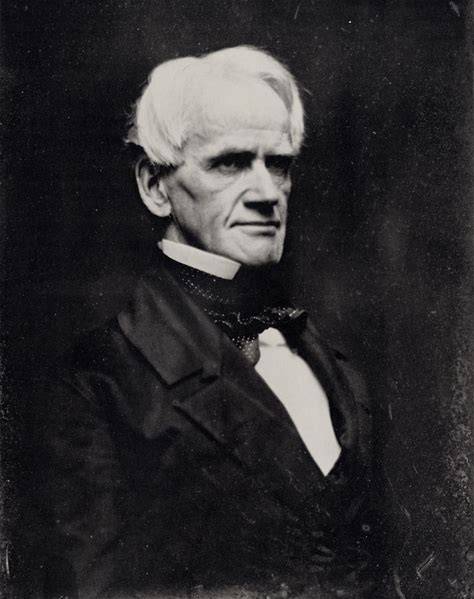
American educational reformer Horace Mann, e.g., imported key elements of the structure of the Prussian education system in the 19ᵗʰ century into the American system, bringing these to Massachusetts. However, the Prussian model was designed for obedience, not republican citizenship. This is how we eventually got to the Bellamy salute, sped along by Progressive Era reforms that intensified Prussian influences. The classical republican concept of providential and moral order of the universe is not about martial obedience, militarism, or authoritarian discipline and submission. This is an essential difference from a classical republican worldview (see The Executive Chief: Unified Role of the Presidential Office in U.S. Government), but this is what I mean by inversion of the meanings of our government. The structure of that system emphasized disciplined workers, obedient soldiers, loyal subjects and uniform national identity, which is opposite of civic virtue, pluralism and independent judgment. So, the factor of France, the development of our education system, etc, are small windows into how large many factors reinforced a problem that is not uniquely my own recognition to revive some “niche history” or plaything ideology of mines.
We need philosophers of republican tradition that will devote their lives to promulgating and re-articulating the problems, history and depths of this heritage, across every mountain, field and swamp. That is how I envision the rest of my life, intellectually and professionally, if need be, and that has to be built, from my state to the next, organically. This kind of work is not the sole work of elite political candidates, nor the work of machines. The American is wasting potential by not learning the potential of its system, that so many claim “does not work.” You are the system. We rather drown in a surveilled subscription-based declining Empire with a thousand distractions a day to pacify the modern’?
This is the truth, that does not depend on race, sex, class or gender. End the nihilism. A republic is a moral order lived by citizens, not a system enforced by the state.
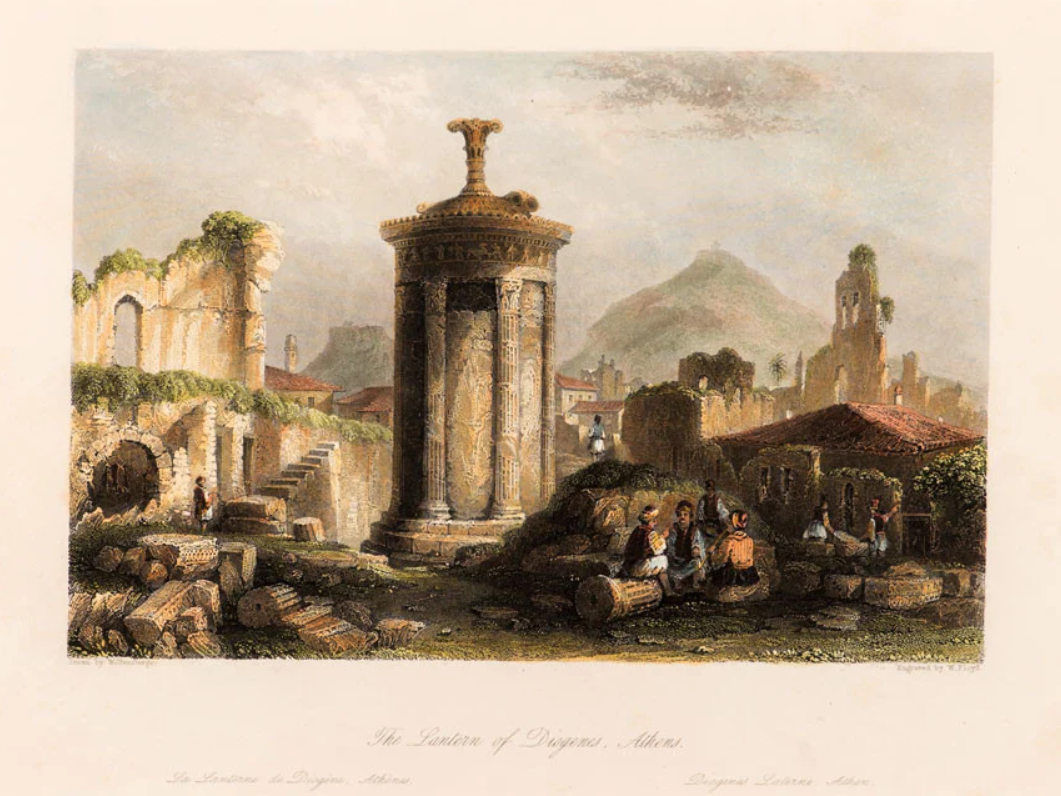
We need Diogenesian-like souls to emerge, right now.

 The American Minervan
Leave a comment