the Birth of Anti-Republican Conspiracy in Europe AND PROFILES OF Carbonaro Revolutionaries INTO THE RISORGIMENTO
INTRODUCTION AND MAZZINI’S CONTRIBUTION
This is a continuation or short briefing about specific individuals or key revolutionaries in this history from God and the People: Mazzini’s Divine Ideal, the Carbonari Networks, and the Republican Struggle Against Monarchism and Theocracy. Jefferson had realized that the philosophy of Weishaupt was William Godwin’s philosophical anarchism. Weishaupt’s case is one example of the damage done by eighteenth-century and nineteenth-century conservative attacks, and their culmination and acceptance by the Italian Fascists in the form of the Judeo-Masonic-Illuminati conspiracy (see Jewish contribution to the Birth of Italy, 1815-1870: Pre-Herzl Jewish Nationalism and Fascist Betrayal), which tried to appropriate and claim the continuation of the legacy of Mazzini.
Republican revolutionaries were suppressed, and some joined in anti-fascist revolutions against the Fascists and National Socialists. The history itself uncovers several elements in the reports and further developed propaganda that were initially constructed to defend despotisms, divine-right rule and absolutism, that the modern “democratic masses” unknowingly or knowingly adopt and adapt into modern anti-liberal zealotry, ignorantly undermining their own democratic republics.
A People cannot accept principally the propaganda of old order monarchies, then complain they are ruled by neo-feudal technocrats and oligarchies. There is in fact, not a single sign in modern politics that “the Illuminati” or even any genuine group or lineage connected to the various original republican networks dominates or underlies the political-business world. Our political world today is a soulless corpse turned over, and this history demonstrates a lost in perspective of the sacrifices of others for a world. We aren’t able to curb an increasingly religious psychosis and allegiances among a number of our political class.
The history of the Carbonari provides a contextual history of republican struggles and philosophy through Italy’s history, which is important as a comparison to the (at the time) slaveholding Republic of the U.S. Italian Republicanism was strongly set in the trans-national and committed principled anti-slavery milieu most recognizably into the 1840s-1860s — egalitarian, multi-racial and in support of universal human rights. It provides a different angle for Americans. The grounds were set before the 1840s, as Mazzini demonstrates in his universalist moral philosophy. Mazzini had given coherent shape (as a unified, national moral-philosophy) to an otherwise loosely defined term — REPUBLICANISM, previously only defined in opposition to monarchy.
What G. Mazzini did was systematize the previously internally contradictory, loosely defined and reactive republicanism of earlier European republicans — from the French Revolution to scattered Italian secret societies, notably expressed in Doveri dell’Uomo and his manifestos of Giovine Italia. Mazzini’s republicanism (or Political Mazzinianism) directly shaped both Black American political thought and the strategies of major U.S. abolitionist networks. National liberation in the former blended with emancipation in the latter as two sides of the same coin. Black Republicanism absorbed Mazzini’s universalist, anti‑tyranny framework viewing their struggle as part of a worldwide democratic revolution. This action was set ablaze by Mazzini and Garibaldi’s spread of it through South Americas. The philosophy passed through transatlantic print networks, abolitionist newspapers, political correspondence, and acknowledgements of public alignment with the Union cause. Mazzini explicitly viewed the “slaveholding republic” as a contradiction and violation of human law, viewing the U.S. as disqualified for maintaining slavery, and unworthy of being the representative of LIBERTY.
Many Italians, not only Mazzini in this period of the nineteenth-century viewed the United States negatively because of slavery, and this sentiment appeared in political writings, journalism, popular culture, and even theater through satirical portrayals. Audiences laughed at the idea of a “free” America, and Italian newspapers (e.g., Il Risorgimento, La Nazione, L’Unità Italiana and Il Diritto) harshly criticized the U.S. as a “false republic” in distinction to the moral clarity of European anti-slavery movements and republicanism articulated by G. Mazzini, Carlo Cattaneo, Francesco De Sanctis and others. In the post-Risorgimento Italy, Victor Emmanuel III ruled alongside Benito Mussolini in a diarchy. Fascism obstructed and destroyed the work of the republican networks, adopting and shaping the conservative and Papal reactions before them. All this history goes back to the early and mid-nineteenth-century among the four “Fathers of the Fatherland” all pursuing divergent goals for the unification of Italy — between Giuseppe Mazzini, Giuseppe Garibaldi, King Victor Emmanuel II, and Camillo Benso (Count of Cavour).
The ideas conveyed here, and the way I convey it through republicanism, which I stand behind may challenge many people’s limited notions — coming from a Black person, but if you understood the history, you would see why it manifests in the writer, or in a Black American so strongly who has been steeped in my history since a youth, mocked for it and misunderstood, especially if one’s political solutions are oriented towards this cause. In this cause and in its argumentation lies the deathblow to corruption and injustices, and the modern government or politician cannot disregard or refute it as “Marxist,” or “foreign.” It is the foundation of the government itself, which we adopted from Europe, and in this form Mazzini expresses, it becomes a weapon against Power, not its enabler and abuser. This is REPUBLICANISM. The early Black and Radical Republicans understood this, studied the classics and built their repertoire to develop and fight for our civil rights.
This will help you also understand the roots and contradictions in the parties and the political attitudes (or beliefs) of citizens towards race, religion and republics in relation to the two.
ANTI-AUSTRIAN AND ANTI-ABSOLUTIST REVOLUTION
The Carbonari (Carboneria) were a decentralized network of secret societies (c. 1800-1831) advocating liberal-patriotic ideas against post-Napoleonic Restoration absolutism in Italy. Austrian political police1 and Bourbon police records, participant memoirs and trial documents show they sought to end foreign (especially Austrian) domination, and Bourbon Papal absolutist rule viewed as tyrannical. Memoirs (Memoirs of the Secret Societies of the South of Italy2, Memoirs of the Court, Aristocracy, and Diplomacy of Austria3) describe Carbonari mobilization against Bourbon despotism in Naples and participant accounts, and contemporary descriptions of the Neapolitan Carbonari emphasize their central role in the 1820 Neapolitan Revolution, which aimed to force the Bourbon monarchy to accept a constitution and end absolutist rule. The Austrian secret police reports describe the Carbonari as part of the broader revolutionary movement threatening absolutist regimes, and the Papal condemnation led to authorities viewing their actions as an attack on the foundations of absolutist governance.
The state’s perception of Carbonari‑type movements filtered into the new republics and republican movements through conservative propaganda as a coordinated political, cultural and clerical effort.
Carbonari goals varied regionally: many favored a constitutional monarchy or representative government with individual rights, freedom of speech, and protection against absolutism; others leaned republican. They express French Revolutionary and Napoleonic liberal ideals while rejecting pure Jacobin extremism, which all republican revolution was caricatured as. Patriotism unified them, unifying Italy (federation or unitary state) under popular sovereignty rather than divine-right kings. Struggles included the 1820 Neapolitan Revolution (forcing a constitution on Ferdinand I; crushed by Austria), 1821 Piedmont revolt, and 1831 central Italian uprisings. The Carbonari opposed monarchism where it meant unchecked power but often compromised with “liberal” monarchs. Many remained Christian and anticlerical only regarding papal temporal power. The movement waned as Mazzini’s Young Italy offered a clearer republican program.
PROFILES OF CARBONAROS: REVOLUTIONARIES OF REPUBLICANISM IN ITALY
Giuseppe Mazzini (1805-1872)
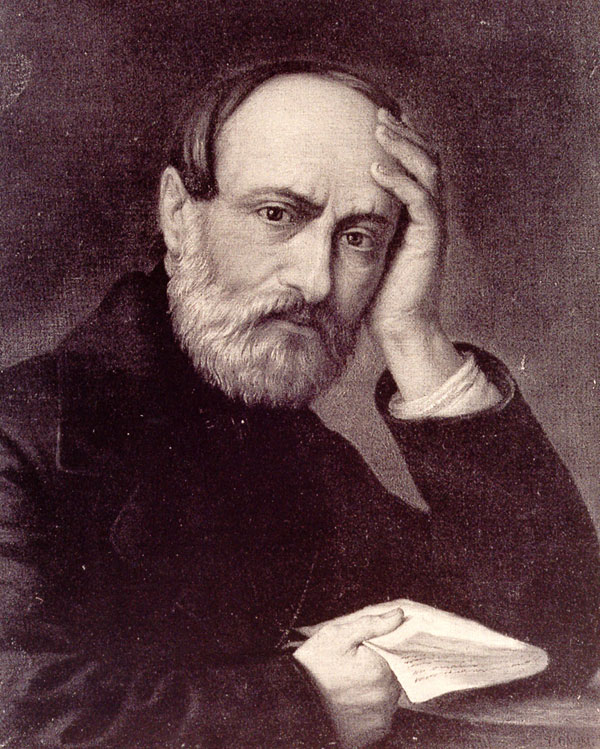
- Mazzini was a Genoese lawyer and Carbonaro (joined 1827-1830) who founded Young Italy (Giovine Italia, 1831) after exile for conspiracy. His philosophy, elaborated in writings like The Duties of Man and Young Italy manifestos, centered on republicanism as moral and logical necessity: “Neither pope nor king — only God and the people.” He viewed hereditary monarchy as a “hereditary lie” and despotism that prevented true democracy, universal suffrage, social justice, and equality. Republics alone enabled popular sovereignty, duty, sacrifice, and progress toward a “brotherhood of man” and eventual world republican federation. He rejected constitutional monarchy as a mere transitional compromise that preserved monarchical privilege and war-making power. Struggle against monarchism: Organized education and insurrection (failed 1833-1834 Piedmont and Genoa revolts) to awaken the masses against Austrian, Bourbon, and papal rule. Refused oaths to the House of Savoy, boycotted the 1861 monarchical unification, and later attempted republican insurrections (e.g., 1870 Sicily). He subordinated republicanism temporarily for unity but never abandoned it, criticizing Cavour and Piedmont as dynastic ambition. His own essays, correspondence, and contemporary Austrian reports confirm his uncompromising popular REPUBLICANISM.
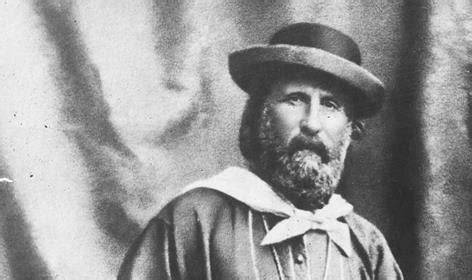
Giuseppe Garibaldi (1807-1882)
- Garibaldi joined the Carbonari then Young Italy (1833), embracing Mazzini’s republican nationalism. He fought for a democratic republican Italy based on popular initiative, liberty, and national unity. Philosophy emphasized practical action over theory: the people (not kings) must create the nation through sacrifice and heroism. He initially shared Mazzini’s anti-monarchism but pragmatically allied with the House of Savoy (Count of Cavour and Victor Emmanuel) when republican efforts stalled, subordinating republican ideals to unification (“Italy first”). Garibaldi was sentenced to death after the 1834 Mazzinian revolt, exiled to South America (fought for republics there), defended the 1849 Roman Republic (against French restoration of papal monarchy) and led the 1860 Expedition of the Thousand, overthrowing the Bourbon Kingdom of the Two Sicilies. He handed southern Italy to the king for unity but remained a republican at heart, later criticizing the monarchy. His memoirs and Mazzini correspondence document this pragmatic republicanism.
Ciro Menotti (1798-1831)
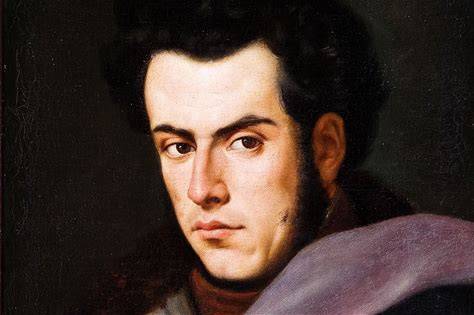
- Menotti was a Modenese Carbonaro (joined 1817) driven by strong democratic and patriotic feelings. He rejected Austrian domination and absolutist dukes, seeking liberation through popular uprising and liberal reforms. His philosophy aligned with Carbonari constitutionalism and democracy with popular sovereignty over foreign-backed monarchy. In his struggle, he organized the 1831 Modena and Emilian revolt with Enrico Misley, trusting (and being betrayed by) Duke Francis IV. He was arrested and executed. The 1831 rebellions were aimed at expelling Austrian influence and establishing representative government.
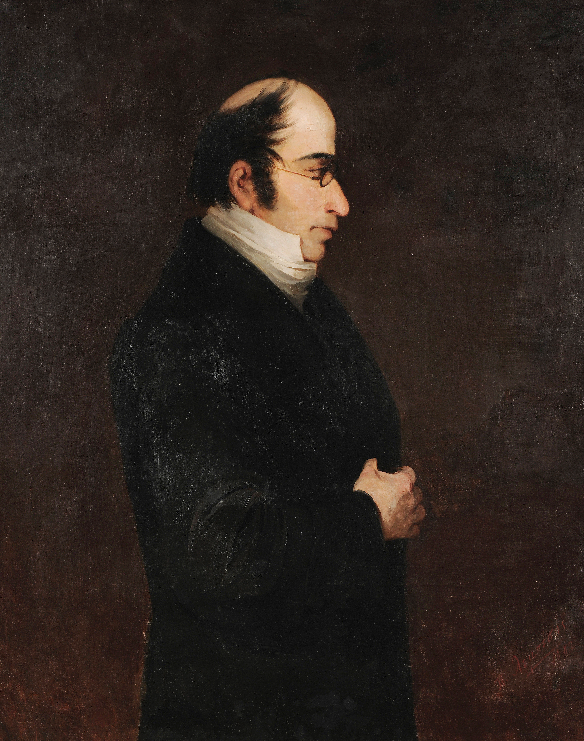
Santorre di Santarosa (1783-1825)
- Piedmontese Carbonaro officer and moderate liberal. He advocated constitutional government (not full republicanism) to limit absolutism and was inspired by liberal ideas from the French July Revolution era. He advocated for representative institutions and national independence over divine-right rule as an anti-absolutist willing to work within monarchy if constitutionalized. Santarosa led the 1821 Piedmont Revolution demanding a constitution from Victor Emmanuel I, but it was crushed by Austria. He fled and died fighting for Greek independence (1825).
Guglielmo Pepe (1783-1855)
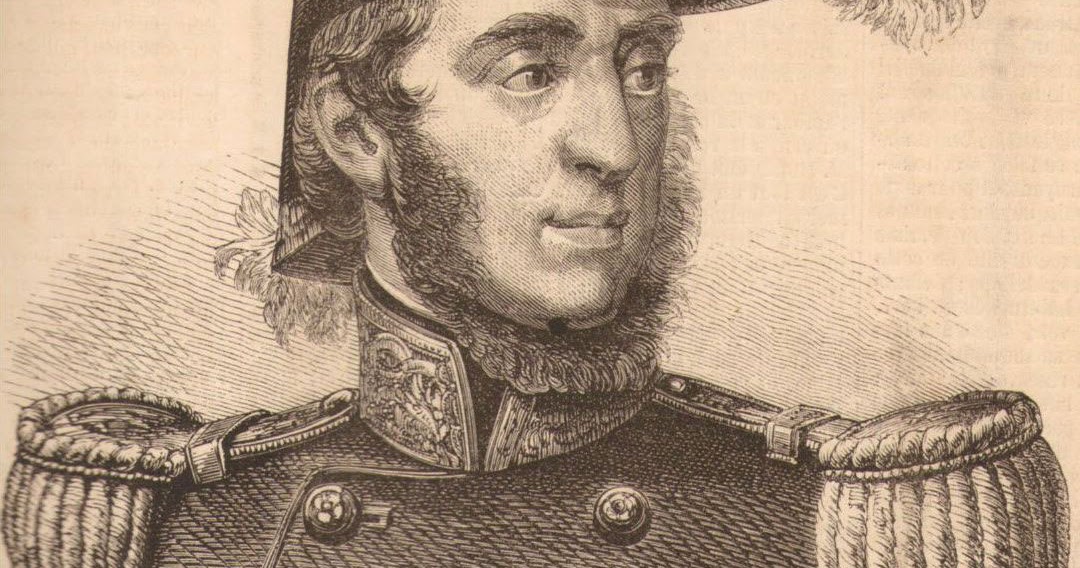
- Neapolitan general with French Revolutionary republican roots enlisted in the republican army in 1799. As Carbonaro leader, he championed constitutionalism and patriotism against Bourbon absolutism, supporting popular rights and anti-foreign rule. His philosophy evolved from early republicanism to pragmatic constitutional monarchy if it advanced liberty. Pepe commanded forces in the 1820 Neapolitan Revolution, which forced a constitution on Ferdinand I, but was crushed by Austria and exiled. He returned for 1848-49 and defended Venice. Pepe wrote memoirs documented this in his narrative of the political and military events in 1821.
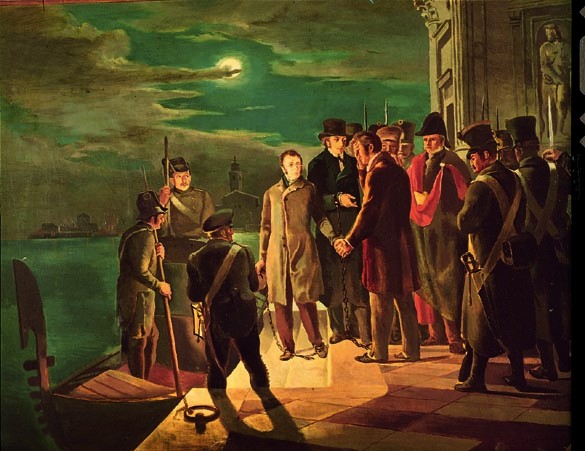
Silvio Pellico (1789-1854) and Piero Maroncelli (1795-1846)
- Pellico (writer) and Maroncelli (patriot, writer and musician) were Carbonari intellectuals arrested in Milan (1821). Pellico’s My Prisons (1832 memoir) reveals initial involvement for government reform, liberty, and patriotism against Austrian rule. His thinking shifted post-imprisonment toward moral and spiritual regeneration rather than radical politics, and he remained liberal but less militant. Not a strict republican, but more constitutionalist. Maroncelli shared similar Carbonari reformist views. Imprisoned at Spielberg fortress, memoirs exposed Austrian repression and inspired Risorgimento sentiment.
There are other attested figures, such as Morelli and Silvati who were Neapolitan officers fighting for purely military constitutionalism. They led 1820 mutiny for constitution against Bourbon absolutism but was executed. Vincenzo Federici (Capobianco) was an early southern Carbonaro who negotiated for liberal reforms and constitutionalism. Biagio Nardi was briefly Modena dictator (1831) and an anti-absolutist Carbonaro. Louis Auguste Blanqui, a French affiliate was radical republican socialist who sought a full republic over monarchy. Marquis de Lafayette sympathized with liberal and constitutional causes and supported representative government but not always strict republicanism in Italian context. Lord Byron held poetic sympathy for Carbonari liberty struggles. He was anti-tyranny but not a formal philosopher of republicanism.
Lesser Carbonari members (thousands in cells) generally shared the movement’s anti-absolutist, patriotic push for constitutions or republics, with their philosophy rooted in popular sovereignty and resistance to foreign (or restoration) monarchies. All drew from verifiable archival and memoir sources. No single uniform “republican” dogma existed, but REPUBLICANISM strengthened with Mazzini.
FOOTNOTES
- Austrian police surveillance records describe the Carbonari as a revolutionary network whose activities were monitored because they sought to undermine Austrian authority in Italy. See Police Minister Johann Anton Pergen Briefs Emperor Leopold II on the Most Important Activities of the Secret Police (March 2, 1790). In the Memoirs of the Carbonari originally published in 1821, the Papal condemnation Ecclesiam a Jesu Christo of 1821 also identifies the Carbonari as a political society active across South Italy, especially in regions under Austrian influence, and plotting to free the peninsula from foreign rule. The Papal brief Ecclesiam a Jesu Christo (1821) shows the Carbonari’s anti‑clerical and anti‑papal political stance and condemns the Carbonari for “plotting to ruin the Apostolic See,” demonstrating that the Papacy viewed them as a direct political threat. ↩︎
- Describes lodges spreading through the southern provinces of the Kingdom of Naples, presenting themselves as defenders of “liberty” against arbitrary power. These memoirs recount how Carbonari ceremonies and oaths bound members to fight tyranny and foreign domination, framing their cause as the liberation of Italy from oppressive rulers. ↩︎
- These memoirs contextualize the political climate in which the Carbonari operated. The German History in Documents and Images collection includes additional Austrian anti‑revolutionary directives that illuminate the state’s perception of Carbonari‑type movements. ↩︎
 The American Minervan